










Liquidambar styraciflua 'LANE ROBERTS' sweetgum

 Symbivit Tric (arbuscular)
 Symbivit (arbuscular)
Liquidambar
The genus Liquidambar includes approximately 15 species of deciduous trees naturally found in the temperate zones of North America, Central America, and Southeast Asia. The best-known species, the American sweetgum (Liquidambar styraciflua), originates from the southeastern United States, where it forms part of mixed deciduous forests. The genus was formally described by Carl Linnaeus in 1753, but the first European record of sweetgum dates back to 1615, when Spanish physician and naturalist Francisco Hernández documented it during his expedition to New Spain (Virreinato de Nueva España), a vast colonial territory of the Spanish Empire in North and Central America with its capital in Ciudad de México (present-day Mexico City). He described it as a tall tree with aromatic resin resembling liquid amber – hence the genus name liquidambar. Although fossil evidence confirms the presence of sweetgums in Europe as early as the Tertiary period, today they occur here only as introduced ornamental trees.
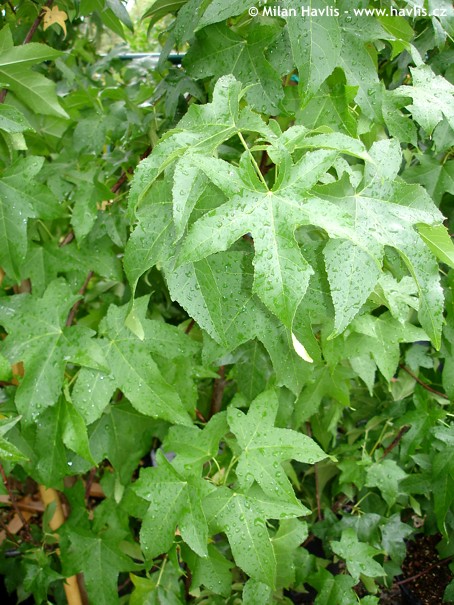
Sweetgums are often mistaken for maples by laypeople due to their similarly shaped, deeply lobed, palmate leaves, most commonly with five tips. What you definitely won’t confuse, however, is their scent when crushed – thanks to the tree’s signature aromatic resin, which is not only fragrant but also slightly sweet. Indigenous peoples of North America – such as the Cherokee and Choctaw – collected the resin, let it harden, and chewed it as a natural treat. Its somewhat sweet taste is what gave the tree its English name sweetgum. And when it comes to autumn foliage, sweetgums are clear winners, offering a wide range of vivid colours and holding onto their leaves longer than most other deciduous trees. In regions like New England or the Appalachian Mountains, they are among the main attractions of so-called "leaf peeping" – autumn trips to places with plentiful of autumn-coloured trees, now often organized by travel agencies. It’s the American counterpart to Japan’s momijigari tradition – just with hamburgers instead of jasmine rice.
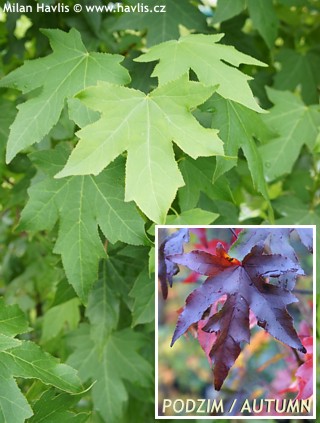
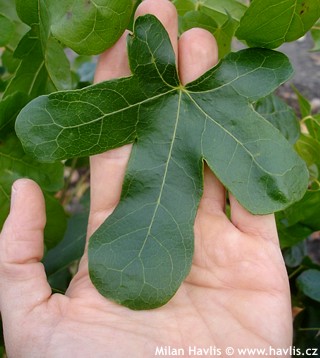
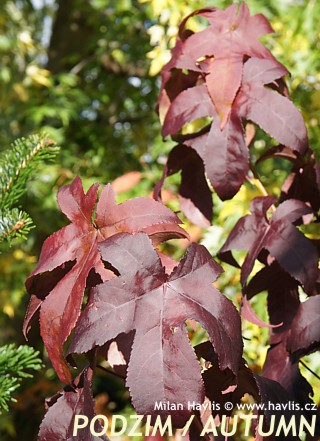
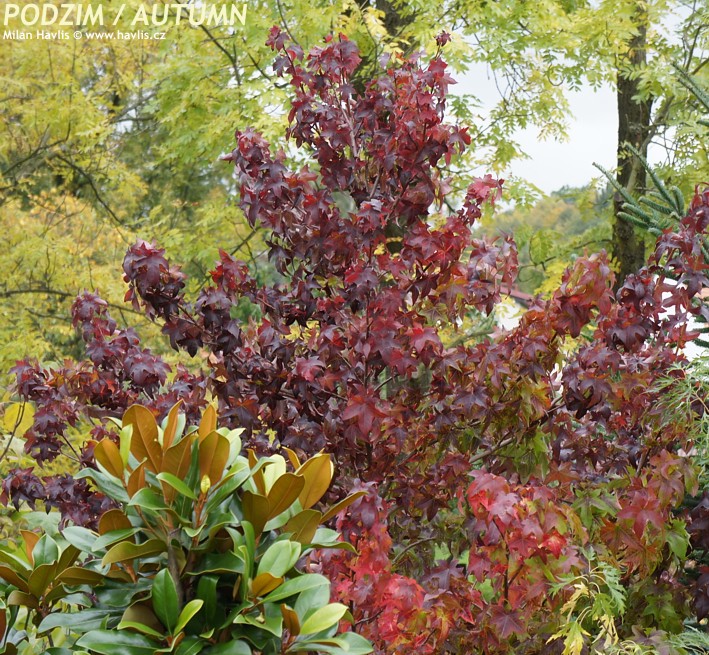
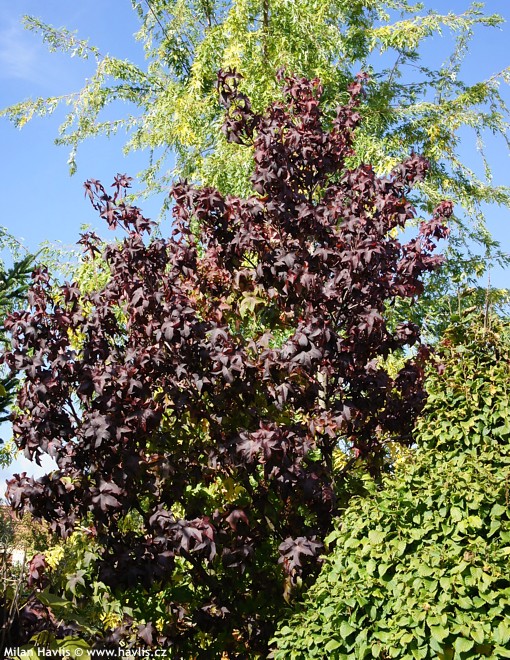
Lane Roberts is a stately sweetgum with a broadly pyramidal crown that appears open and majestic. The leaves are larger than those of the species, deeply lobed, palmate, glossy and dark green in summer. In autumn they transform into one of the most dramatic palettes among sweetgums: predominantly deep wine‑red to almost blackish tones, often highlighted with yellow shades. The colours remain on the tree for a very long time, sometimes until Christmas. Beyond the foliage and crown shape, the bark and twigs are equally striking: the trunk bark is grey from youth and soon becomes deeply furrowed, while even young twigs bear conspicuous corky ridges, so in winter the tree can look as if it stepped out of a ghost story. It usually grows 10–15 m tall, in parks and open spaces even more, and thanks to its open canopy it makes a representative impression in boulevards, wide streets or park landscapes.
The abundance of sweetgum cultivars is due to the species’ high variability and its tendency to mutate spontaneously, producing striking visual differences. This selection originated in England in the late 1960s, when Dr Lane Roberts purchased a sweetgum seedling from the Hillier nursery. His tree was distinguished by exceptionally dark autumn colouring, which prompted Harold Hillier to request propagation material. Hillier named the cultivar after his customer and introduced it to the market in 1971. Since then, Lane Roberts sweetgum has become one of the most popular cultivars for urban and park plantings in England, valued not only for its aesthetics but also for its high frost resistance, appreciated also in the colder parts of usually milder maritime British. Moreover, thanks to its tolerance of wetter soils and paved surroundings, it is quite possible that the next sweetgum you notice in London or another English city will be this very cultivar, and you may recall Dr Lane Roberts when you see it.
Last update 11-09-2007; 16-11-2025
Sweetgums are relatively tolerant when it comes to planting sites, but they do have preferences if you want them to thrive and look their best. Always give them full sun – adequate light is the key to vibrant autumn colours. They’ll cope with ordinary garden soil, but they’ll be more vigorous and attractive in acidic, deep soil that doesn’t dry out completely. Once established, they are impressively drought-tolerant – they can even draw moisture from dew condensed on their leaves overnight. On the other hand, they can also handle more water and we’ve found they’ll grow even tolerate occasional waterlogging which results in turning colours and shedding the leaves much earlier than others. Standard forms with a trunk require a strong support – a staking set for the first three years until they establish. The soil above the roots should be kept free of turf or competing plants – ideally mulched. Pruning or shaping, if needed, is best done in late winter or in midsummer. Very young plants should be protected from severe frost, as their hardiness is around –20 °C, but mature trees and shrubs with lignified tissues can easily withstand temperatures down to –29 °C (USDA zone 5).