













.jpg)
Veronica prostrata 'NESTOR' prostrate speedwell

 Symbivit Tric (arbuscular)
 Symbivit (arbuscular)
Veronica
The genus Veronica belongs among the most numerous and the most diverse groups of flowering plants of the temperate zone. It includes several hundred species distributed almost worldwide, from alpine meadows and forest understories to dry steppes and coastal rocks. It was described in the 18th century by Carl Linnaeus, who adopted an already established name linked to the legend of Saint Veronica. The legend says that she offered Christ a piece of cloth during his arduous journey to Golgotha, with which he wiped sweat and blood off his face. His image was said to have miraculously imprinted itself on the fabric, the so‑called vera icon, or “true image”. This idea of a faithful, unembellished imprint of reality was symbolically transferred in pre‑modern botany to speedwells, whose small, clearly drawn flowers were perceived as honest and needing no adornment.
The prostrate speedwell is one of the best‑adapted perennial species of Europe’s dry habitats. Its natural range stretches from Central through Eastern to Southeastern Europe, continues across the Caucasus and reaches as far as Western Siberia. Throughout this vast area it occupies sunny, stony slopes, dry grasslands and limestone outcrops where most plants struggle to survive. Thanks to its fibrous root system and its ability to spread clonally, it belongs among the so‑called clonal herbs – plants capable of producing new vegetative units and persisting for decades even on extremely poor soils. Although Carl Linnaeus formally described the species in 1762, its ecological role is far older: across European steppes and pastures it acted as a natural soil stabiliser, holding slopes together and filling the gaps between stones. In Central Europe its pale blue spring flowers are among the first gentle colours on dry hillsides. Its tolerance of drought and preference for limestone have made it a beloved rock‑garden plant that links the botanical history of Europe’s steppes with modern garden design.
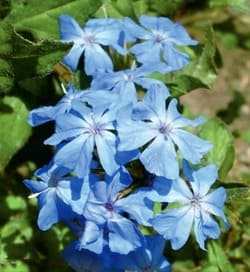
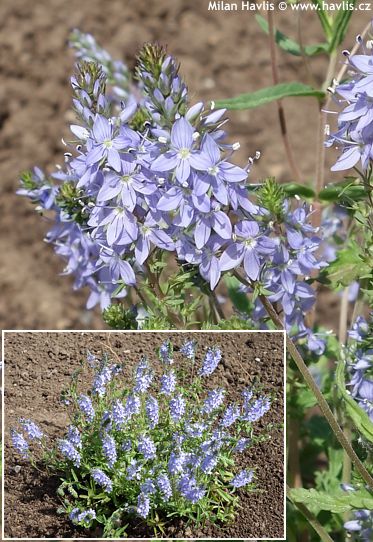
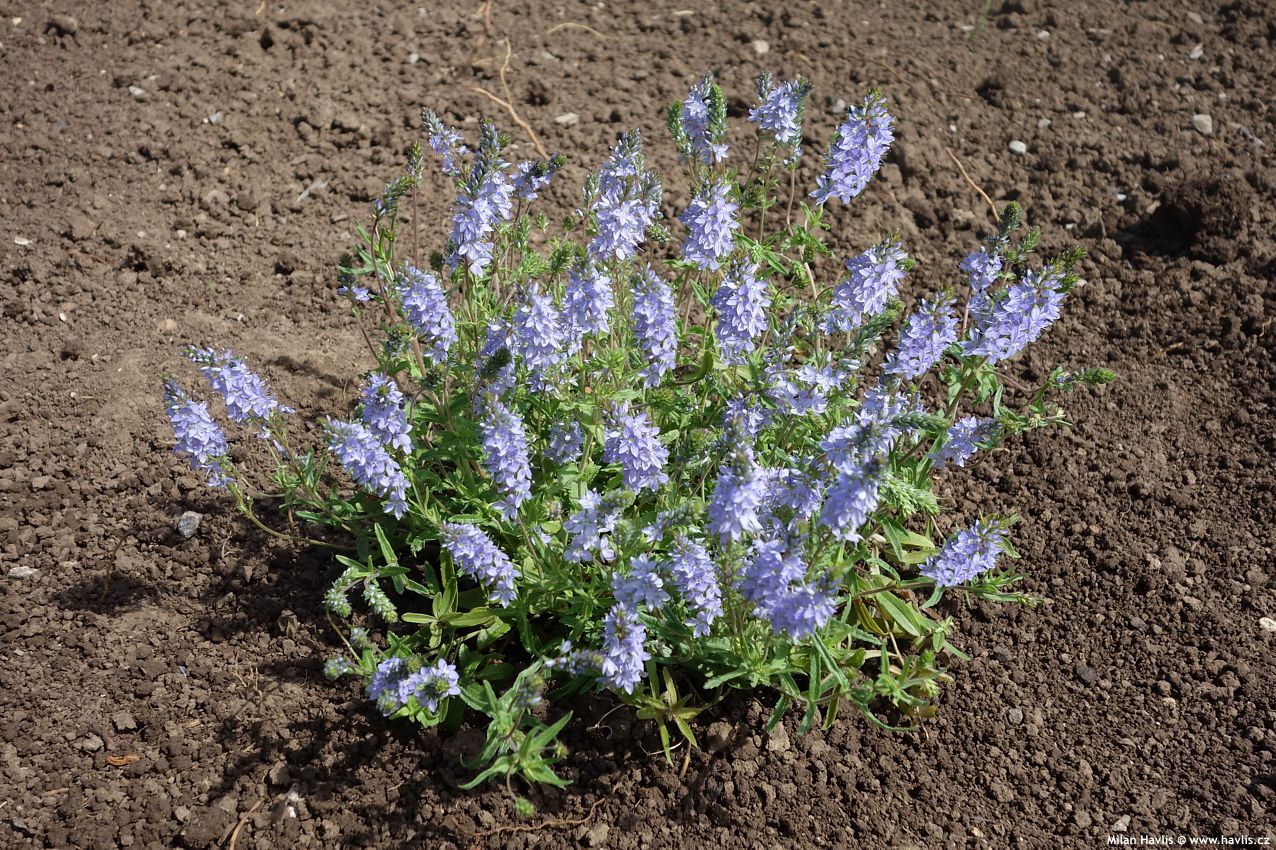
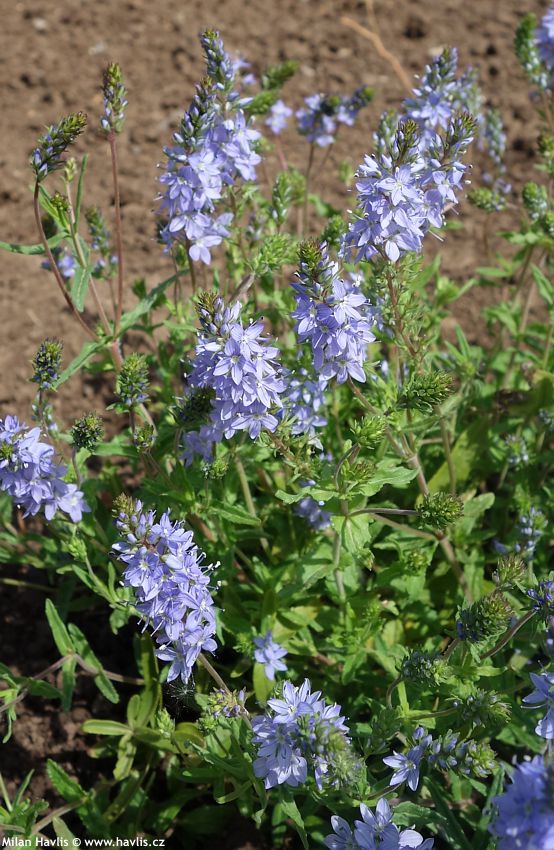
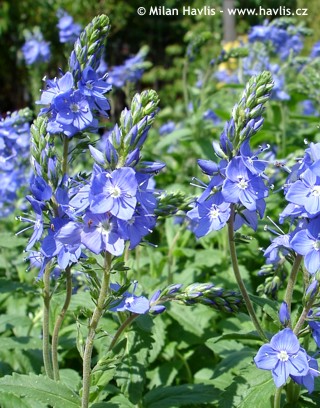
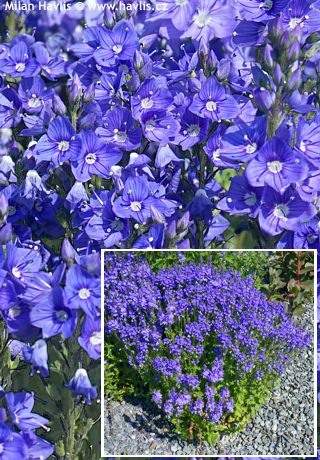
The speedwell cultivar Nestor is one of those plants that attract attention through subtlety rather than showiness. At the turn of spring and summer it produces short, upright racemes of pale lavender‑blue flowers with darker veins emerging from an almost white centre, giving the inflorescences an unexpectedly delicate pattern. The plant forms low, cushion‑like clumps 7 to 15 cm tall and 30 to 50 cm wide, depending on conditions and pruning. Its creeping stems are densely covered with narrowly lanceolate, mid‑green leaves, so the clump looks neat and fresh even outside the flowering season. Compared with the species, it flowers more abundantly and its colour is lighter and softer. No official information about the origin of the cultivar is available but given its appearance and growth habit it is reasonable to assume that it arose as a selection from European populations, which naturally vary in flower intensity and growth density – and ‘Nestor’ represents one of the most attractive forms.
‘Nestor’ is an ideal choice for places where a reliable, long‑lived groundcover is needed, one that will not overwhelm its neighbours. It performs best in rock gardens, on dry stone walls and along sunny borders, where its creeping stems naturally follow the terrain and quickly fill small gaps between stones. Thanks to its soft, pale flower colour it can visually soften a planting and link showier rock‑garden plants into a coherent unit. It pairs beautifully with Thymus serpyllum, Sedum acre, Aurinia saxatilis, Campanula portenschlagiana or Aubrieta deltoidea, which share similar requirements and together create a colourful yet harmonious spring carpet. In modern plantings it also works well as a low edging along paths, where it looks natural and effortless without demanding regular care.
Last update 25-01-2016; 29-12-2025
The prostrate speedwell is one of the most dependable rock‑garden plants, provided it has full sun and perfectly drained soil. It thrives in gravelly, stony or sandy substrates that dry quickly and do not retain water, as prolonged moisture leads to root rot. Limestone soils suit it naturally, but it also grows well in neutral soils as long as they are not heavy. Fertilising is unnecessary, overly rich soil results in loose growth and reduced resilience. During prolonged drought it appreciates occasional watering, otherwise it is highly tolerant of heat and dry conditions. After flowering it can be lightly trimmed to maintain a compact shape and encourage fresh foliage. In winter it is fully hardy to around –34 °C (USDA zone 4) and requires no protection, provided it does not stand in water.

.jpg)
