










CURRENTLY IN STOCK:
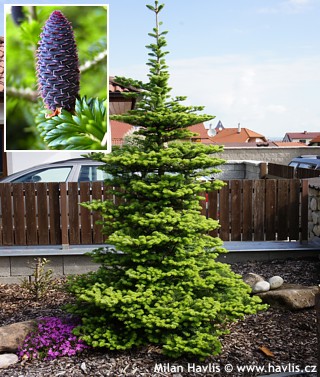
One of the most popular conifers for small and mid-sized gardens is this Korean fir. It has short, glossy, dark green needles that are silver on the reverse. Already as a young plant it produces very attractive bluish-purple cones.
It is slow growing, the tree shape is very regular, pyramidal, no ...

3 - 6m

1,5 - 2,5m

full sun

5 (down to -29°C)

for zone 5+6
for zone 7
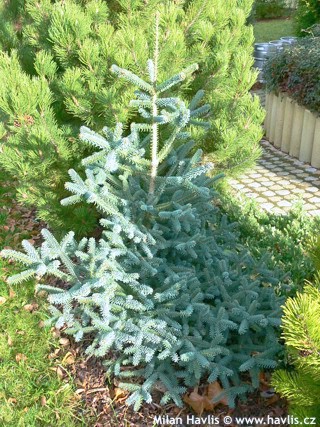
Spanish fir is one of the most popular conifers with blue needles. It is also called hedgehog fir as the needles are short and stiff, regularly composed around its branches. The shape is broadly conical, very neat and regular.
Glauca has striking silvery-blue needles which make it easy to combine w ...
3 - 5m
1,5 - 2,5m

full to partial sun
5b (down to -27°C)
for zone 5+6
for zone 7
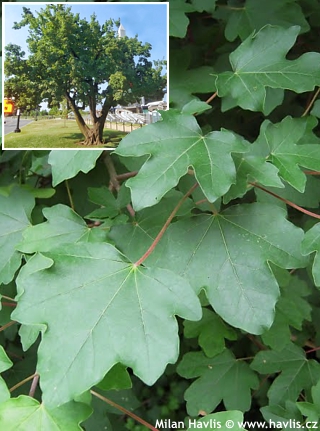
Field maple (and its varieties) is one of the most frequently planted trees in Czech urban landscapes. It is of European origin and has earned its success thanks to its high tolerance to all kinds of weather conditions as well as those brought upon by humans, and longevity. It is rated a medium-tall ...
6 - 10m
6 - 10m
full to partial sun
5 (down to -29°C)
for zone 5+6
for zone 7
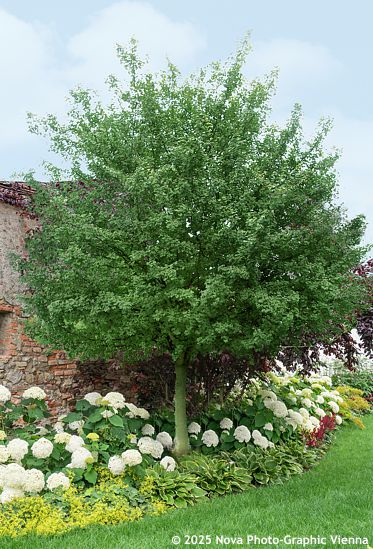
When one mentions Elsrijk, most landscape architects think of a tree that “doesn’t stand out” and that is precisely what makes it exceptional. It is a field maple variety whose canopy is regular, narrowly oval to pyramidal, and keeps its shape without pruning, giving it a tidy appearance even withou ...
6 - 10m
4 - 6m
full to partial sun
3 (down to -40°C)
for zone 5+6
for zone 7
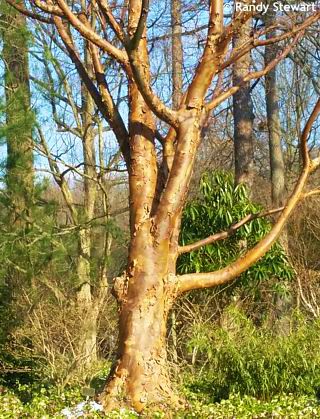
Some trees are admired for other features than just flowers or foliage. There are many of us who easily fall head over heels in love with a picturesque bark like that on paperbark maple from China. It peels off in thin, almost paper-like shavings even on young plants which makes it one of the most s ...
5 - 7m
3 - 4m
full sun
4 (down to -34°C)
for zone 5+6
for zone 7
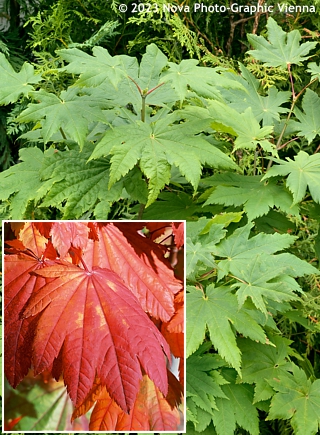
Vitifolium is a long-time favourite of a Japanese maple variety, proved to thrive in almost any garden, and characterized by large, 8-15 cm wide, palmately rounded leaves, which are divided into 9 to 12 pointed lobes with serrated margins. The number of lobes distinguishes this specie ...
3 - 5m
2 - 4m
full sun
5 (down to -29°C)
for zone 5+6
for zone 7
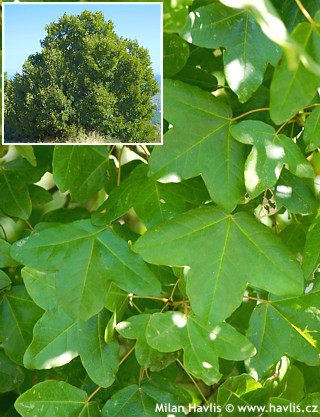
Montpellier maple is a typical Mediterranean tree commonly found in dry, coastal or mountainous landscapes of Portugal, France, and Italy. It makes small, three-lobed, leathery but deciduous leaves, which are medium green in summer, and turn yellow, amber orange or scarlet red in autumn. Its flowers ...
4 - 6m
4 - 6m
full sun
5 (down to -29°C)
for zone 5+6
for zone 7
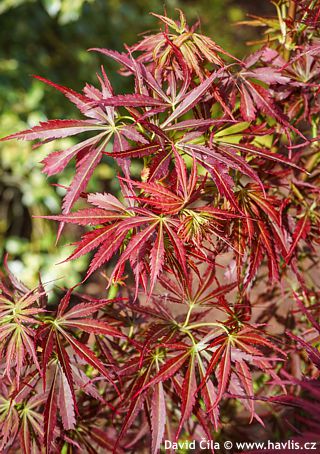
Jerre Schwartz Japanese maple was bred by one of the prominent American lovers and growers of Japanese maples, Billy Schwartz of the Green Mansions Nursery in Pennsylvania, and it was introduced to the market in 2005. It belongs to the dwarf varieties, as at the age of 15 years, it is no m ...
1,5 - 2,3m
1 - 1,5m
full to partial sun
5 (down to -29°C)
for zone 5+6
for zone 7
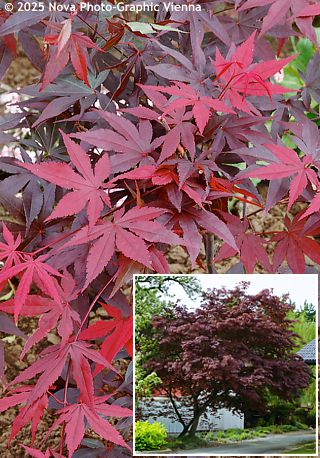
Red Emperor is another red-leaved Japanese maple, this time from the USA, where it was introduced in 1976 by Dick Wolff from Red Maple Nursery in Pennsylvania. He was an enthusiastic lover of the vibrant shades of red and maroon leaves on Japanese maples, and he was especially proud of his ...
4 - 6m
2 - 4m
full to partial sun
5 (down to -29°C)
for zone 5+6
for zone 7
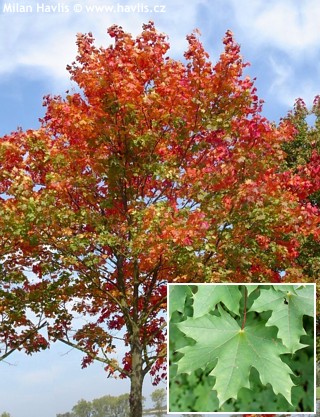
Norway maple is a native European tree commonly cultivated in countries and regions with harsh winters. It is one of the most common street and park in Czech and Slovak republics. Its tolerance against pollution, low winter temperatures, and vigorous growth made it a useful tree for almost all place ...
15 - 25m
10 - 20m
full to partial sun
3 (down to -40°C)
for zone 5+6
for zone 7
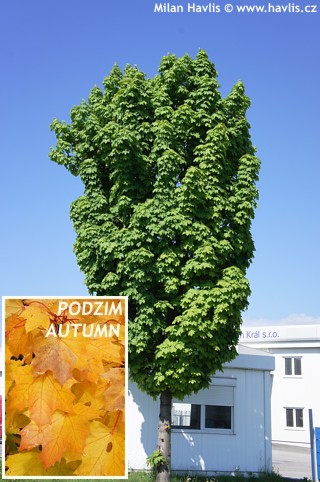
Columnare is a slender form of Norway maple with deciduous, 10-15 cm across, broadly palmate leaves that are green in summer and turn golden orange and bright yellow in autumn. The crown is very narrow – only about 3m wide in 15-20 years, and rather dense. Pruning is usually not required but c ...
15 - 18m
3 - 5m
full to partial sun
for zone 5+6
for zone 7
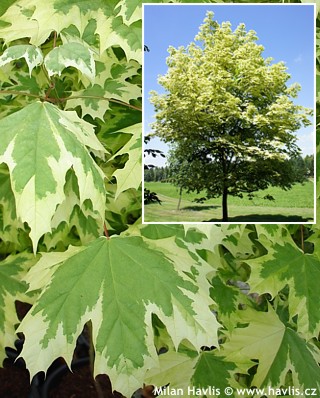
Drummondii is a variegated form of Norway maple, only some 100 years old. The decades from its birth proved its popularity which is still very high. The leaves are beautifully creamy white variegated at the margins, with bright green centres.
Apart from pruning at the end of winter, should you wis ...
5 - 8m
2 - 3m

semi-shade / partial sun
4 (down to -34°C)
for zone 5+6
for zone 7
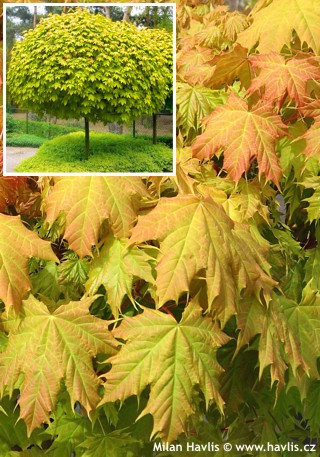
Golden Globe is a dwarf Norway maple i.e. one of those with large leaves as opposed to Japanese maples with small and dissected foliage. One of the big advantage of Norway maple is its resistance against majority of common tree diseases and pests. And it will grow almost anywhere.
Golden Globe va ...

IV - V
2 - 4m
3 - 4m
full sun
4 (down to -34°C)
for zone 5+6
for zone 7
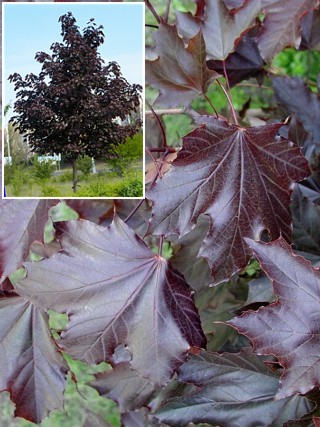
Royal Red is a Norway maple variety you cannot mistake – its leaves emerge in a rich wine-red, deepen to dark maroon in summer, and blaze amber to fiery orange in autumn. In early spring, before the canopy fully leafs out, clusters of small yellow flowers appear, creating a striking contrast against ...
10 - 15m
6 - 12m
full sun
3 (down to -40°C)
for zone 5+6
for zone 7
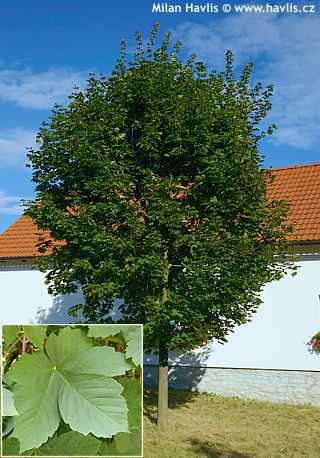
Sycamore tree is one of our native maple species and its natural habitat extends vertically from the north of Europe (with the exception of the northernmost peaty locations) to the mountainous areas of southern Europe, and horizontally from the colder parts of western Europe to the Caucasus. It is o ...
15 - 30m
10 - 20m
full to partial sun
3 (down to -40°C)
for zone 5+6
for zone 7
.jpg)
Men usually get mad when women describe colours with expressions like salmon pink, peachy red etc. Well, men, get ready for another hit below the belt: we have a tree whose leaves are SHRIMP pink. Not familiar with that colour? Go to the nearest restaurant and have a prawn-cocktail to see what the f ...
IV - V
3 - 7m
3 - 5m
full sun
4 (down to -34°C)
for zone 5+6
for zone 7
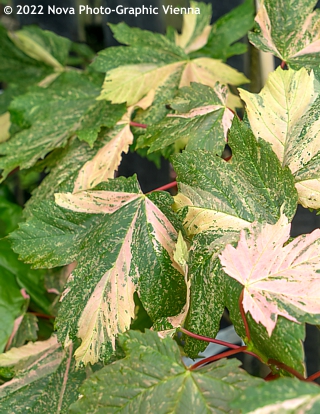
Simon-Louis Frères is a beautiful sycamore maple variety from France introduced in 1881. Its leaves emerge bright pink and as they unroll and mature, each leaf becomes uniquely marbled white and green in various portions. They are deciduous, coarsely-serrate, 5-lobed, and have red stalks. In au ...
3 - 6m
1,5 - 3m
full sun
4 (down to -34°C)
for zone 5+6
for zone 7
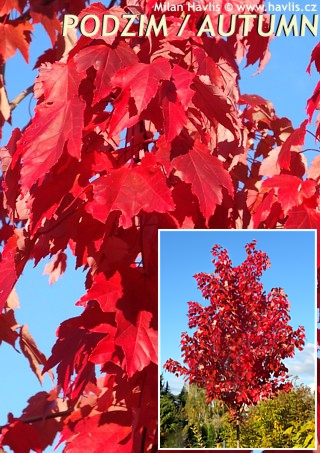
Red maple is one of the most spectacular big-sized trees suitable for large gardens, parks or city avenues. October Glory is a variety cultivated for its smaller size and fantastic autumn foliage colour. It has mid-sized leaves that are glossy and green in summer, changing to orange and red in early ...
9 - 13m
4 - 6m
full to partial sun
5 (down to -29°C)
for zone 5+6
for zone 7
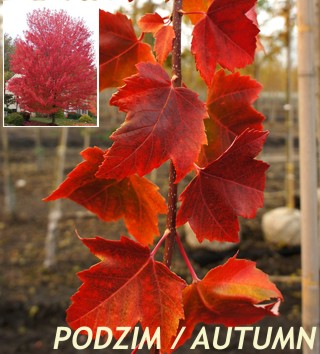
Red Sunset belongs to the top favourite scarlet maples. It makes eye-catching display of autumn colour. Its deciduous leaves are three-lobed, mid-sized, rich green in summer and bright scarlet red in autumn. It grows fast, forming a widely oval, upright canopy. The crown is dense and needs no traini ...
15 - 18m
9 - 12m
full to partial sun
3 (down to -40°C)
for zone 5+6
for zone 7
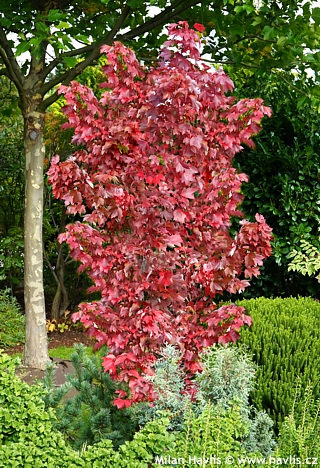
MORGAN is a beautifully coloured variety of scarlet maple, which was discovered in 2002 by Ray Tate from the Angel Creek Nursery in Bishop, Georgia, USA. It was a single mutation among a number of October Glory seedlings planted at a nearby nursery in Morgan County. Among the 58 existing varieties o ...
10 - 20m
6 - 12m
full to partial sun
3 (down to -40°C)
for zone 5+6
for zone 7
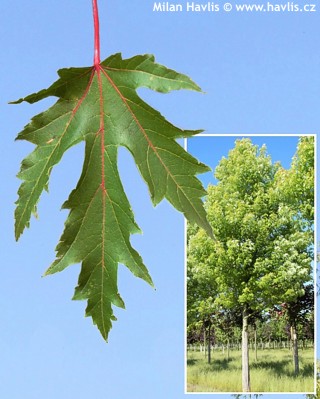
Pyramidale is a silver maple variety with attractive, deeply cut foliage with prominent red veins. The leaves are deciduous, rich green in summer, turning yellow, golden and orange-red in autumn. The tree forms a widely columnar canopy and is fast growing. Its branches may have a tendency to break, ...
12 - 18m
4 - 6m
full to partial sun
4 (down to -34°C)
for zone 5+6
for zone 7
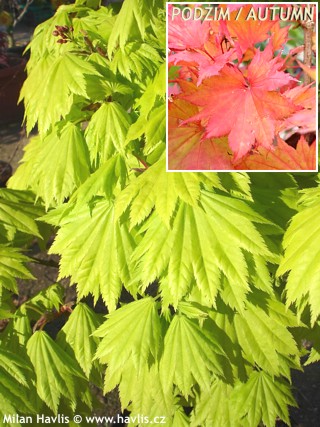
“Aureum” is variety of Shirasawa maple that differs from others by its more or less erect growth with horizontal lateral branches. The fan-shaped leaves are fresh yellow-green to golden yellow, sometimes with pinkish margins. The other difference is fruit: Acer shirasawanum holds its samaras above t ...
2 - 4m
semi-shade / partial sun
5b (down to -27°C)
for zone 5+6
for zone 7
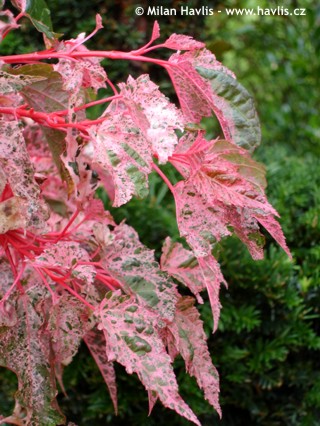
Even among a hundred trees you will notice Red Flamingo hybrid snake-bark maple first. Such a colourful small tree must have been brought directly from Mars where red is constantly in vogue. It is a stunning variety making a breathtaking display wherever you put it. Its key features are the leaves a ...
2 - 4m
1,5 - 3m
full to partial sun
6 (down to -23°C)
for zone 5+6
for zone 7
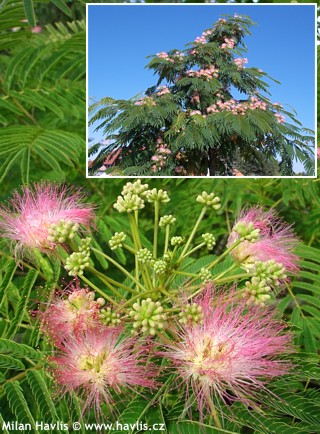
The botanical species of the Persian silk tree is a fine-leaved, lightly built tree that brings the atmosphere of warm climates into the garden. It offers several attractive features at once: conspicuous summer-long flowering, delicate foliage and an unusual crown shape on a tree of modest height. T ...
VII - IX
3 - 7m
3 - 7m
full sun
6 (down to -23°C)

for zone 5+6
for zone 7
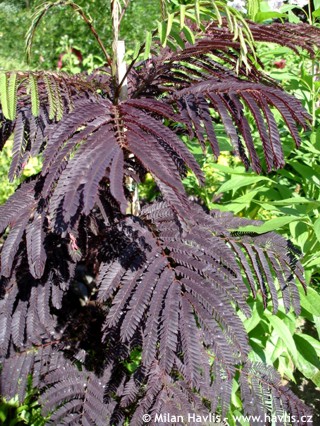
A spectacular new variety of silk tree comes from Japan and is called Summer Chocolate®. It was discovered in 1990 as a seedling in a controlled planting of Albizia julibrissin in 1990. It was patented in the USA under PP 13,822 in 2003. It is considered a rarity for lovers of exotic-looking pl ...
VII - VIII
2 - 5m
2 - 5m
full sun
6b (down to -21°C)
for zone 5+6
for zone 7
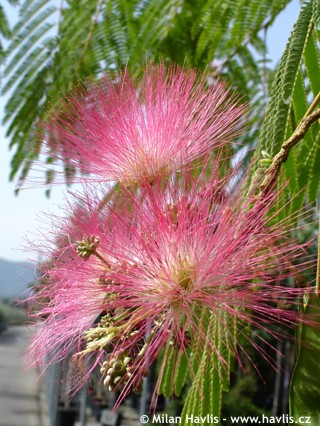
Ombrella® is one of the earliest selections of silk tree, discovered by the French grower and nurseryman André Bourquin in southern France, in the Drôme region near Valence, around 1986. He first noticed the darker, deep green leaves and in summer he was struck by the much richer, raspberry pink flo ...
VII - IX
2 - 6m
1 - 3m
full sun
6 (down to -23°C)
for zone 5+6
for zone 7
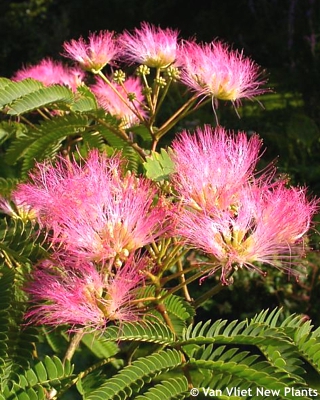
TROPICAL DREAM is a silk tree variety from Belgium where it was selected by Johan Possemiers around 1984. It was selected among many seedlings raised from seeds collected around Seoul in South Korea. Though, it took many years to reach the trade as only in 2015 it was first introduced at Plantarium ...
VII - VIII
3 - 5m
3 - 6m
full sun
6 (down to -23°C)
for zone 5+6
for zone 7
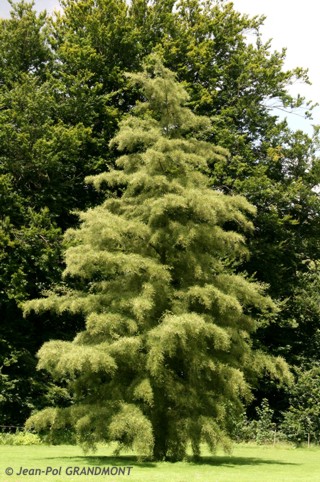
Common alder is a European native plant. There are varieties, however, that are very uncommon and I am not afraid to say exquisite. Such as this variety: Imperialis.
Imperialis alder bears mid-green, deciduous, very deeply cut, 4-8 cm long, narrow leaves that look like tiny witches’ brooms. B ...
5 - 8m
2 - 4m
full sun
3 (down to -40°C)
for zone 5+6
for zone 7
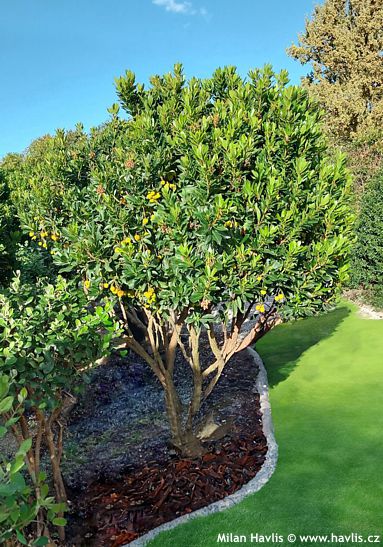
The leaves of the strawberry tree are evergreen, narrowly oval to obovate, 6–10 cm long, leathery, stiff, and with serrated margins that are more pronounced toward the tip. They are bright green and glossy and very handsome. The twigs are slightly orange, reddish when young, and as the bark ages it ...
X - V
2 - 4m
2 - 4m
full to partial sun
6b (down to -21°C)
for zone 5+6
for zone 7
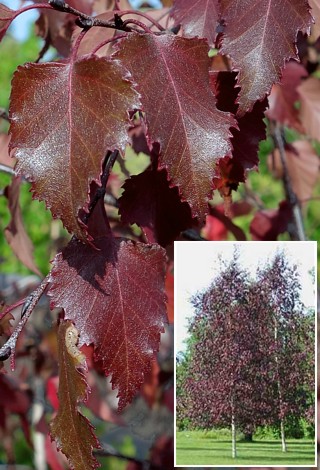
ROYAL FROST is a trade name of a very attractive birch variety. It is a hybrid between betula populifolia „Whitespire“ and betula „Crimson Frost“. Deciduous leaves are diamond-shaped, serrated at margins, rich burgundy red in summer, and crimson red, purple, orange and yellow ...
8 - 12m
3 - 5m
full sun
3 (down to -40°C)
for zone 5+6
for zone 7
.jpg)
Shiloh Splash birch looks like almost anything but a birch. It bears noticeably smaller leaves, richly variegated with creamy white along the margins. It was discovered in 1999 by brothers John and Danny Allen at their Shiloh Nursery in North Carolina, USA, as a spontaneous mutation of the species, ...
3 - 5m
2 - 3m
full sun
3 (down to -40°C)
for zone 5+6
for zone 7
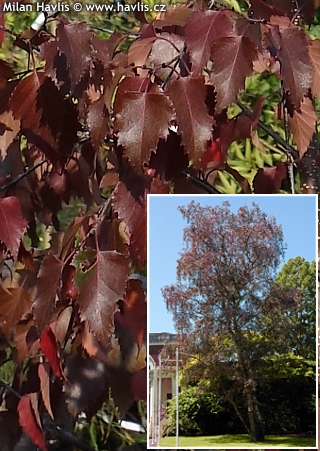
Purpurea is a red-leaved variety of European silver birch found in France in 1872. The species is named pendula which might make us believe it should be weeping but it is not. It refers to thin young branches which are so lightweight that they weep but only until the following year when they harden ...
4 - 5m
2 - 4m
full to partial sun
2 (down to -45°C)
for zone 5+6
for zone 7
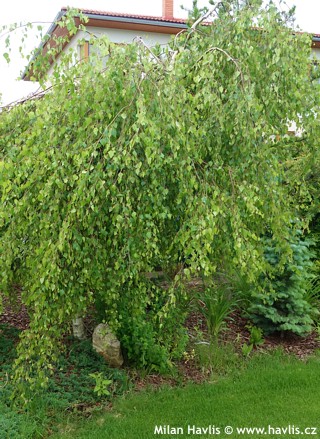
European white birch is an attractive tree which, however, in its basic form is not suitable for small-sized gardens. However, this selection is excellent for every garden or even a tiny spot at your doorway. It is a weeping white birch, called Youngii.
It is commonly 2-3m tall, and in our climat ...
2 - 3m
1 - 3m
full to partial sun
2 (down to -45°C)
for zone 5+6
for zone 7
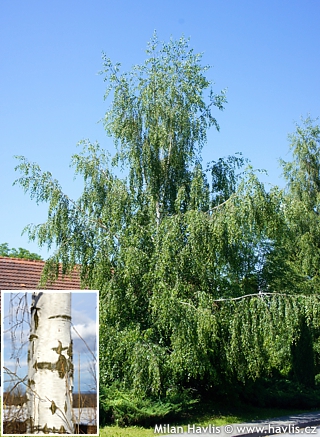
The species of European white birch is a large tree growing over 20m tall in maturity. Its most significant feature is white bark, pealing off in thin layers. Diamond-shaped leaves are mid green, partly glossy and are said to emerge only after the danger of all frosts. They turn yellow in autumn. Th ...
IV - IV
15 - 25m
5 - 10m
full sun
2 (down to -45°C)
for zone 5+6
for zone 7
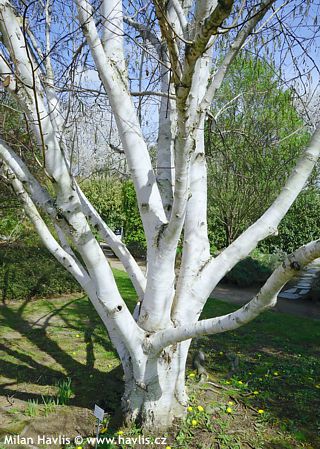
Birches are typical trees of Eastern Europe and Asia, as well as some northern regions. Himalayan birch grows slower and not as tall as white birch so you can try one in your garden, too.
Doorenboos is naturally a multi-stemmed shrubby tree with thick trunks. They are highly attractive for the cr ...
7 - 10m
4 - 6m
full to partial sun
4 (down to -34°C)
for zone 5+6
for zone 7
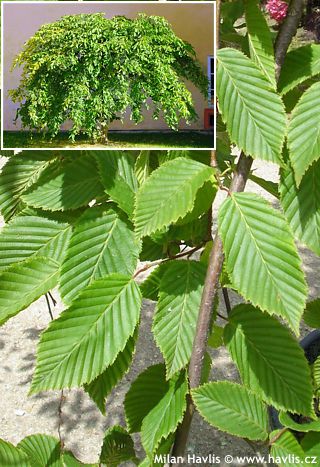
Pendula is a weeping form of hornbeam. Mature plants make gracious looking specimens with irregularly weeping or cascading branches. Their crowns are usually not too symmetrical providing a unique appearance for every plant. Naturally the crown grows slowly into a large, umbrella-shaped head with br ...
2 - 4m
2 - 6m
full sun
4 (down to -34°C)
for zone 5+6
for zone 7
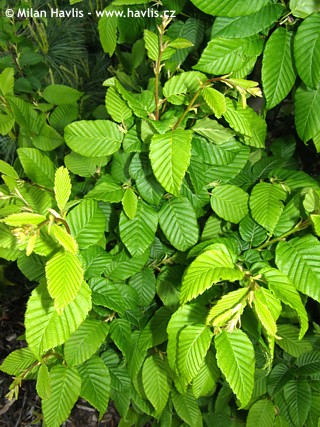
One of the original trees found in natural woodlands of Europe is hornbeam. Varieties of this deciduous tree are becoming more and more popular in gardens, too.
Fastigiata, syn. “Pyramidalis” is an elegant, slow growing hornbeam with columnar habit and branches growing strictly upright ...
8 - 12m
2 - 4m
full to partial sun
4 (down to -34°C)
for zone 5+6
for zone 7
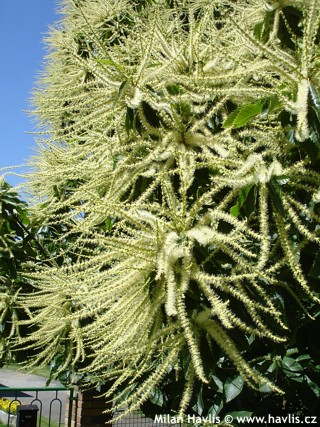
Sweet chestnut is cultivated for several beautiful features. The deciduous leaves are deep green, elliptic to oblong, up to 20 cm long, distinctly serrated and glossy, turning deep golden yellow in autumn. Flowers are creamy beige catkins that appear in July. They release a rather strong fragrance ( ...
VII - VII
5 - 20m
5 - 10m
full to partial sun
5 (down to -29°C)
for zone 5+6
for zone 7
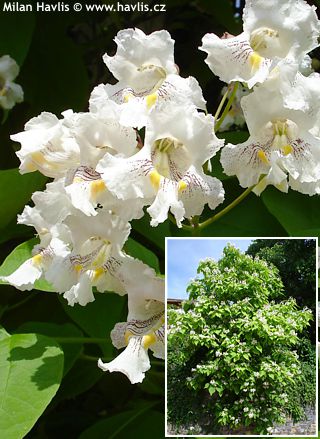
Catalpas have been grown in our country for many years. The species may be found in every larger city as an important feature of a city park. It offers outstanding points of interest such as large leaves in summer and long cigar-shaped seed pods in winter, hence its name Indian Bean Tree.
Flowers a ...
VI - VII
5 - 10m
3 - 5m
full sun
5 (down to -29°C)
for zone 5+6
for zone 7
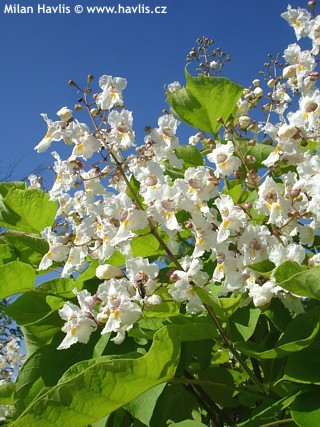
Aurea variey bears huge, tropical looking, heart shaped leaves (20-25 cm large), of bright yellow-green colour. They are slightly hairy like suede, pleasant to touch. They have interesting scent similar to tobacco leaves that allegedly repels insects.
Beginning of summer 20-30 cm tall upright pani ...
VI - VII
2 - 8m
2 - 6m
full sun
5 (down to -29°C)
for zone 5+6
for zone 7
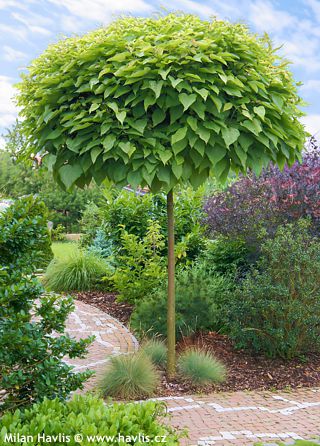
Nana variety is a lot different to the species. It can be found under its second Latin name catalpa bungei. It is a small tree that can be considered dwarf as opposed to its parent. It was bred to achieve an attractive tree with exceptional foliage but of reduced size to fit even a small garden or a ...
2 - 3,5m
2 - 4m
full sun
5 (down to -29°C)
for zone 5+6
for zone 7
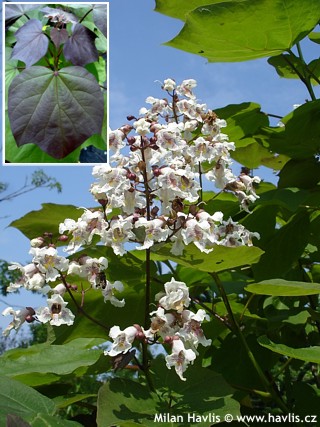
Do you like a tall tree but are afraid it would be too big for your small garden? Well, if you have enough will to prune it every one or two years you can always control its size provided it is not an ash type tree growing about 1 m every year. Thus you can enhance the look of your garden with somet ...
VI - VII
3 - 9m
3 - 6m
full sun
5 (down to -29°C)

for zone 5+6
for zone 7
.jpg)
Glauca Pendula represents a truly distinctive form of the Atlas cedar, offering an almost aristocratic character. This cultivar was discovered and selected in France around 1873, in the horticultural setting of Châtenay‑les‑Sceaux near Paris, then a centre of botanical experimentation an ...
2 - 4m
3 - 5m
full sun
5 (down to -29°C)
for zone 5+6
for zone 7
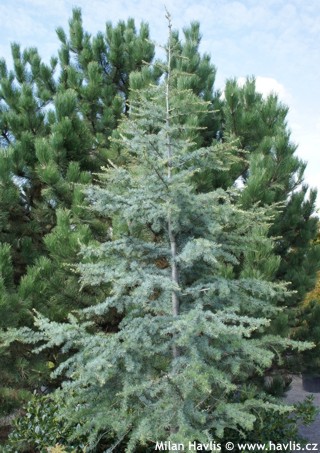
Himalájský cedr is the most graceful of all cedars. Robusta Glauca is an Italian selection with long, evergreen needles. Their colour is from blue-green to almost silvery blue while new shoots are soft green. Robusta Glauca cedar is unique for its robust structure with strong stem and habit which is ...
10 - 15m
5 - 7m
full sun
5b (down to -27°C)
for zone 5+6
for zone 7
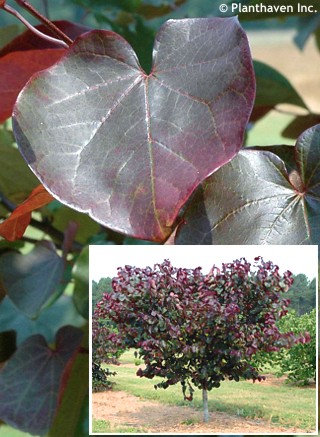
Merlot redbud, just the French grapevine variety of the same name, has leaves of the deepest wine red colour. They are deciduous, heart-shaped, and glossy. Compared to Forest Pansy they are a little smaller (abt. 10x13 cm), the plant is not as vigorous, and exhibits a more compact and denser habit. ...
IV - V
2 - 3m
2 - 2,3m
full sun
for zone 5+6
for zone 7
.jpg)
Alley Cat, a variety of Eastern redbud, is a gem, or perhaps even a work of art. Imagine a vibrant green coat worn by an eccentric painter who paints exclusively in white, while listening to the Toreador Song and Habanera from Carmen, splashing white paint all around in ecstasy, including on his own ...
IV - V
3 - 5m
3 - 5m
full to partial sun
5 (down to -29°C)
for zone 5+6
for zone 7
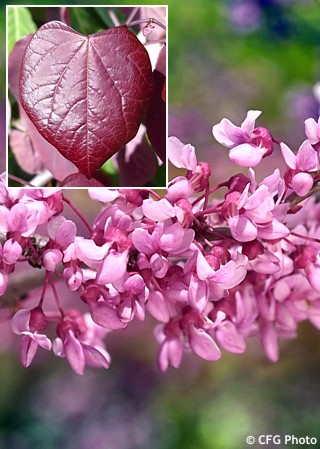
Eastern redbud is a lovely, deciduous, small tree or a large shrub where the word “love” is the key feature. Why? Because its leaves are in a perfect shape of a heart that we are used to draw as an icon. Moreover, Forest Pansy variety has burgundy red to deep burgundy brown foliage. I ...
IV - V
2 - 4m
2 - 4m
full sun
5 (down to -29°C)
for zone 5+6
for zone 7
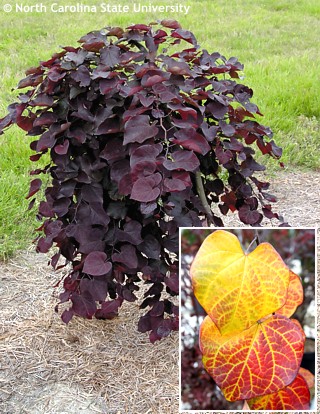
Ruby Falls is undoubtedly one of the darkest coloured little trees that will grab your attention thanks to its dark burgundy red, typically heart-shaped, approximately 8x10 cm large leaves and a weeping habit. Its crown is quite compact and the branches may soon touch the ground unless pruned on reg ...
IV - V
1 - 2m
1 - 2m
full sun
6 (down to -23°C)
for zone 5+6
for zone 7
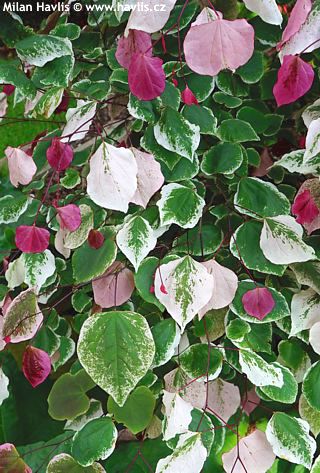
CAROLINA SWEETHEART™ redbud is like fireworks glowing with several colours at once. This darling was developed in cooperation with the Star Roses and Plants Nursery by Thomas G. Ranney from North Carolina State University in the USA, who is also known in our country thanks to his of wonderful Storm™ ...
IV - V
2 - 4m
2 - 4m
full to partial sun
5 (down to -29°C)
for zone 5+6
for zone 7
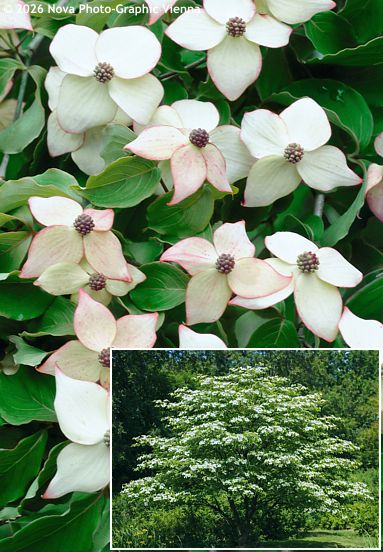
Norman Hadden is a Japanese dogwood that looks a little like a fashion trend from the 2020s – oversized. When it comes into bloom, it feels as if the tree has slipped into a set of ceremonial robes one size too large. Its bracts are unusually big, reaching 10 to 15 centimetres, placing it among the ...
V - VI
4 - 6m
3 - 5m
full to partial sun
5b (down to -27°C)
for zone 5+6
for zone 7
.jpg)
Empress of China Chinese dogwood stands out above all for its abundant and reliable flowering on a fully leaved, evergreen plant. It produces striking, snow‑white bracts approximately 6–8 cm across, appearing in great numbers and creating an exceptionally clean, almost porcelain‑like eff ...
VI - VII
3 - 5m
3 - 4m
full sun
6b (down to -21°C)
for zone 5+6
for zone 7
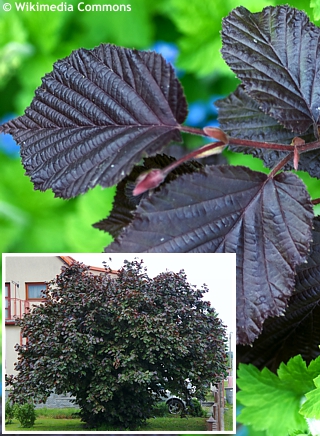
Filbert is a hazelnut species from S.E. Europe and S.W. Asia and exhibits a vigorously growing many-stemmed shrub with deciduous leaves. Purpurea is an old variety with deep maroon to near black leaves. They are 5-12 cm long, 4-10 cm wide, and during summer the colour of maturing leaves changes to d ...
II - III
3 - 6m
3 - 6m
full sun
4 (down to -34°C)
for zone 5+6
for zone 7
.jpg)
Granatnaja is a Russian cultivar of crataegosorbus - a medium-sized tree with edible fruit. Its leaves are odd-pinnate, with lanceolate to elliptical, finely serrated leaflets that resemble hawthorn more than rowan, reflecting its hybrid origin. In autumn, the foliage turns vibrant shades of red-ora ...
IV - V
3 - 6m
3 - 4m
full to partial sun
4 (down to -34°C)
for zone 5+6
for zone 7
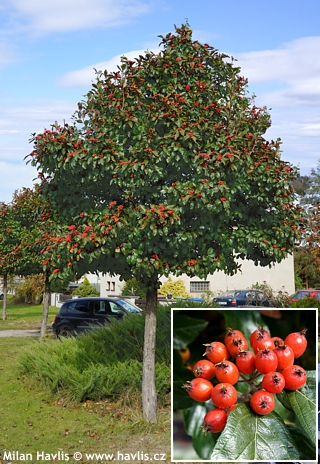
Carrièrei hawthorn differs from the original hybrid by a much more profuse blooming and therefore a magnificent display of fruit in autumn. It is a small to mid-sized tree whose leaves, though deciduous, remain on the tree much longer than on other deciduous trees. So no wonder that many garden ...
V - VI
3 - 5m
2 - 4m
full to partial sun
4 (down to -34°C)
for zone 5+6
for zone 7
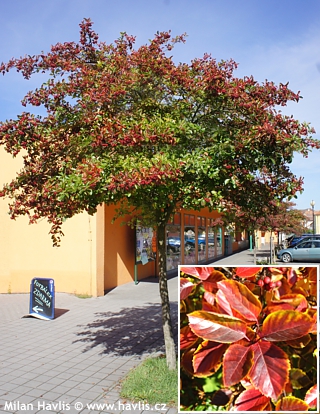
Splendens hawthorn is undoubtedly one of the most beautiful trees of northern hemisphere not only among hawthorns. It is valued for its lush, glossy foliage and a profusion of red berries. Leaves are deciduous, broadly elliptic, serrated at margins, dark green in spring and summer, and take on vibra ...
V - VI
4 - 7m
3 - 4m
full to partial sun
4 (down to -34°C)
for zone 5+6
for zone 7
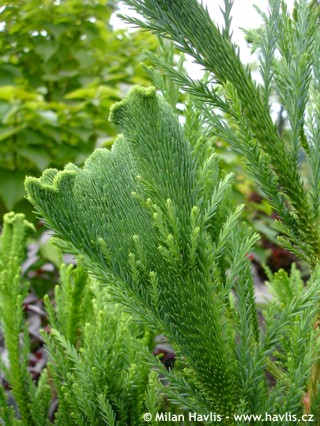
The Japanese cryptomeria Cristeria is a weird looking variety with congested new growths that are flattened into “cockscombs” and divide into individual branches in summer. Their colour is rich, warm green that turns bronzy-brown in winter which is its protective colour. It grows moderately into a n ...
3 - 6m
1 - 2,5m
full to partial sun
5b (down to -27°C)
for zone 5+6
for zone 7
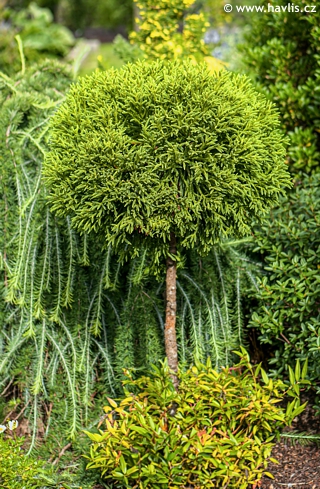
Following the success Little Champion variety, Little Diamond is another dwarf Japanese cedar variety with a spherical habit. It originated in the Netherlands in 1990, and its beauty inspired the growers to train it into a gorgeous little tree with a single trunk. Since Little Diamond grows slowly, ...
1 - 2m
0,5 - 1m
full to partial sun
5 (down to -29°C)
for zone 5+6
for zone 7
.jpg)
Fastigiata Arizona cypress is a favourite even in gardens where conifers aren’t typically welcome, thanks to its distinctive character, texture, and color. It grows upright and compact, with branches forming a sharper angle with the trunk, emphasizing its columnar habit. The foliage is soft to the t ...
5 - 10m
2 - 5m
full sun
5 (down to -29°C)
for zone 5+6
for zone 7
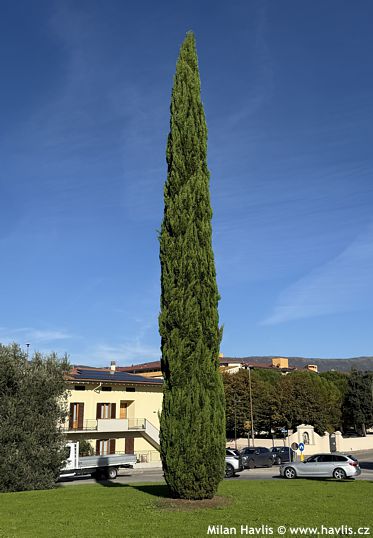
Now for the cultivar Totem. The name itself suggests a plant with the character of a sculpture – and that is exactly what it is. Totem is an extremely narrow, columnar cultivar of Tuscan cypress, like a green sword thrust into the ground. It grows slowly yet steadily, holding its shape like a soldie ...
4 - 8m
0,5 - 1m
full sun
7 (down to -18°C)

for zone 5+6
for zone 7
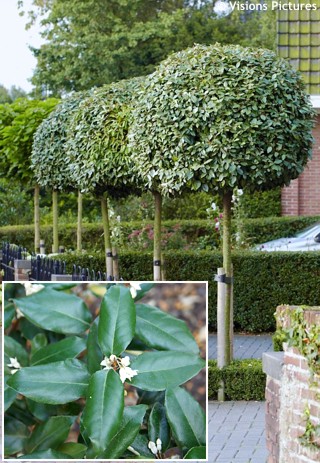
This evergreen silverthorn is a hybrid of e.macrophylla and e.pungens. Its leathery leaves emerge beige-grey and mature to glossy dark green with lots of grey dots making it look like stardusted. Thanks to the foliage it is sometimes called Russian olive which is not correct as this name is already ...
VIII - X
2 - 4m
2 - 3m
full to partial sun
6 (down to -23°C)
for zone 5+6
for zone 7
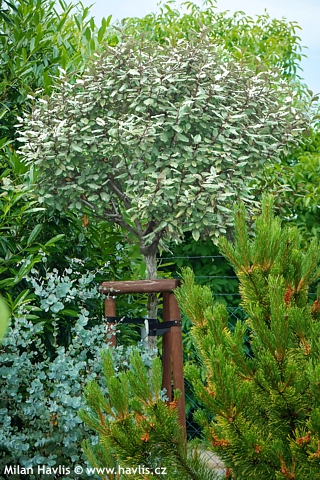
Compacta is a recent selection of Ebbing's silverthorn, very probably of Italian origin (not confirmed). Unlike its mother plant - the species of Ebbing's silverthorn - it makes a compact and well-behaved shrub without overgrown twigs in one season. In fact, this sport makes quite a hand ...
IX - X
2 - 5m
1,5 - 2m
full to partial sun
6 (down to -23°C)
for zone 5+6
for zone 7
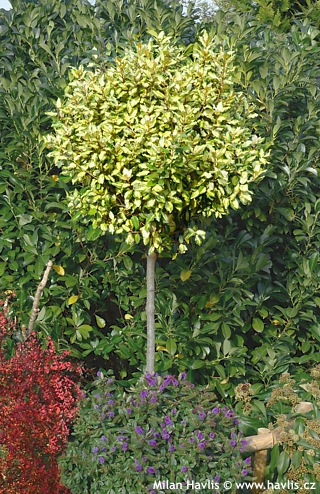
MARYLINE® is a trade name for a striking selection of evergreen silverthorn, found by Albert Brenelière in France. It is a very bushy, upright growing, evergreen shrub with irregularly variegated leaves. They are leathery, oval to ovate, partially undulated, and glossy. The centres ar ...
IX - X
2 - 4m
1 - 2m
full to partial sun
6 (down to -23°C)
for zone 5+6
for zone 7
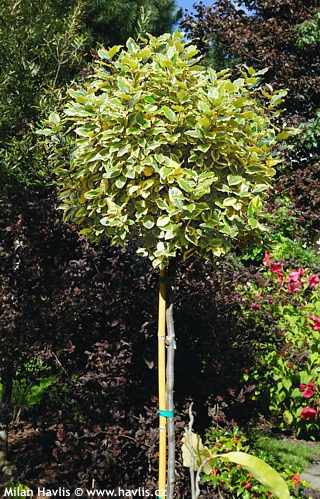
Viveleg silverthorn is a bushy, upright growing, evergreen shrub or small tree with irregularly variegated leaves. They are leathery, oval to ovate, partially undulated, and glossy. The centres are dark green, the margins are rich yellow, and the borderline between these two colours is lig ...
IX - X
2 - 4m
1 - 2m
full to partial sun
6 (down to -23°C)
for zone 5+6
for zone 7
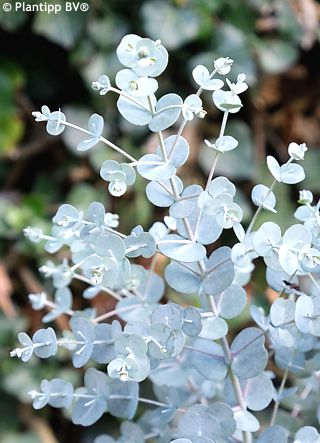
In 2006, a miracle occurred that at first looked rather ominous – in a French nursery, all seedlings of this botanical species froze except for a single plant, even though everyone was convinced of its suitability for the French climate. One eucalyptus, one pot, survived an unusually severe winter t ...
5 - 10m
2 - 4m
full to partial sun
6 (down to -23°C)
for zone 5+6
for zone 7
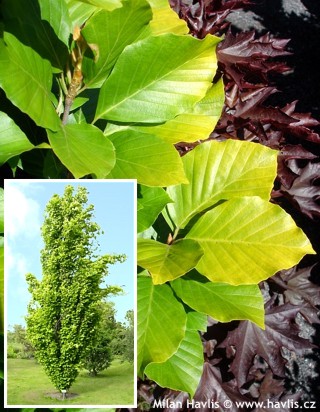
Dawyckii varieties of common beech are very popular for their habit and leaf colours. Dawyck Gold has upright, columnar habit, its initial slow growth changes after a few years to medium-fast, never really fast. Young leaves are bright yellowish green, turning to glowing grass gr ...
10 - 15m
1 - 3m
full to partial sun
4 (down to -34°C)
for zone 5+6
for zone 7
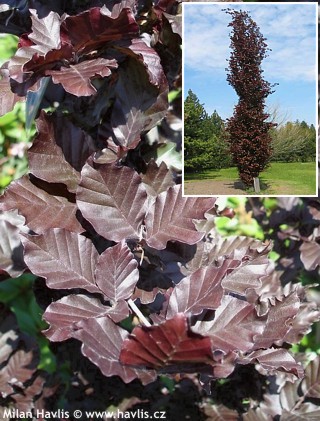
Dawyckii varieties of common beech are very popular for their habit and leaf colours. Dawyck Purple has upright, columnar habit, its initial slow growth changes after a few years to medium-fast, never really fast. Spring leaves are striking purple, colour slightly deepens through ...
10 - 15m
1 - 3m
full sun
4 (down to -34°C)
for zone 5+6
for zone 7
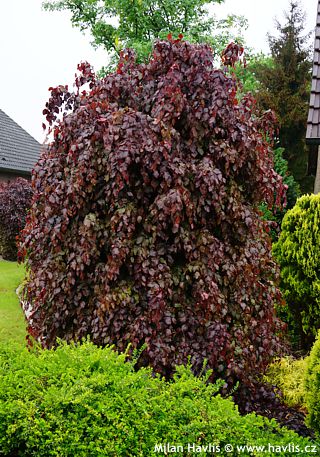
Purpurea Pendula is a perfect example of a beautiful garden-origin eech. It is a slow growing small tree with a mushroom head of pendent branches, usually grafted from 1.5 to 2m tall. The deciduous leaves are rich purple-black (if grown in full sun) that create a fascinating waterfall of s ...
1,5 - 2,5m
1,5 - 2m
full sun
4 (down to -34°C)
for zone 5+6
for zone 7
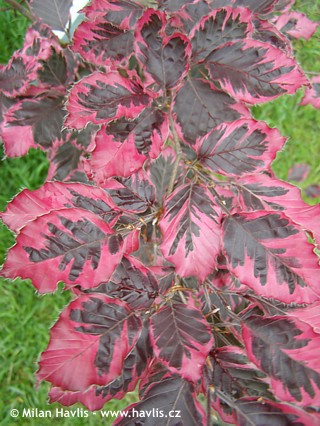
Beech is a reliable and hardy tree of our climate. Variety Purpurea Tricolor has deep burgundy red leaves with pink margins that, upon conditions, can reach the centre of the leaf.
Natural habit is quite airy and thin when young. When mature it reaches well over 10 meters but this ...
3 - 15m
3 - 10m
full sun
4 (down to -34°C)
for zone 5+6
for zone 7
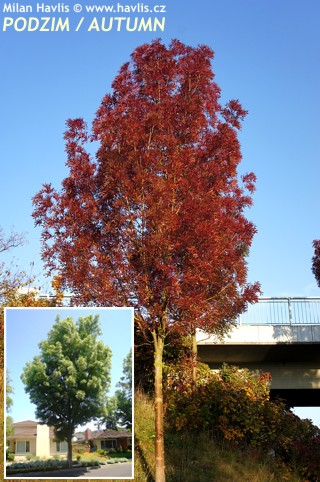
Raywood is a very elegant variety of a deciduous tree called Claret ash. Its leaves are pinnate, up to 25 cm long and are composed of narrow, elliptic and very glossy individual leaflets that are deep green in summer and turn breathtaking shades of brilliant carmine red and deep burgundy red in the ...
10 - 15m
2 - 5m
full sun
5 (down to -29°C)
for zone 5+6
for zone 7
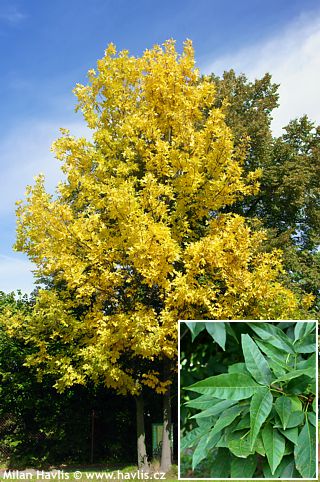
Summit is a green ash variety sought-after for mostly two features: it is a male tree – not producing seeds and unwanted seedlings, and its vibrant autumn colour. The pinnate leaves are deciduous, composed of 5-9 broadly elliptic to narrowly ovate, deep green, not very glossy leaflets which tu ...
12 - 15m
7 - 12m
full sun
4 (down to -34°C)
for zone 5+6
for zone 7
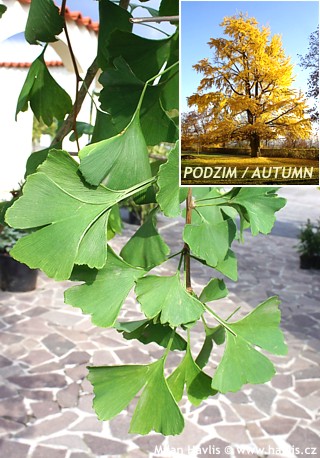
Maidenhair tree is probably one of the oldest species on Earth. It was here some 180 million years ago … obviously it was the time when the Dead Sea was still ill. Its extreme tolerance of various conditions made it survive to our time. One tree can live as long as 2000 years.
It belongs to c ...
15 - 30m
full sun
3 (down to -40°C)
for zone 5+6
for zone 7
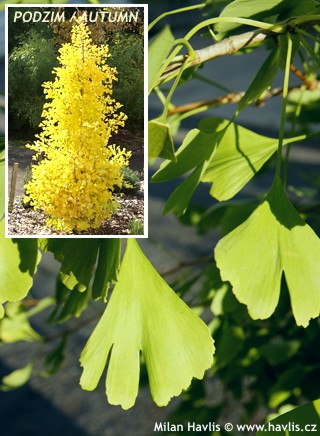
Fastigiata Blagon is a French variety of maidenhair tree with narrowly conical or almost columnar growth. It bears deciduous, 4-7 cm wide, fan-shaped, divided, mid green leaves (botanically classified as needles), that change to fantastic shade of bright golden yellow in autumn. It is often pruned o ...
8 - 12m
2 - 3m
full sun
3 (down to -40°C)
for zone 5+6
for zone 7
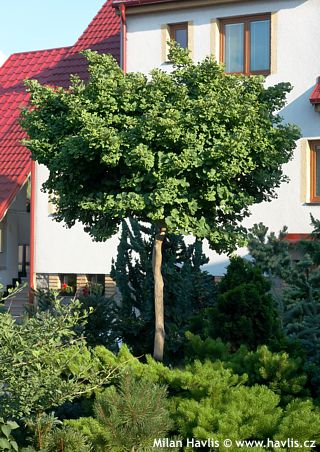
Mariken is a new variety from 1999. It is a dwarf form with short branches, densely covered with foliage. It is usually available as a small shrub suitable for rockeries, or a half-standard for gardens with less space, or a standard tree. Thanks to its dense growth and attractive foliage mainly tree ...
0,5 - 2,5m
0,5 - 1,3m
full sun
3 (down to -40°C)
for zone 5+6
for zone 7
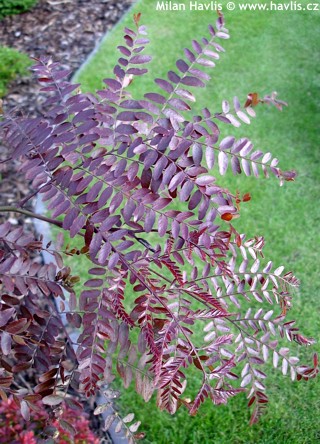
Some of you, gleditsia lovers, may have read about this quite rare and unique version of honey locust. Its charm consists in the unusual colour of leaves. They are bright purple as they emerge, turning chocolate brown later and light bronze in summer. They are pinnate or bi-pinnate and look like fer ...
3 - 8m
2 - 5m
full sun
5 (down to -29°C)
for zone 5+6
for zone 7
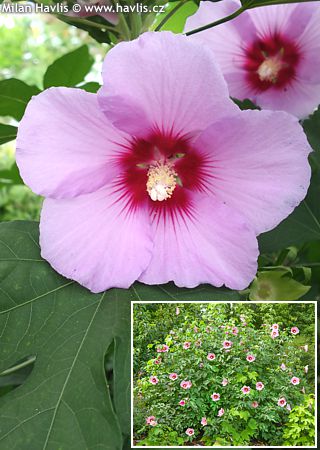
Resi is a Dutch variety of hybrid hibiscus (h. syriacus x h. paramutabilis) bred by Piere Theunissen and introduced by the nursery Piet Vergeldt Boomkwekerijen in 2008. In the US it is sold under the brand name FULL BLAST™. European Patent No. 33825 was granted in 2013 (expired in 2021). It be ...
VII - IX
3 - 5m
2 - 3m
full sun
5 (down to -29°C)
for zone 5+6
for zone 7
.jpg)
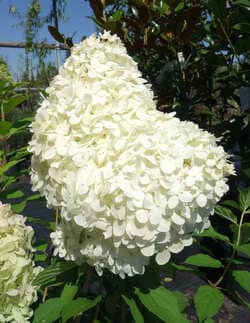
Kyushu is a time‑tested cultivar of panicle hydrangea, rightly regarded today as a classic. It is an upright, medium‑ to strongly‑growing shrub with a naturally open habit; in maturity it commonly reaches 1.5–2.5 m in height and about 1–1.5 m in width. It produces tall, conical inf ...
VII - IX
1,5 - 2,5m
1,5 - 2,5m
full to partial sun
4 (down to -34°C)
for zone 5+6
for zone 7
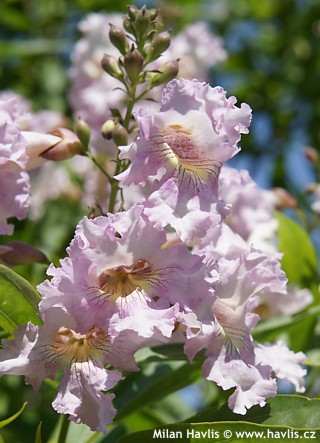
The cultivar SUMMER BELLS of chitalpa boasts abundant and prolonged flowering throughout summer, from June to August. The inflorescences are upright clusters shaped like slender pyramids, reaching 10 to 20 cm in height, composed of exquisite orchid‑like blossoms that combine light pink to lila ...
VI - VIII
4 - 6m
3 - 4m
full sun
5 (down to -29°C)
for zone 5+6
for zone 7
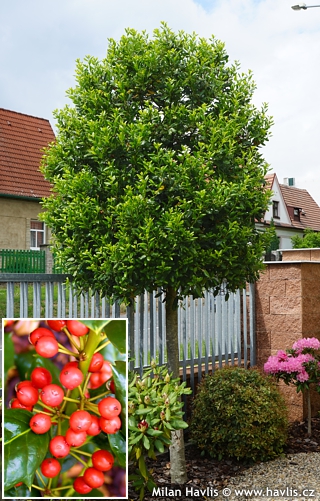
Nellie R. Stevens holly is one of the most cultivate hardy hollies worldwide simply because it is beautiful and versatile. It is a cross between English holly (ilex aquifolium) and Chinese holly (ilex cornuta). It grows relatively fast and can be trained into a gorgeous looking evergreen tree.
The ...
2 - 5m
1,5 - 2,5m
full to partial sun
6 (down to -23°C)
for zone 5+6
for zone 7
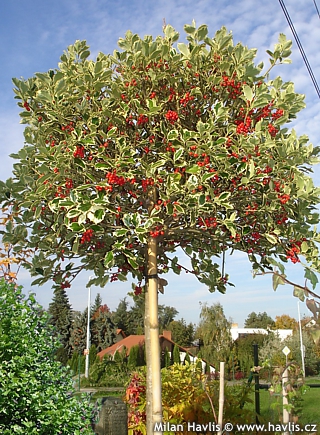
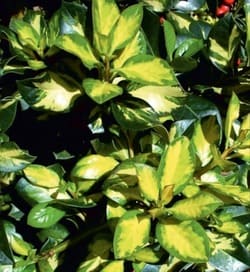
Argentea Marginata is an eye-catching cultivar of variegated English holly. Its sharply serrated, evergreen leaves are almost identical to those of the species but moreover are decorated with a wide brim of creamy white colour at margins. Young leaves show prominent purple red to dark pink hues as t ...
3 - 6m
2 - 3m
full to partial sun
5b (down to -27°C)
for zone 5+6
for zone 7
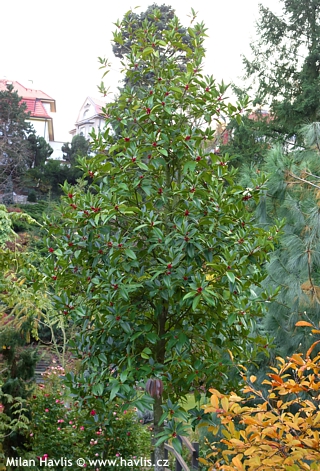
Chestnut Leaf is probably the most common variety when you happen to come across a Koehne holly in Europe early 21st century. I am giving this date deliberately in case you are reading this article in 2050 or later, laughing how come that we used to be so deprived having just one Koehne holly then. ...
2 - 6m
1,5 - 3m
full to partial sun
6 (down to -23°C)
for zone 5+6
for zone 7
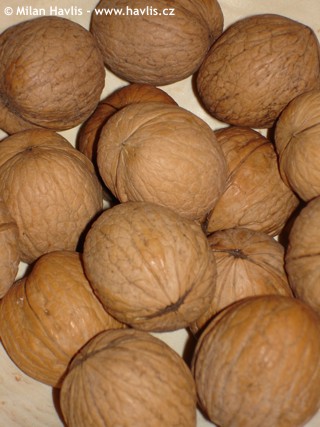
Common walnut is a native tree of the Old World. Its natural habitat lies between South-eastern Europe and Himalayas. Irrespective of its large size it is still one of the most sought-after fruit trees of our country.
Walnut has attractive, pinnate foliage that have a unique scent. Flowers are cat ...
IV - V
5 - 20m
5 - 20m
full sun
5 (down to -29°C)
for zone 5+6
for zone 7
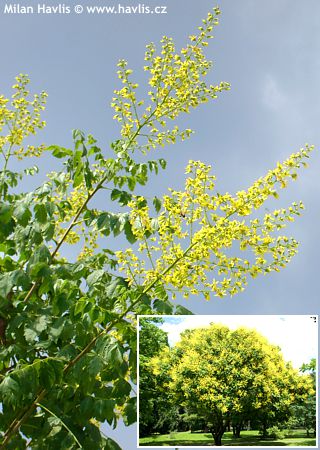
Not many trees bloom in mid or even late summer when all the spring flowering beauties have only leaves. Golden-rain tree is one of the few.
In late July/early August upto 30 cm long panicles of small, bright yellow flowers appear on this medium sized tree. The flowers can remain on the tree for a ...
VII - VIII
5 - 15m
5 - 10m
full sun
5 (down to -29°C)
for zone 5+6
for zone 7
.jpg)
At first glance, Adam's laburnum looks like an ordinary laburnum – an upright shrub or small tree with an open crown and smooth grey-green bark. But a closer look at the branches reveals that something is amiss. Some shoots bear the typical trifoliate leaves of laburnum, others have the smaller, ov ...
V - VI
3 - 5m
2 - 3m
full sun
5 (down to -29°C)
for zone 5+6
for zone 7
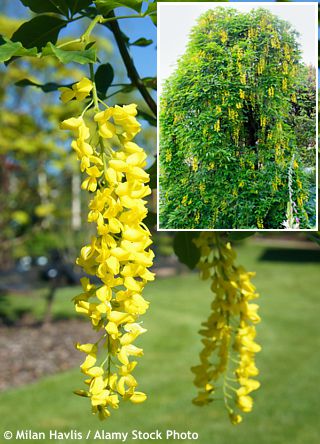
Golden rain comes from mountainous parts of southern Europe. The natural habitat of this one is even closer to our border: central- and south-European Alps.
The flowers are slender racemes, composed of pea-like, bright yellow flowers with a deep red blotch in the centre. They are 15-40 cm long and ...
V - VI
1 - 3m
1 - 2m
full sun
5 (down to -29°C)
for zone 5+6
for zone 7
.jpg)
The most striking feature of the French crepe myrtle cultivar FUCHSIA D’ÉTÉ is its exceptionally vivid fuchsia‑pink colour, which shines across the garden in summer and brings a sense of joy and freshness. The flower panicles are large, long and dense, usually around twenty centimetres, and th ...
VII - VIII
2 - 4m
2 - 3m
full sun
7 (down to -18°C)
for zone 5+6
for zone 7
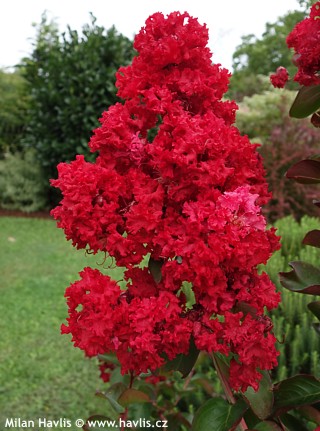
DYNAMITE® is among the reddest crape myrtle cultivars currently available and also one of the hardiest, able to withstand winters of zone 6 (down to about –23 °C). Its name was chosen aptly and with humour, reflecting the explosive red of its flowers. It belongs to the Play It Again® series, which i ...
VIII - IX
1,5 - 3m
1 - 1,5m
full sun
6 (down to -23°C)
for zone 5+6
for zone 7
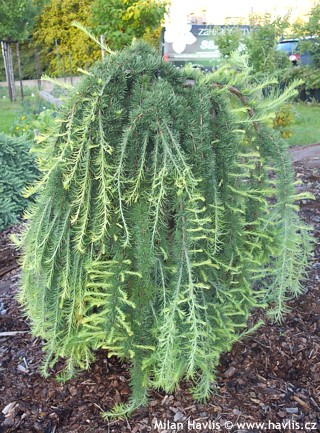
Weeping form of deciduous larch Stiff Weeper is one of the most sought-after conifers in our country. It has strictly pendent branches with no horizontal growth. The crown looks like a head of a long-haired girl. The needles are about 4 cm long, bright green with a silvery blue shade, turning yellow ...
0,5 - 2m
0,5 - 1m
full sun
4 (down to -34°C)
for zone 5+6
for zone 7
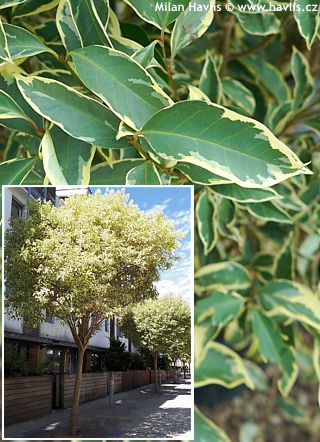
Excelsum Superbum is a highly attractive, variegated form of glossy privet. It makes large, up to 15 cm long and 6 cm wide, ovate to oval, pale dark green leaves abundantly variegated butter yellow, often extended to the midribs. Directly contradicting its botanical name they are NOT glossy, they ar ...
IX - X
2 - 5m
1 - 3m
full sun
7 (down to -18°C)
for zone 5+6
for zone 7
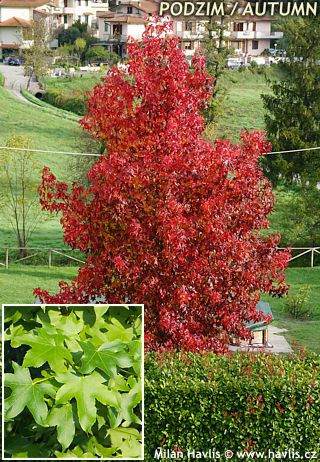
This is the species of sweetgum. Its maple-like, star-shaped leaves are medium-deeply or deeply cut and have fresh green colour. As it is reproduced mainly by seeds the plants often vary even if grown from seeds of the same parent. This results in plants having slightly different characteristics suc ...
8 - 15m
3 - 6m
full to partial sun
5 (down to -29°C)
for zone 5+6
for zone 7
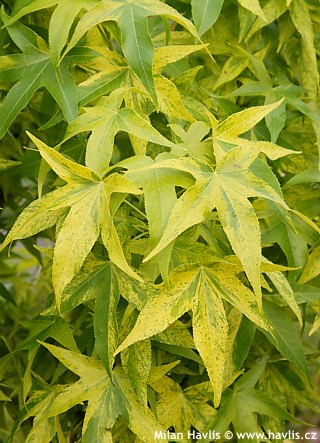
The sweetgum Aurea immediately attracts attention with its exceptional foliage – irregularly mottled in golden yellow against a background of medium green, this colouration reliably lasts from spring until autumn, when the yellow areas shift towards light pink and rose tones, while the originally da ...
6 - 8m
4 - 8m
full sun
5 (down to -29°C)
for zone 5+6
for zone 7
.jpg)
Gum Ball is a dwarf cultivar of sweetgum that has gained popularity for its compact size and attractive appearance without the need for pruning. Its leaves are deeply lobed, with five to seven lobes and prominent veining, turning into a spectacular mix of fiery red, orange, purple, and deep burgundy ...
1,5 - 3,5m
1,5 - 2m
full sun
5 (down to -29°C)
for zone 5+6
for zone 7
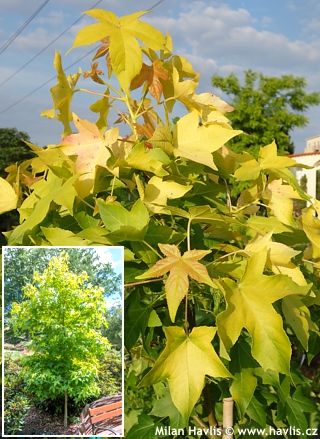
Naree sweet gum was found as a spontaneous mutation of the species in Australia and did not reach Europe until after 2000 – it was first introduced by the Junker’s Nursery from Milverton, United Kingdom, in 2002. It belongs among a few unique varieties with yellow leaves. These are deciduous, broadl ...
6 - 10m
3 - 6m
full sun
5 (down to -29°C)
for zone 5+6
for zone 7
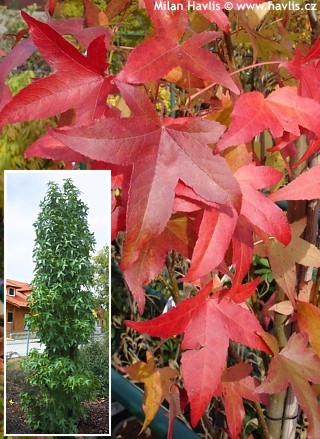
Slender Silhouette is a beautiful sweetgum which could be your perfect choice for a small garden or a miniature front yard. A 5m tall plant seldom exceeds 1m wide. It is a slow growing version of sweetgum with strictly upright and columnar habit. The leaves are quite large, conspicuously lobed with ...
5 - 7m
1 - 1,5m
full sun
5b (down to -27°C)
for zone 5+6
for zone 7
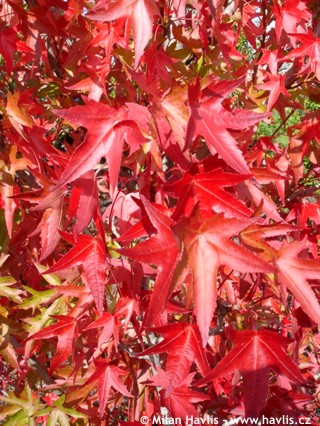
Stared is a European selection of sweetgum that appeared at the turn of the 20th and 21st centuries. Its name is a contraction of star and red, and in the literature it is sometimes also listed under the synonym ‘Red Star’. The leaves are deeply incised into 5-7 narrow lobes and hang from the branch ...
5 - 7m
2 - 3m
full sun
5b (down to -27°C)
for zone 5+6
for zone 7
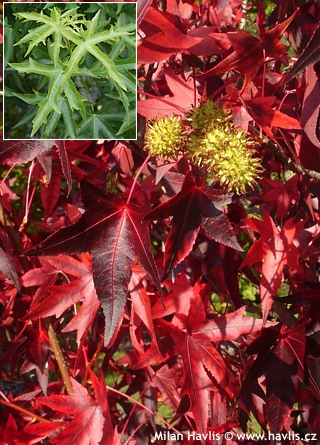
Stella is an attractive sweet gum selection, similar to Stared variety, yet a little broader in habit. Its leaves are beautiful, 15-20 cm large, deciduous, star-shaped, deeply lobed, green in summer and rich scarlet red and deep burgundy red in autumn for almost 2 months. An extra feature is the lea ...
6 - 12m
2 - 4m
full sun
5 (down to -29°C)
for zone 5+6
for zone 7
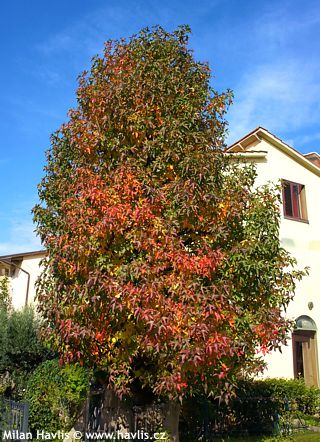
Worplesdon is a popular sweetgum variety among both growers as well as customers. It is a reliable and hardy selection that grows well without any additional maintenance. It has deep green, deciduous leaves that are star-shaped, deeply lobed, often with a pair of small teeth beneath each tip. The mo ...
6 - 12m
3 - 6m
full sun
5 (down to -29°C)
for zone 5+6
for zone 7
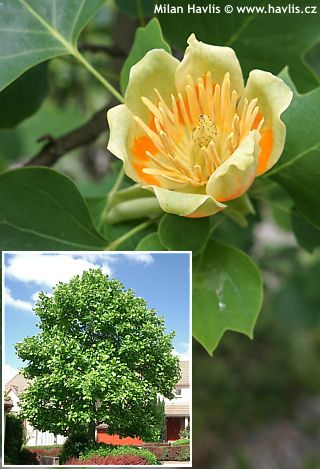
Belonging to the same family as magnolia, common name tulip tree may be misleading since this name is often used for magnolias with saucer-shaped flowers. Hence gardeners rather use its other name yellow poplar. This is the tree with huge lyra-like, saddle-shaped leaves which do appear to miss a lob ...
VI - VII
25 - 30m
10 - 15m
full sun
5 (down to -29°C)
for zone 5+6
for zone 7
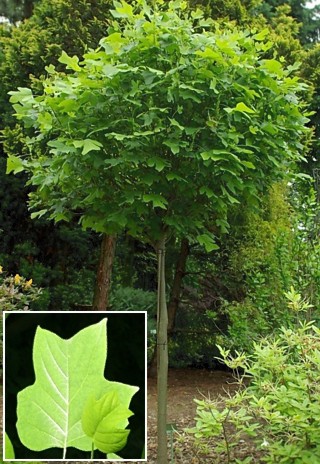
Edward Gursztyn is a compact or almost dwarf variety of yellow poplar. It makes a uniform, rounded canopy and very hadsome, typical saddle-shaped leaves. They are deciduous, green in summer and yellow in autumn. No flowers have been observed so far. It needs no pruning for a nice shape but ou can tr ...
2 - 4m
1,5 - 2m
full sun
5b (down to -27°C)
for zone 5+6
for zone 7
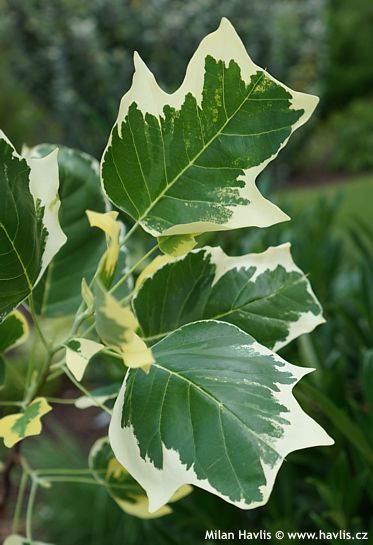
Liriodendron Snowbird® is a remarkable cultivar of this attractive tree, with origins linked to New Zealand. According to some sources, it was bred by James Palmer Rumbal, a long-time researcher at the renowned Duncan & Davies nursery, who specialized in selecting and propagating ornamental wood ...
VI
10 - 20m
6 - 12m
full sun
5 (down to -29°C)
for zone 5+6
for zone 7
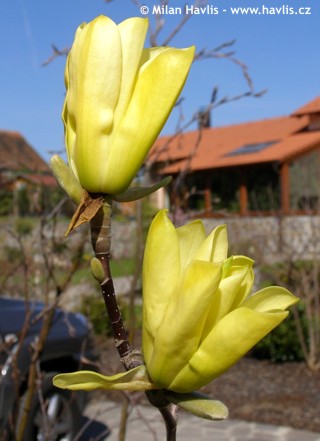
Another unique jewel among magnolias is this yellow flowering hybrid called Butterflies. It is a cross between M. acuminata var. acuminata ‘Fertile Myrtle’ and M. denudata ‘Sawada’s Cream’. It was raised by Phil Savage in Michigan, USA, introduced in 1989 and patented in 1991. Both their colour and ...
IV - V
3 - 5m
3 - 5m
full to partial sun
5 (down to -29°C)
for zone 5+6
for zone 7
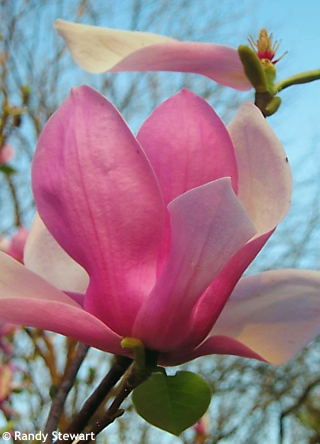
Galaxy magnolia was raised at U.S. National Arboretum in 1963, as a cross between purple-pink m. liliiflora ‚Nigra‘ and large-flowered m. sprengeri ‘Diva’. The result is a strong growing shrub or rather single-stemmed mid-sized tree with a thick leader, forming dense, oval to pyramidal shaped canopy ...
IV - VI
3 - 6m
2 - 4m
full sun
4 (down to -34°C)
for zone 5+6
for zone 7
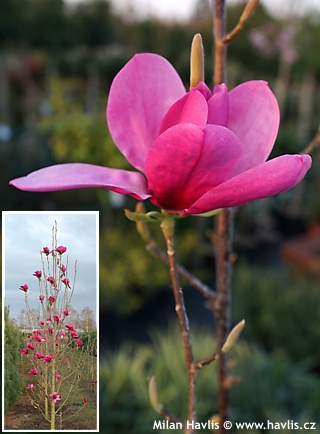
Livingstone magnolia is a cross between m. sprengeri ‘Diva’ and m. ‘Vulcan’. Sprenger’s magnolia is often used in hybridization for flower size and fragrance, and Vulcan was surely chosen for the colour. The result is splendid. A large flower of a vibrant purple red colour and pleasant scent. Bloomi ...
IV - V
4 - 6m
1,5 - 3m
full to partial sun
5b (down to -27°C)
for zone 5+6
for zone 7
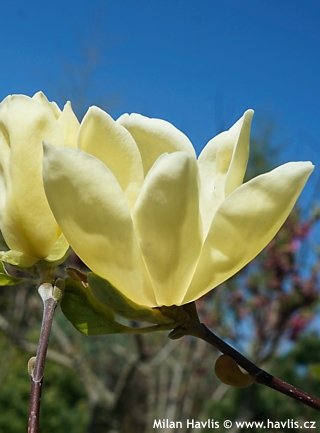
Maxine Merrill is a magnolia cross between m.acuminata ssp. subcordata ‚Miss Honeybee‘ and m. x loebneri ‚Merrill‘. It was bred by one of the greatest magnolia breeders Phil Savage from the USA. It produces medium-sized, cup-shaped flowers with 6 sturdy petals of soft banana yellow colour. They open ...
IV - V
4 - 5m
2 - 3m
full to partial sun
5 (down to -29°C)
for zone 5+6
for zone 7
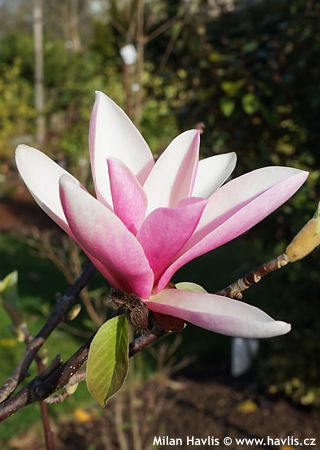
Pink Charm is a pink-flowered and highly attractive magnolia variety that, along with Rose Marie, emerged from the crossing of Pink Surprise and Daybreak. It was bred and introduced by Dennis Ledvina in 2013. The flowers are bright pink on the outside, pale pink to almost white on the inside, and ha ...
IV - V
3 - 6m
2 - 3m
full to partial sun
5 (down to -29°C)
for zone 5+6
for zone 7
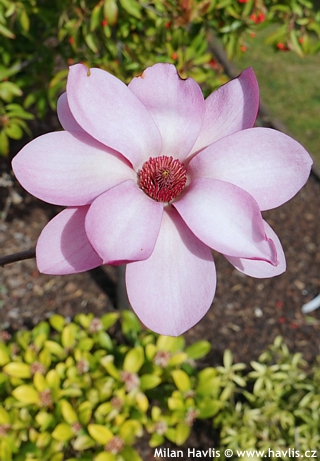
Purple Star magnolia is a modern variety from 2015 from the renowned Belgian breeder Phillippe de Spoleberch, whose perhaps the greatest success, with which he gained fame around the world, is Daphne magnolia, so far considered the best deep yellow available. Purple Star is a cross between m. cylind ...
IV - V
3 - 6m
2 - 3m
full to partial sun
6 (down to -23°C)
for zone 5+6
for zone 7
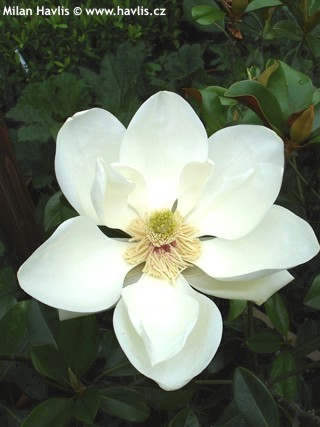
Goliath is bushier than the species. As you can tell by its name, something is going to be extraordinary here. True: the flowers are extremely large, often up to 30 cm wide, strongly fragrant and appear on the plant usually from June, often from late May if the end of spring is hot, and continue blo ...
V - IX
3 - 8m
3 - 4m
full sun
6 (down to -23°C)
for zone 5+6
for zone 7
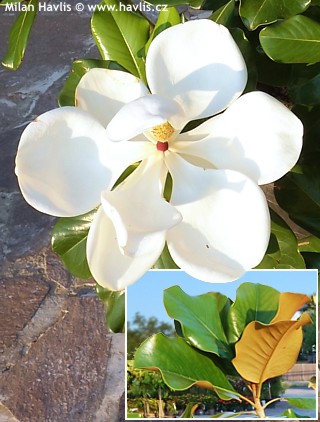
Southern magnolia Mont Blanc® produces the largest flowers ever measured: 25-40 cm across on older plants. They are creamy white and highly fragrant. Their scent attracts not only bees and other insects, but also most perfume producers and all passersby, especially in late afternoon and early evenin ...
VI - IX
4 - 8m
3 - 5m
full sun
6 (down to -23°C)
for zone 5+6
for zone 7
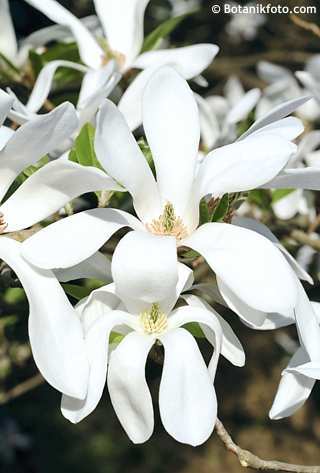
Japanese magnolia belongs among the tallest, fastest growing, and the hardiest magnolias of the planet. It is native to Japan (and Korea) where it was named after Japanese word kobushi which means fist and relates to the shape of opening flower buds. Flowers are about 10 cm across, goblet- to saucer ...
IV
6 - 12m
6 - 8m
full sun
4 (down to -34°C)
for zone 5+6
for zone 7
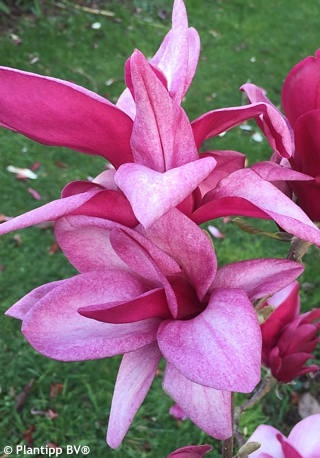
Discovering magnolia STARBURST was a thrill. Not only has it gorgeous flowers, but it also has something very practical for small gardens – narrower, almost fastigiate habit. Its fragrant flowers are 15-20 cm across, purple red on the outside and much paler inside with pink stars airbrushed onto the ...
IV - V
2 - 4m
1 - 2m
full to partial sun
6 (down to -23°C)
for zone 5+6
for zone 7
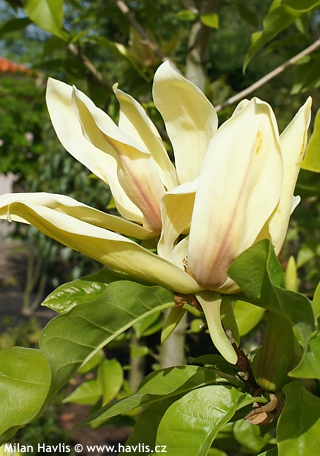
Hattie Carthan magnolia was bred by Doris Stone from the Brooklyn Botanic Garden by cross-pollinating several unnamed m. x brooklynensis hybrids (m.acuminata x magnolia x liliiflora) and ‘Evamaria’ variety. The result was a stunning magnolia with firm flowers of elongated tepals. They are 10-12 cm l ...
IV - V
4 - 7m
1,5 - 3m
full to partial sun
5 (down to -29°C)
for zone 5+6
for zone 7
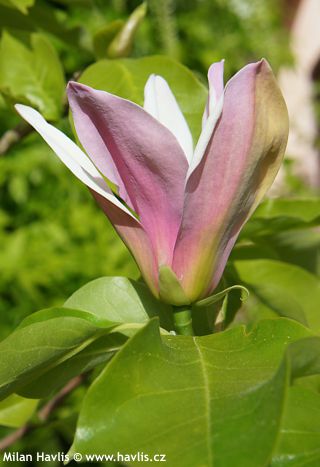
Woodsman is more than a lumberjack. In a broader sense, he's also someone who takes care of the forest and its trees, not seeing them as a commodity. He loves and appreciates them. People connected with occupations such as woodsman or lumberjack are often described in a manly manner which nowadays ...
V
2 - 4m
1,5 - 2,5m
full to partial sun
5 (down to -29°C)
for zone 5+6
for zone 7
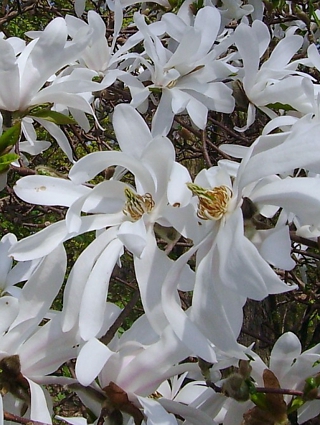
Proctor magnolia is a hybrid of two Japanese magnolia species – m. stellata and m. salicifolia. It is distinguished by early flowering and profusion of star-shaped, white, fragrant flowers, larger than on m. stellata, with less petals but of firmer appearance. Slavin’s Snowy is a selection composed ...
III - IV
6 - 8m
3 - 4m
full to partial sun
5 (down to -29°C)
for zone 5+6
for zone 7
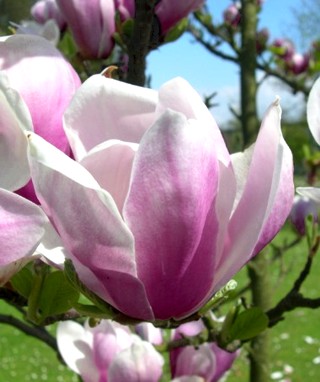
Alexandrina is a very popular variety of saucer magnolia. Thanks to the rich colour of outer petals it is rated commercially best-selling saucer magnolia. The flowers are upto 10 cm across, white inside, flushed deep pink and purple outside, with a lovely fragrance.
Deciduous leaves are rather ob ...
IV - IV
4 - 6m
full to partial sun
5 (down to -29°C)
for zone 5+6
for zone 7
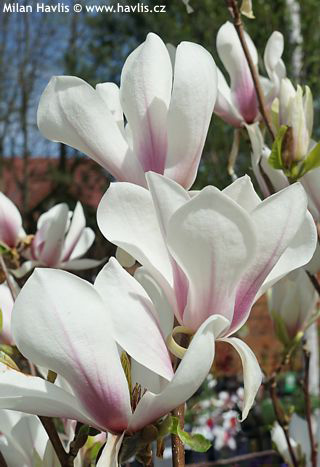
Superba is a saucer magnolia variety which differs from the original hybrid in slightly paler flowers with longer petals, later onset of flowering and a more subtle habit. The flowers are approx. 10 cm high and up to 20 cm wide when fully opened, and the individual petals are narrower and not as con ...
IV
4 - 6m
3 - 4m
full to partial sun
5 (down to -29°C)
for zone 5+6
for zone 7
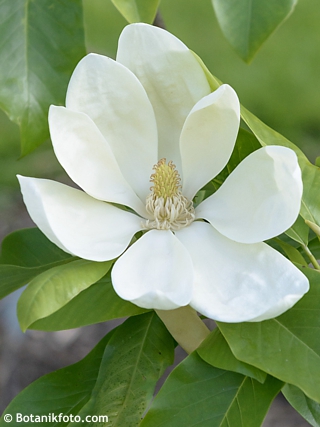
Thompson magnolia boasts large, creamy white, very fragrant flowers which come out from June until July on a fully leafed out plant. The flowers are up to 15 cm across and the fragrance is deep and sweet. Deciduous leaves are broadly ovate to obovate, 15-25 cm long, fresh green above and glaucous be ...
VI - VII
3 - 5m
2 - 3m
full sun
6 (down to -23°C)
for zone 5+6
for zone 7
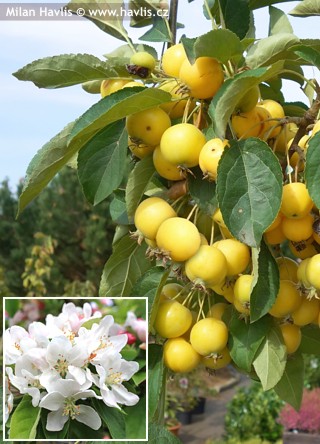
Golden Hornet is a well known crabapple variety with rich butter yellow fruit. It produces masses of slightly fragrant, white blossoms opening from pink buds in May, which are followed by spherical, bright yellow, glossy fruit which is in fact tiny apples that can be eaten if you like somewhat astri ...
V
5 - 8m
5 - 8m
full sun
5 (down to -29°C)
for zone 5+6
for zone 7
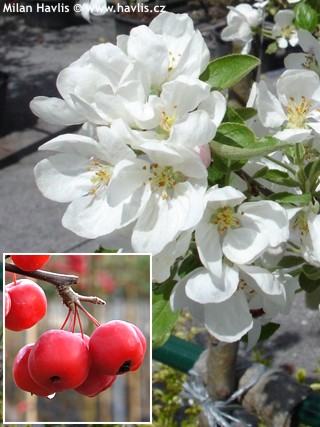
Red Sentinel is a beautiful crabapple variety with scented, white blossoms opening from pink buds. It flowers from early May and in autumn produces profusion of rich red, sometimes yellow flushed fruit that is not edible for humans but delicious for birds.
Leaves are deciduous, broadly ovate, dark ...
IV - V
4 - 6m
3 - 5m
full sun
5 (down to -29°C)
for zone 5+6
for zone 7
.jpg)
Royalty crabapple captures attention first and foremost with its blossom. In April, the entire tree becomes covered in deep pink to purplish flowers that make the crown appear as if lit from within. The flowers are richly coloured, lightly scented and among the most intense within ornamental crabapp ...
IV - V
3 - 6m
2 - 5m
full sun
4 (down to -34°C)
for zone 5+6
for zone 7
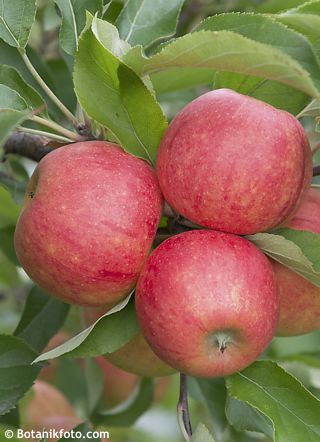
The fruits of Elstar are medium‑sized, round to slightly flattened apples, with a yellow‑green skin largely covered by a bright red blush and fine striping. The flesh is creamy yellow, tender, crisp, and very juicy, with a distinctly aromatic sweet‑tart flavor reminiscent of t ...
IV - V
3 - 8m
2 - 4m
full sun
5 (down to -29°C)
for zone 5+6
for zone 7
.jpg)
Golden Delicious ranks among the most important apple cultivars of the 20th century and became the foundation for breeding dozens of other varieties worldwide. The fruits are medium to large, conical to round‑conical, with a smooth skin that is greenish‑yellow at harvest and turns golden ...
IV - V
3 - 6m
3 - 4m
full sun
4 (down to -34°C)
for zone 5+6
for zone 7
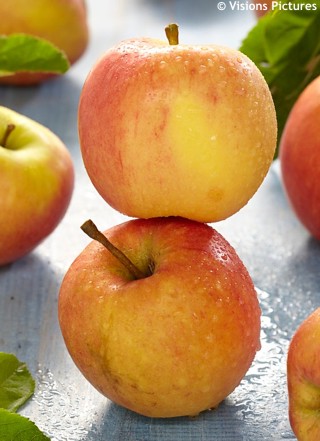
James Grieve is an old and proved, very tasting variety of a midseason apple tree from Scotland from 1893. The apples are medium to large, juicy and sweet, and are great eaten fresh off the tree, yet a little sharp. Sweetness rises only after one week of cold storage. It generally does not store wel ...
IV - V
3 - 5m
2 - 4m
full sun
5 (down to -29°C)
for zone 5+6
for zone 7
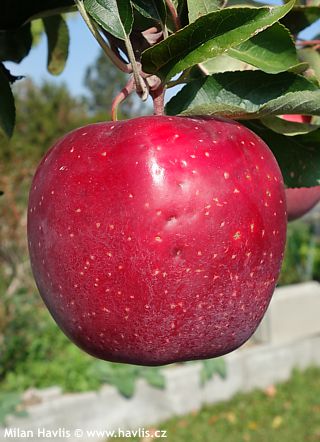
James Grieve Red is a sport of James Grieve apple, found in 1922 with redder fruit. It produces very tasty, sweet and aromatic apples from end August until early October. The fruit is best eaten fresh off the tree. Under usual condition it can be stored for maximum of 2 months, while in fruit-coolin ...
IV - IV
3 - 8m
2 - 4m
full sun
5 (down to -29°C)
for zone 5+6
for zone 7
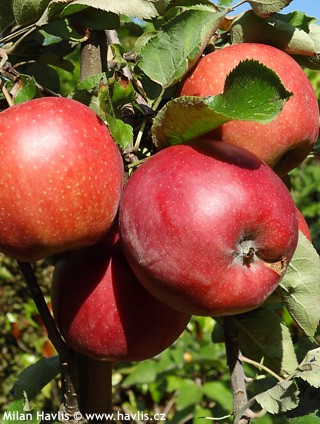
Jonagold is a great dessert apple variety that combines the best of both its parents. It has the sweetness of Golden Delicious as well as mild sharpness and aroma of Jonathan. The flesh is crispy and very juicy. Moreover, Jonagold is a very attractive apple to look at – it is honey yellow with ...
IV - V
2 - 4m
2 - 3m
full sun
for zone 5+6
for zone 7
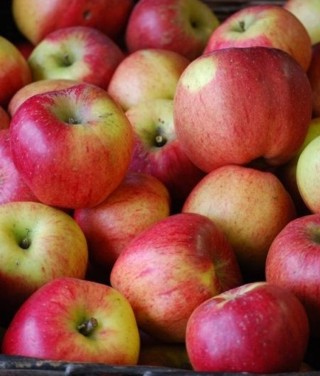
Melrose is an attractive and tasty late apple. It is a result of crossing Jonathan and Red Delicious. The apples are sweet and crunchy. Their colour is red. Ideal snack apple or for cooking. Tastes best about one month from picking. It can be stored until end February.
Apple trees should be pruned ...
IV - V
3 - 6m
2 - 4m
full sun
for zone 5+6
for zone 7
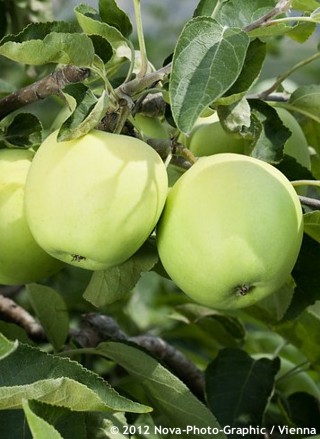
This is probably the earliest apple in our climate, of Russian origin from around 1800. Its name is different in every country, the English name is White Transparent. It produces good crops of medium-large to large fruit with greenish-yellow, soft skin and very juicy flesh that can be quite sharp fo ...
IV - V
2 - 4m
1,5 - 3m
full sun
5 (down to -29°C)
for zone 5+6
for zone 7
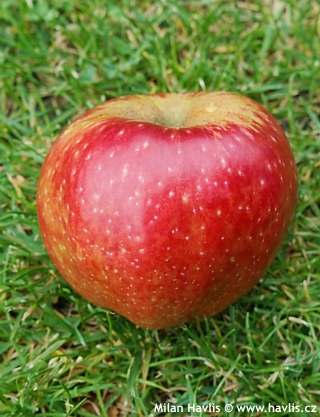
Summerred is an early apple tree variety from 1964 which originated in Canada as a self-pollination of McIntosh Red and Golden Delicious. Though both the parents are midseason apples, Summer Red produces its fruit as early as from late August in a good season. The apples are medium large, beautiful, ...
3 - 4m
2 - 3m
full sun
4 (down to -34°C)
for zone 5+6
for zone 7
.jpg)
The fruits of Princess Louise (aka ‘Marquis of Lorne’) belong among medium to large apples, broadly round in shape, with a thin and delicate skin that turns from greenish to yellow at full maturity, often with a rosy blush. The flesh is snow‑white, very fine, crisp, and juicy, with a pleasantl ...
IV - V
4 - 6m
3 - 5m
full sun
4 (down to -34°C)
for zone 5+6
for zone 7
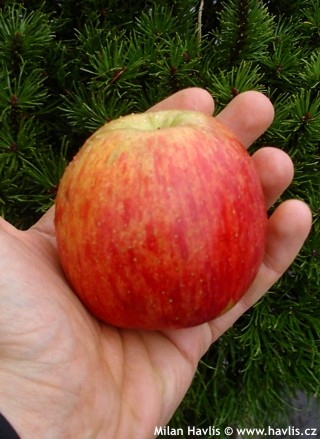
Reine des Reinettes (King of the Pippins, Goldparmäne) is a mid-season apple with golden-orange skin, with profusion of red stripes. It is medium-sized, rounded, and can be picked from September until October, and stores well approximately until Christmas time. The flesh is juicy, delicious and very ...
IV - V
2 - 5m
2 - 3m
full sun
5 (down to -29°C)
for zone 5+6
for zone 7
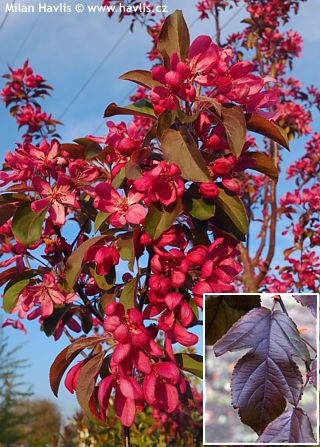
Scarlet crabapple is a fantastic addition to the collection of spring flowering apples and cherries. This one, however, has more than one feature to look at (just like Scarlett Johansson who may have been a reason for giving this tree its name …)
Scarlet is a flowering crabapple tree with pro ...
IV - V
4 - 6m
2 - 5m
full sun
5 (down to -29°C)
for zone 5+6
for zone 7
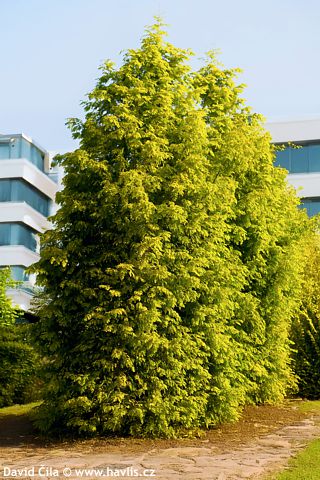
AMBER GLOW™ is the result of the breeding work of William A. Head, an American breeder from Seneca, S.C., who aimed to develop a variety of dawn redwood with golden leaves that could withstand the hot summer sun without scorching, even if it didn't have roots in constant moisture. He succeeded ...
3 - 7m
2 - 4m
full sun
4 (down to -34°C)
for zone 5+6
for zone 7
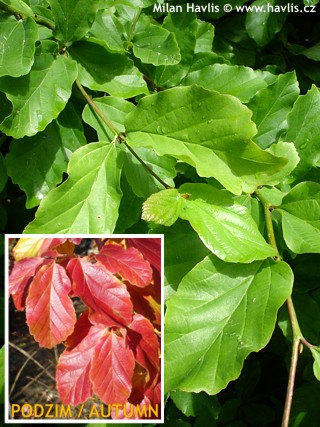
The Persian ironwood is a deciduous, usually multi‑stemmed tree with handsome leaves. They are smooth, glossy, broadly oval, similar to beech leaves but about twice the size: 6–15 × 4–10 cm, with pronounced veins that give them a sculptural quality. In spring they are light green, remaining fr ...
5 - 12m
4 - 6m
full to partial sun
4 (down to -34°C)
for zone 5+6
for zone 7
.jpg)
Red Robin is the very first and, it must be said, still a remarkably successful cultivar of Fraser's photinia. Twenty years after its introduction it received the AGM (Award of Garden Merit) from the Royal Horticultural Society for its resilience, beauty and reliability. It is a New Zealand selecti ...
V
2 - 6m
2 - 5m
full to partial sun
6 (down to -23°C)
for zone 5+6
for zone 7
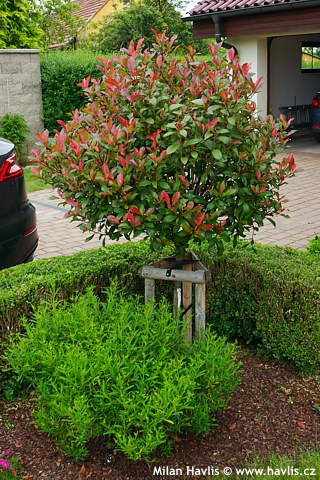
From the very moment CARRÉ ROUGE photinia hit the market, it became an overnight sensation. It originates from the hugely successful ‘Red Robin’, but offers a far more compact and denser habit, with slower growth and smaller leaves that look elegant and completely smother the plant’s coat, turning t ...
2 - 3m
1 - 2m
full to partial sun
6 (down to -23°C)
for zone 5+6
for zone 7
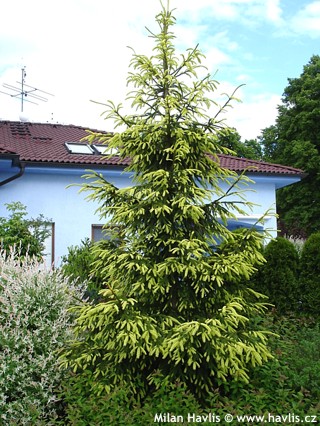
Caucasian spruce is an attractive conifer with an interesting habit. Lateral branches grow horizontally first, later they rise a bit upwards in an angle of about 45° while new growths are slightly drooping. Aureospicata is a variety with bright yellow new foliage that lasts for as long as 6 weeks.
...
8 - 15m
4 - 6m
full sun
5 (down to -29°C)
for zone 5+6
for zone 7
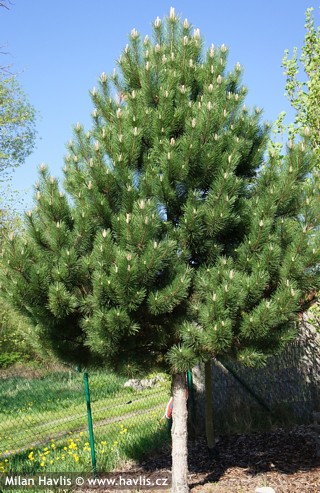
Austrian (black) pine was first classified by Austrian botanist Johann Arnold in 1785. It is a hardy tree which escaped Austria in early 20th century, and can now be found all around Europe, down to Turkey, and in North Africa. Hard to say if Mother Nature needed a stronger substitute for more tende ...
10 - 30m
6 - 8m
full to partial sun
3 (down to -40°C)
for zone 5+6
for zone 7
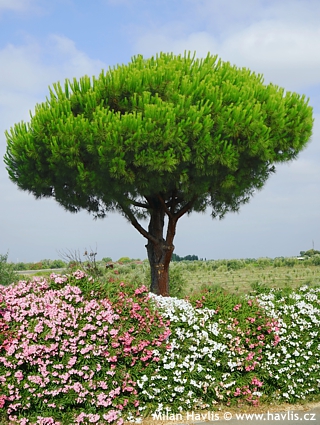
Italian stone pine, often called just umbrella pine, is a long-lived conifer with fresh green, evergreen, and relatively soft needles 10-20 cm long, which grow in pairs and densely cover the branches creating an impenetrable screen. Young plants grown from seeds till the age of about ten years first ...
10 - 20m
8 - 15m
full sun
7 (down to -18°C)
for zone 5+6
for zone 7
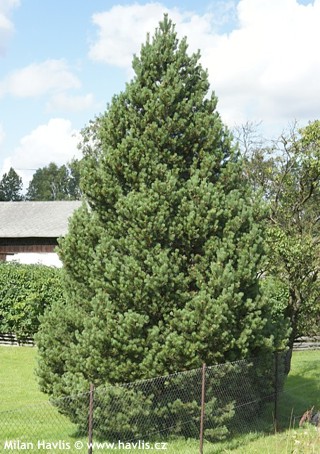
Uncinata is a subspecies of mountain pine. Its main difference from dwarf mountain pine is a central leader which helps it make a tree character. Also, this pine is much taller in full maturity as opposed to common mountain pine, forming a widely pyramidal habit, slightly irregular. Uncinata is comm ...
10 - 20m
3 - 6m
full sun
2 (down to -45°C)
for zone 5+6
for zone 7
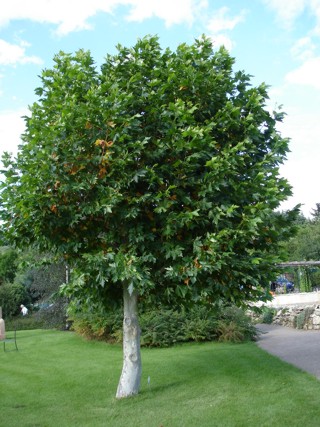
Some trees have identity crisis and scientists are trying to trace up their true origin. As these efforts often end up in argumentative sessions we tend to choose the easiest possible explanation. In the case of this London plane tree we rather believe it comes from Cenozoic platanus aceroides and w ...
5 - 30m
4 - 20m
full sun
4 (down to -34°C)
for zone 5+6
for zone 7
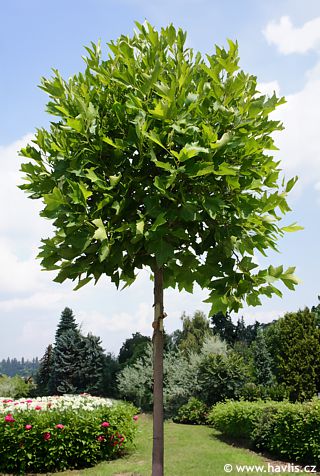
Alphen’s Globe has been a sought after small tree in the last decade or so since it offers beauty of its parent – plane tree - but much smaller dimensions which make it suitable even for small gardens.
Its deciduous leaves are large – 20 cm wide, glossy green, with 5 lobes. Fruits are prickly sph ...
4 - 6m
3 - 4m
full sun
5 (down to -29°C)
for zone 5+6
for zone 7
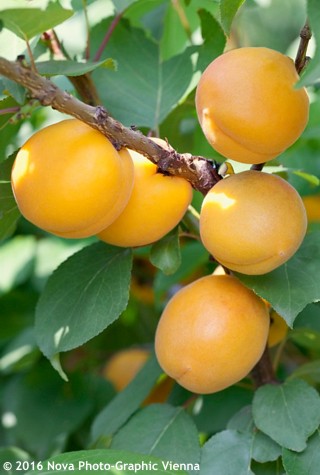
Bulida is a Spanish apricot tree variety from 1940. It is very hardy and a heavy cropper. The fruit is large, firm, yellow-orange without a red blush, very sweet, free-stone, and juicy with melting flesh. Maturing time is usually from early August, in good summers the fruit may ripen already in from ...
IV - IV
3 - 5m
2 - 4m
full sun
5 (down to -29°C)
for zone 5+6
for zone 7
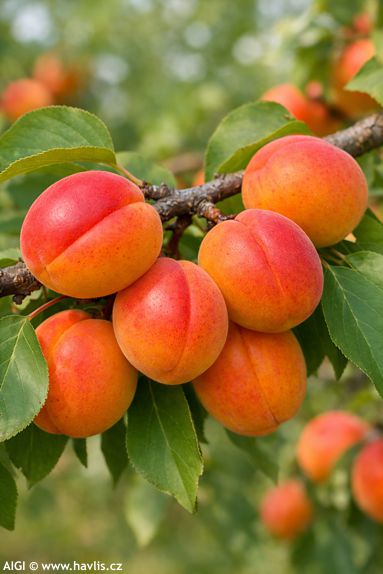
Farbaly apricot produces medium‑sized to large, broadly oval fruit with a deep orange skin and a pronounced, evenly distributed red blush that may cover up to half of the surface. The skin is finely velvety, slightly firmer, and tolerates handling and transport well. The flesh is orange, firm ...
IV
3 - 4m
3 - 4m
full sun
6 (down to -23°C)
for zone 5+6
for zone 7
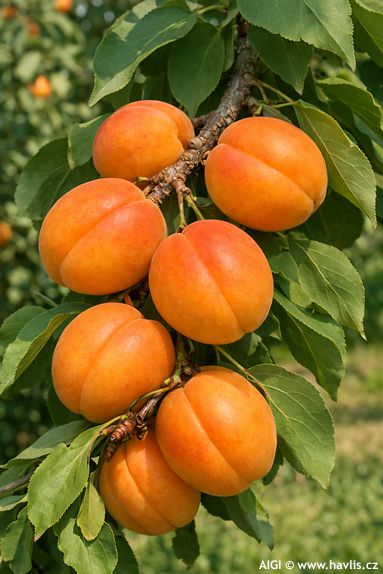
The fruit of Goldrich apricot is large to very large, broadly oval, with a smooth, firm skin of deep orange colour and a fine red blush on the sun‑exposed side. The flesh is orange, firm and moderately juicy, with a balanced ratio of sugars and acids; the flavour is sweet, refreshing and sligh ...
IV
3 - 4m
3 - 4m
full sun
5b (down to -27°C)
for zone 5+6
for zone 7
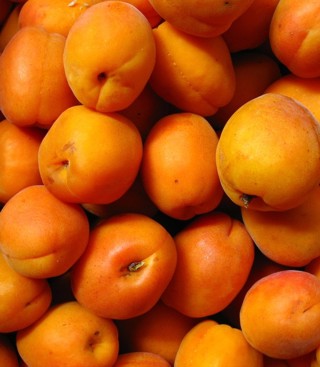
Luizet apricot is one f the most suitable ones from our climate because it blooms late which helps it avoid late spring frost. On the other hand it is an early variety with fruit maturing in mid-summer.
Fruit is rounded to oval, deep orange with irregular red flushes, very aromatic. Taste is sweet. ...
IV - IV
3 - 4m
2 - 3m
full sun
6 (down to -23°C)
for zone 5+6
for zone 7
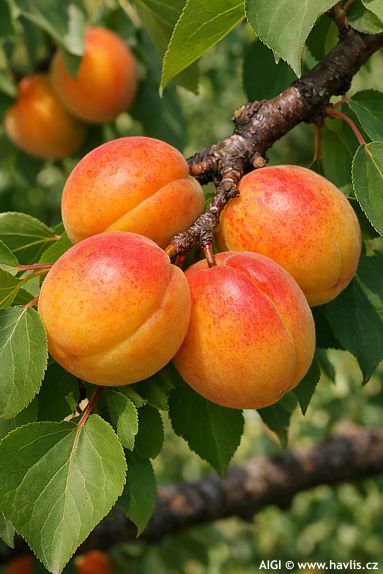
Mombacher Frühe apricot produces medium‑sized, round to slightly flattened fruits with a yellow‑orange skin and a fine red blush on the sun‑exposed side; the surface is softly velvety and the flesh is orange, juicy, tender, easily separating from the stone, with a balanced, ar ...
IV
3 - 5m
2 - 4m
full sun
5b (down to -27°C)
for zone 5+6
for zone 7
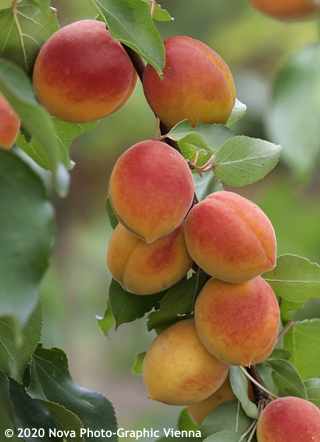
Imola is a town in Italy renowned for the race track The Autodromo Internazionale Enzo e Dino Ferrari. It is close to Bologna in a region called Emilia-Romagna, possibly the most important Italian region for growing fruit trees. Reale d’Imola is an apricot tree which originated there in one of ...
IV
4 - 6m
2 - 4m
full sun
5b (down to -27°C)
for zone 5+6
for zone 7
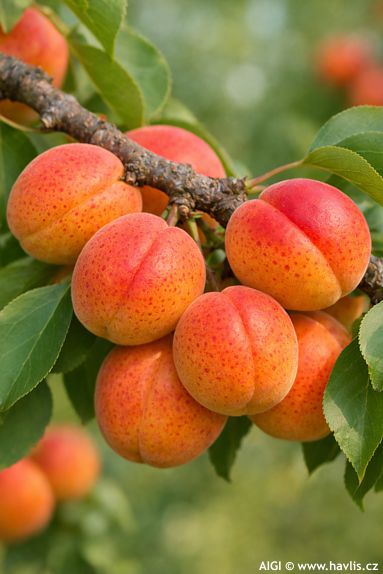
The fruit of Rouge du Roussillon apricot is small to medium‑sized (35–55 mm in diameter), round to slightly oval, with a deep orange ground colour and fine red speckling or a light red blush covering part of the surface. The skin is thin and finely velvety; the flesh is soft, juicy and highly ...
IV
3 - 4m
3 - 4m
full sun
6 (down to -23°C)
for zone 5+6
for zone 7
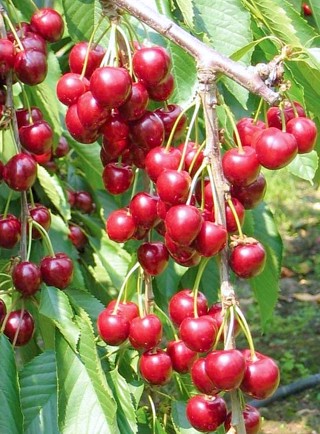
Burlat is an early variety of sweet cherries. The fruit is vivid to dark red, mid-sized or large, very sweet and juicy, with medium firm flesh. As it is very precocious it is not vermicular.
It is partly self-fertile but benefits from being pollinated by another early cherry. It likes slightly acid ...
IV - V
3 - 7m
full sun
for zone 5+6
for zone 7
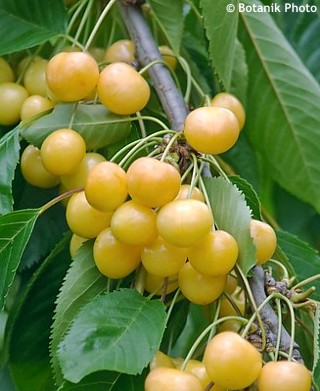
Dönissens Gelbe is a super sweet and aromatic variety of yellow sweet cherries from Germany. It produces masses of medium-sized, juicy fruit in July. Its colour brings one advantage – it is usually untouched by birds who relish on red-coloured cherries.
It is self-sterile and needs a pollina ...
IV - IV
3 - 5m
3 - 4m
full sun
5 (down to -29°C)
for zone 5+6
for zone 7
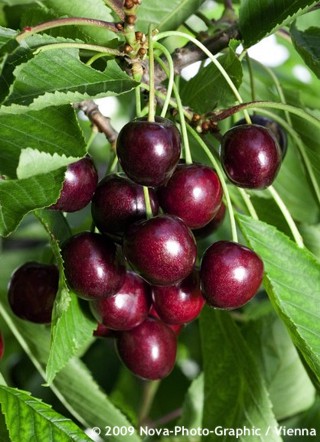
Hedelfingen is a very good variety of sweet cherry. It bears medium-sized fruit in early summer. Fruit is sweet and crunchy and partly resistant to cracking. It gains its colour about a week before it is truly mature. It needs protection from cherry-worms.
It is not self-fertile and needs a pollina ...
IV - IV
3 - 6m
3 - 4m
full sun
5 (down to -29°C)
for zone 5+6
for zone 7
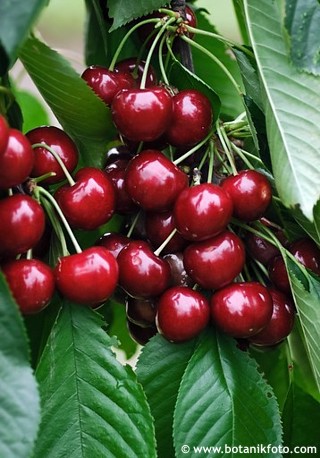
Moreau is a French cherry cultivar from the 19th century, named after the breeder Moreau of Angers (Loire, France). It first appears in the literature around 1880, making it an older, classic bigarreau type. Its fruits are medium‑large to large, round to slightly heart‑shaped, with dark ...
IV
5 - 7m
3 - 5m
full sun
5 (down to -29°C)
for zone 5+6
for zone 7
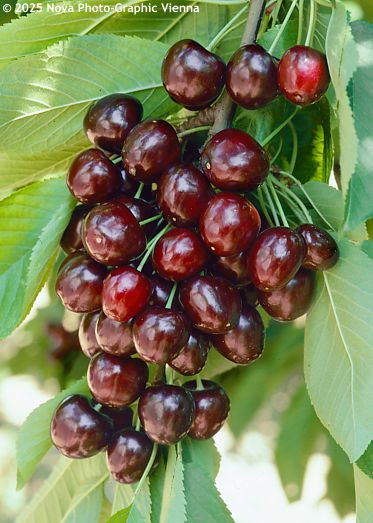
Morel belongs among old, dark-skinned, midseason sweet cherries of the bigarreau type. The fruits are medium to large, round, with a dark red to almost black skin. The flesh is firm, juicy, and sweet, with a clean, distinctive flavour suitable for fresh consumption as well as for preserving. Ripenin ...
4 - 8m
3 - 5m
full sun
5 (down to -29°C)
for zone 5+6
for zone 7
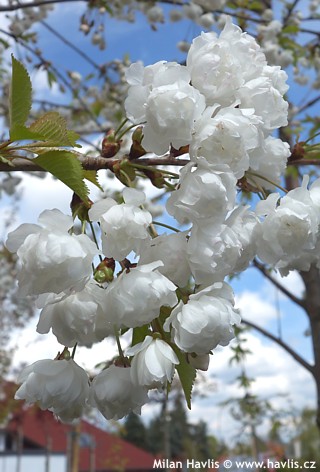
This flowering cherry originated in France already in 1700. That is a success to see that a variety so old still finds its place among new and hyper modern selections. Well done! This is a medium sized tree with stunning blossoms. They are pure white, fully double, and appear in profusion from mid A ...
IV - V
6 - 12m
3 - 6m
full sun
5 (down to -29°C)
for zone 5+6
for zone 7
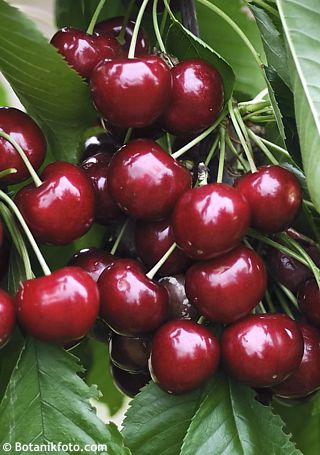
Sunburst is another modern variety of self-fertile sweet cherries. It produces heavy yields of large, dark red, glossy, free-stone fruit of excellent flavour – sweet and juicy. Harvest begins in late July. The fruit is significantly resistant to cracking in rainy weather.
Self-fertile means i ...
4 - 6m
3 - 5m
full sun
5 (down to -29°C)
for zone 5+6
for zone 7
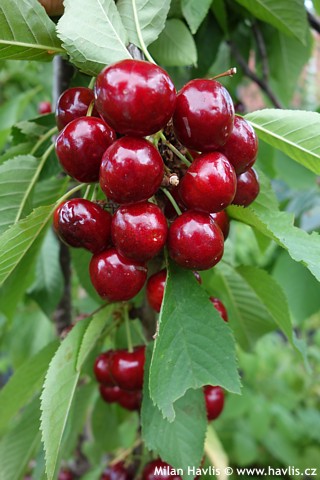
Van is a mid-season variety of sweet cherry. Its fruit ripens in early July. Fruits are large, heart-shaped, deep red, almost black. The flesh is aromatic, sweet, and has excellent taste. It needs protection from cherry-worms.
It is not self-fertile and needs a pollinated for heavy crop. It likes s ...
IV - V
4 - 6m
full sun
for zone 5+6
for zone 7
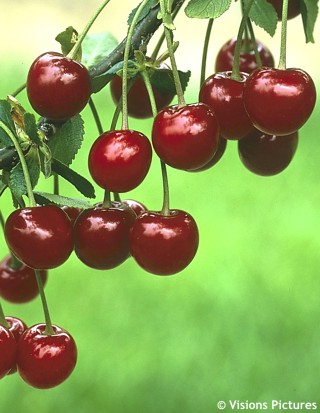
Morellenfeuer is one of the top German sour morello cherries. It bears medium-sized, burgundy-black fruit with dark, juicy flesh that is both sour and light sweet, aromatic, freestone. It is ideal eaten fresh as well as processed in jams, preserves, desserts etc. It is a late variety cropping in Aug ...
IV - V
3 - 6m
2 - 4m
full sun
5 (down to -29°C)
for zone 5+6
for zone 7
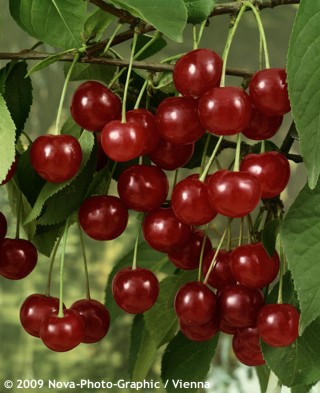
Schattenmorelle is a sour cherry variety with bright red fruit. The flesh is red, sour, not very sweet, and very juicy. Freestone.
It is a self-fertile variety that needs no pollination partner. It crops reliably every year, bearing plentiful of fruit at the ends of partly weeping branches. Semi-v ...
IV - IV
4 - 6m
3 - 4m
full sun
5 (down to -29°C)
for zone 5+6
for zone 7
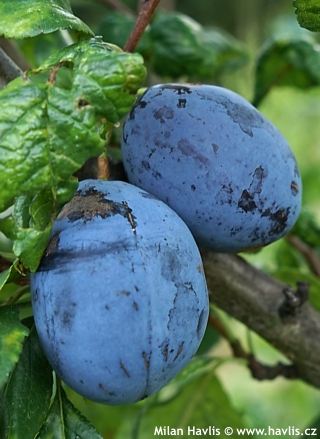
President is an amazing moyer plum variety of excellent taste and late maturity. Unlike most moyer plums such as Stanley of Jojo which can be picked up as early as in late August, you have to be more patient for President as it ripens in roughly mid September. And as it matures over almost 4 weeks y ...
3 - 6m
2 - 3m
full sun
4 (down to -34°C)
for zone 5+6
for zone 7
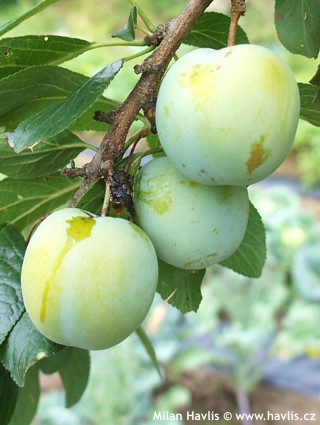
Reine Claude d´Oullins is another French variety out of Reine Claude range. It is a greengage with large, spherical fruit of greeny-yellow fruit. It is delicious, sweet and juicy taste, the flesh is attached to the core. It is an early variety that ripens from mid to end of August.
It flowers in Ma ...
V - V
3 - 4m
2 - 4m
full sun
5b (down to -27°C)
for zone 5+6
for zone 7
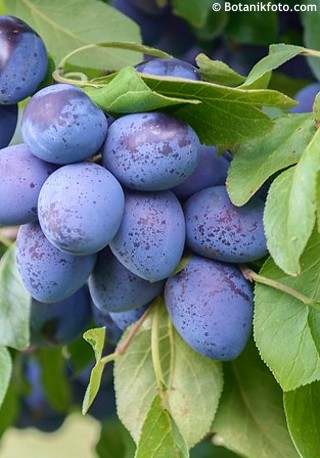
Stanley is one of the most tasteful and reliable varieties of plums. The fruit is sweet and juicy, though firm. Flesh is orange-yellow, skin is smooth, deep violet-blue. The fruit is excellent fresh as well as canned, high sugar content makes them ideal for drying.
It blooms late in the spring and ...
V - V
2,5 - 6m
2 - 4m
full sun
4 (down to -34°C)
for zone 5+6
for zone 7
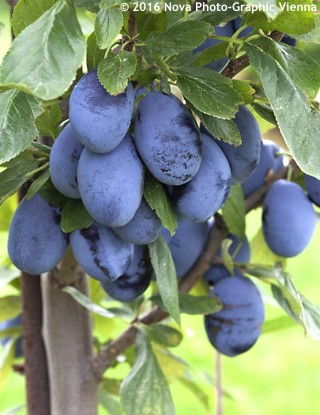
Quetsche d’Alsace is one of the oldest European plum varieties that was first described in German Alsace in 1914, hence its name. Still, it is so old and of unclear origin that most producing countries gave it its own name in their own language. We call it Švestka domácí (‘house plumR ...
V - V
3 - 5m
2 - 3,5m
full sun
5 (down to -29°C)
for zone 5+6
for zone 7
.jpg)
Mirabelle Ruby is a nearly columnar variety of mirabelle that grows tall and slender, as if reaching for the sky. It reaches a height of about 2.5 to 3 meters while maintaining a compact width of under one meter. The tree produces few lateral branches – its fruits grow directly from the trunk and ma ...
2,5 - 3m
1 - 1,5m
full sun
5 (down to -29°C)
for zone 5+6
for zone 7
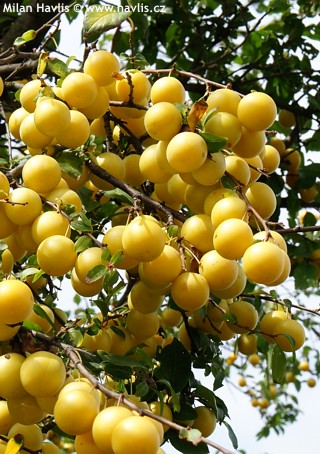
Mirabelle de Nancy is a traditional French mirabelle variety, primarily cultivated in the region between the cities of Metz and Nancy. The tree reaches a height of 4 to 6 meters and develops a dense, rounded crown with a slightly irregular growth habit. It blooms in April with delicate white flowers ...
IV - IV
3 - 6m
3 - 4m
full sun
5 (down to -29°C)
for zone 5+6
for zone 7
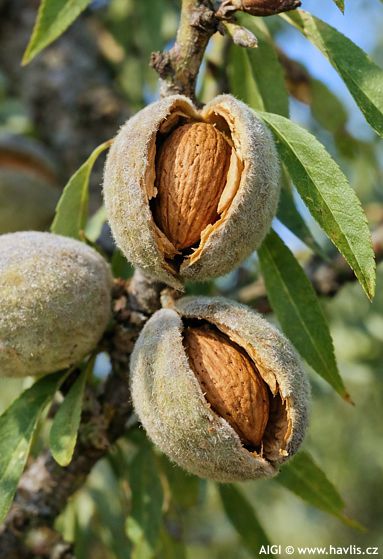
The almond cultivar Robijn originated in the Netherlands and is better adapted to the Central European climate. It is valued for its steady growth, good resilience and reliable fruiting. It grows moderately strongly, forms a spreading crown and reaches a height of about four metres, therefore less t ...
2 - 4m
2 - 4m
full sun
6 (down to -23°C)
for zone 5+6
for zone 7
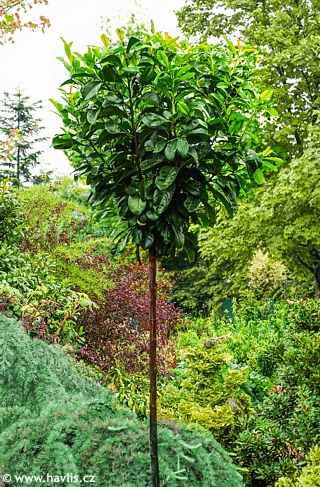
Miniredia is a slow‑growing dwarf cherry laurel variety with evergreen, glossy, dark green leaves measuring 7–8 cm in length and 4–5 cm in width, broadly elliptic in shape. In spring, the young foliage emerges in a striking amber‑orange colour, similar to cultivars such as ETNA® or ...
IV
2 - 3,5m
1 - 1,5m

full sun to shade
6 (down to -23°C)
for zone 5+6
for zone 7
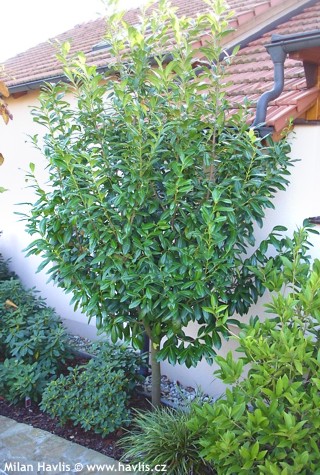
Cherry laurel Novita became a sensation the very moment it hit the market – a true horticultural blockbuster. Its dark, intensely glossy leaves looked luxurious and were impossible not to fall in love with. On top of that, it grew strongly and vigorously, quickly finding its place wherever a den ...
V
3 - 6m
2 - 5m
full sun to shade
5b (down to -27°C)
for zone 5+6
for zone 7
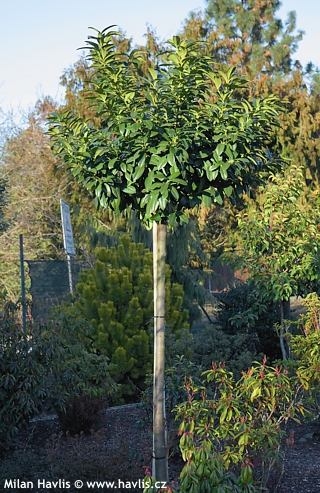
KLEOPATRA® is a Hungarian cherry laurel variety bred by Dr. Józsa Miklos and introduced in 2007. It forms a compact, graceful shrub or a small tree with spreading branches and dark green, glossy, leathery, evergreen leaves. They emerge coppery orange just like on Etna® variety and can be distinguish ...
IV - V
2,5 - 3,5m
1 - 2m
full sun to shade
5b (down to -27°C)
for zone 5+6
for zone 7
.jpg)
Angustifolia is a popular cultivar of Portuguese laurel, valued for its more compact growth and narrower leaves. The foliage is evergreen, leathery and firmer than that of the species, slightly incurved, narrowly elliptic, 6–10 cm long and 1.5–3 cm wide, with a striking glossy surface. The leaves de ...
V - VI
4 - 8m
2 - 4m
full to partial sun
5b (down to -27°C)
for zone 5+6
for zone 7
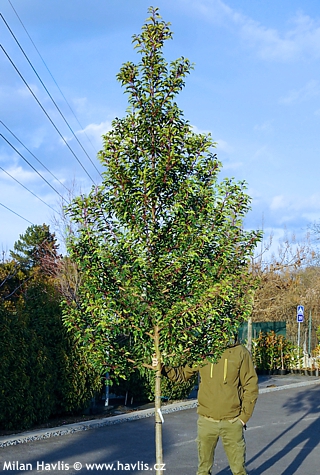
Brenelia is a modern and attractive cultivar of Portuguese laurel from France, selected by Yves Brenelière in the early 21st century. It is distinguished by its larger, distinctly undulated leaves with a higher gloss. The foliage is evergreen, narrowly elliptic, typically 8–12 cm long and 2–4 c ...
VI
4 - 8m
2 - 4m
full to partial sun
5b (down to -27°C)
for zone 5+6
for zone 7
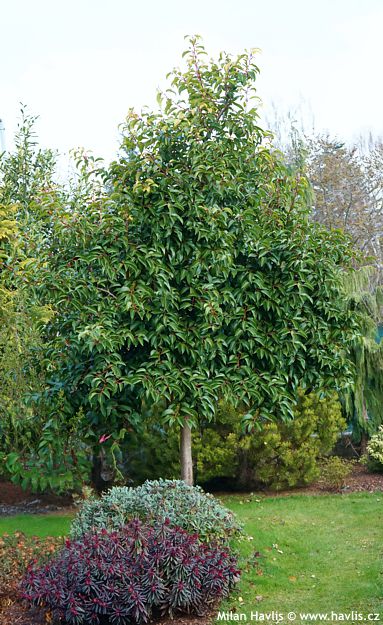
TICO® Portugal laurel is exceptional. It is a vigorously growing, large‑leaved form of this evergreen species, which I fell in love with the very first moment I encountered its luxurious foliage – one of the most distinctive features of this selection. The leaves are conspicuously large, thick ...
VI
2 - 6m
3 - 4m
full sun
5b (down to -27°C)
for zone 5+6
for zone 7
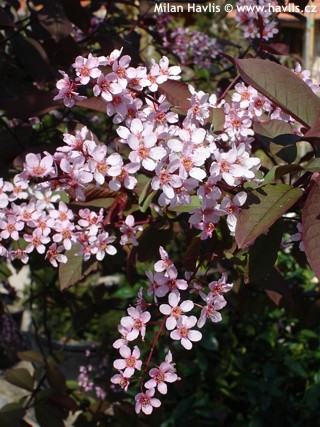
Colorata is a Swedish variety of European bird cherry from 1953 variety producing pink flowers and coloured foliage. In late April appear slender racemes composed of tiny, cotton-candy pink, scented flowers. Deciduous leaves are narrowly obovate, very dark green and emerge tinged an attractive tone ...
IV - V
5 - 8m
4 - 5m
full to partial sun
3 (down to -40°C)
for zone 5+6
for zone 7
.jpg)
Pluot® Purple Candy® looks as if in the middle of the night it secretly escaped from a tree of purple plums and caught stardust on its skin. Its fruits have a rich purple skin with a gentle sheen, reminiscent of a candy wrapped in fruit syrup. The flesh is bright carmine red, exceptionally juicy, wi ...
2 - 3m
1 - 2m
full sun
5 (down to -29°C)
for zone 5+6
for zone 7
.jpg)
The Tibetan cherry is an exceptionally beautiful deciduous tree with a subtle, almost understated aesthetic. Unlike most flowering cherries, it does not offer a mass of blossom in spring, but draws attention through its bark, whose detail is so compelling that one naturally steps closer to appreciat ...
IV
10 - 15m
6 - 8m
full sun
4 (down to -34°C)
for zone 5+6
for zone 7
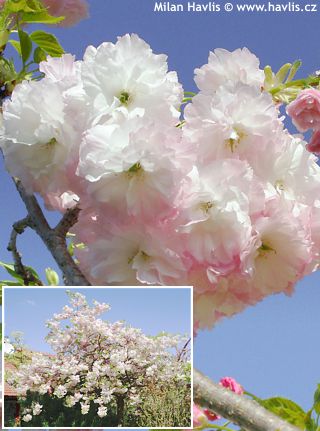
Looking into the crown of this Japanese flowing cherry it is clear why people in Japan take a bow in front of them and organize sakura festivals. It is not only because of their beauty, they also believe that their trunks hold spirits of the dead, and finally they manifest the new life emerging in e ...
V - V
2 - 4m
2 - 5m
full sun
4 (down to -34°C)
for zone 5+6
for zone 7
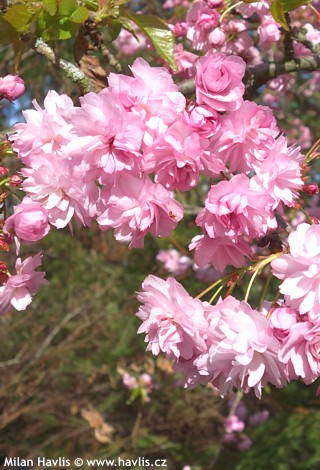
True pink is the colour of this beautiful Cheal´s Weeping Cherry. Either a standard or a half standard tree, this flowering cherry always has rather pendulous branches forming a wide crown.
Double flowers appear on bare branches at the end of April and continue throughout May already with new leav ...
IV - V
2,5 - 3m
1 - 3m
full to partial sun
5 (down to -29°C)
for zone 5+6
for zone 7
.jpg)
Many believe the most beautiful ornamental cherry – the Sakura – is the famous ‘Kanzan’ or the original weeping ‘Kiku-shidare-zakura’. They are indeed magnificent, but imagine the excitement when, in Oregon in the early 1990s, a bud mutation appeared that offered the same qualities plus dark purple ...
IV - V
6 - 8m
5 - 6m
full sun
5 (down to -29°C)
for zone 5+6
for zone 7
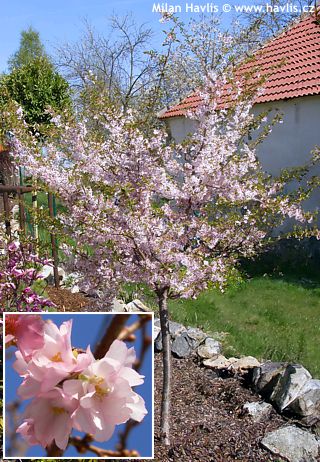
The prunus genus contains over 400 species which are useful and beautiful at the same time. There are cherries, plums, peaches or sloes, as well as flowering Japanese cherries, cherry laurels etc. This variety received its name for the season in which it can re-flower if the end of autumn is warm. H ...
III - IV
3 - 4m
1 - 3m
full sun
4 (down to -34°C)
for zone 5+6
for zone 7
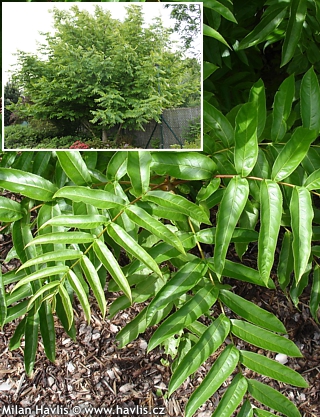
Caucasian wing nut is one of my favorite trees. I first saw it growing in the castle garden of Třeboň chateau where it was ingeniously and logically placed as a focal point in the front of the main facade. And despite its size I knew immediately that I wanted to grow this „baby“ in my ga ...
V
15 - 20m
10 - 15m
full sun
5 (down to -29°C)
for zone 5+6
for zone 7
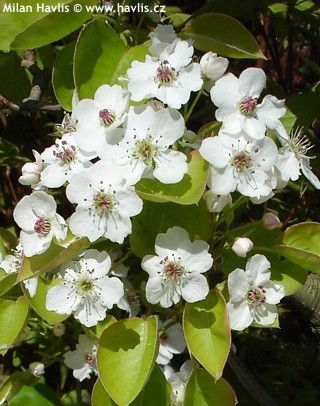
Callery pear is a flowering (ornamental) pear tree which is cultivated for its profuse flowering in April. The tree produces a huge quantity of snow white flowers followed by small, almost spherical fruit that is edible but not too tasty.
Chanticleer is a famous variety of narrowly conical habit. I ...
IV - V
8 - 13m
4 - 6m
full sun
5 (down to -29°C)
for zone 5+6
for zone 7
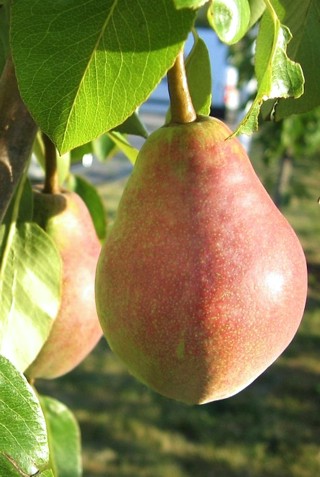
Clapps Favourite is an early pear tree variety that was first introduced in the USA before 1860. It bears medium-sized pears with greeny-yellow skin, red flushed. The flesh is sweet, soft and juicy, “melt in the mouth”. It is ideal snack fruit eaten just as picked from the tree.
It crops profusel ...
IV - V
3 - 5m
2 - 4m
full sun
4 (down to -34°C)
for zone 5+6
for zone 7
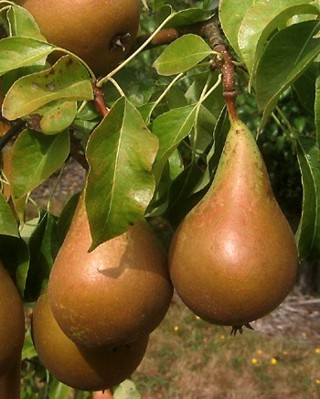
Conference is a famous pear tree from the 19th century. It was first introduced at the National British Pear Conference in 1885, hence its name. It has medium-sized fruit that is pyriform if cross-pollinated, or banana-shaped if self-pollinated.
The fruit is pale green with golden brown russet pa ...
IV - IV
3 - 5m
2 - 4m
full sun
4 (down to -34°C)
for zone 5+6
for zone 7
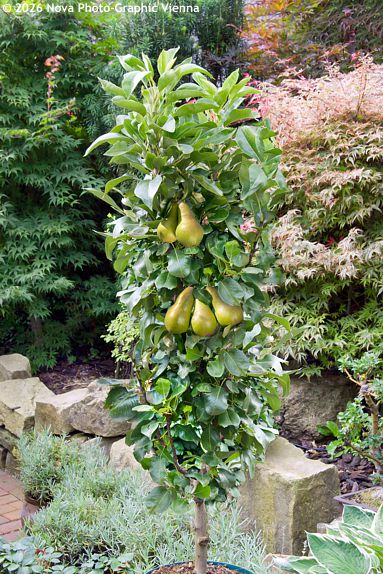
Condo
Condo is a narrowly growing, upright cultivar with a compact crown that maintains a slender shape and produces only a few side branches. The fruits are medium to large, greenish-yellow with a slight blush, juicy, sweet and aromatic, with a flavour reminiscent of Conference, from w ...
2 - 3m
0,5 - 1m
full sun
4 (down to -34°C)
for zone 5+6
for zone 7
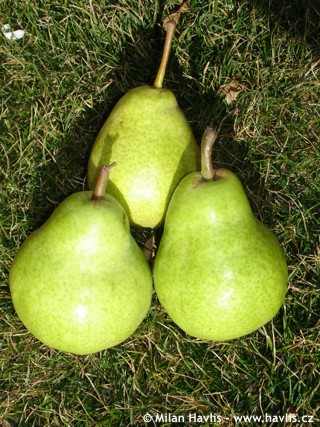
Williams is probably the most known and spread out pear in the world. Its complete name is Williams bon Chretien and comes from the UK, 18th century.
It is an early variety bearing mid-sized or large fruit with light green or yellow skin. The flesh is very juicy, aromatic, and sweet, it quickly s ...
IV - V
3 - 5m
full sun
4 (down to -34°C)
for zone 5+6
for zone 7
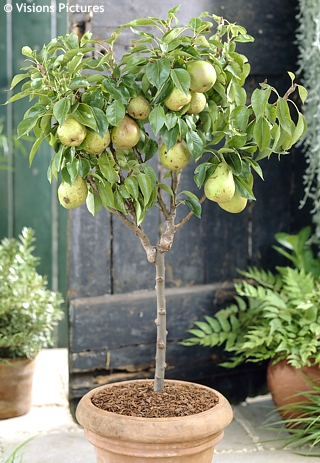
Dwarf pears
are short and slender mini trees, usually with erect branches and plenty of fruit on a small tree. They are commonly at least partially or fully self-fertile so that they don’t need a pollinator which might be a problem to find if located on a city balcony. Leaves ma suffer from rust if ...
1 - 1,5m
0,5 - 1m
full sun
4 (down to -34°C)
for zone 5+6
for zone 7
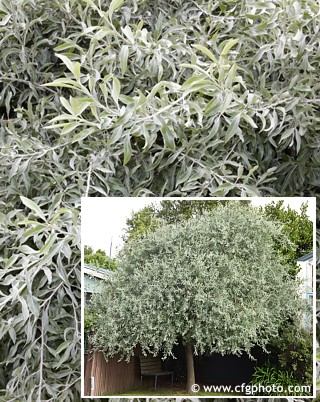
Among quite a few English names of this species I think that silver pear is best. This deciduous tree really belongs to a pear family and has silvery blue-green, willow-like, narrow leaves. They emerge much greener in mid spring, along with the white, scented, 5-petalled flowers that are followed by ...
IV - V
3 - 5m
2 - 4m
full sun
4 (down to -34°C)
for zone 5+6
for zone 7
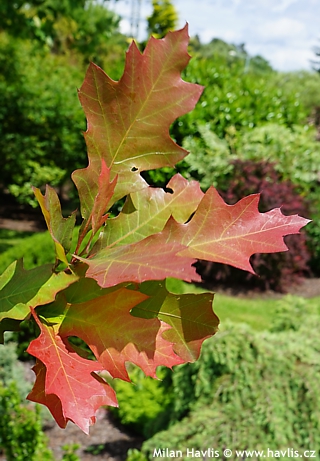
New Madrid is a hybrid Nuttall oak variety, a cross between q. nuttallii (= q. texana) and q. palustris. It is a little smaller than the species, yet a large tree for mid-sized gardens and parks. It is renowned for its colourful foliage – in spring the leaves emerge coppery red, in late spring ...
10 - 15m
7 - 10m
full sun
6 (down to -23°C)
for zone 5+6
for zone 7
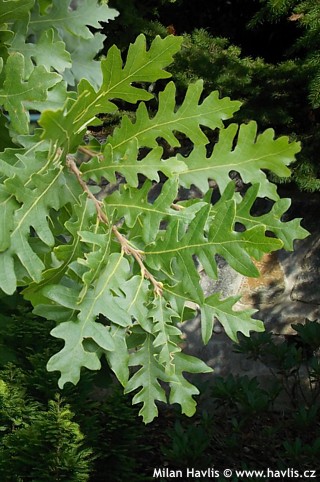
Turkey oak is a handsome mid-sized tree with lovely foliage. The leaves are fresh green until early summer, changing to mid green in summer and pale yellow in autumn. They are typically about 12 cm long, deeply lobed with rounded lobes, and glossy
It grows slowly or medium fast into a tree with rou ...
8 - 13m
5 - 13m
full to partial sun
6 (down to -23°C)
for zone 5+6
for zone 7
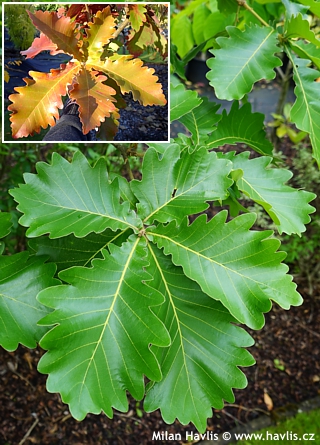
Leaves of this rare daimyo oak are extra large and can reach up to 30 cm in length on adult trees. They are glossy, have rounded lobes, and are almost leathery, just like leaves on evergreen plants. This one, however, is deciduous but still it keeps its old foliage late into winter. The leaves are a ...
6 - 12m
2 - 6m
full sun
3 (down to -40°C)
for zone 5+6
for zone 7
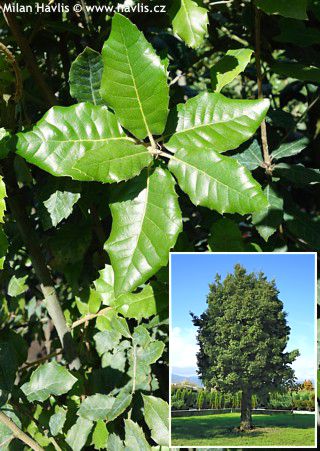
Holm oak or holly oak (holm is an old word for holly) is native to the Mediterranean and is spread from southern parts of Italy, France, Spain and Portugal, to west Balkan and milder parts of North Africa. It used to form vast areas of evergreen forests most of which are chopped down today. It was f ...
8 - 15m
6 - 8m
full sun
6 (down to -23°C)
for zone 5+6
for zone 7
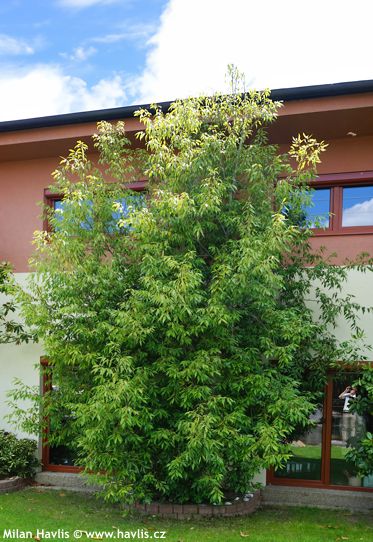
The bamboo-leaf oak is a small to medium-sized evergreen tree whose leaves resemble those of bamboo. They are narrow, elongated to lanceolate, with finely serrated edges or almost entire. New foliage emerges in attractive shades that vary from seedling to seedling and may be bronze, salmon, red, or ...
5 - 12m
4 - 6m
full sun
6 (down to -23°C)
for zone 5+6
for zone 7
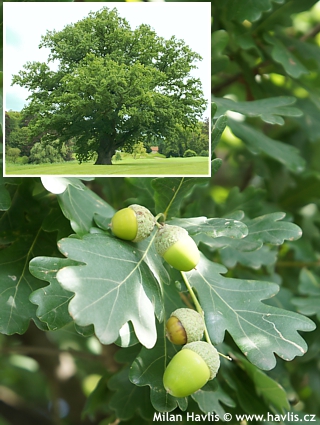
Oaks are common trees of our natural woodlands. They border our ponds, occur naturally in our mixed forests, and make magnificent specimen trees in our parks and arboretums where less common species or rare varieties can be seen. English oak and sessile oak are the most common species of the Czech R ...
20 - 30m
15 - 20m
full sun
5 (down to -29°C)
for zone 5+6
for zone 7
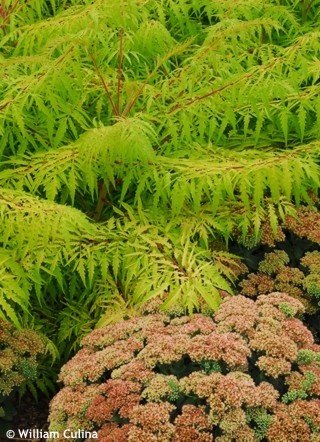
From Bailey Nurseries, USA, which also gave birth to hardy hydrangea Endless Summer®, comes a new plant, a special variety of sumac. Within a short time it has become a popular novelty among growers and gardeners around the world.
Tiger Eyes® is a cut-leaf form of sumac. Its pinnate, fern-like le ...
1 - 4m
1 - 2m
full sun
3 (down to -40°C)
for zone 5+6
for zone 7
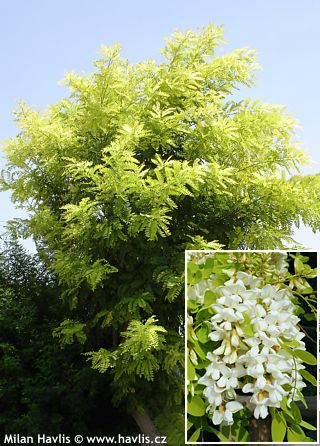
European gardens love colours. And the truth is what a tropical garden has to offer in terms of colours of the flowers, our gardens can easily compete beating it with colours and shapes of the leaves. Hence one of our most attractive trees, a jewel among gold-leaved: golden locust. It was first disc ...
V
5 - 8m
3 - 6m
full to partial sun
4 (down to -34°C)
for zone 5+6
for zone 7

i>Umbraculifera is a popular variety of locust with 25-30 cm long pinnate, deciduous leaves that are made of up to 23 elliptic to ovate individual dark green leaflets. New leaves appear all season long so there are always some new at the tip of the branches, looking really fresh. An exceptional adva ...
3 - 5m
2 - 4m
full to partial sun
4 (down to -34°C)
for zone 5+6
for zone 7
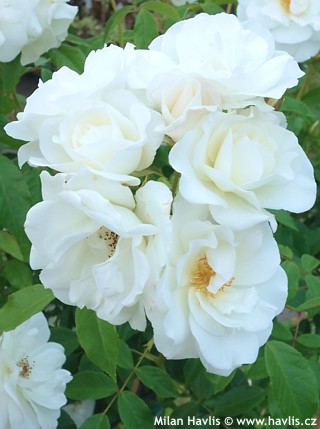
Iceberg is an old rose bred by Reimer Kordes already in 1985. In order to support its international success its original name Schneewittchen® was changed to Iceberg®. It has medium-sized, snow white, semi-double flowers with light fragrance. Leaves are dark green and healthy, marginally suspected to ...
VI - X
0,8 - 1,2m
0,6 - 0,8m
full sun
5b (down to -27°C)
for zone 5+6
for zone 7
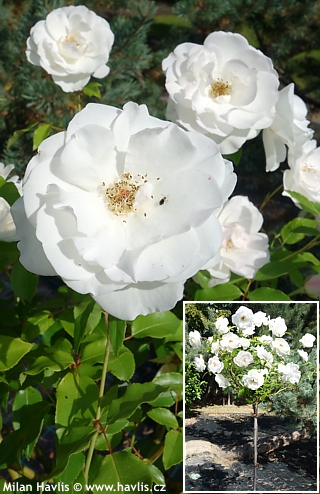
SCHNEEWITTCHEN® (Snow White) is a pure white floribunda rose from 1958 bred by Reimer Kordes (1922-1997). In 1983 it received a prestigious award Rose of the Year 1983 which it truly deserves. It produces 5-6 cm large, semi-double, mildly scented, snow-white flowers from June until November on the b ...
VI - XI
0,8 - 1,5m
0,4 - 0,6m
full sun
5 (down to -29°C)
for zone 5+6
for zone 7
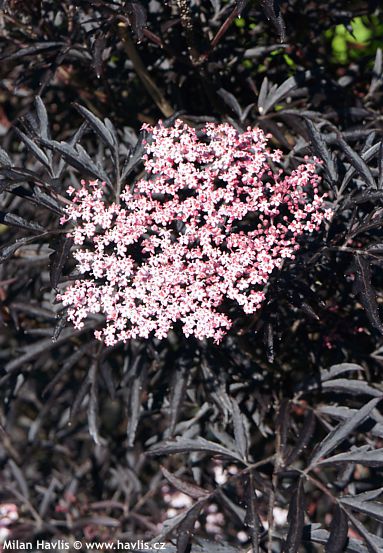
BLACK LACE elderberry blooms from May to June with abundant, almost flat panicles composed of tiny, fragrant, five-petaled flowers. They are pale pink to white and open from smoky purple buds, which intensifies the flowering colour. It blooms profusely. By the end of summer, it produces a ...
V - VI
3 - 5m
2 - 3m
full to partial sun
4 (down to -34°C)
for zone 5+6
for zone 7
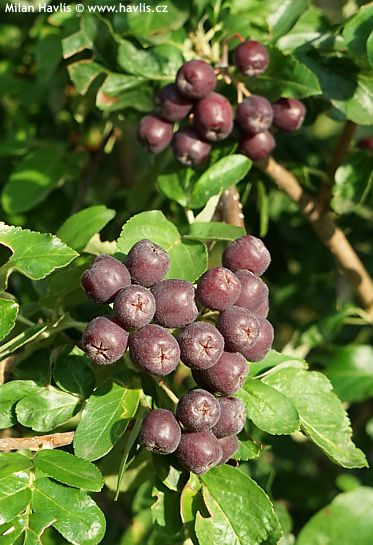
Burka is a unique hybrid rowan, growing to a height of around 3–5 meters, making it ideal for smaller gardens. Its habit is compact, with a naturally shaped, dense crown. Flowers appear from April to May, white and arranged in corymbs, attracting pollinators with their gentle fragrance. But the real ...
V - VI
3 - 5m
3 - 4m
full to partial sun
4 (down to -34°C)
for zone 5+6
for zone 7
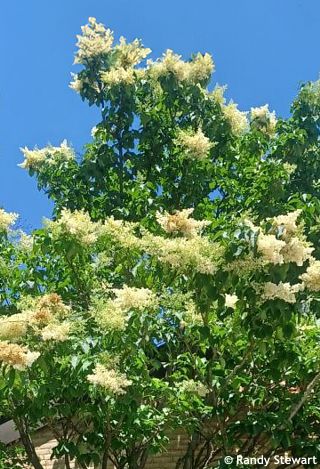
Ivory Silk is a profusely blooming variety of Japanese lilac, which, due to the shape of its inflorescence, can at first glance resemble crape myrtle – Lagerstroemia. The flowers are ivory cream to slightly yellowish at full maturity, strongly and sweetly fragrant, and arranged in slightly inc ...
VI
4 - 7m
3 - 5m
full sun
3 (down to -40°C)
for zone 5+6
for zone 7
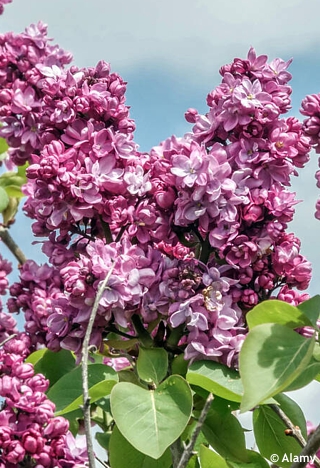
Paul Thirion is a beautiful lilac variety from France producing lilac pink, double flowers. They open from dark rose buds and are composed in 20-25 cm long panicles with an intensely sweet perfume. Blooming begins in the first half of May and lasts for 2-3 weeks. Pruning is not needed but can be don ...
V
2,5 - 3m
2 - 3m
full to partial sun
3 (down to -40°C)
for zone 5+6
for zone 7
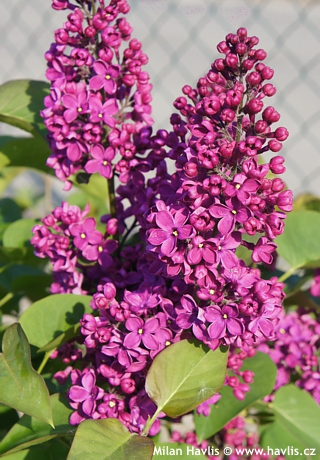
Sarah Sands lilac is a true eye-catcher with its vivid purple red flowers. They are composed in 20-25 cm long, erect panicles with an intensely sweet perfume. They open from the first half of May for 2-3 weeks. Pruning is not needed but can be done immediately after flowering. Deadheading is recomme ...
V
3 - 4m
3 - 4m
full to partial sun
3 (down to -40°C)
for zone 5+6
for zone 7
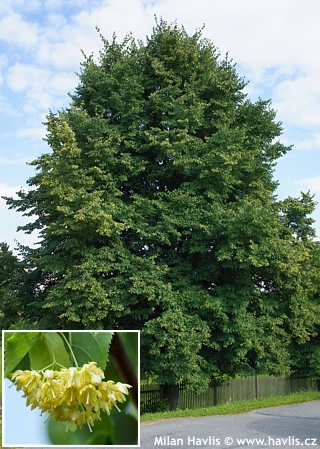
Linden trees (limes) are generally large, long-lived plants that can be found in broad avenues, in parks or in old villages. Small-leaved lime was declared our national tree of the Czech Republic in 1848 and it is a national tree of Slovakia and Slovenia, too. It is native to Europe and Caucasus whe ...
VI - VII
15 - 25m
7 - 10m
full to partial sun
3 (down to -40°C)
for zone 5+6
for zone 7
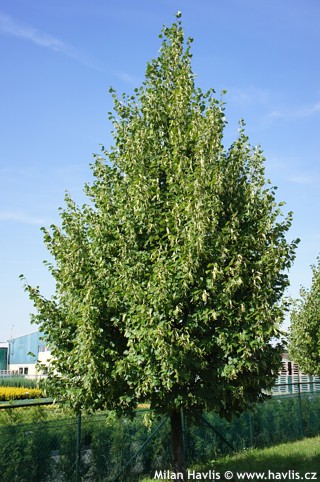
Linden trees are usually large plants that can be found in broad avenues, in parks or in old villages. They are beautiful but due to their size only a few gardens can accommodate one. As the demand was so high for smaller-sized plants the breeders came with a few varieties in the last few decades th ...
VI - VII
12 - 15m
6 - 10m
full to partial sun
3 (down to -40°C)
for zone 5+6
for zone 7
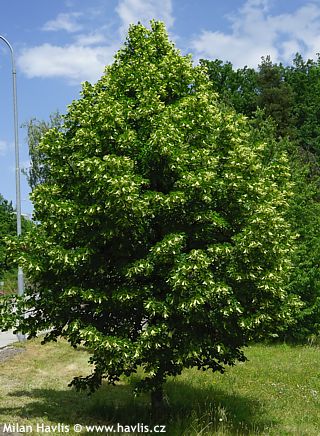
Rancho is a small-leaved linden variety sought-after for its slow growth and much smaller size in maturity. It was bred by Edward Scanlon from Olmsted Falls in Ohio, USA, and introduced in 1961. It makes dense canopies with branches growing at an angle of 30-45 ° making the canopy almost impenetrabl ...
VI - VII
8 - 12m
4 - 6m
full sun
3 (down to -40°C)
for zone 5+6
for zone 7
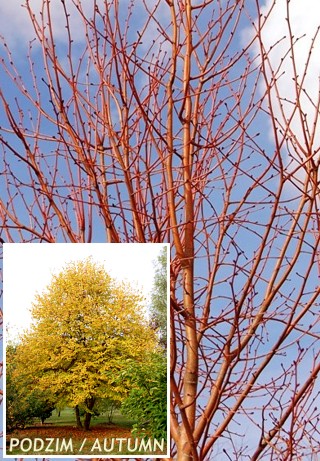
Winter Orange is an outstanding linden tree variety. It features rich orange colour of branches in winter, vivid yellow leaves in autumn, and bright red buds in spring. The leaves are broadly heart-shaped, mid green, deciduous. Flowers come out in July and attract bees which produce very aromatic ho ...
VI - VII
10 - 12m
4 - 6m
full sun
3 (down to -40°C)
for zone 5+6
for zone 7
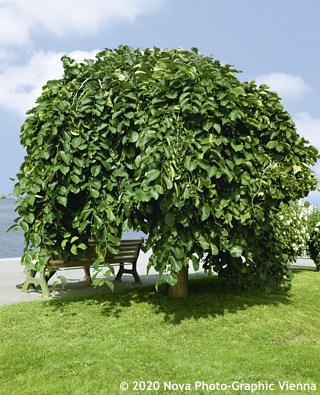
Pendula elm is a wych elm variety with strictly weeping branches and large leaves. It is very similar to a sister variety Camperdownii which forms a more cascading framework while Pendula is truly weeping. Its leaves are dark green, deciduous, 10-15, sometimes up to 20 cm long. In early spring appea ...
3 - 6m
3 - 5m
full sun
4 (down to -34°C)
for zone 5+6
for zone 7
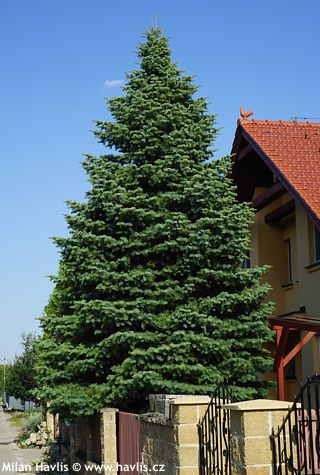
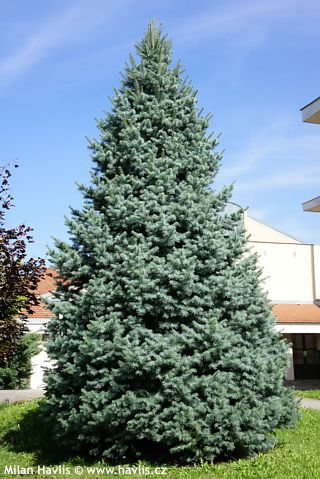
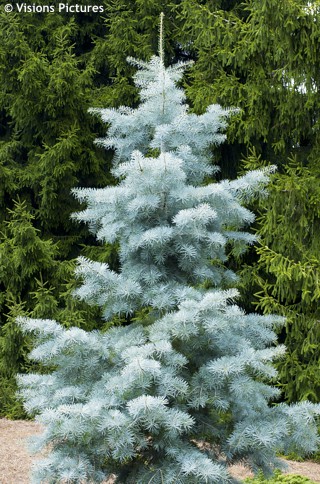
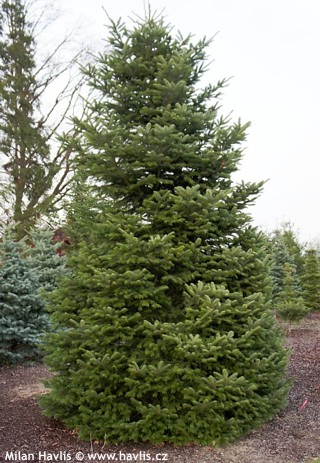
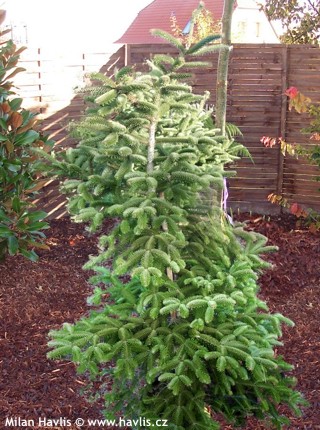
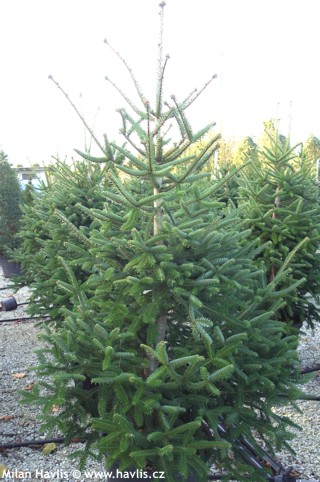
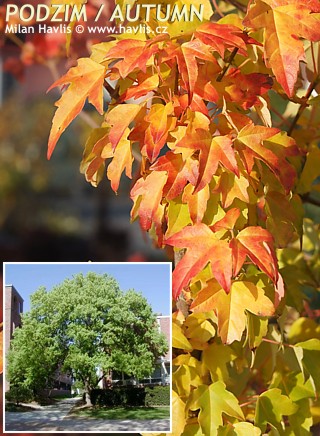
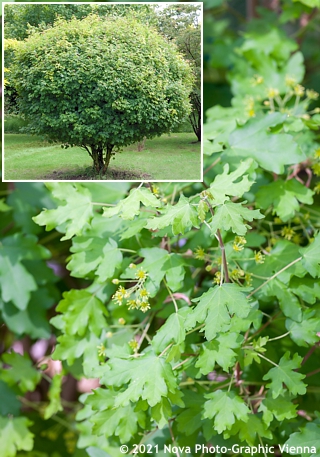
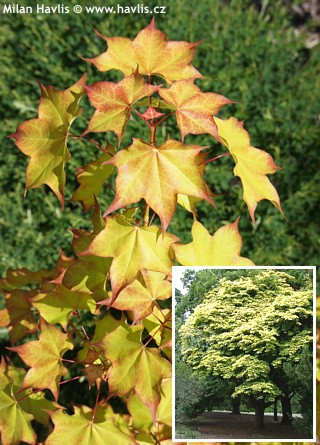
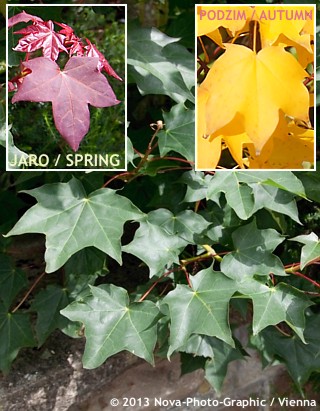
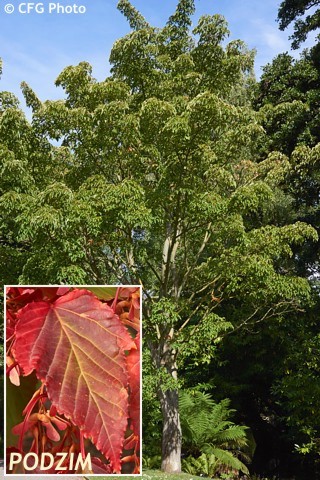
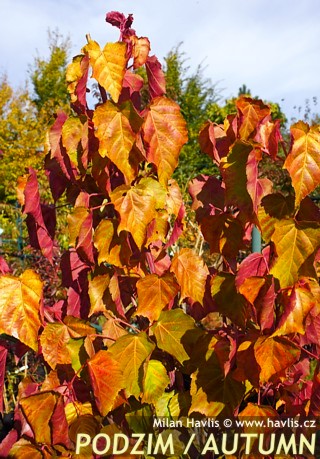
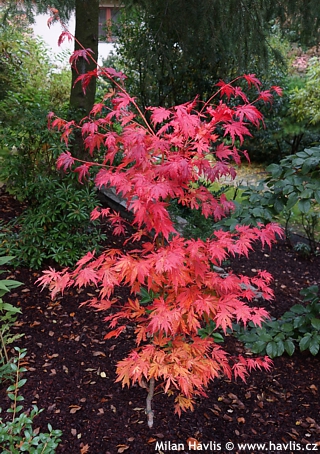
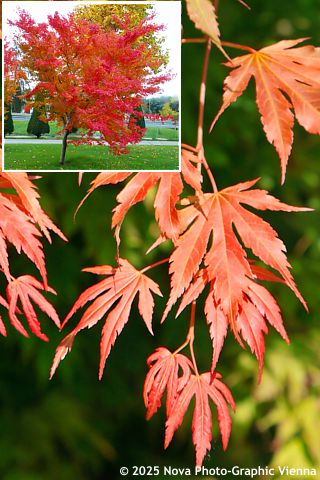
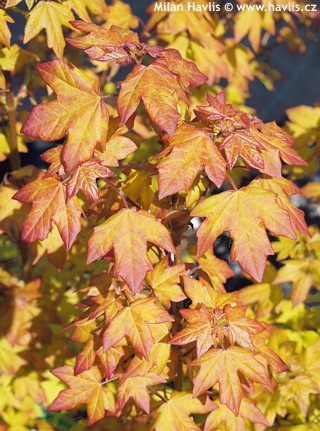
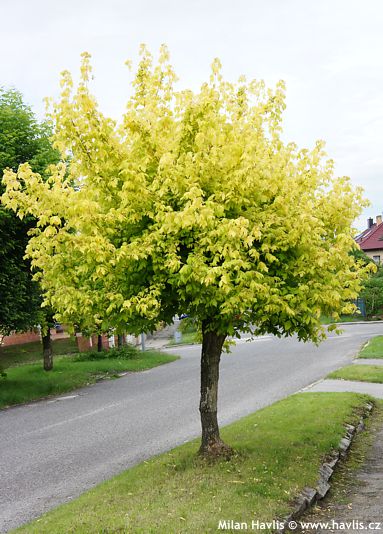
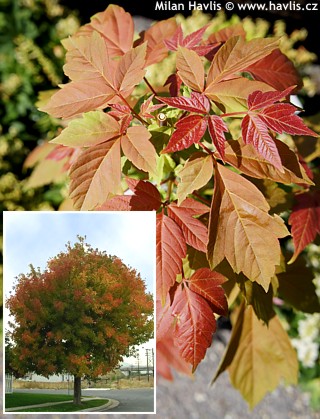
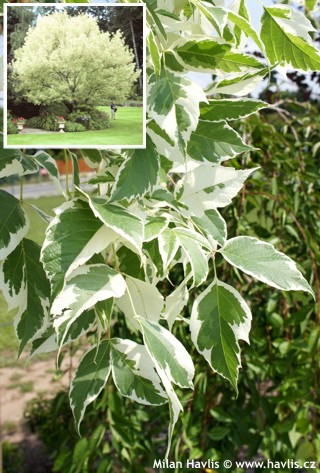
.jpg)
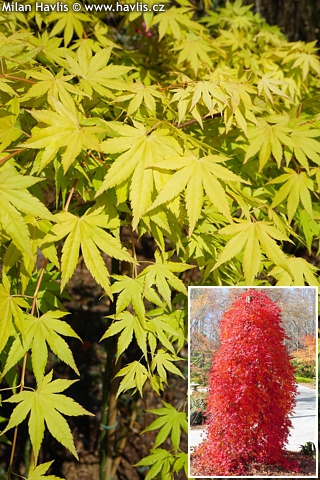
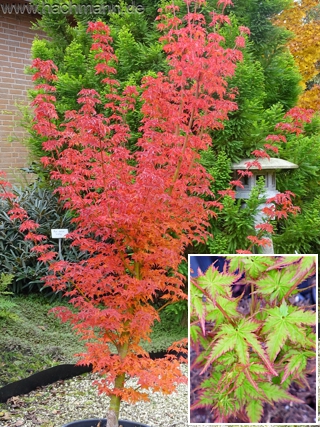
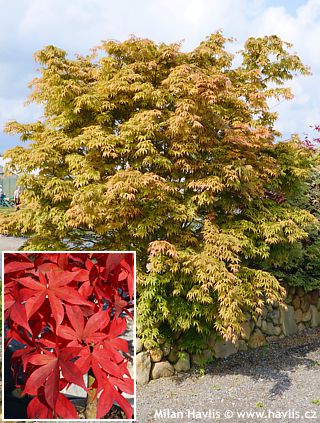
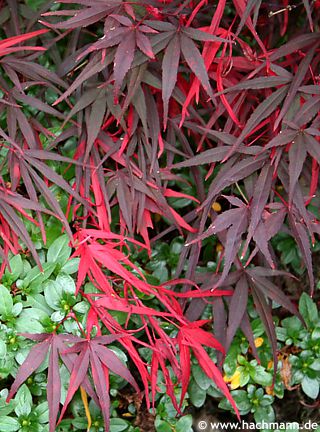
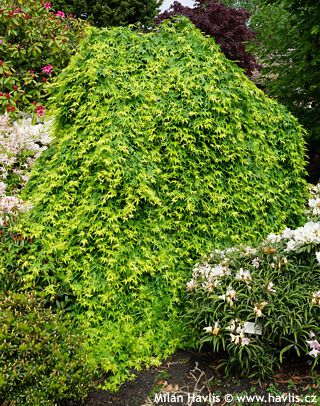
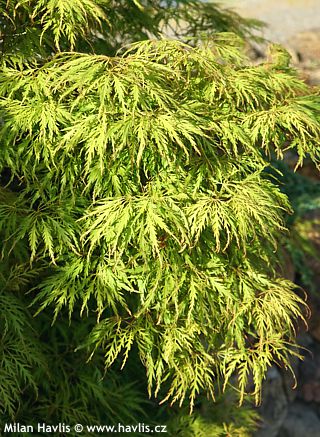
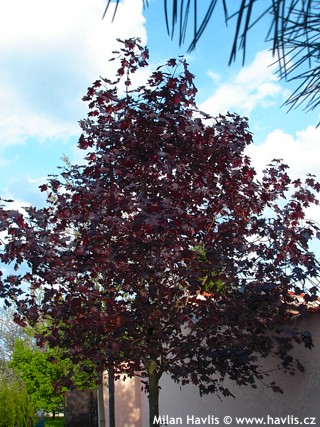
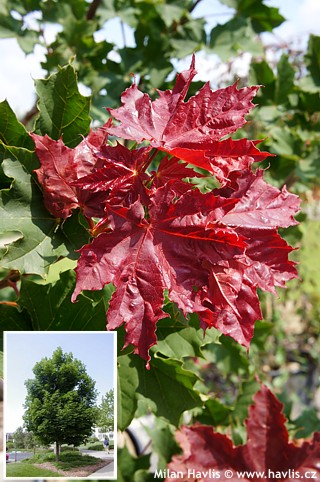
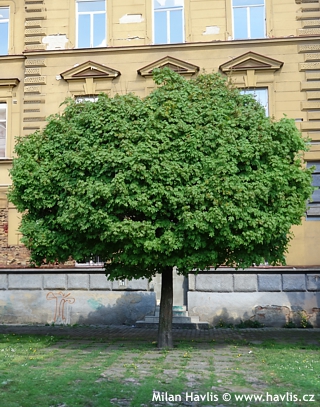
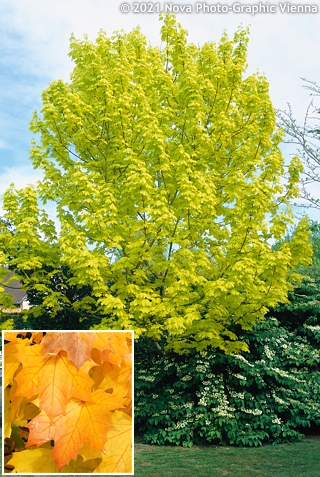

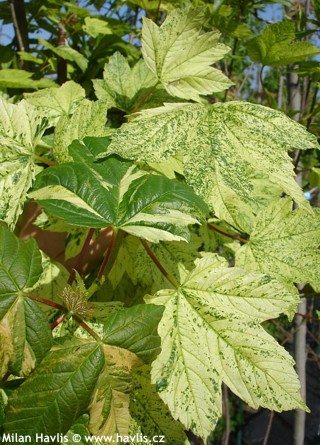
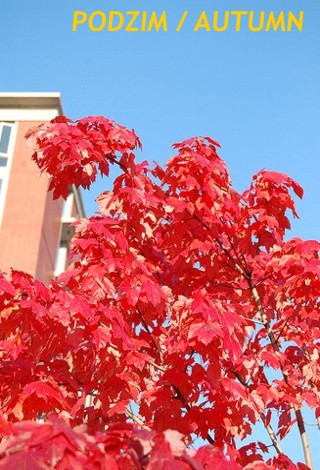
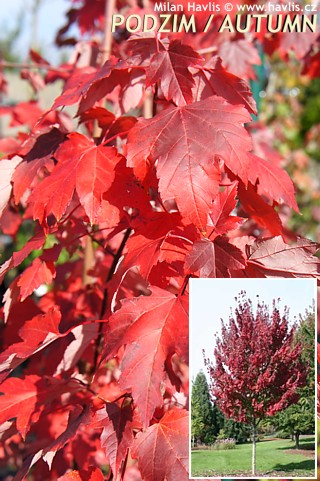
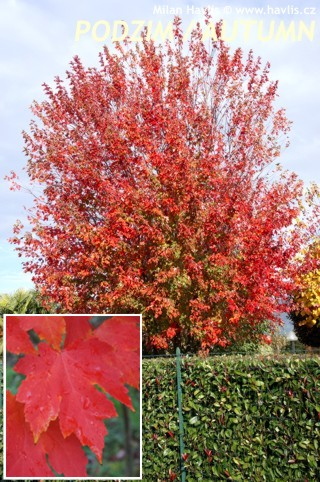
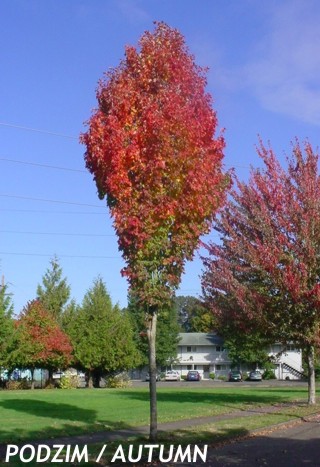
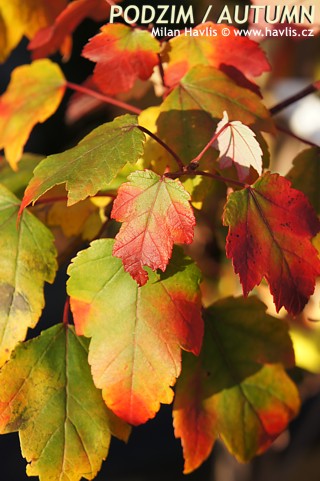
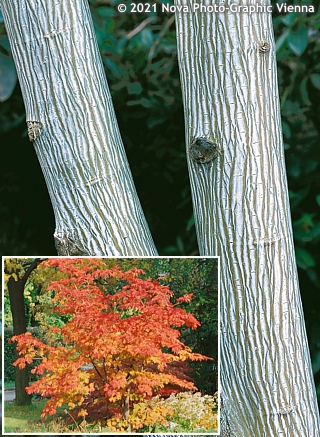
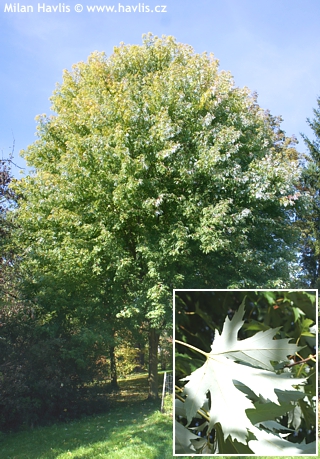
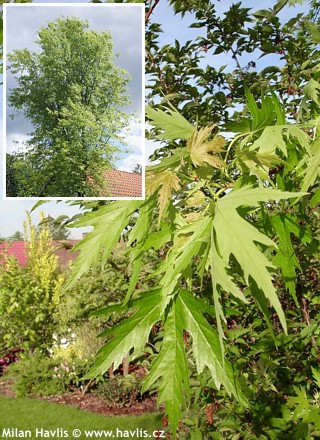
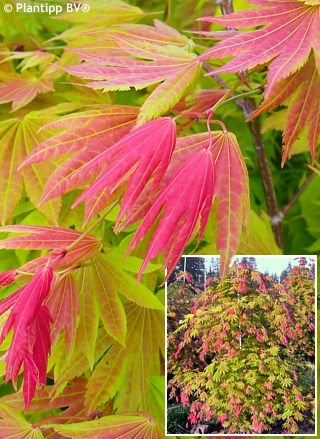
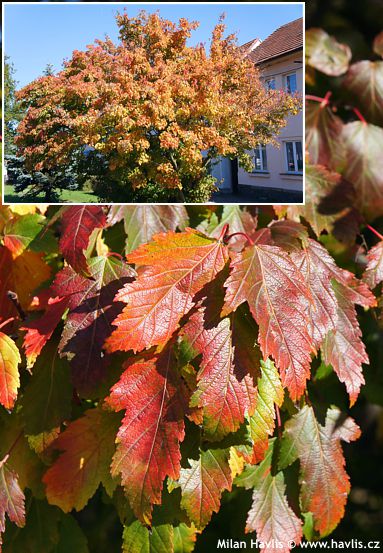
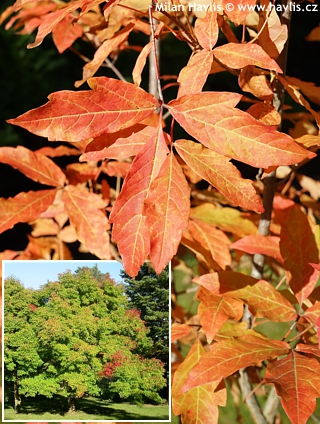
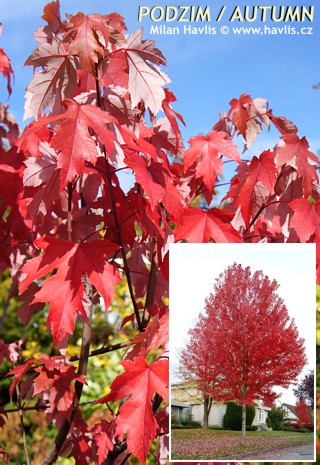
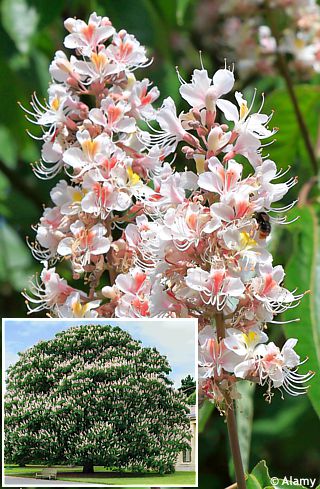
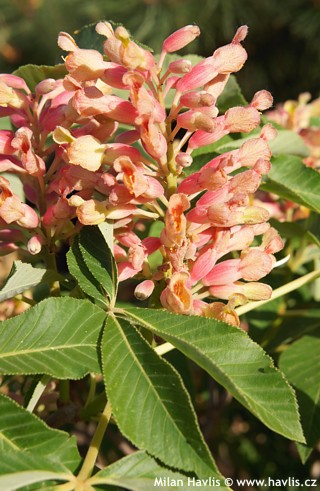
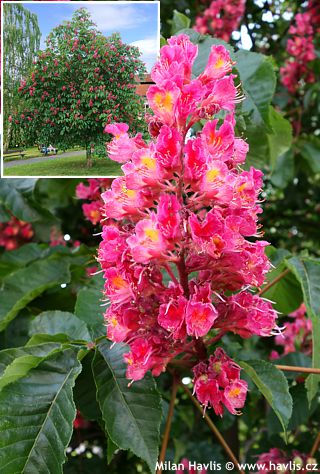
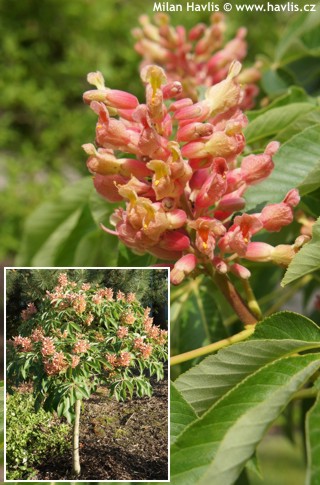
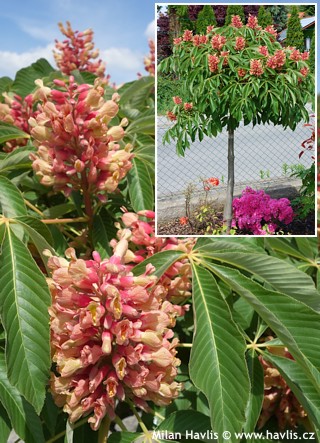
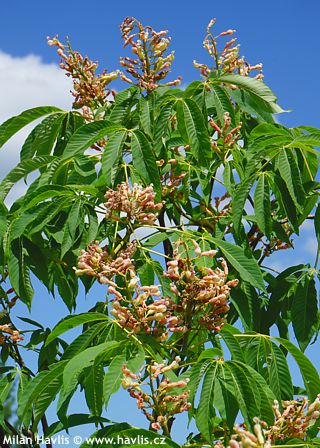
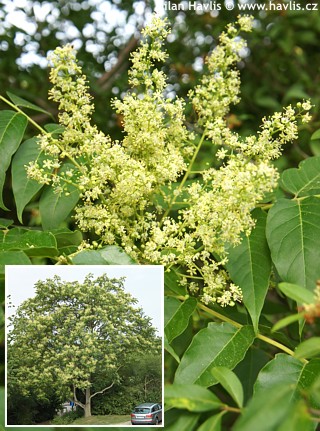
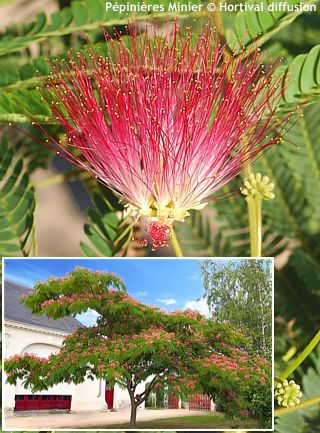
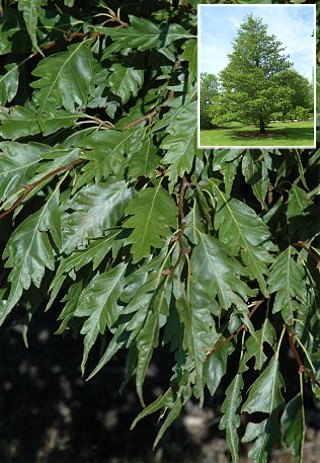
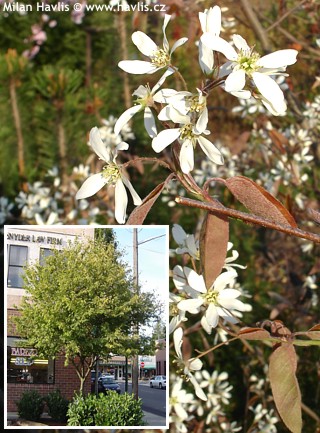
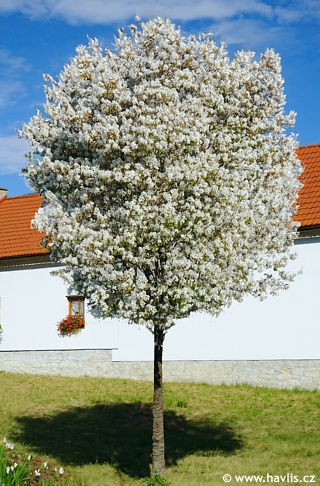
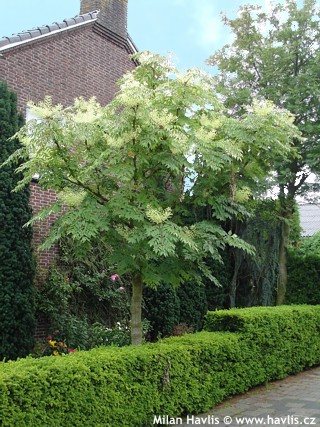
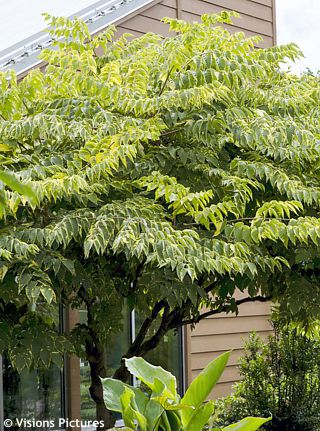
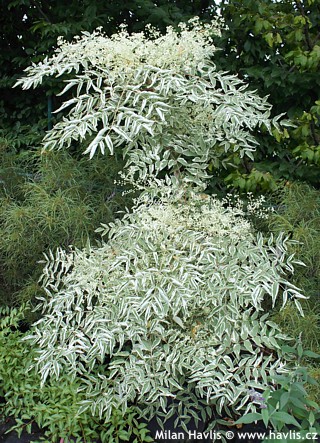
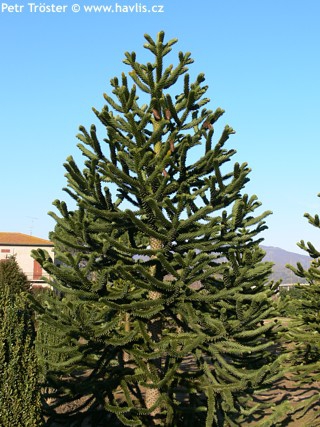
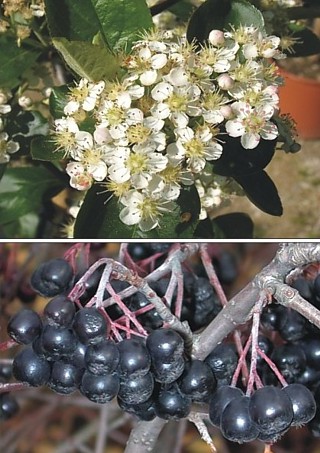
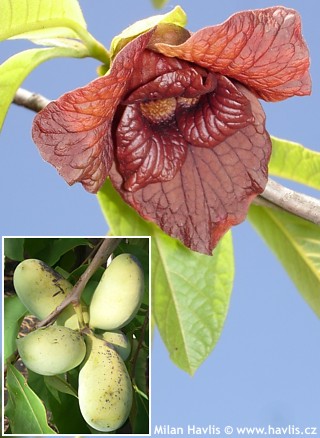
.jpg)
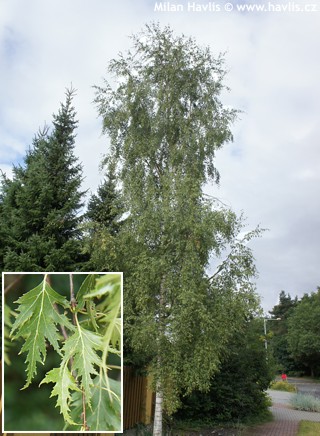
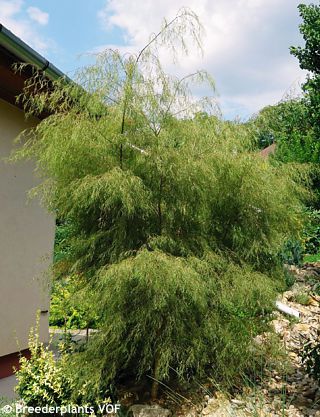
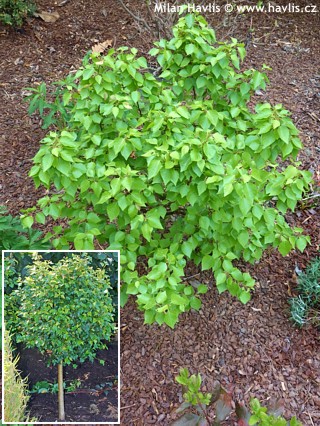
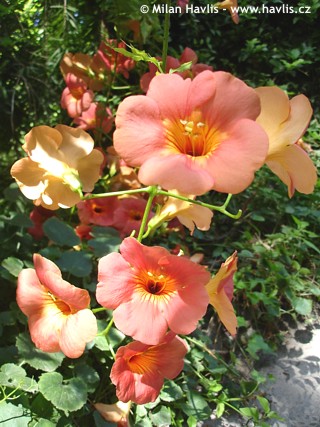
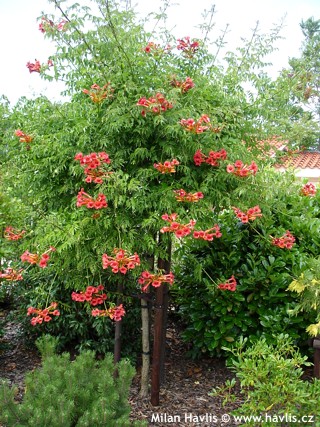
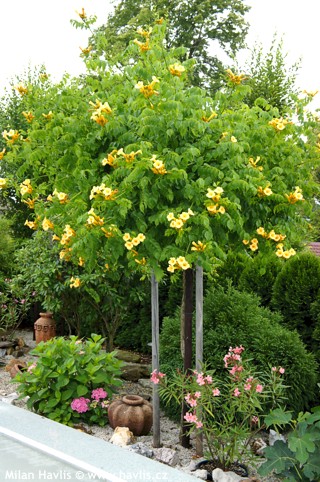
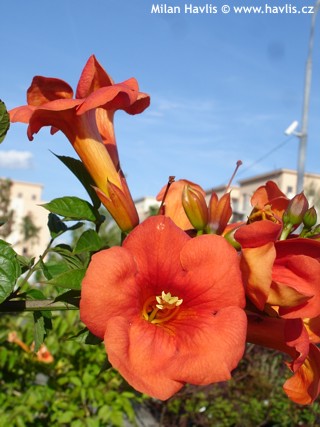
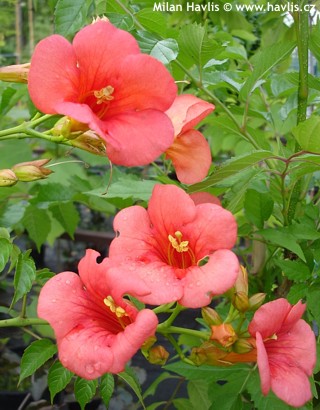
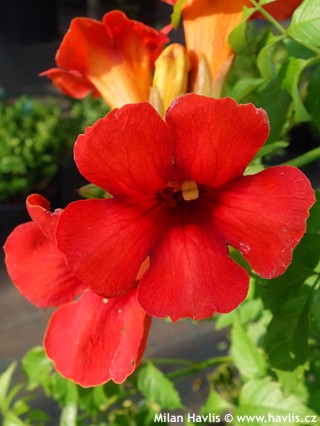
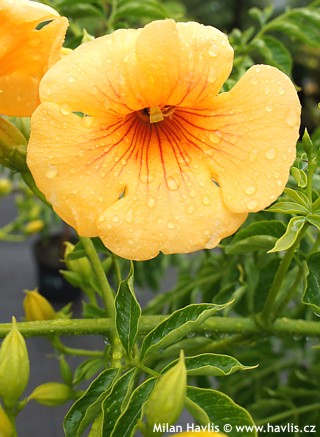
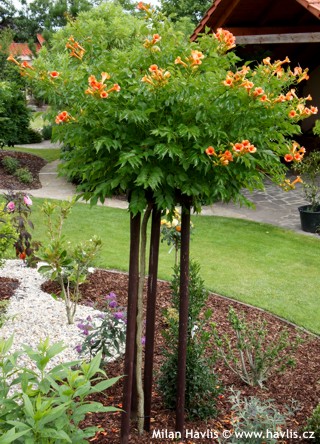
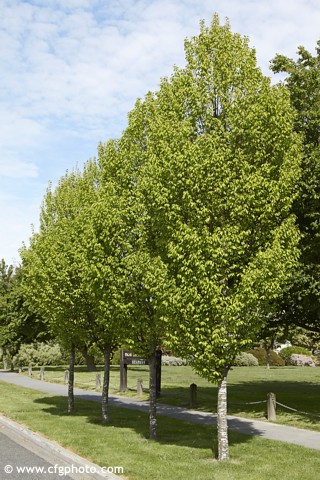
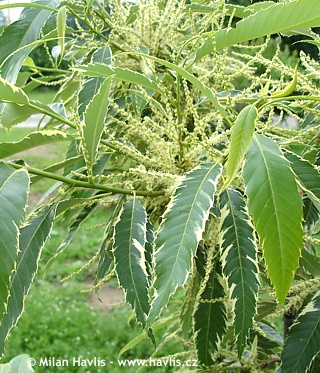
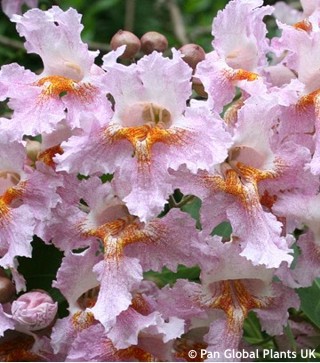
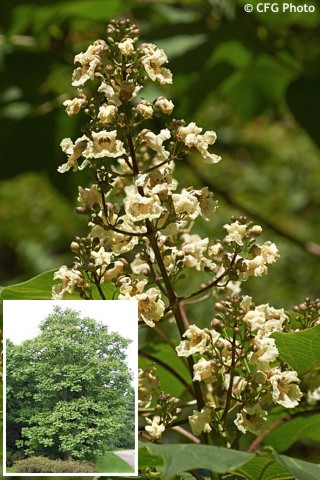
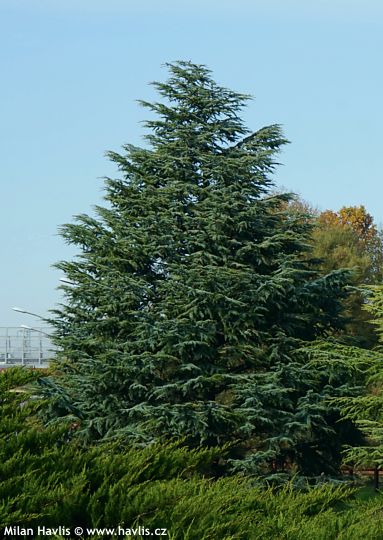
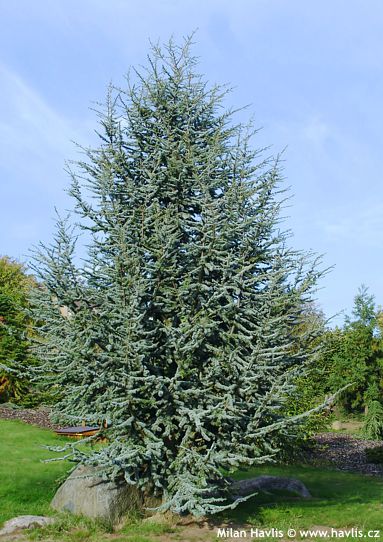
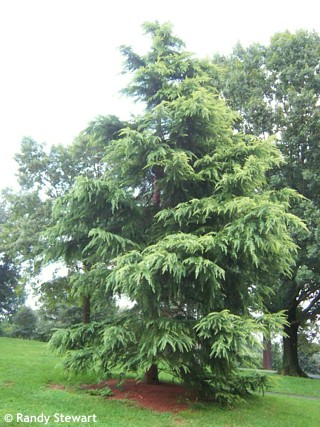
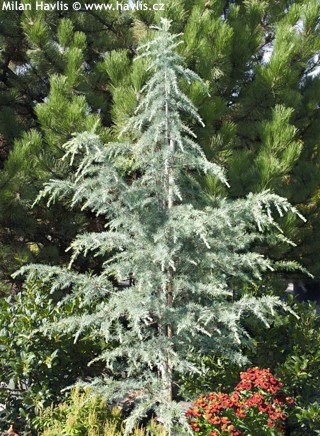
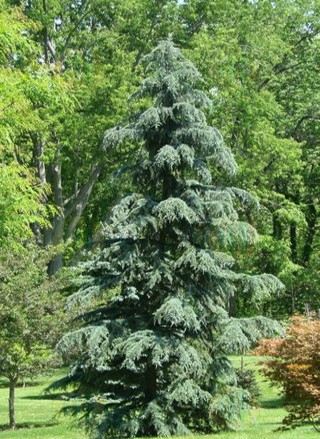
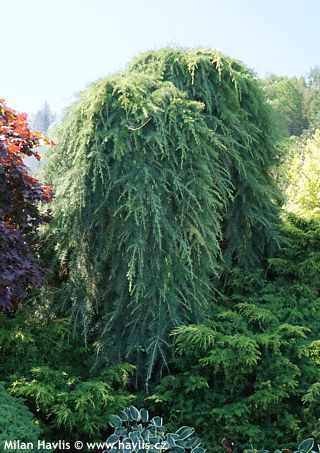
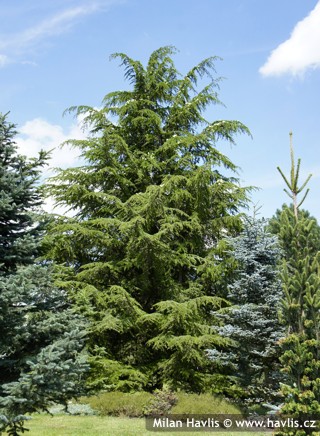
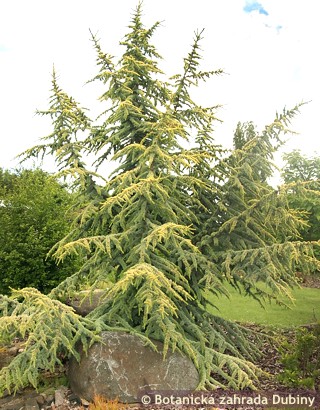
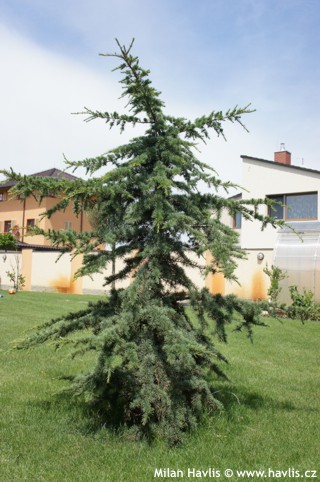
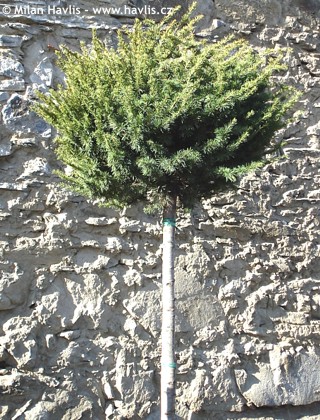
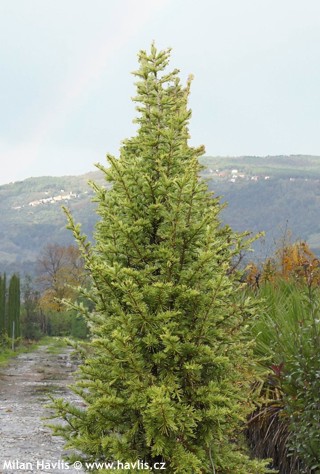
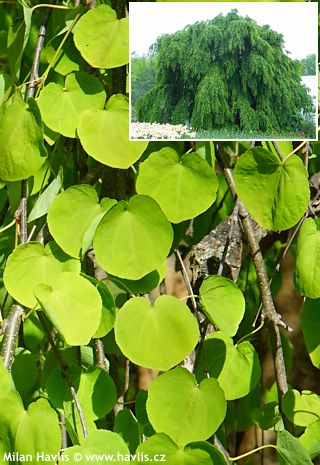
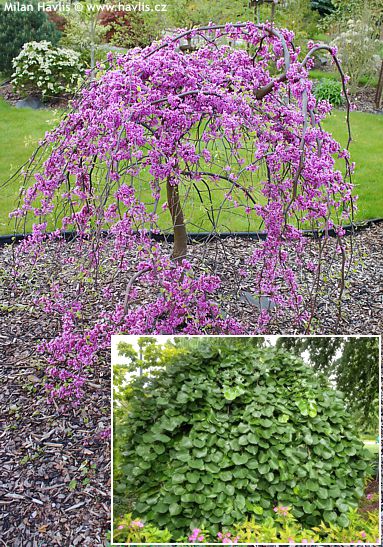
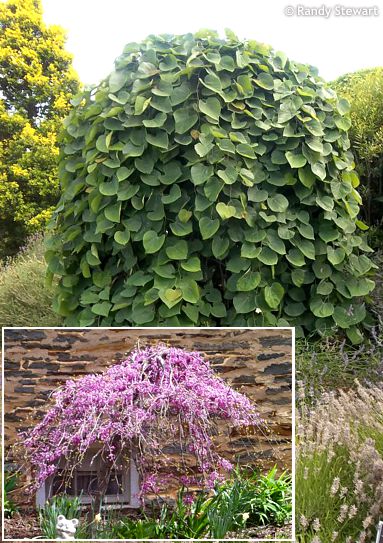
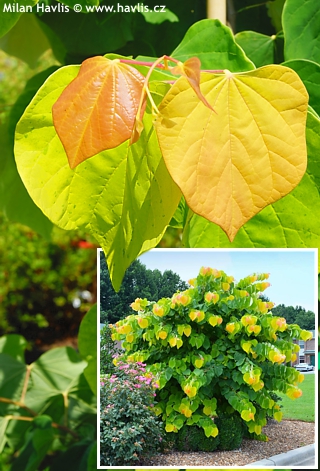
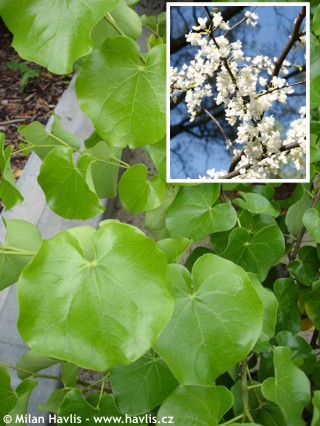
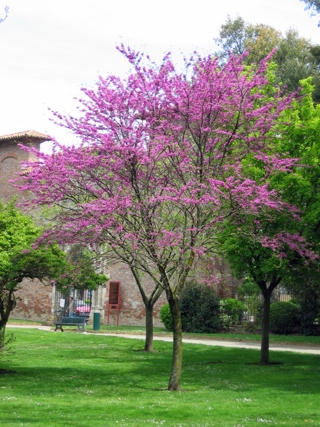
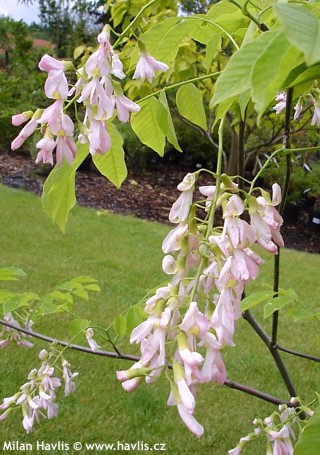
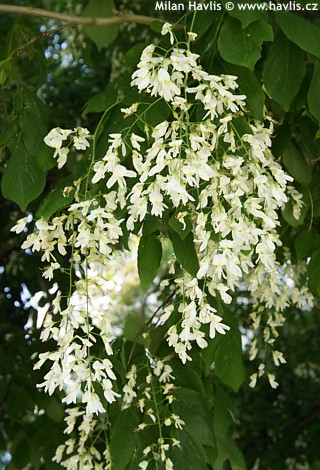
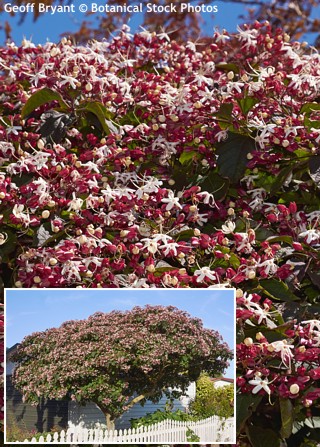
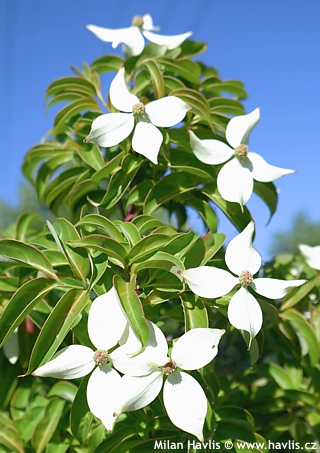
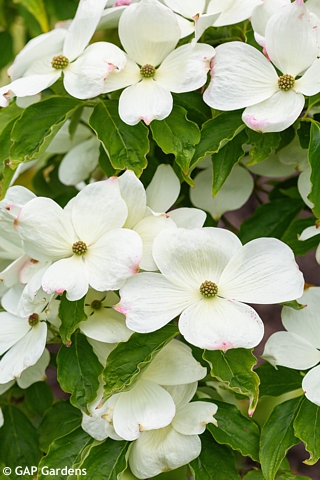
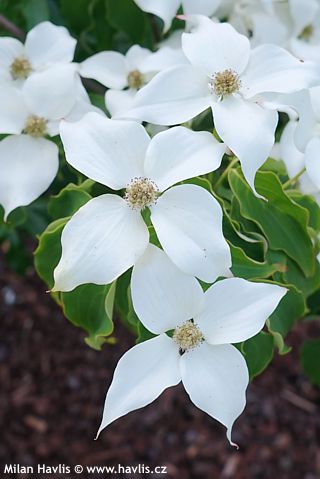
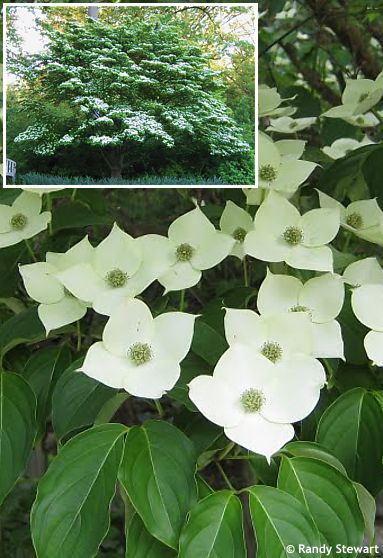
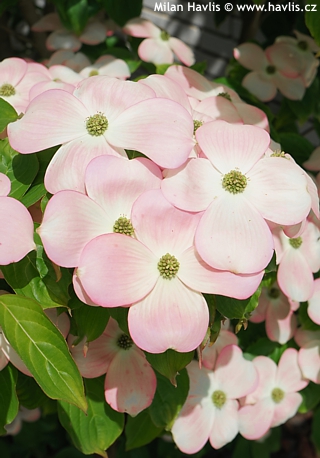
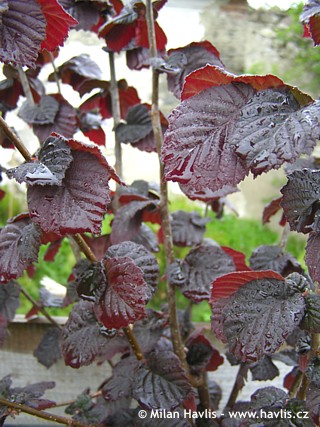
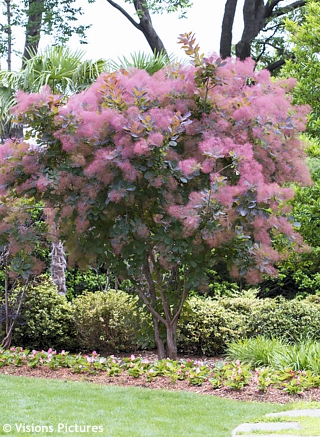
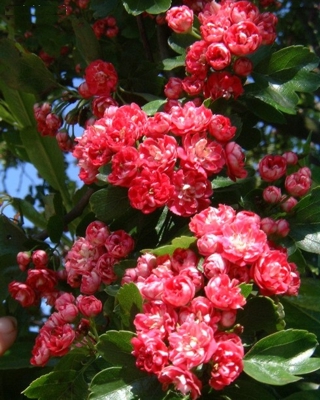
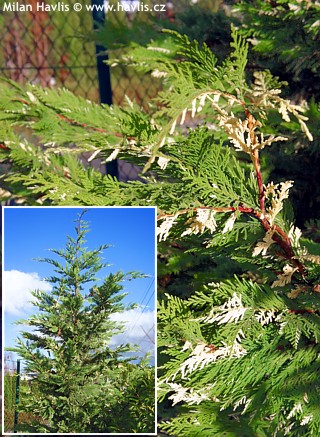
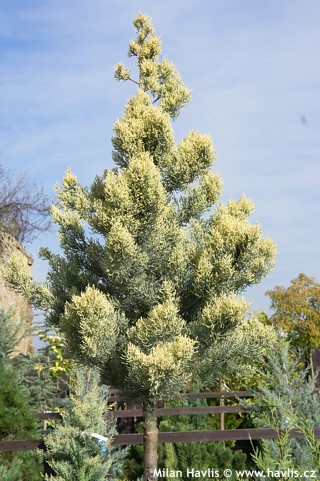
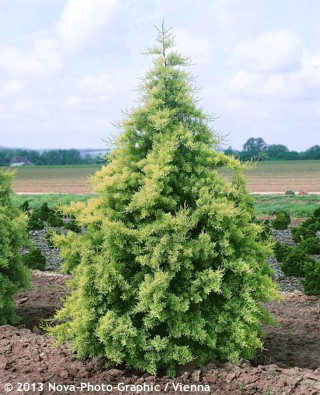
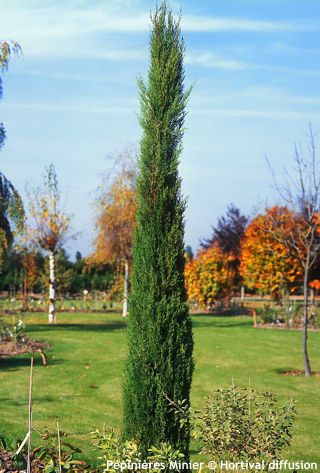
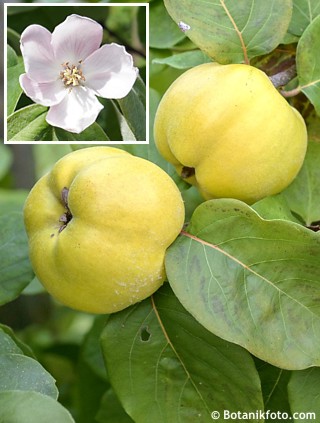
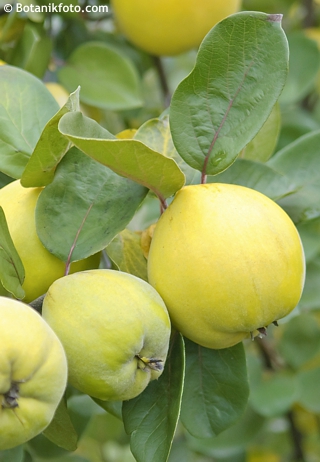
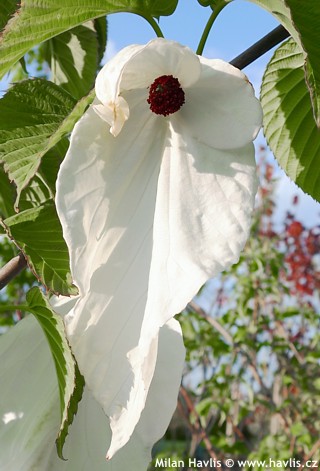
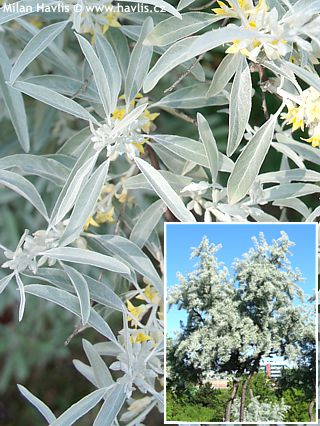
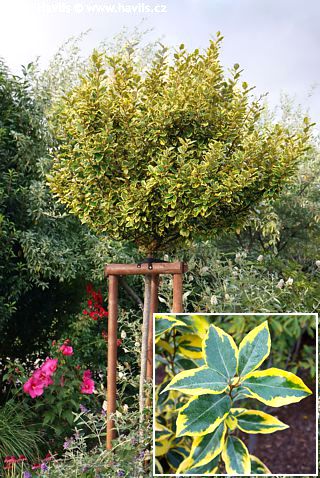
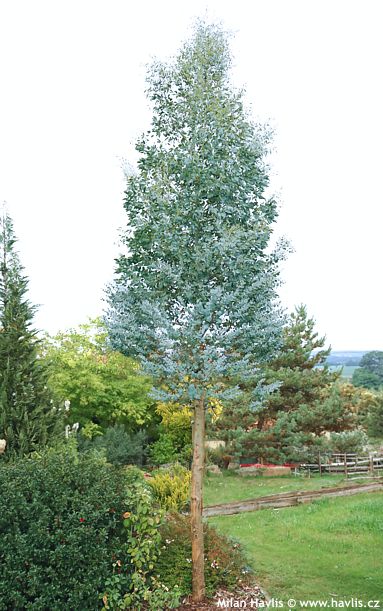
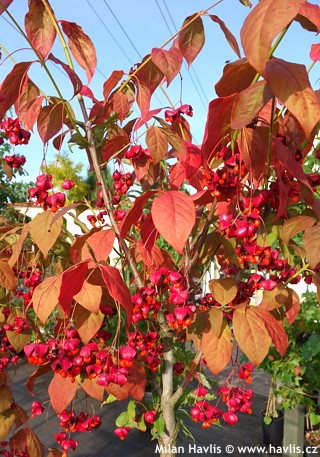
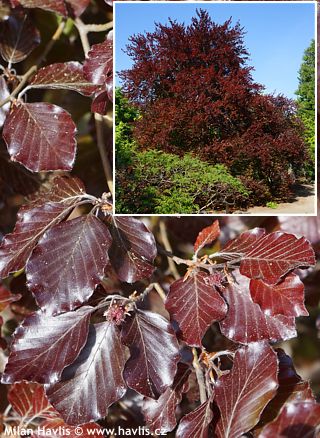
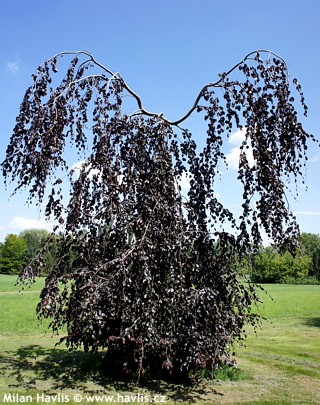
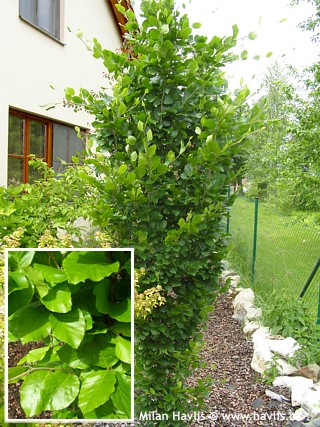
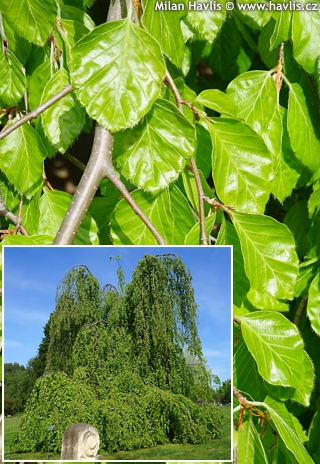
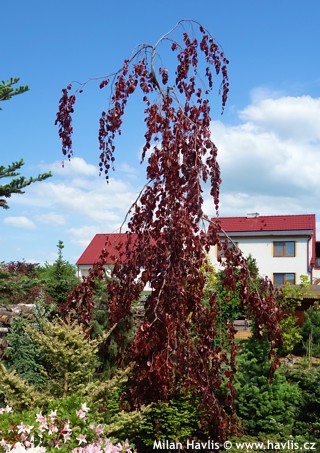
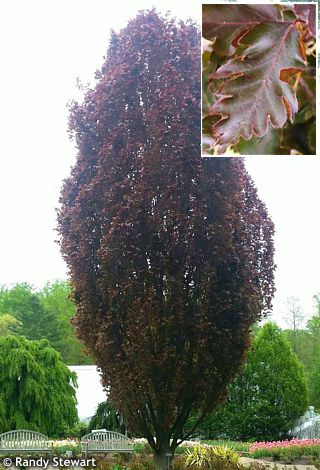
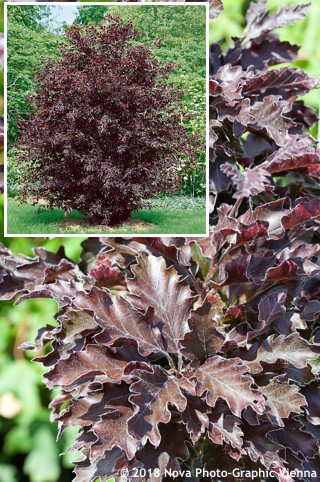
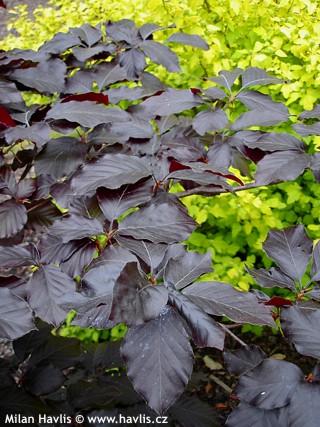
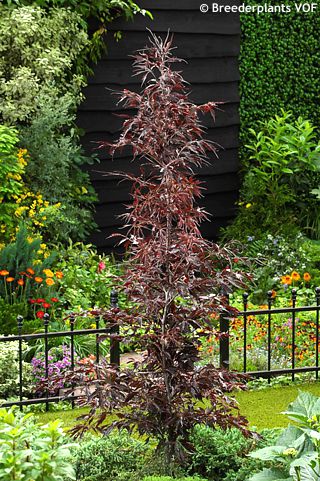
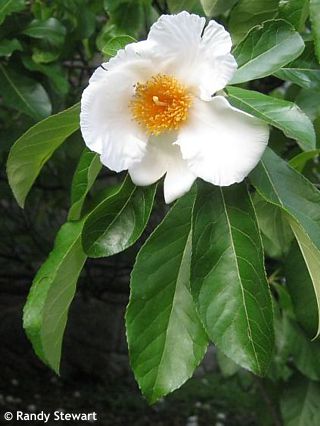
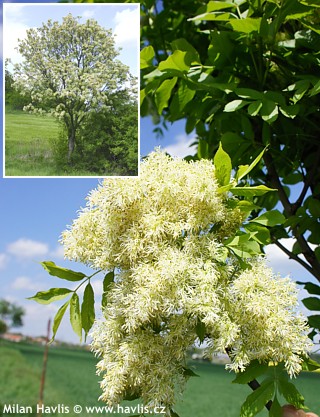
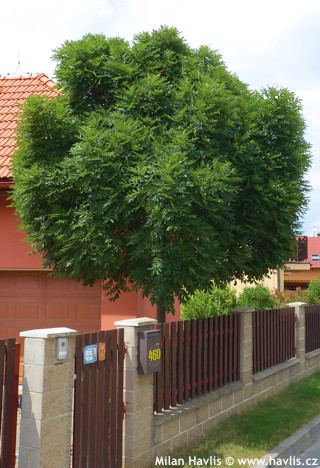
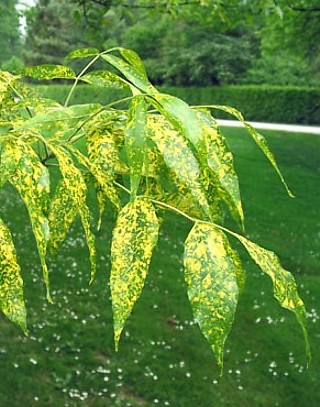
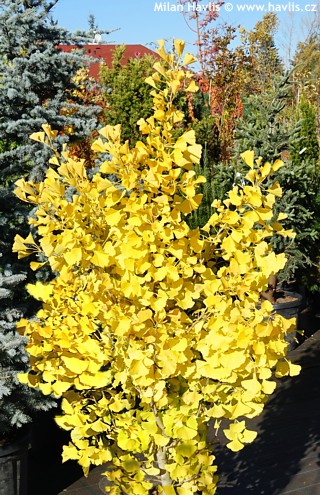
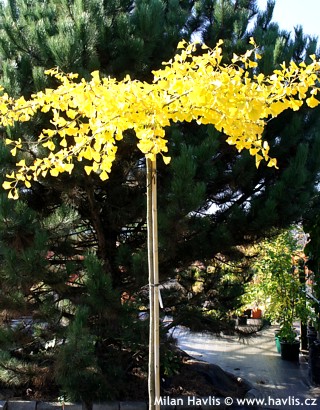
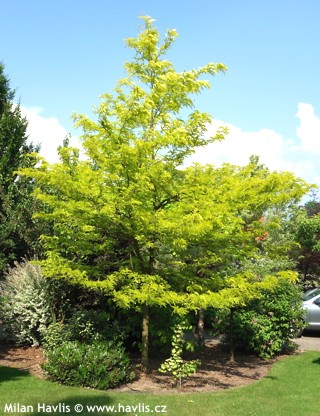
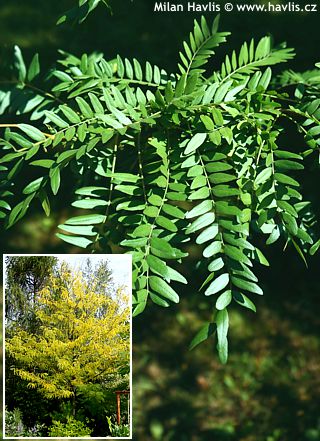
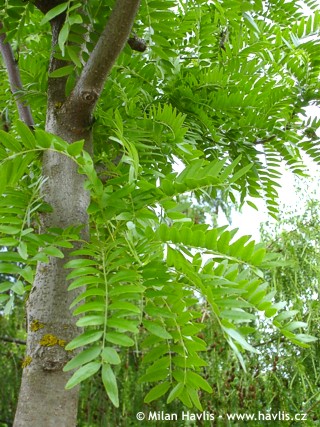
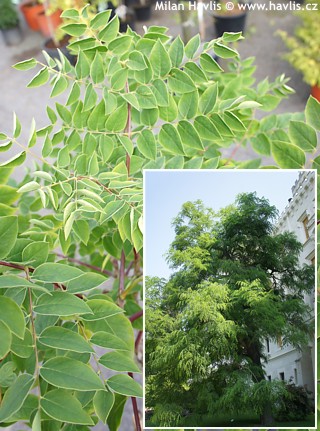
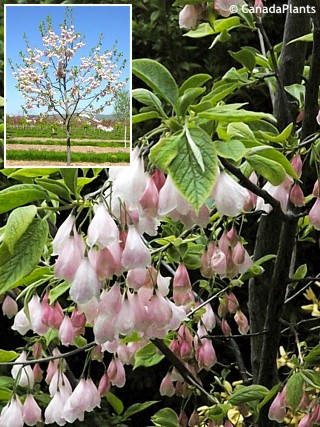
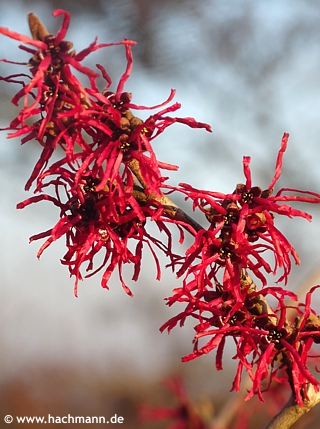
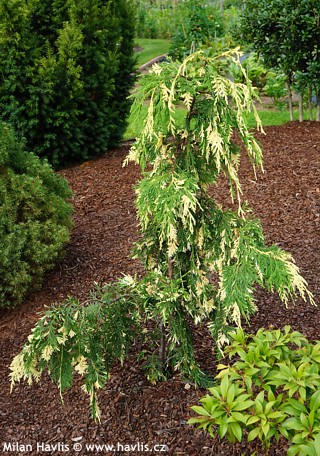
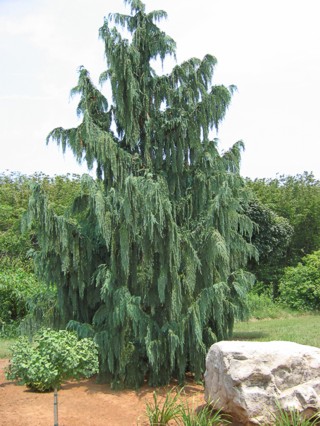
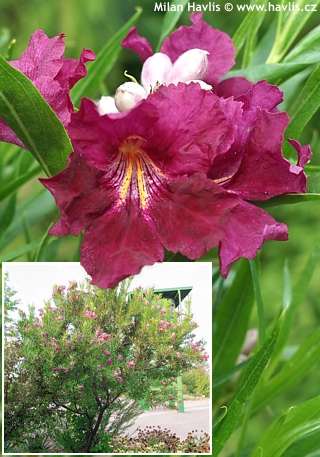
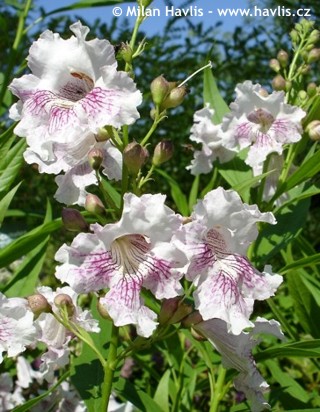
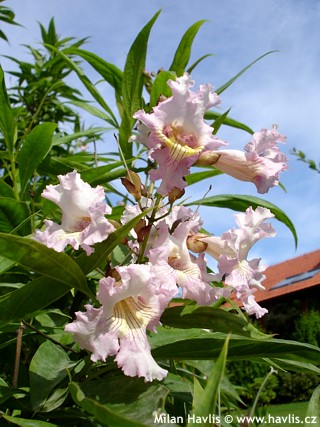
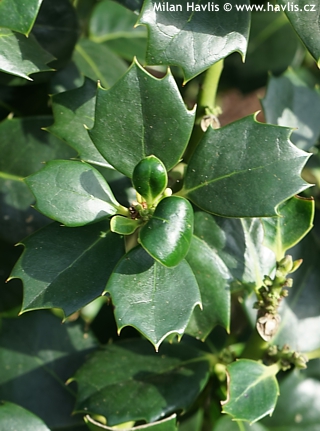
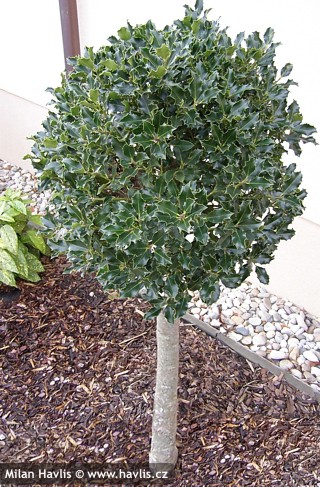
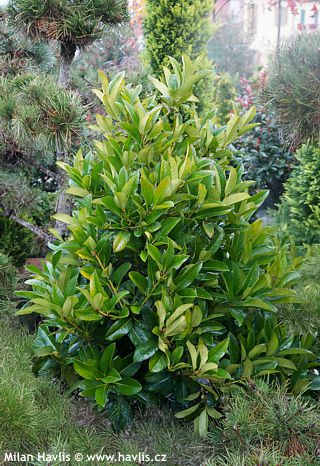
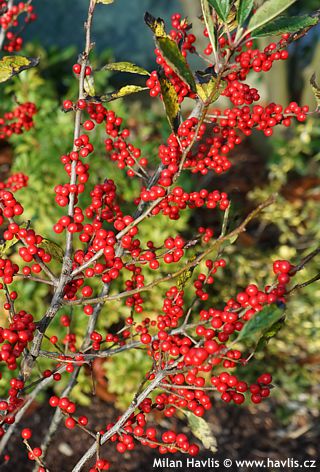
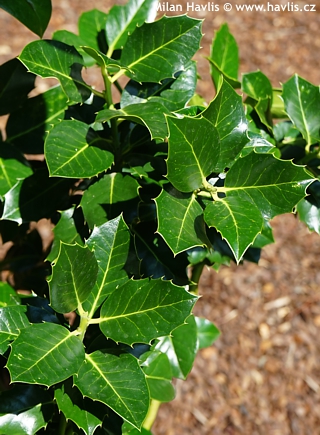
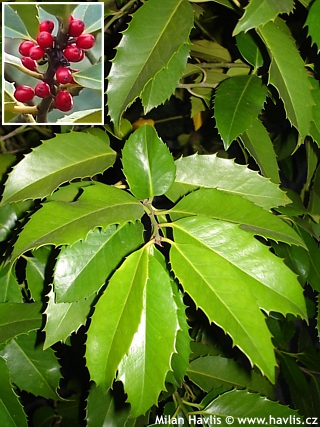
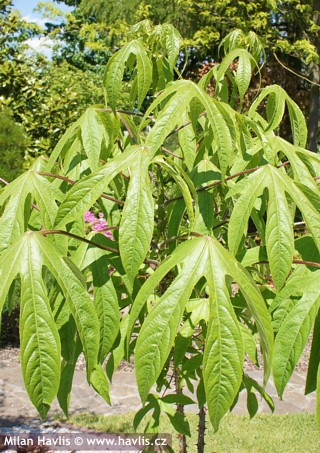
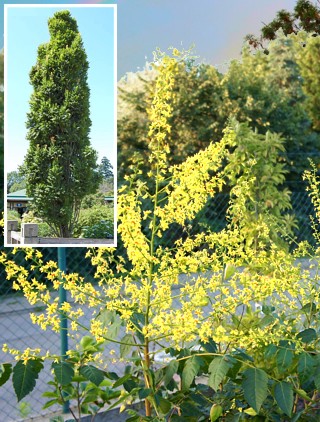
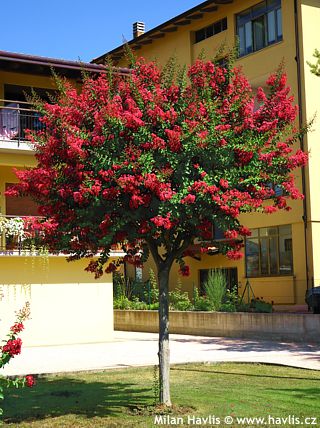

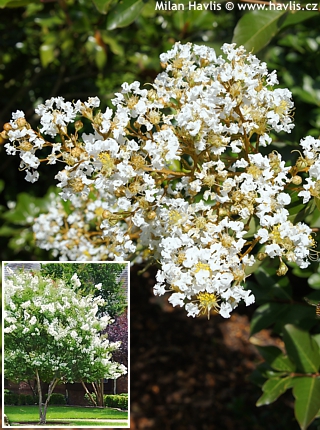

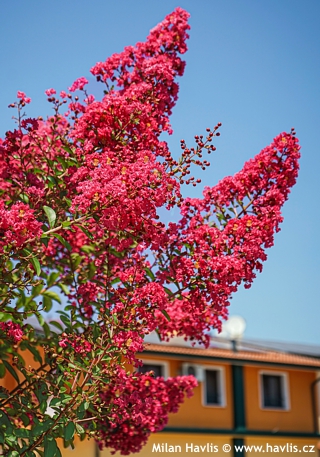
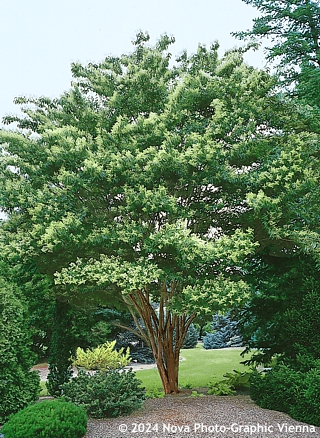
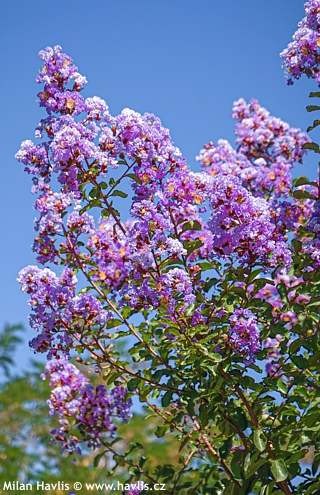
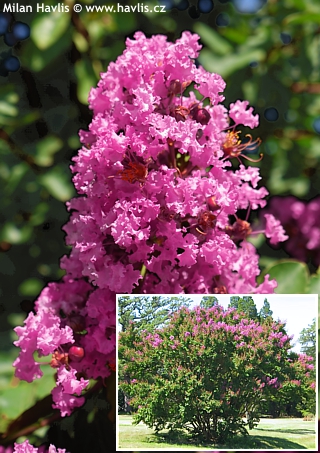
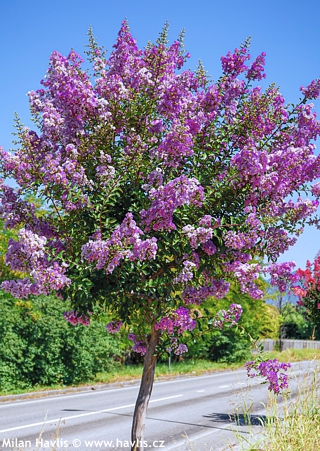
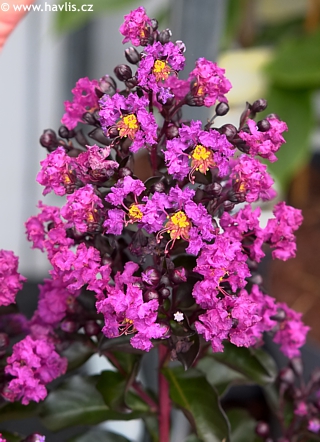
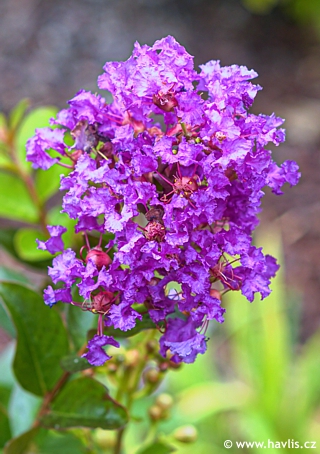
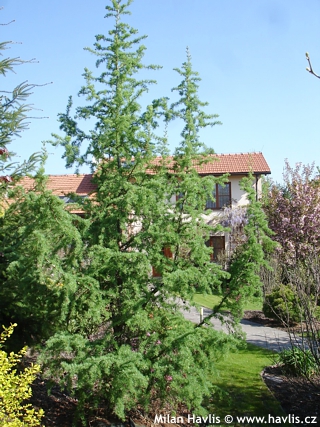
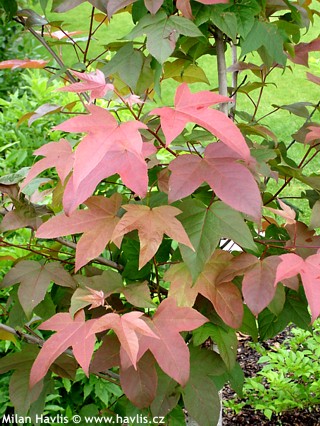
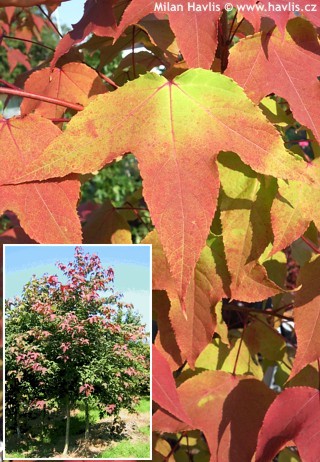
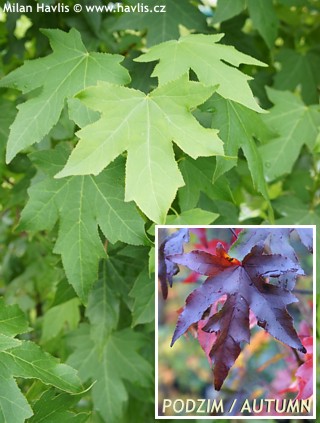
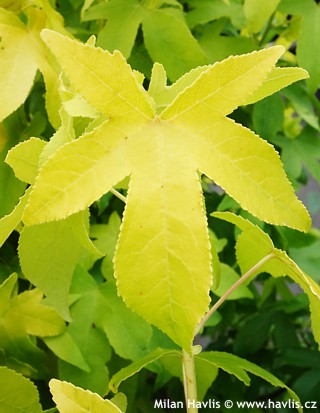
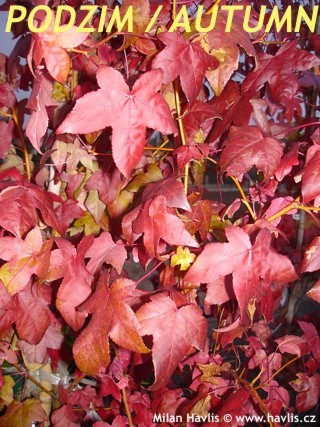
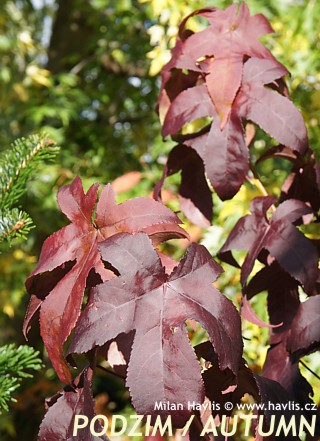
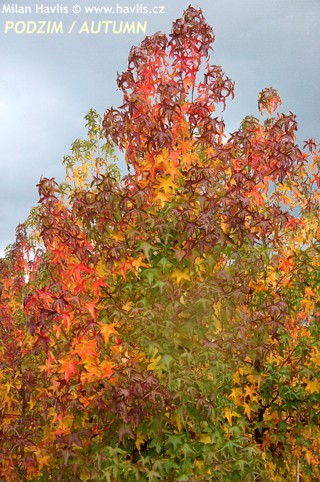
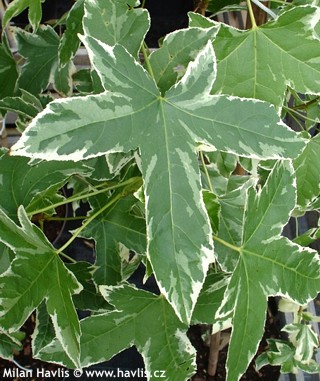
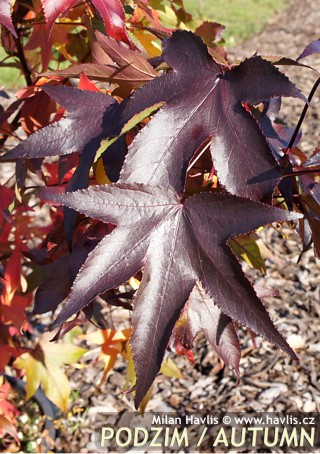
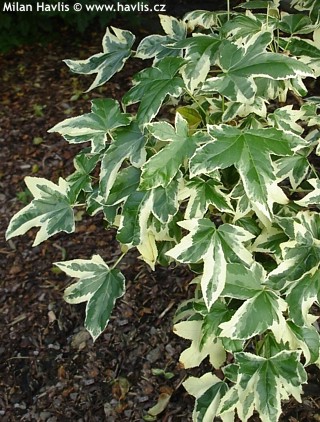
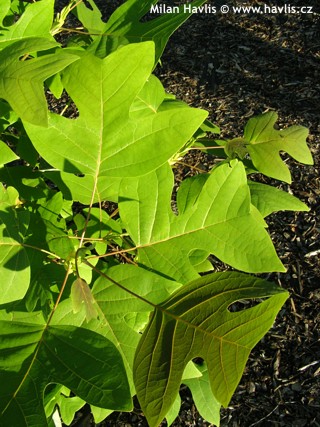
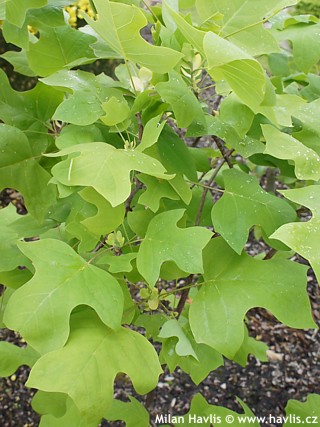
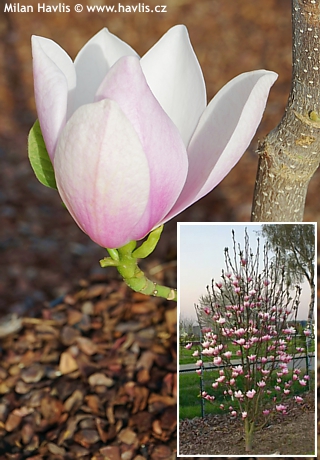
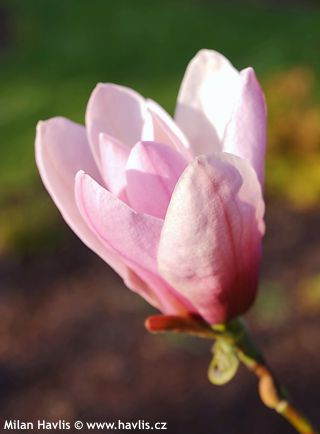
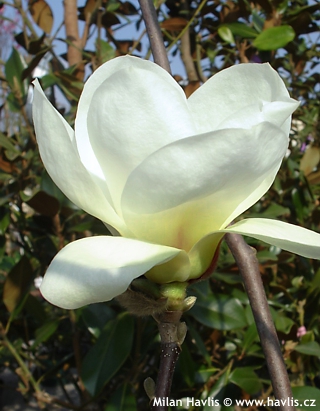
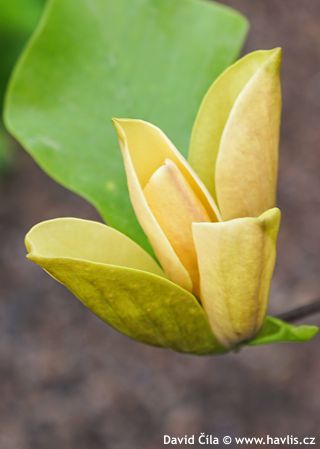
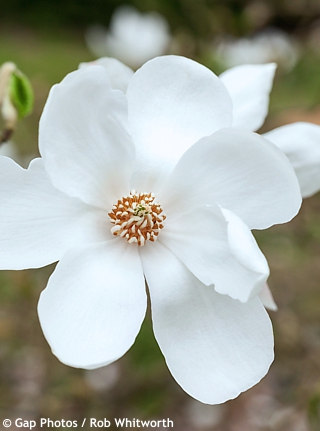
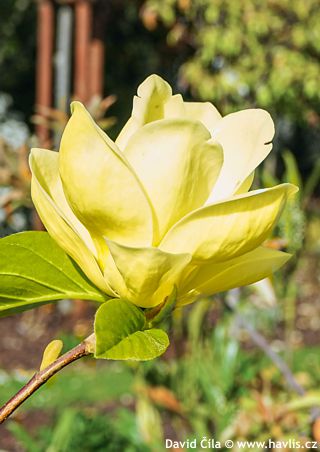
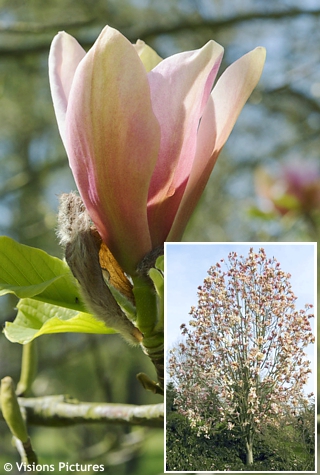
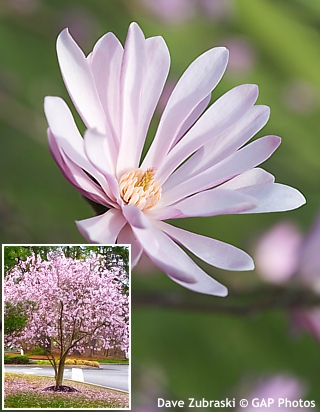
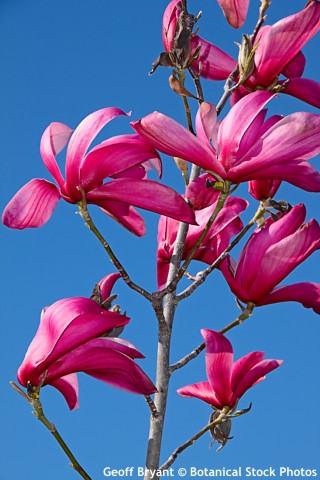
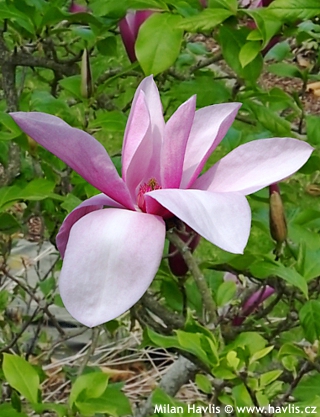
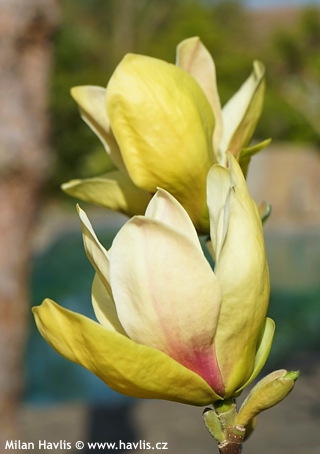
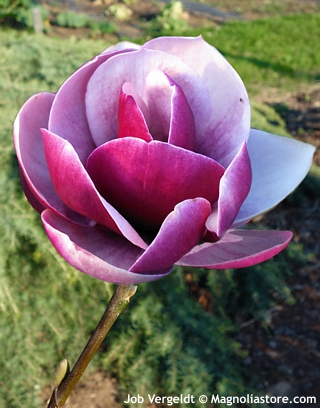
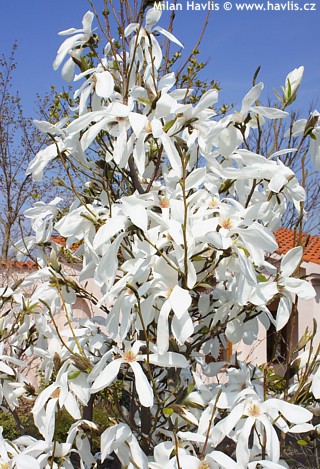
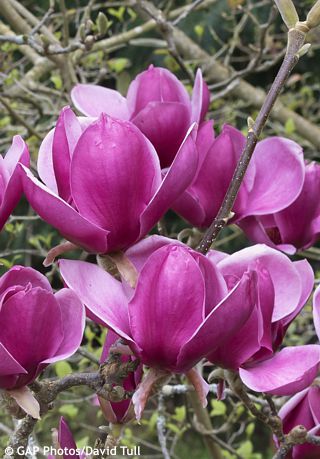
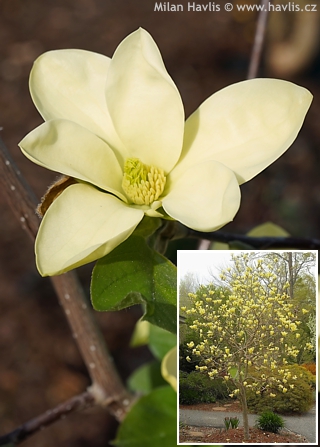
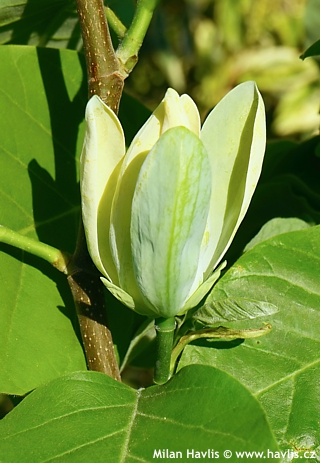
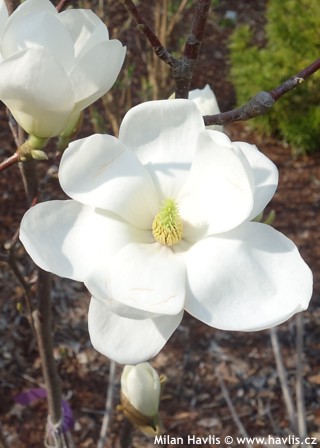
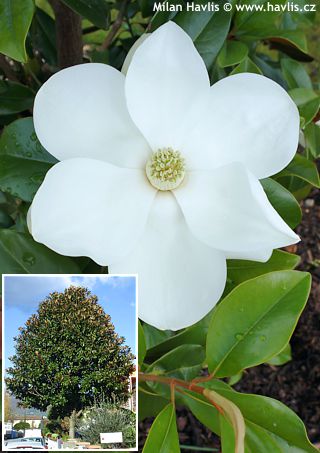
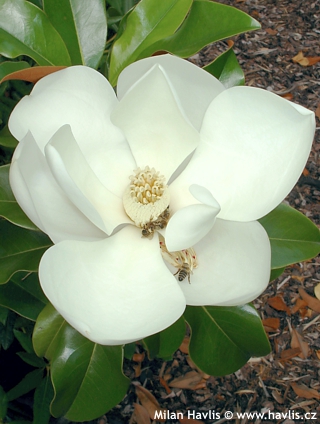
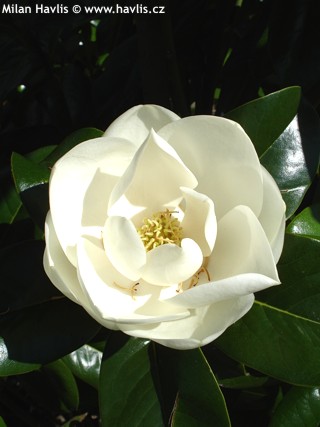
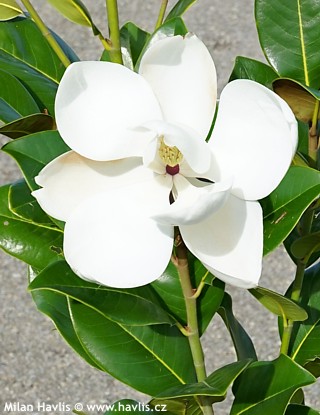
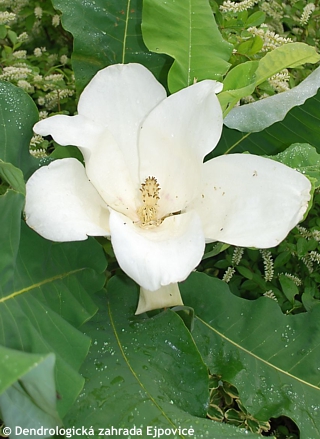
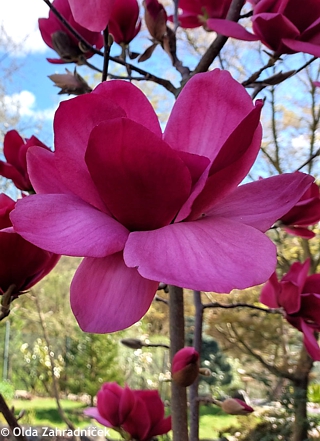
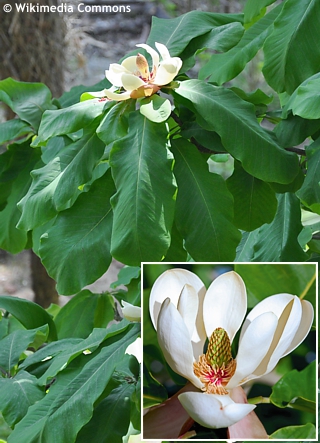
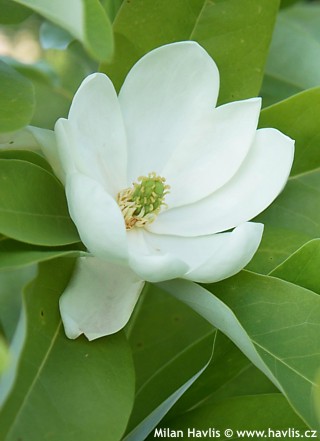
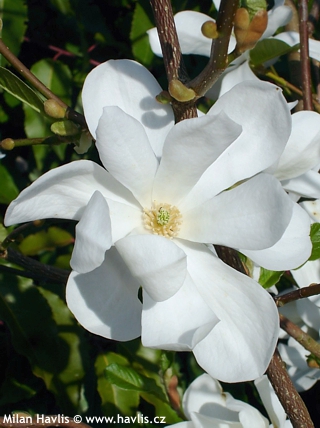
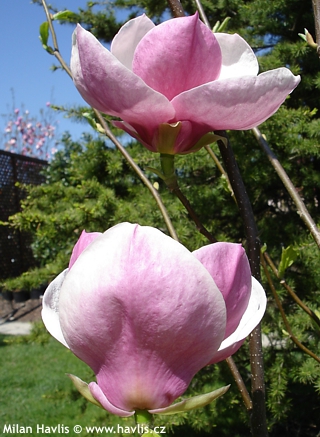
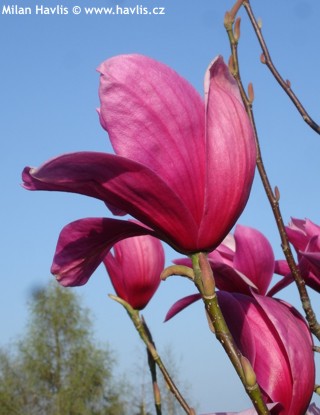
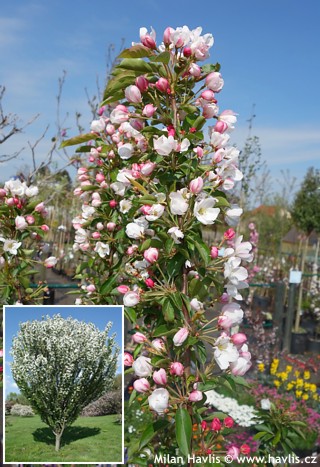
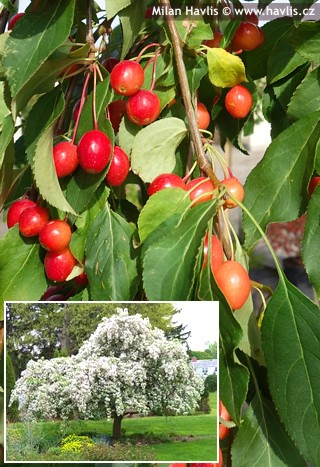
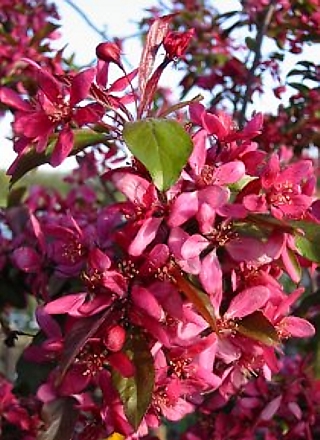
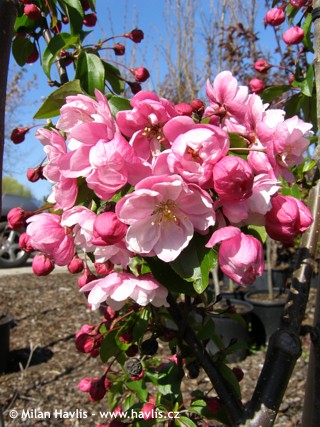
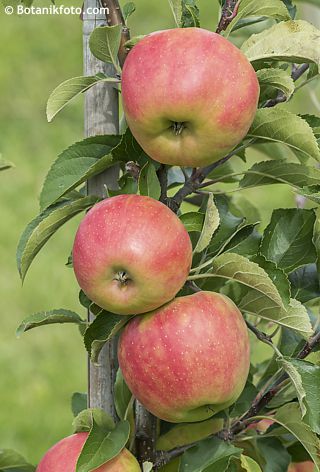
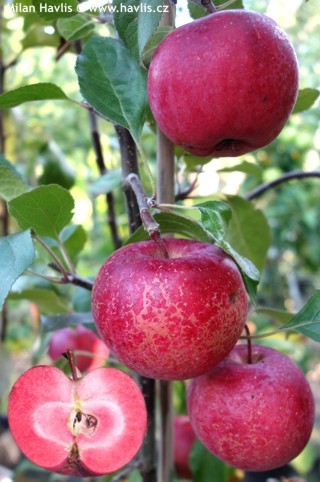
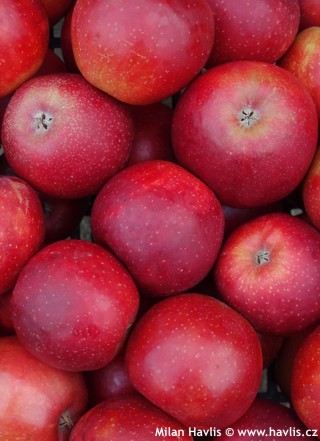
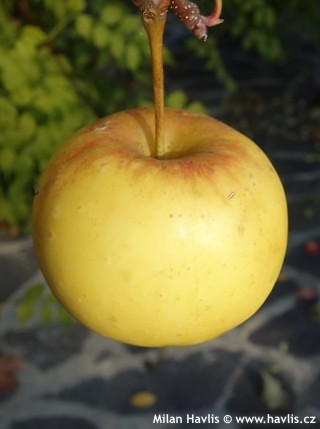
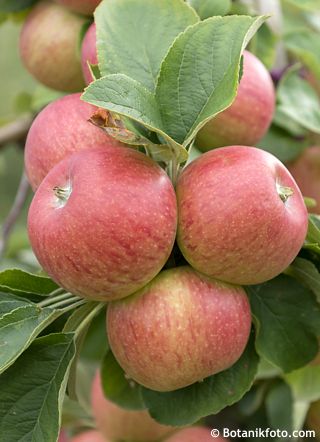
.jpg)
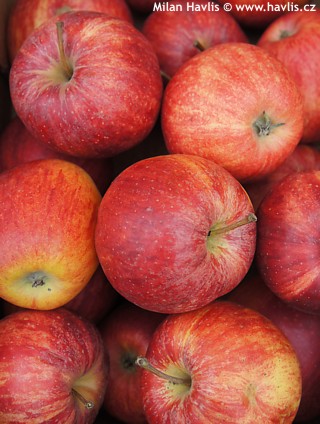
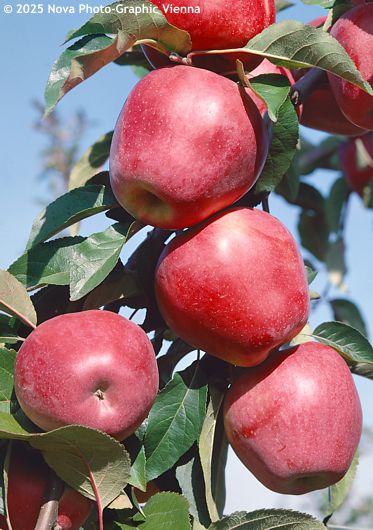
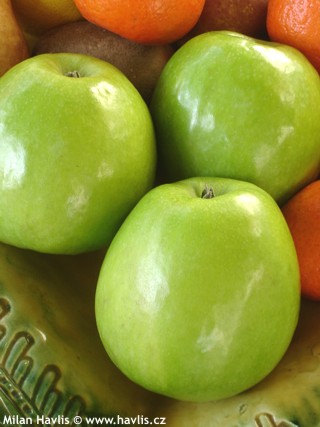
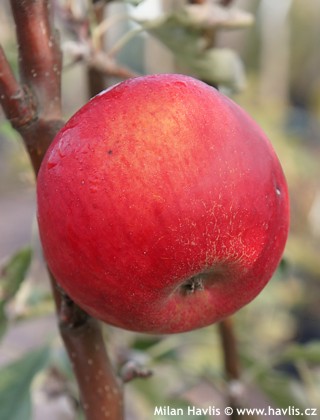
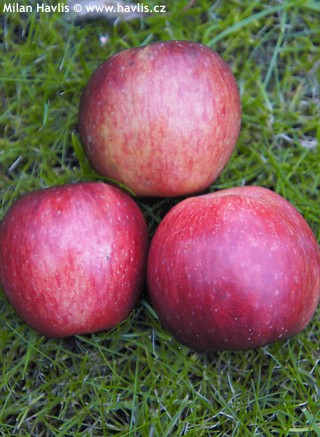
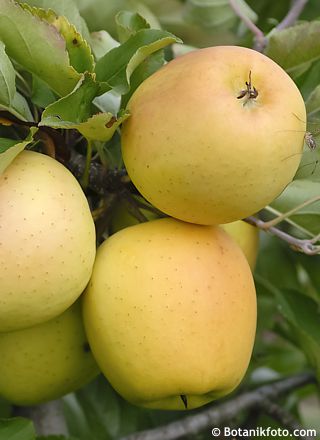
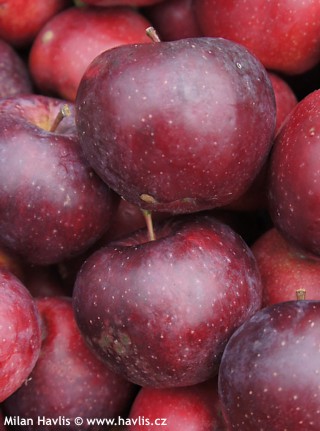
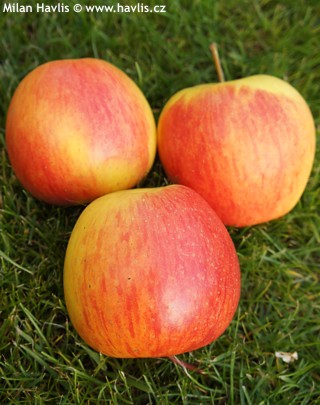
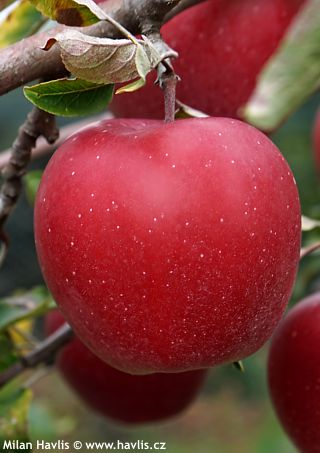
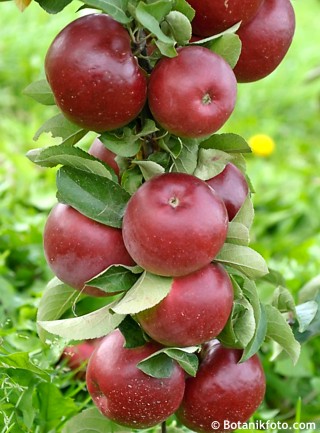
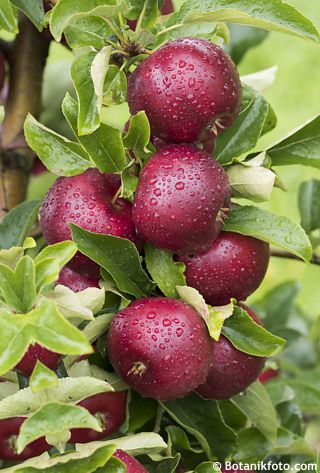
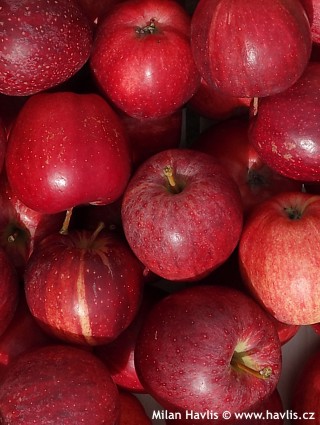
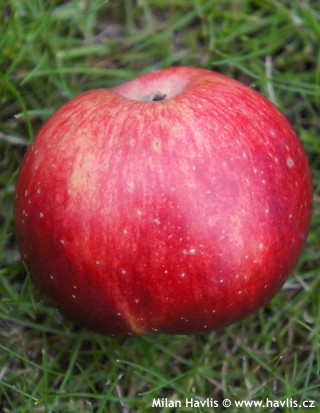
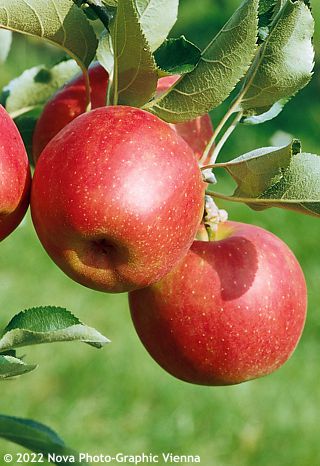
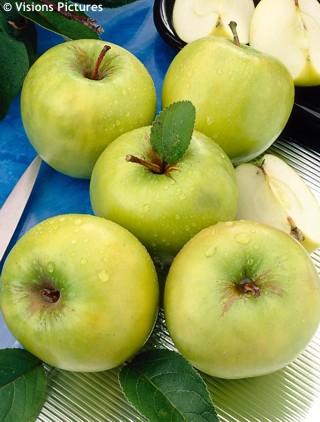
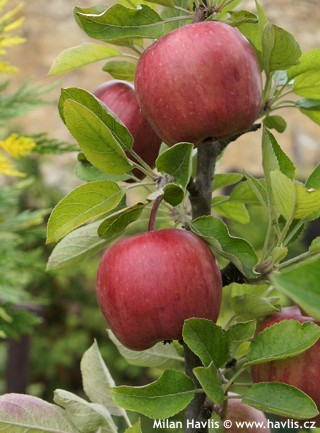
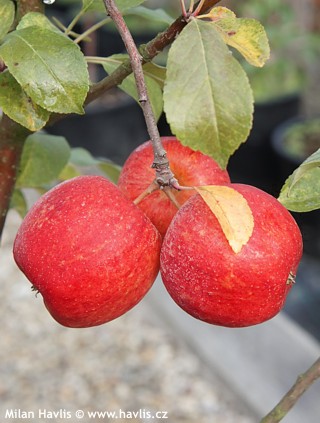
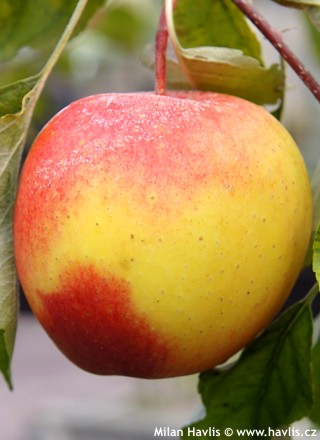
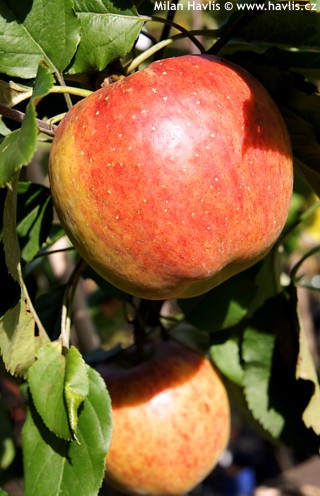
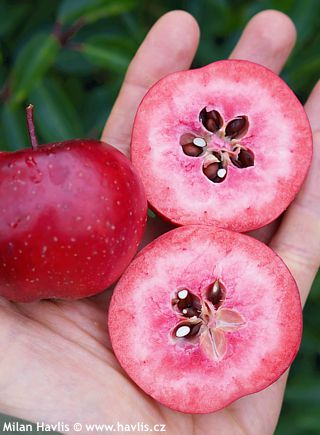
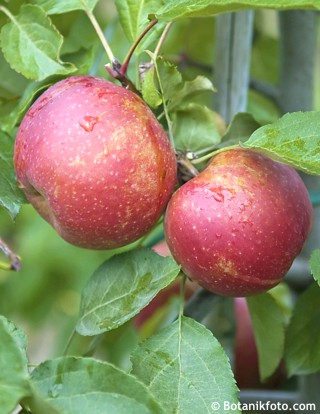
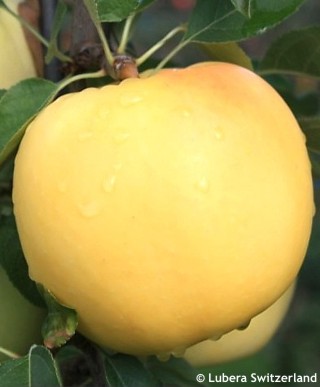
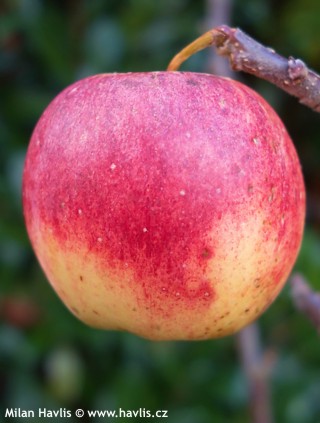
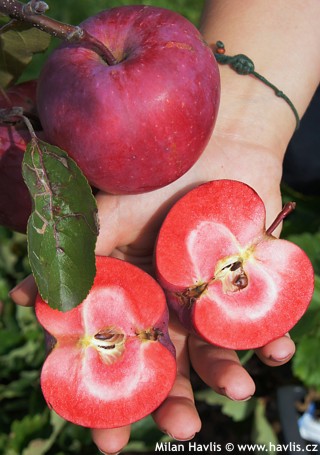
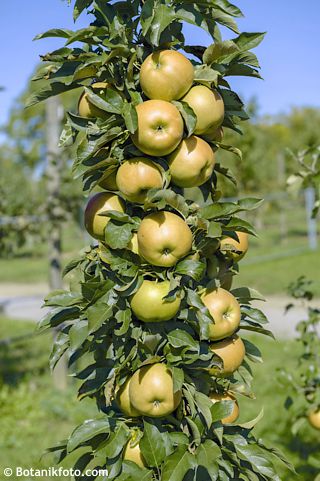
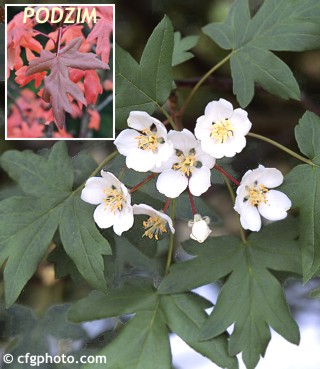
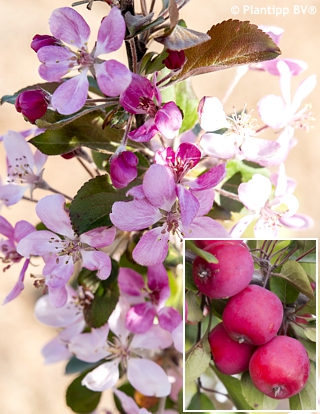
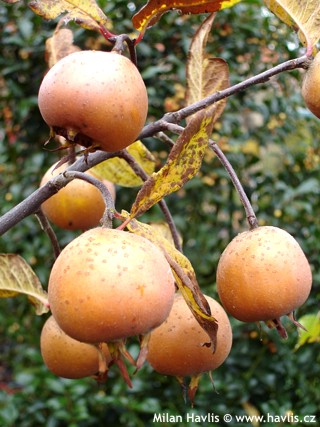
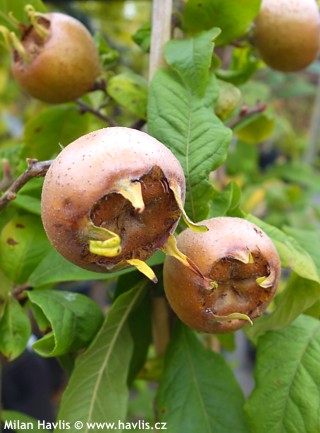
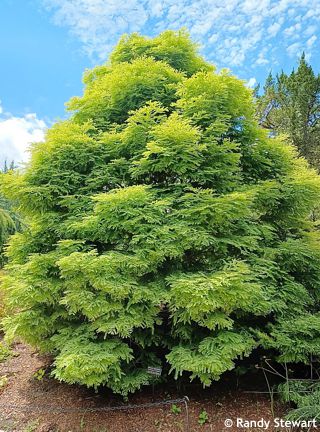
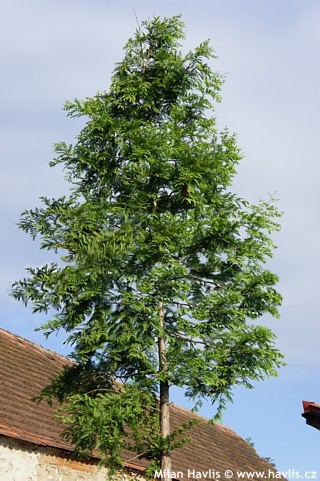
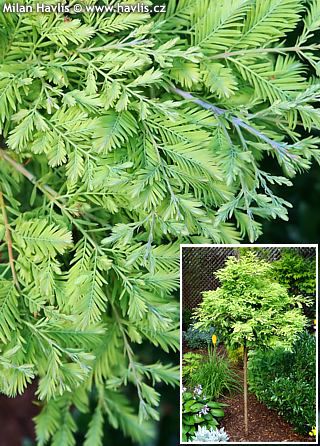
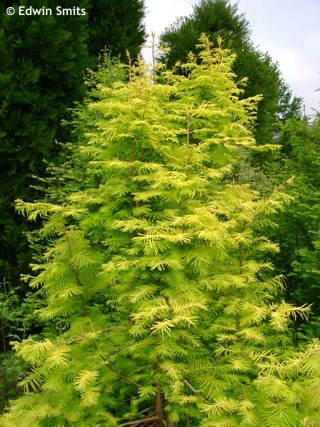
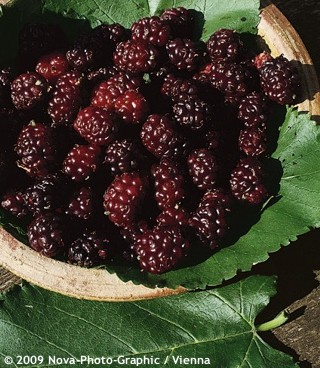
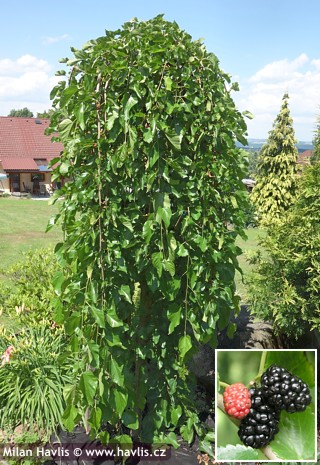
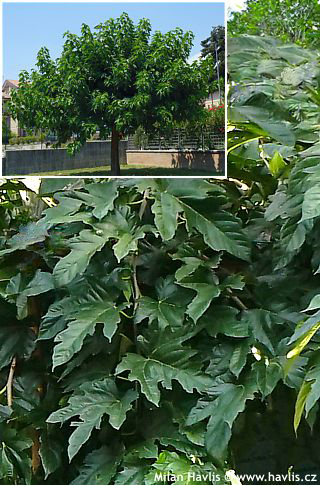
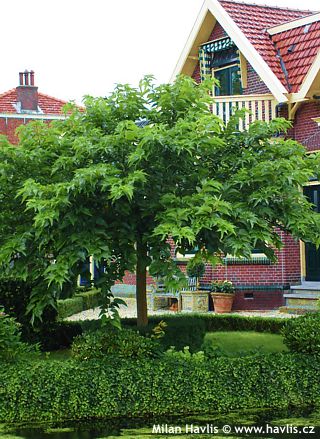
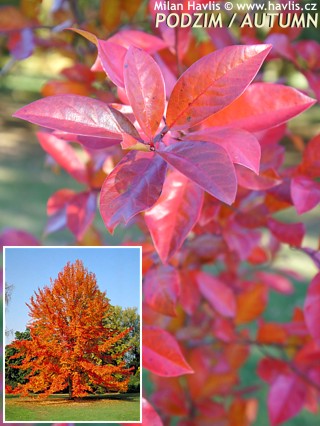
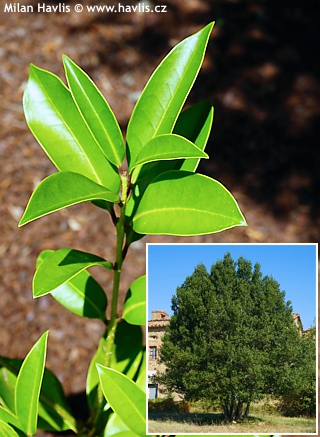
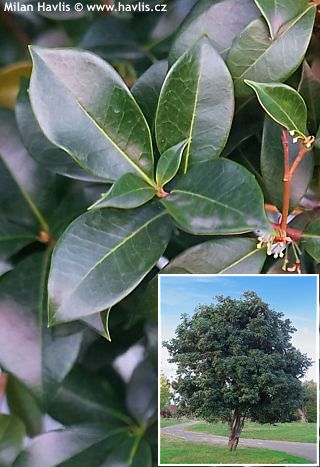
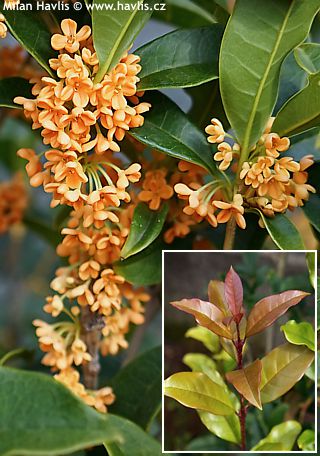
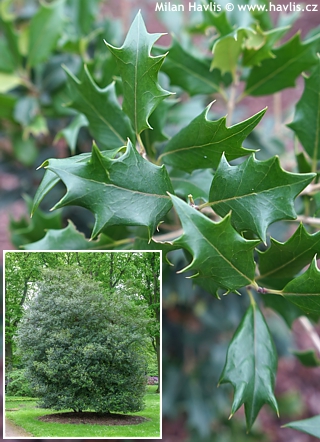
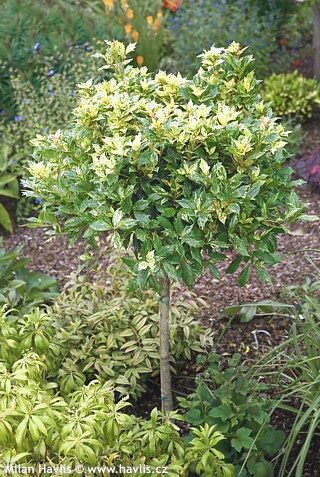
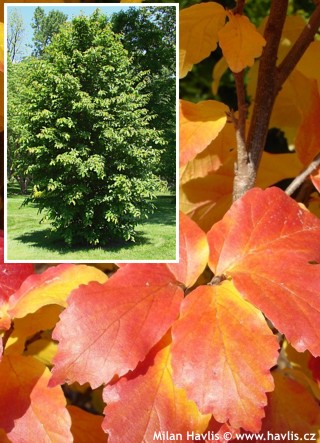
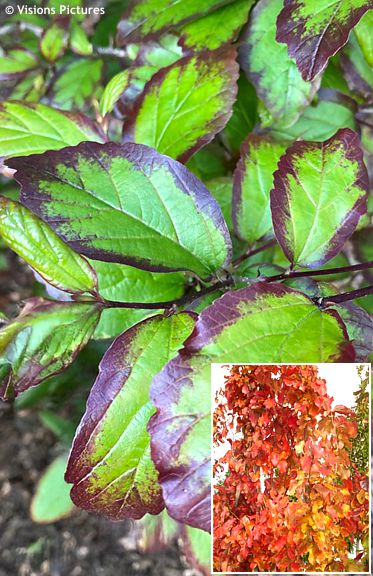
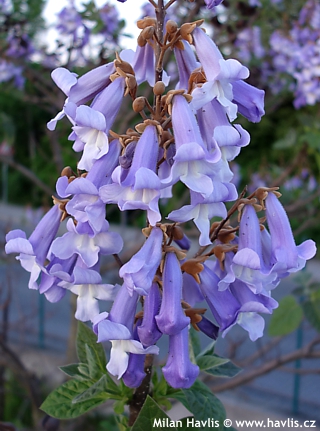
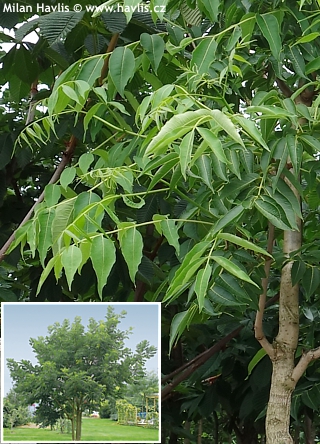
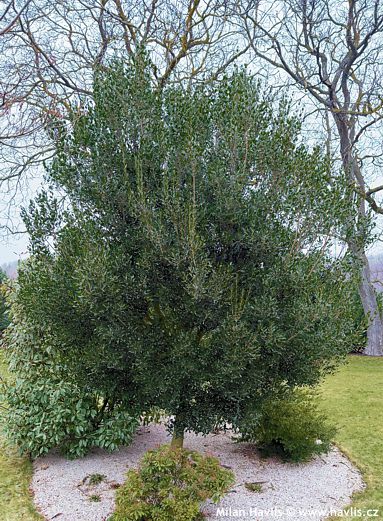
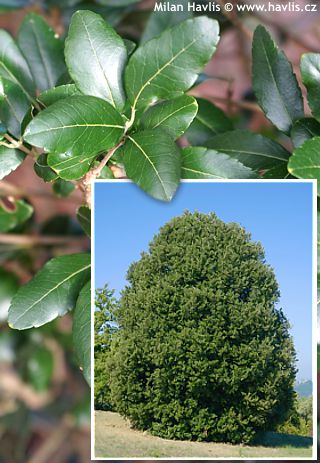
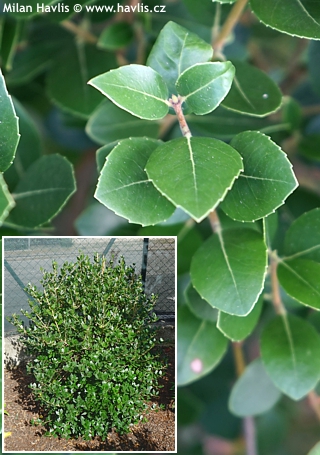
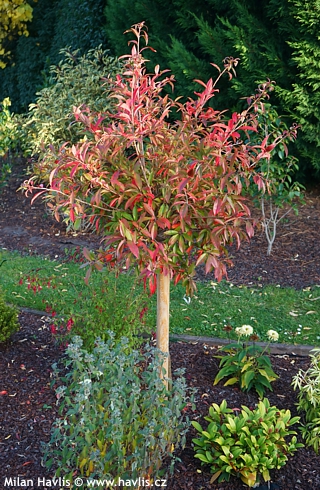
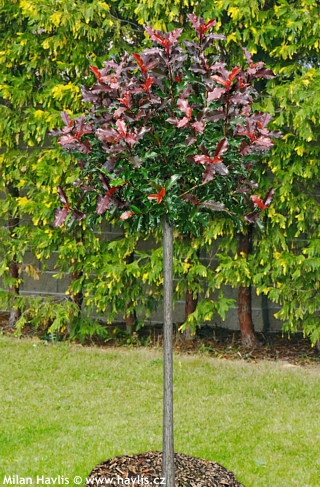
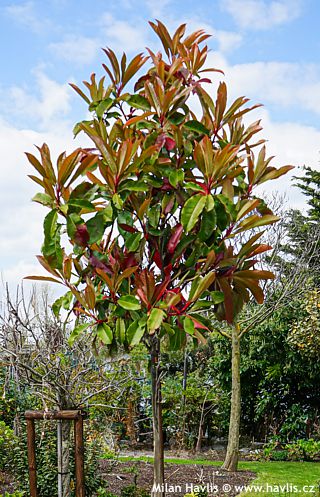
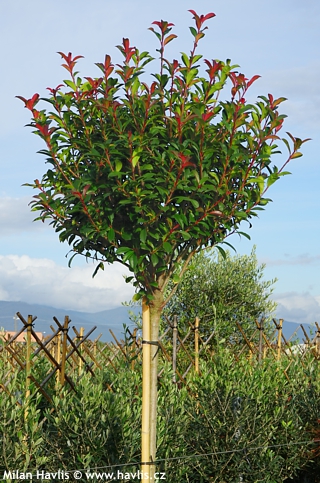
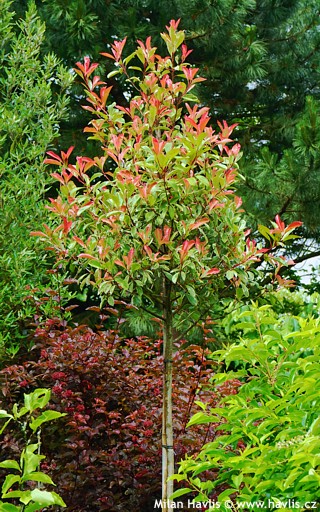
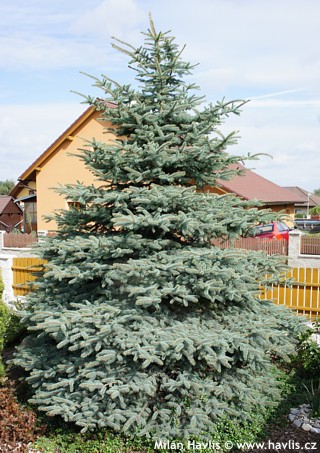
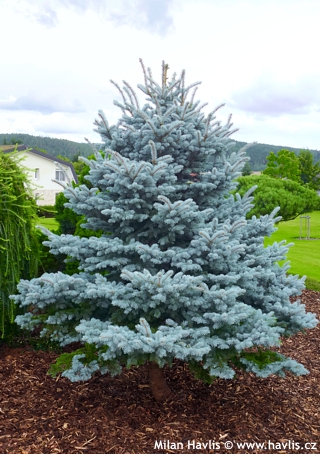
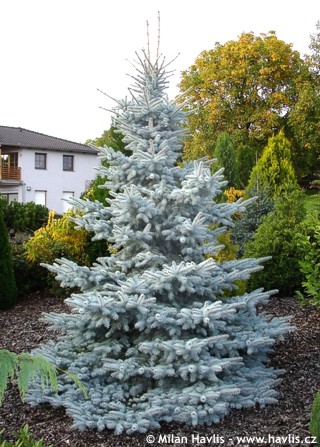
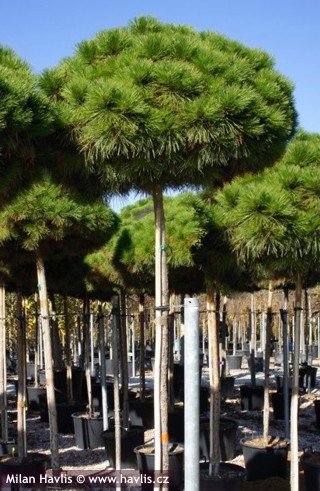
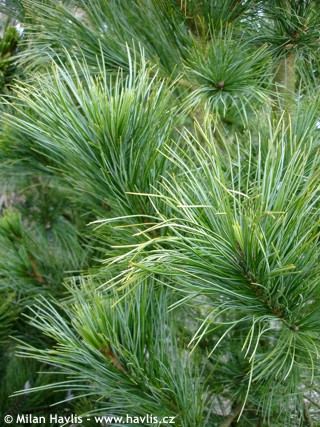
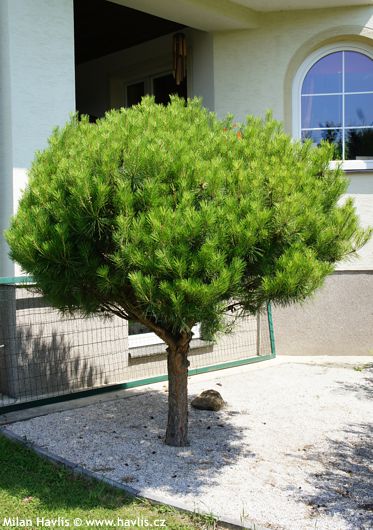
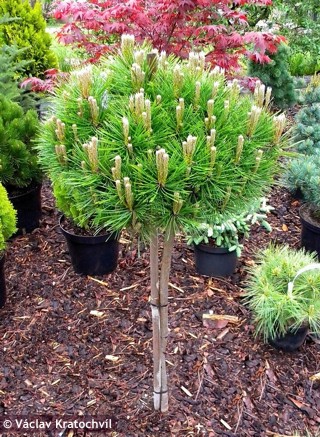
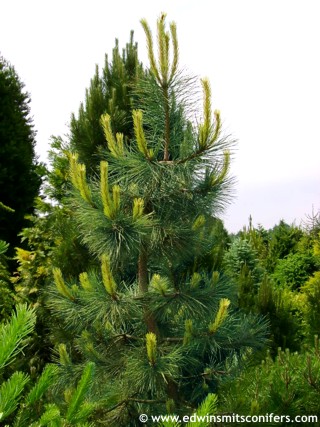
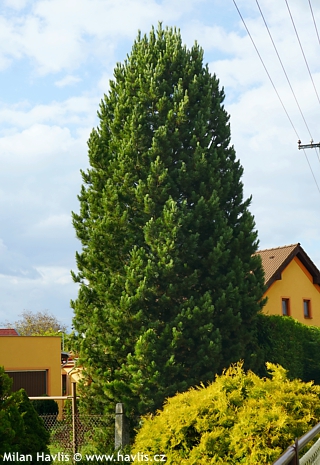
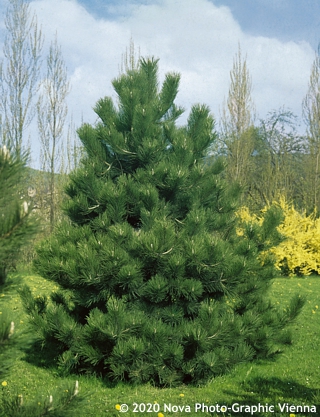
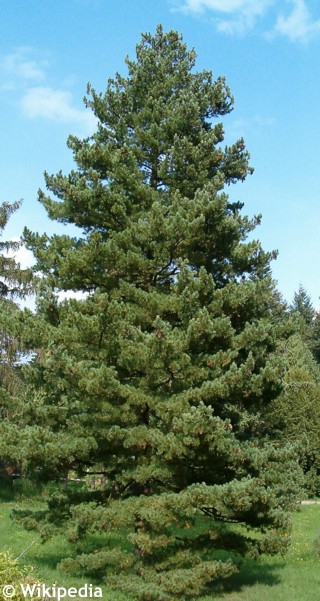
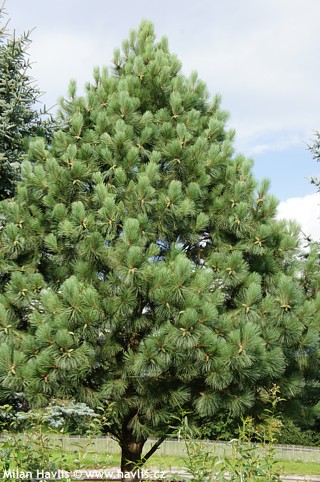
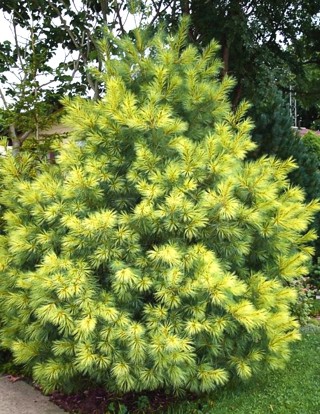
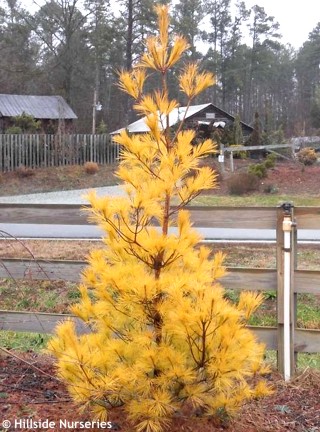
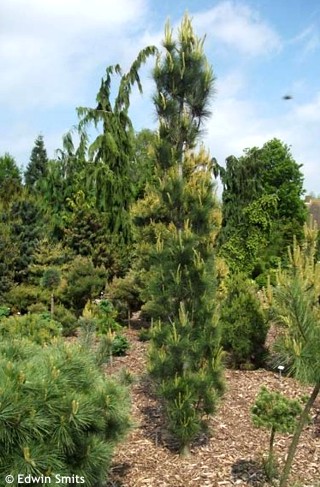
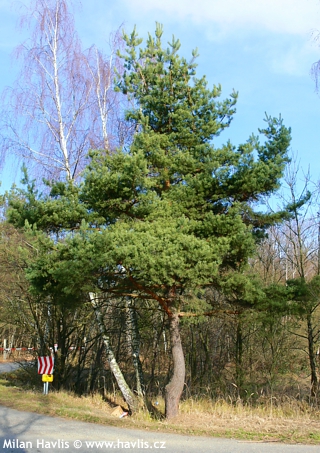
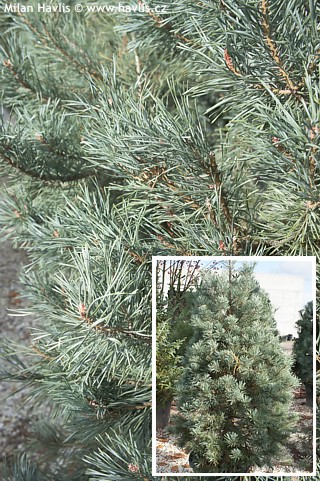
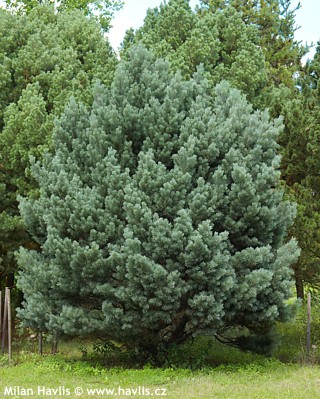
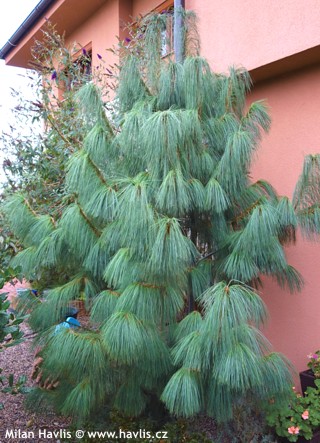
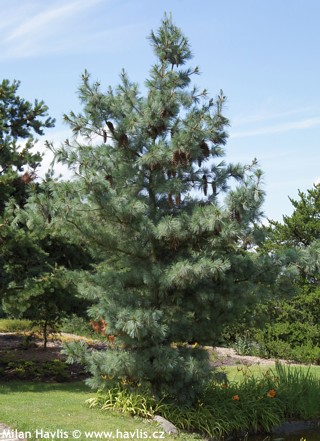
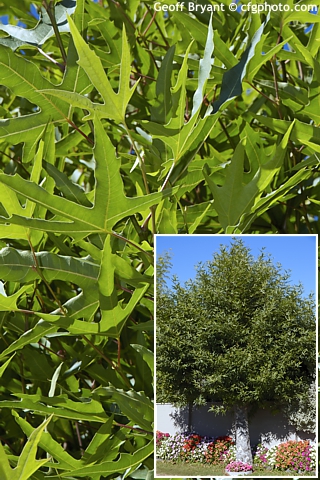
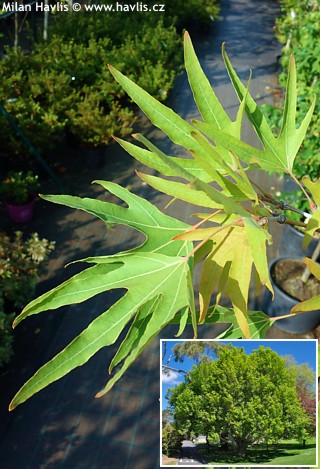
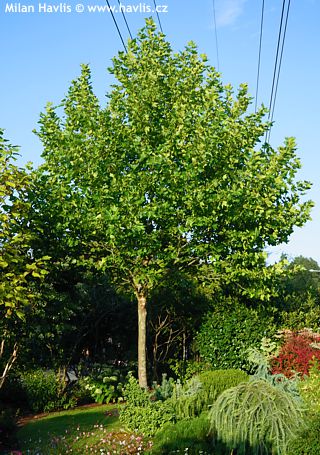
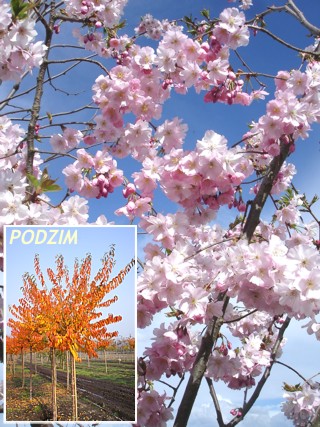
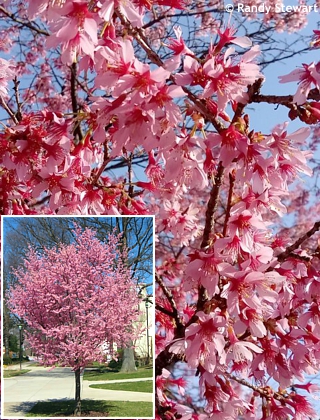
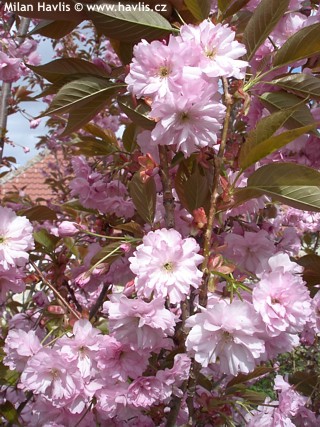
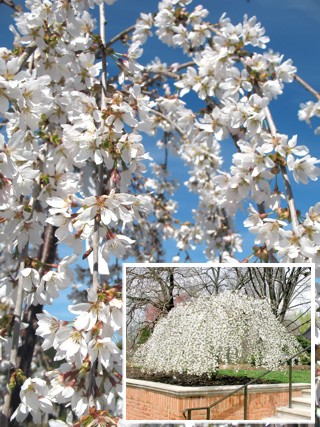
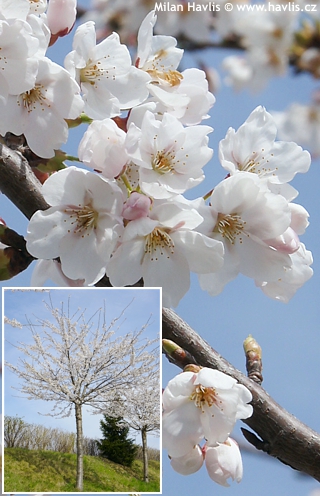
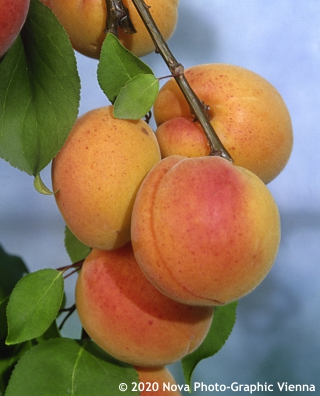
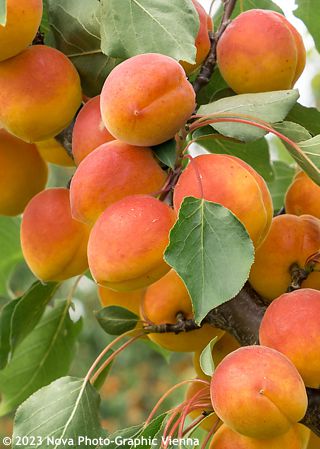
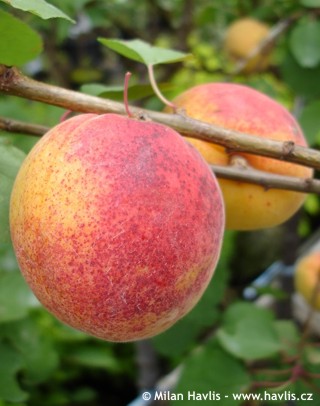
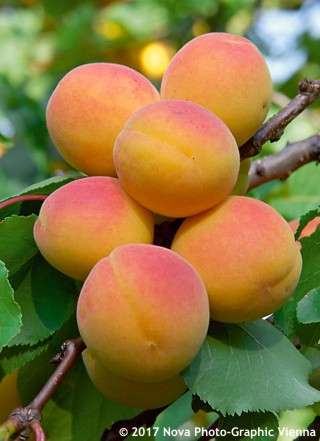
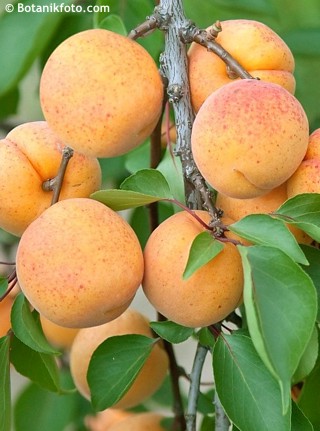
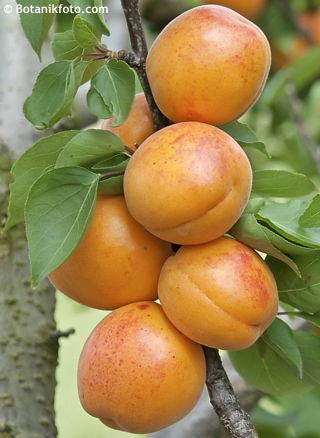
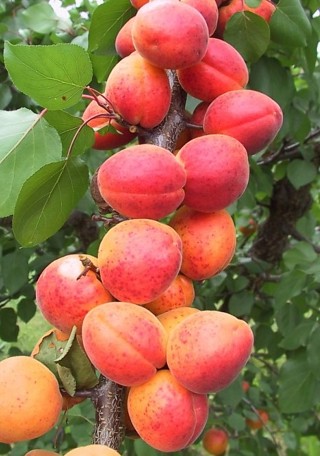
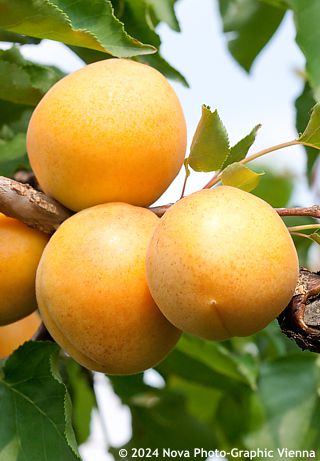
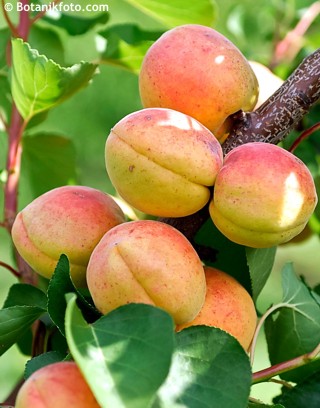
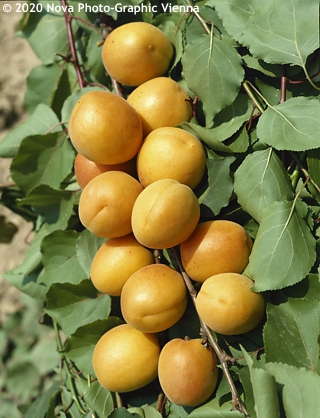
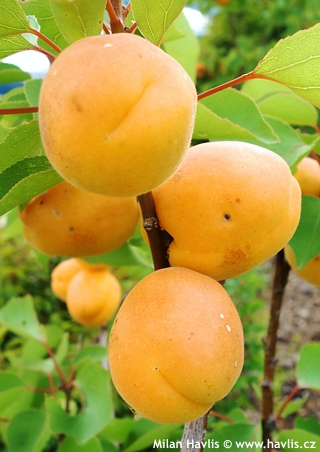
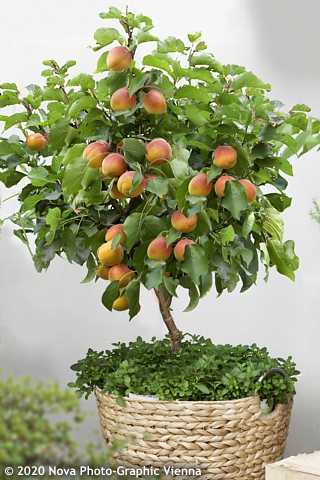
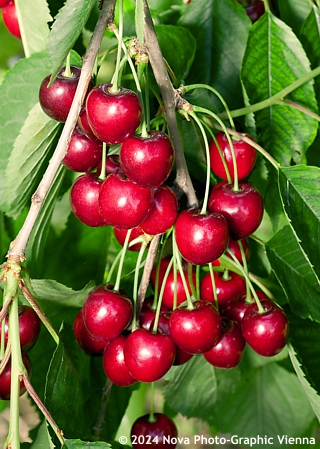
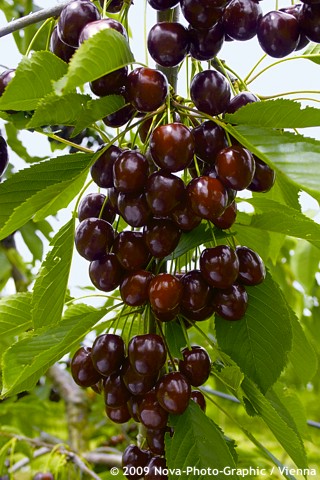
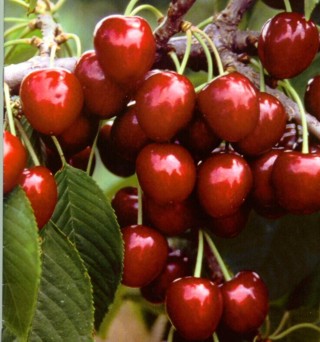
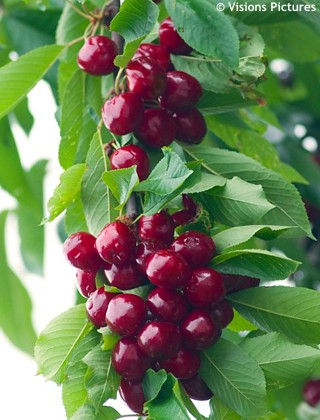
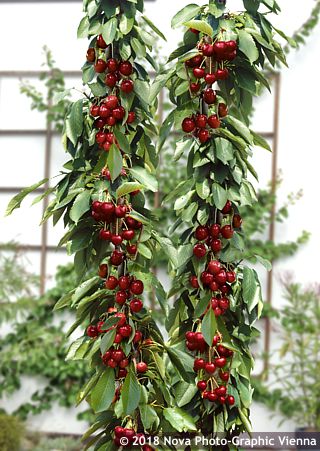
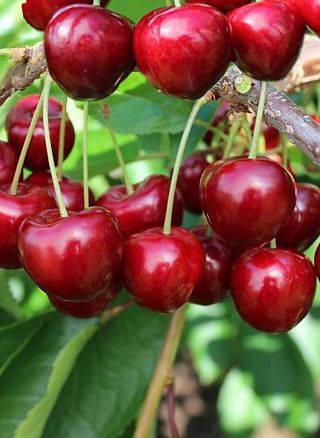
.jpg)
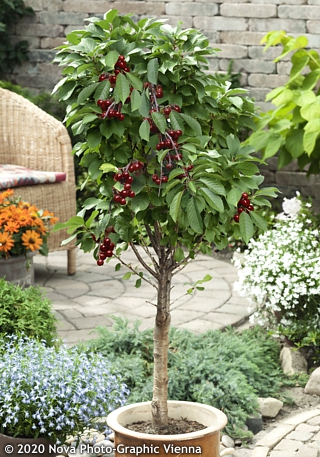
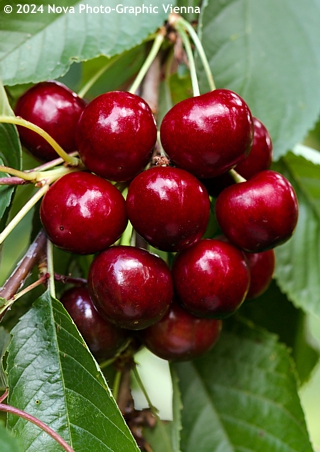
.jpg)
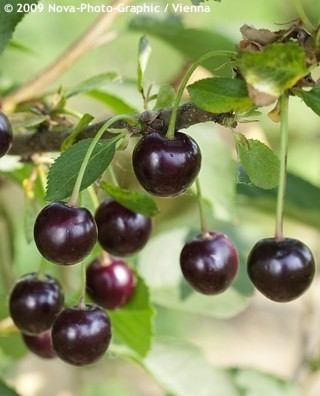
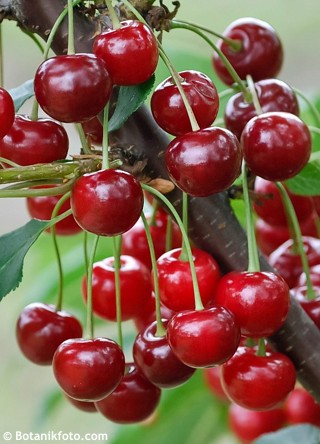
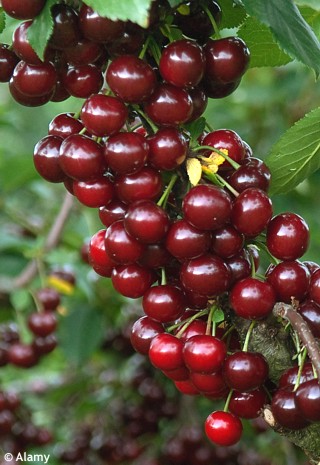
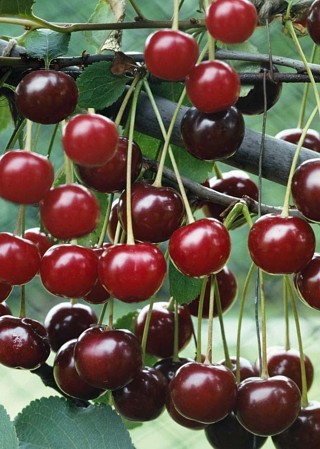
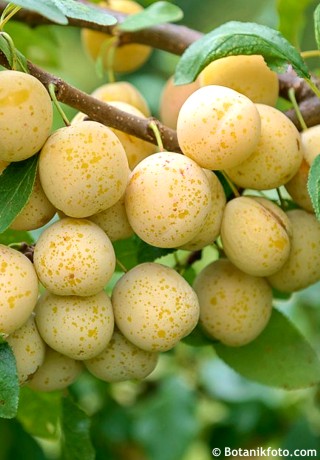
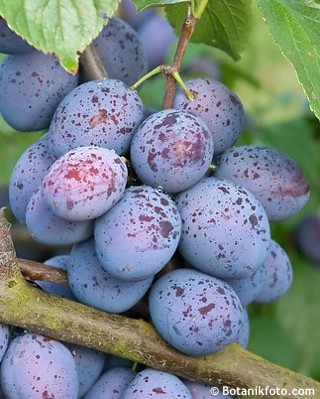
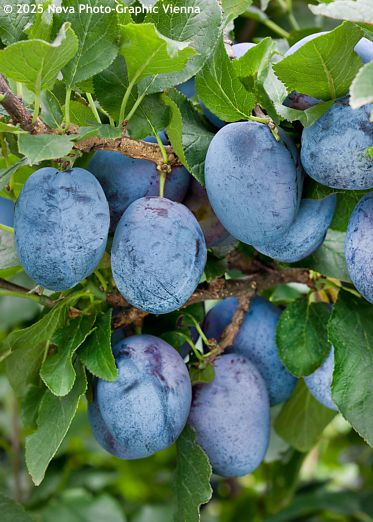
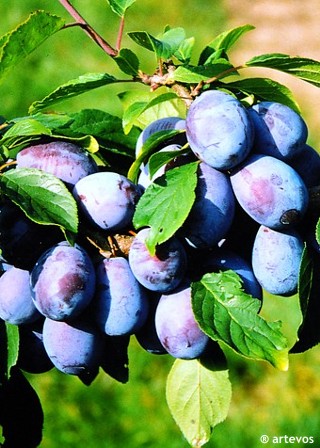
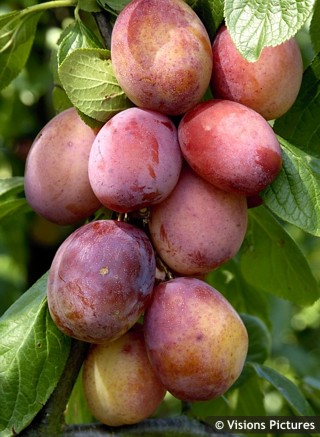
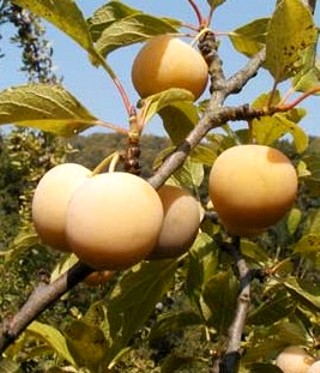
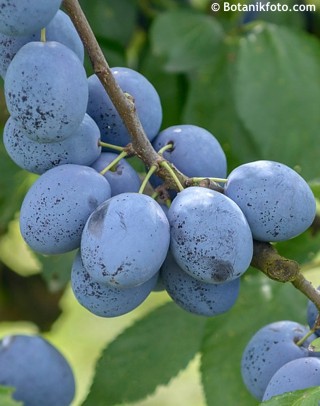
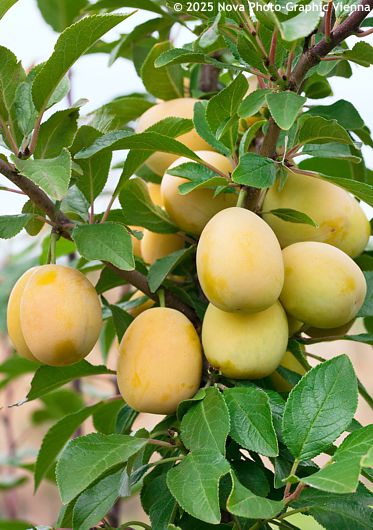
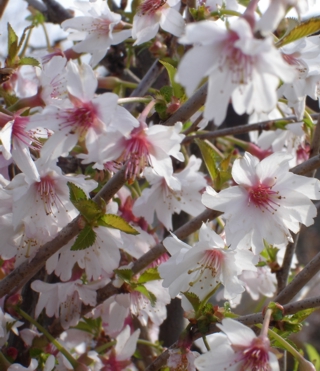
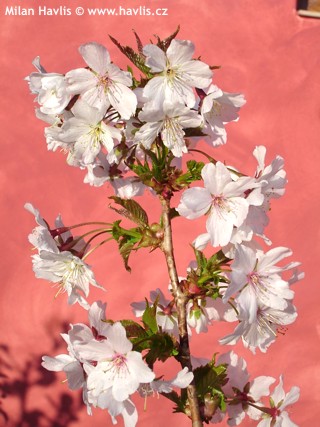
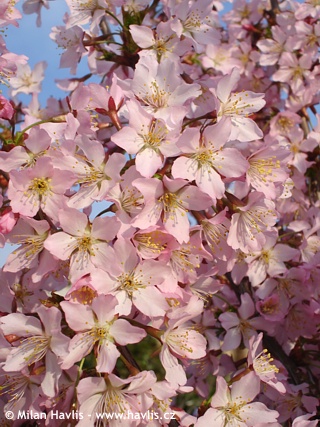
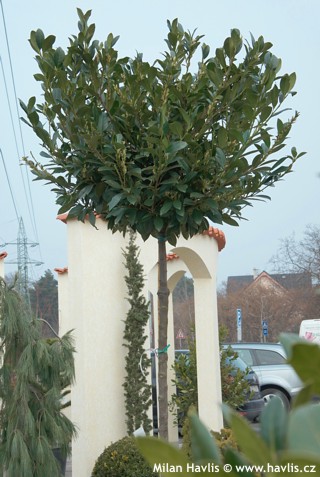
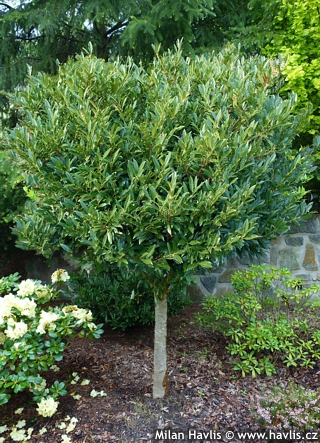
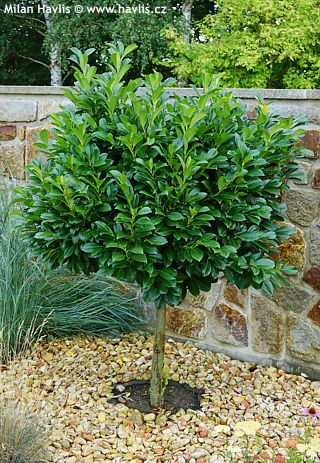
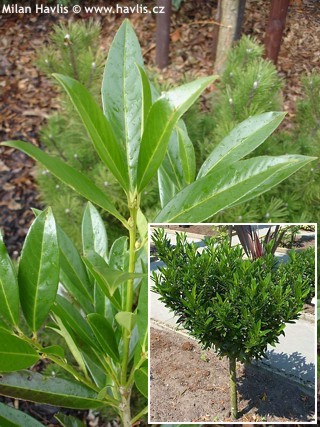
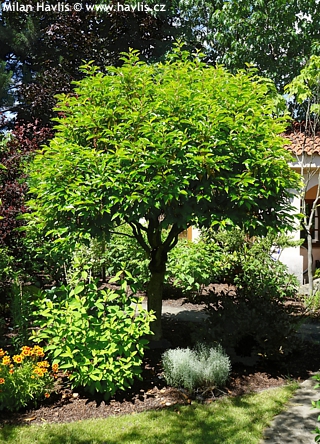
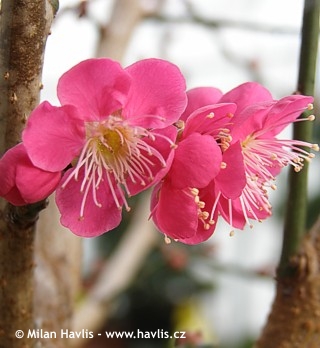
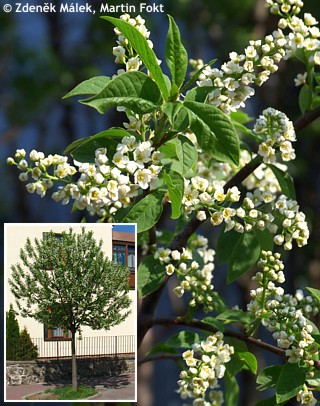
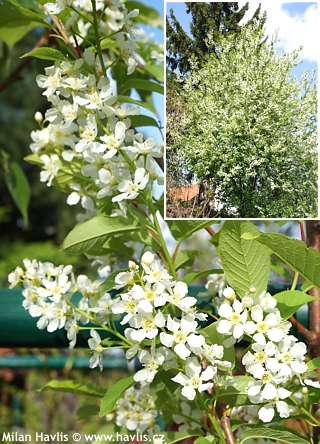
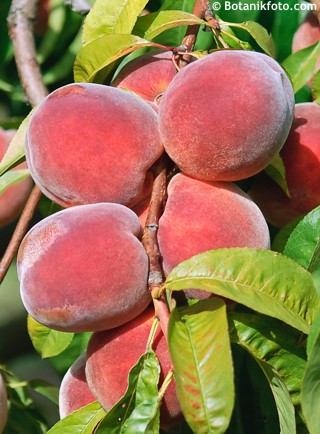
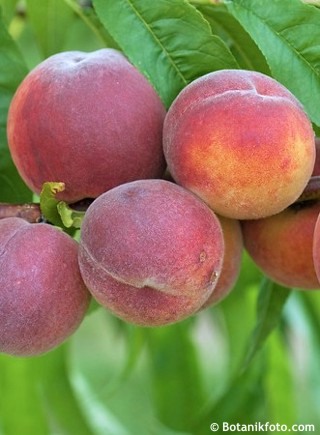
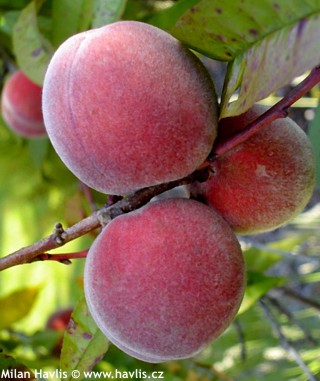
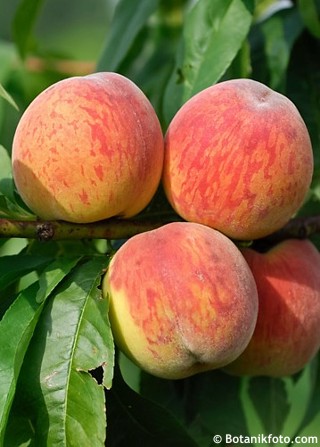
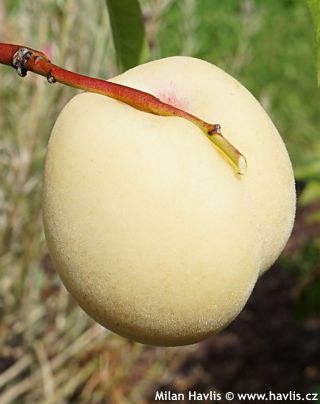
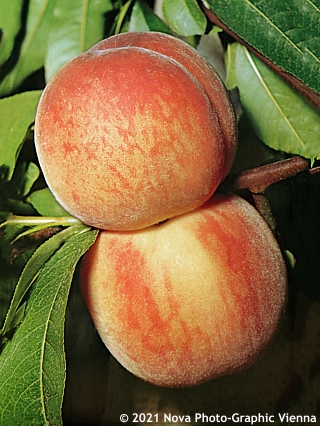
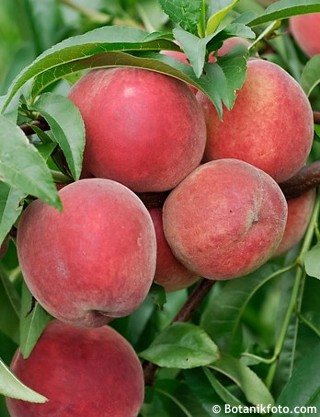
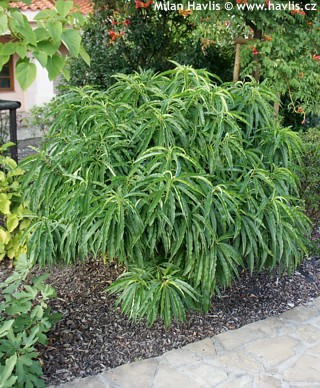
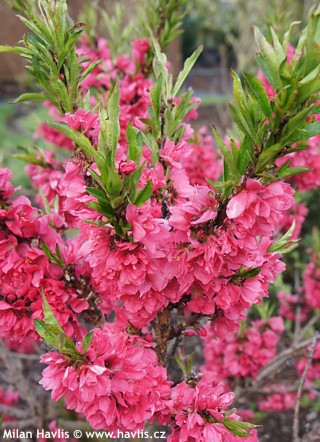
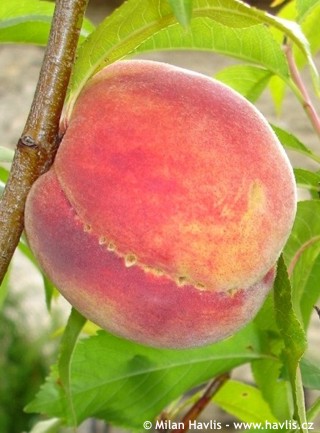
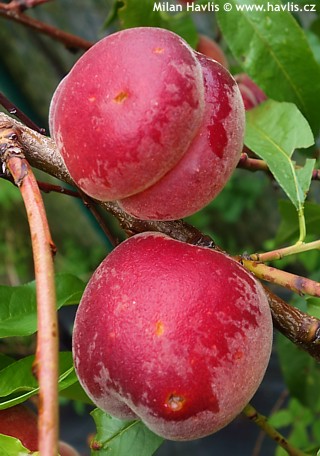
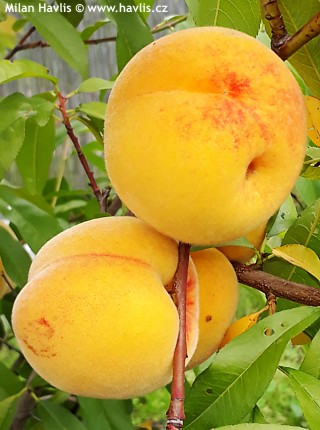
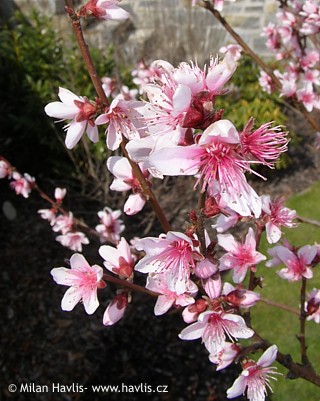
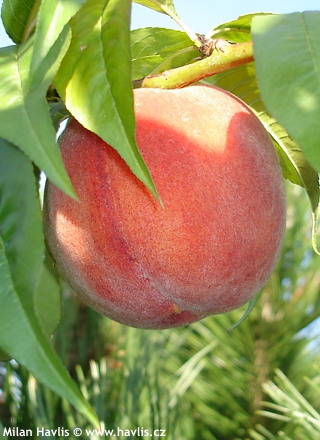
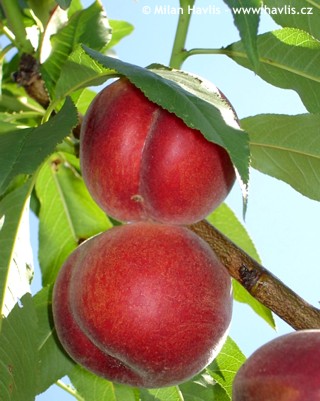
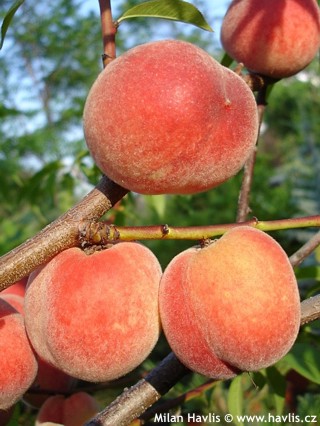
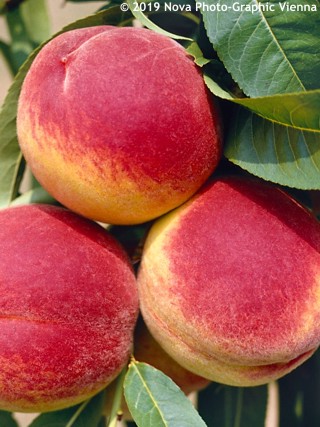
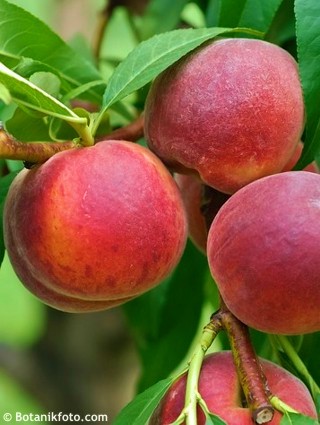
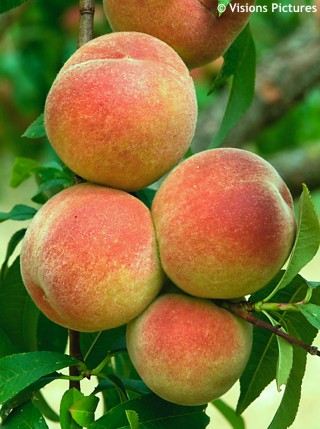
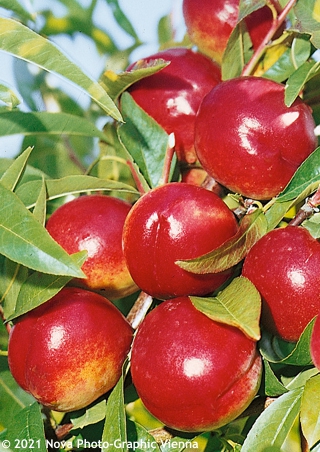
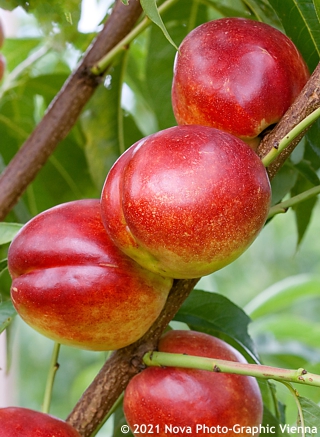
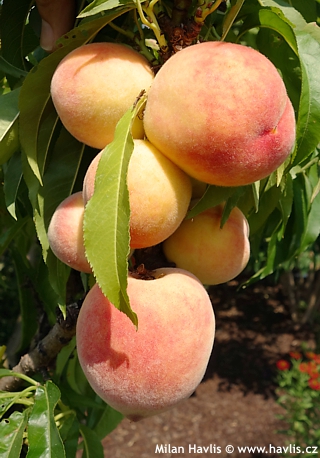
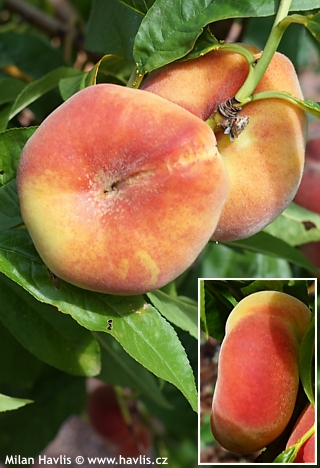
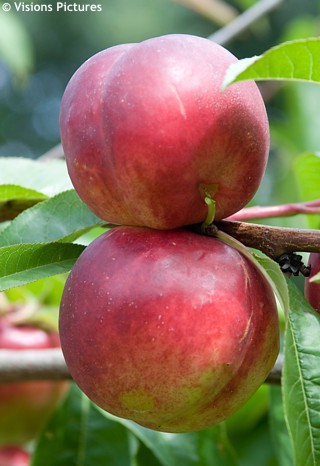
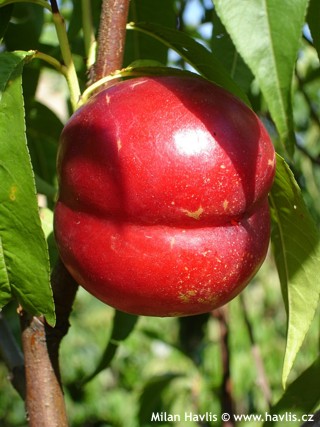
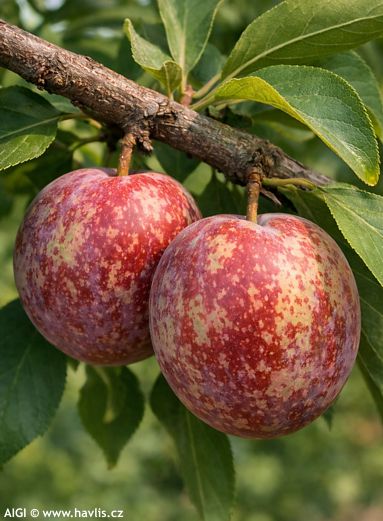
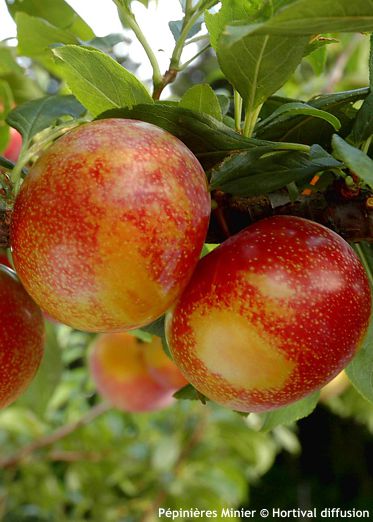
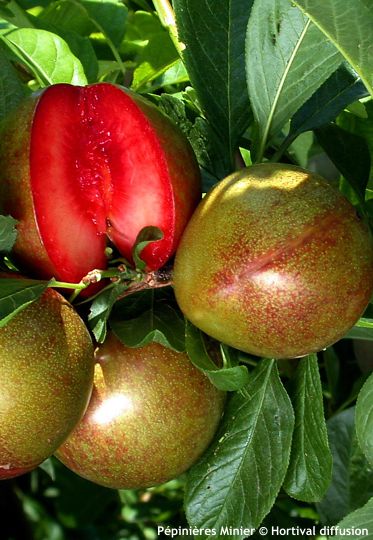
.jpg)
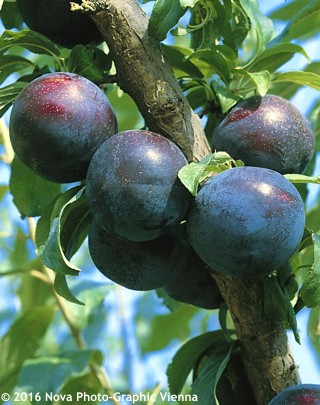
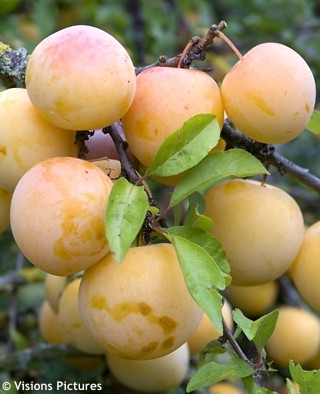
.jpg)
.jpg)
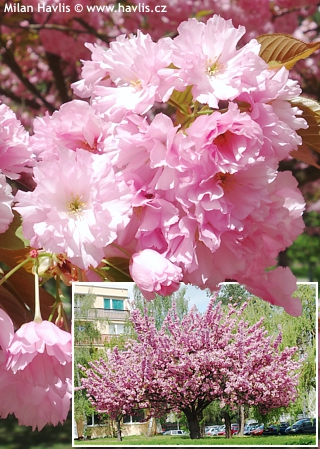
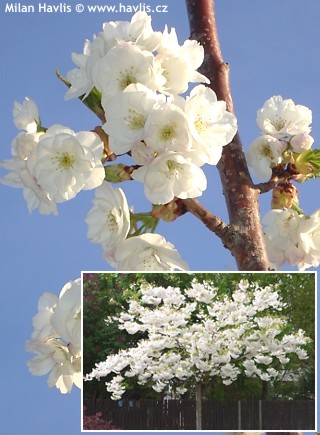
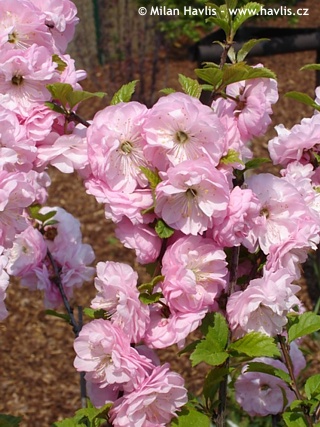
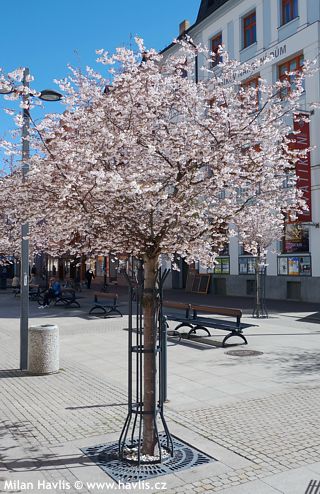
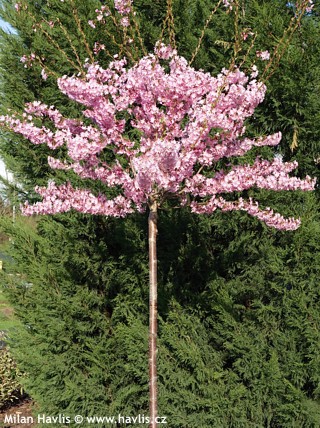
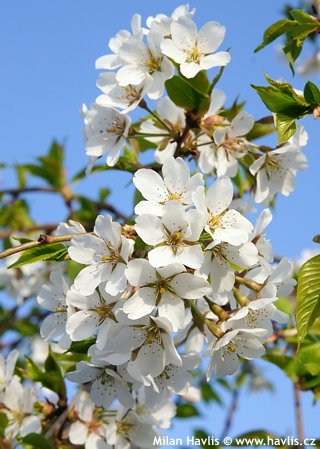
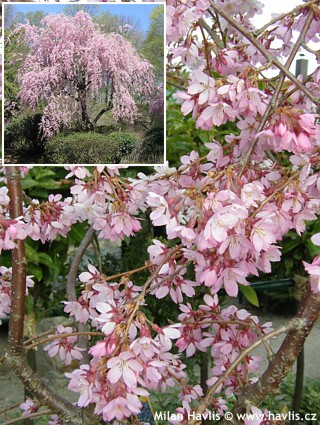
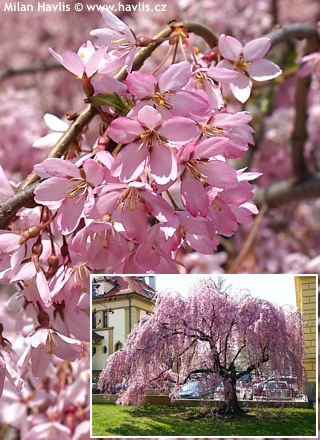
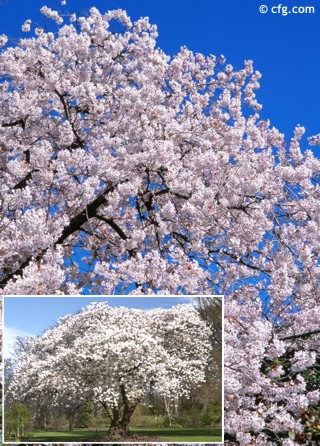
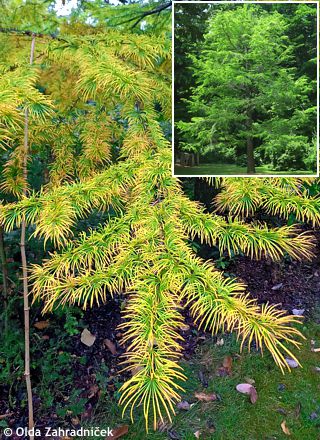
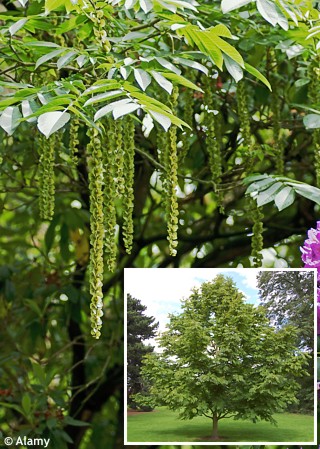
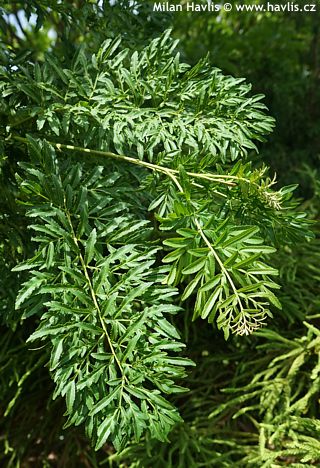
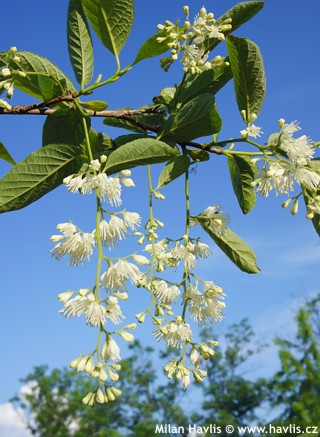
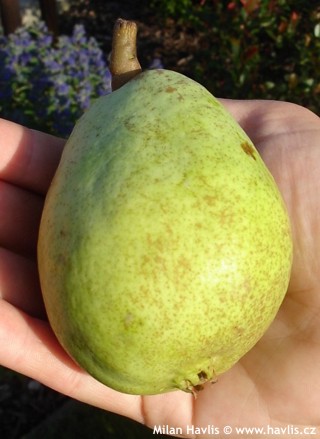
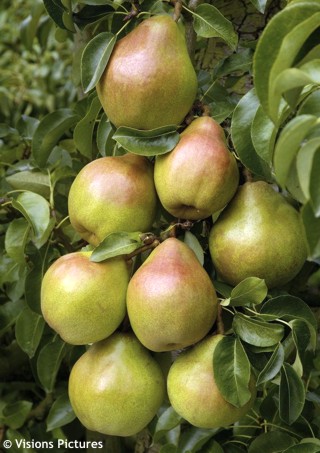
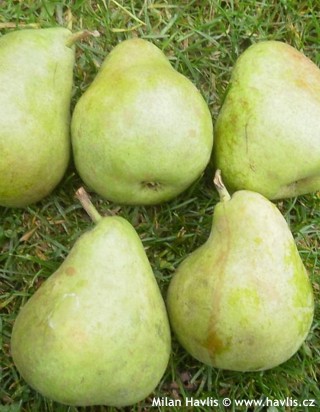
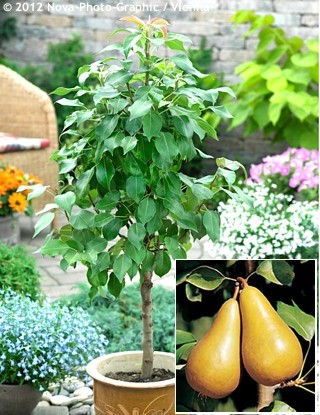
.jpg)
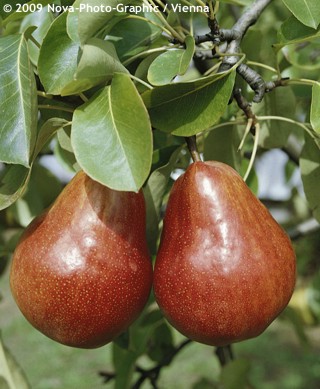
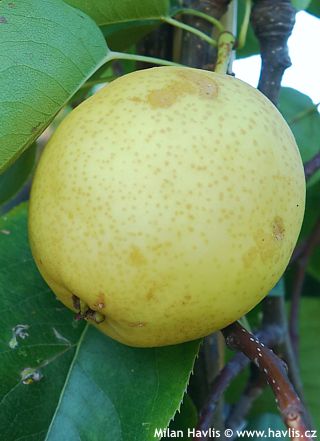
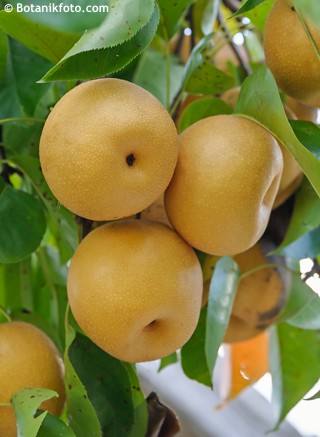
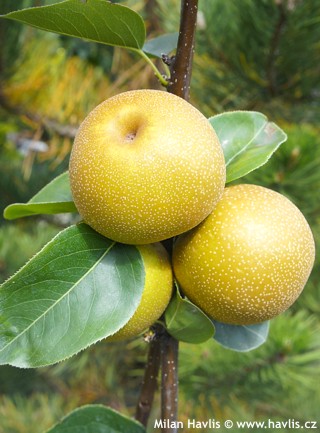
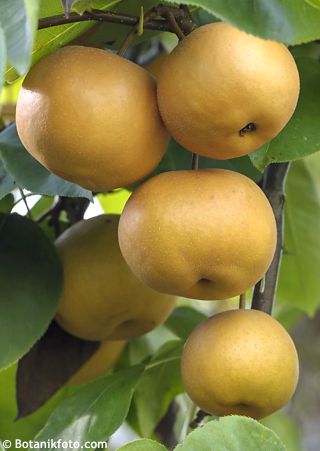
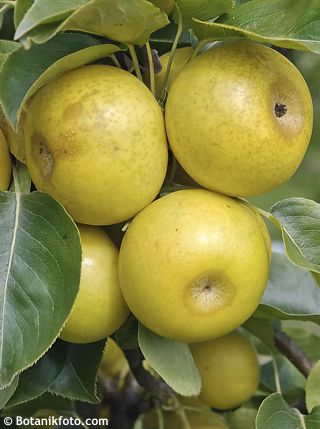
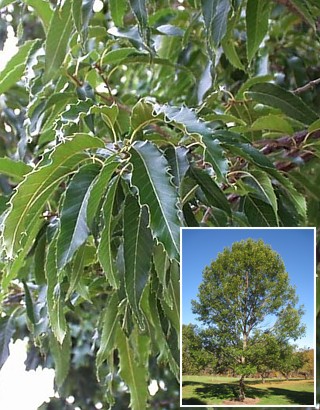
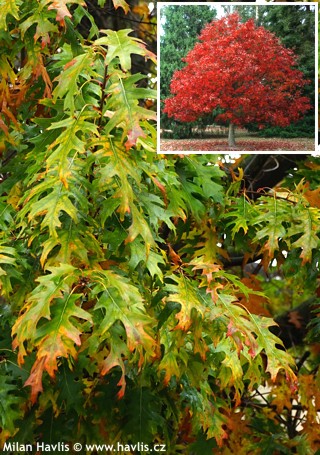
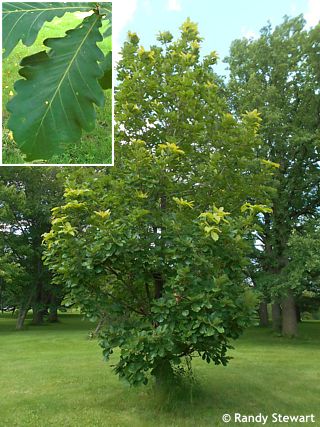
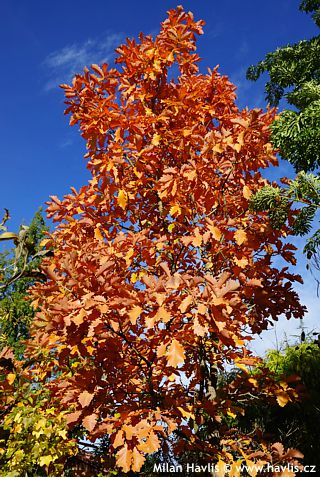
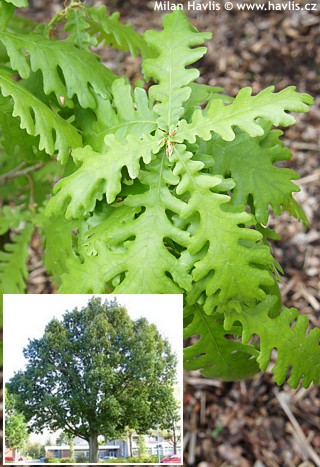
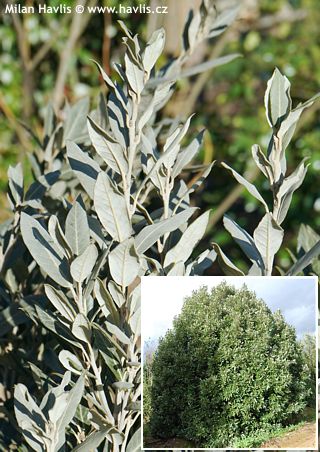
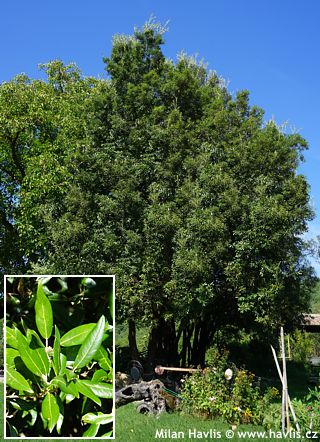
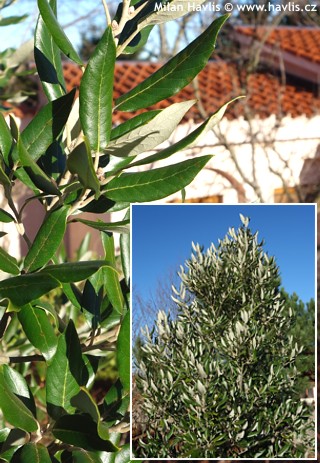
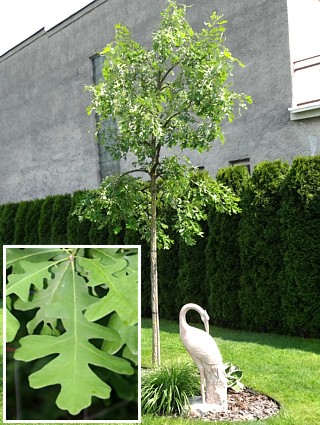
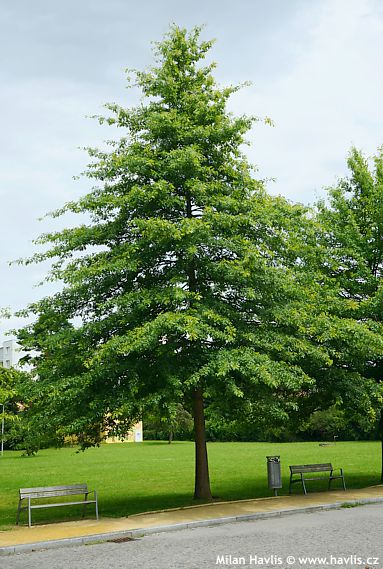
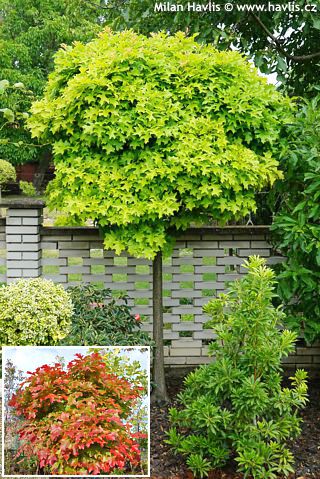
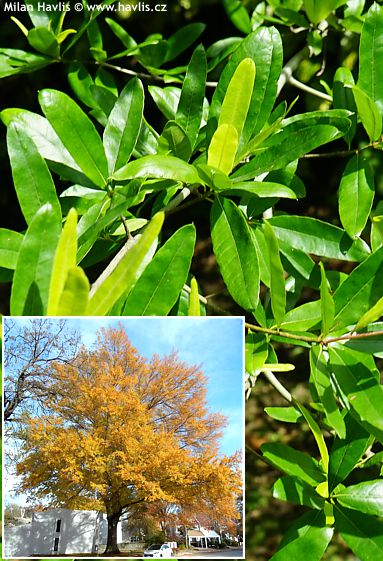
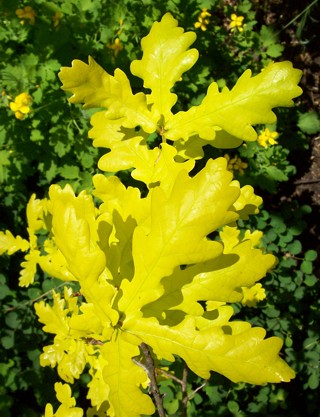
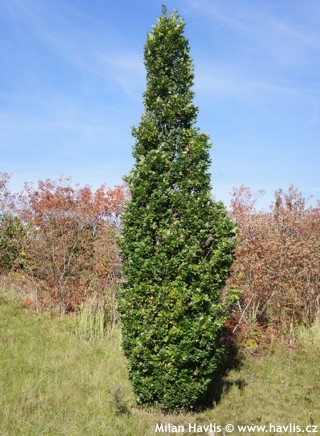
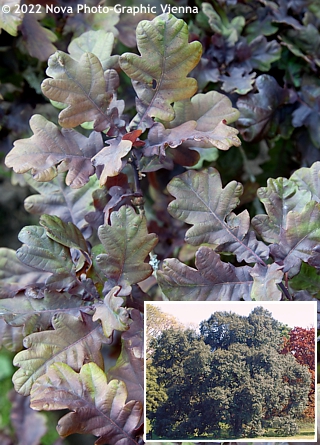
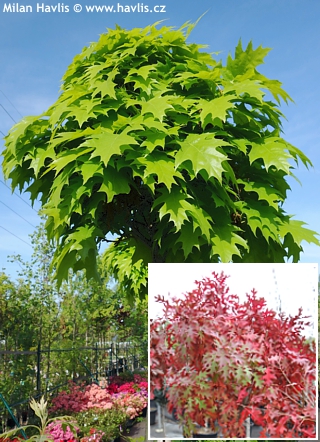
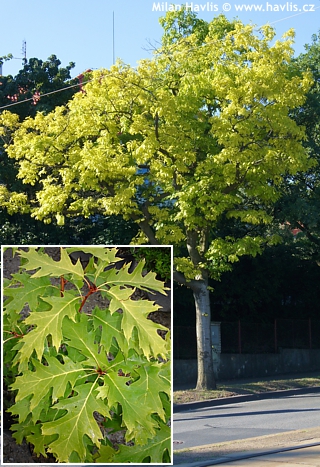
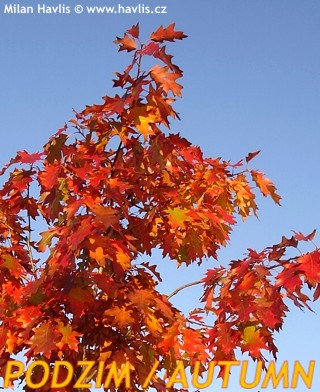
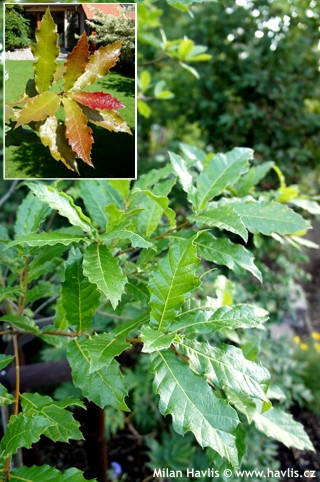
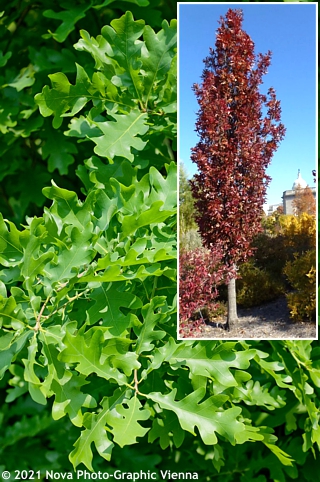
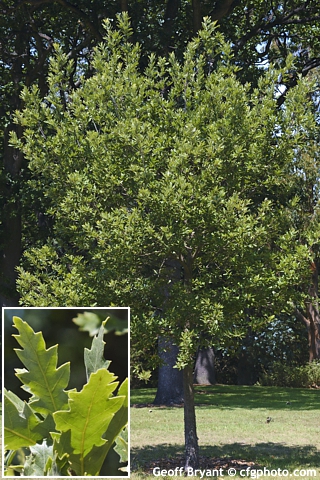
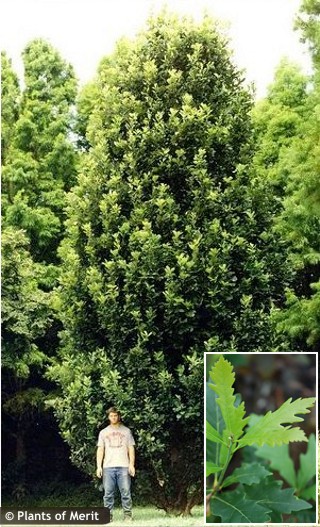
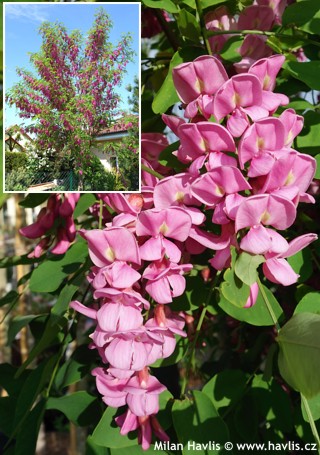
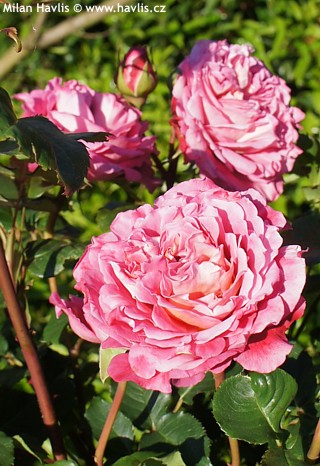
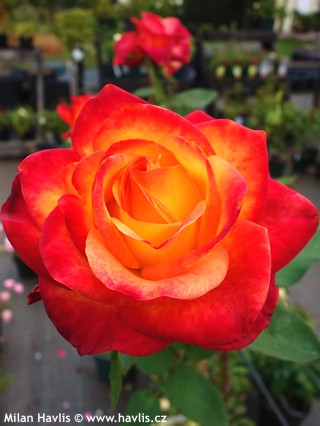
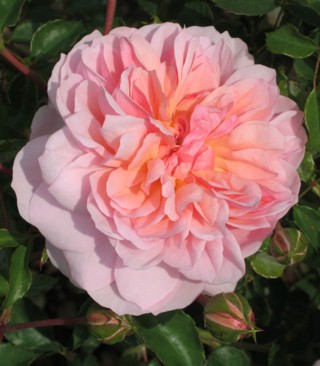
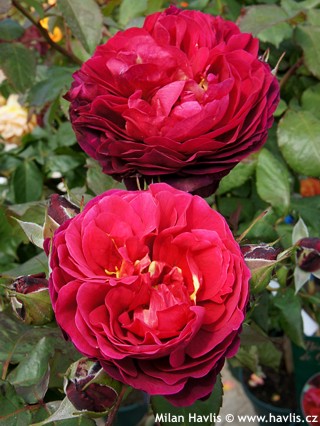
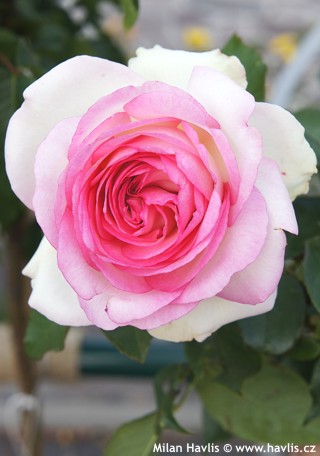
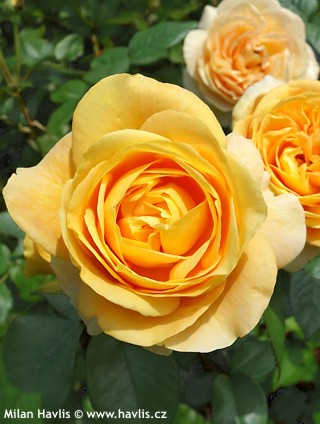
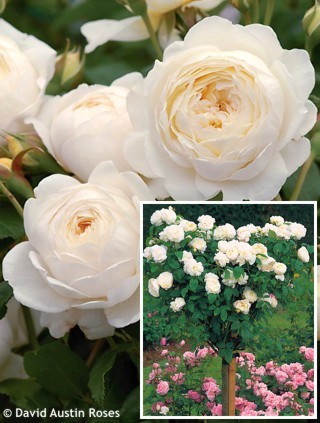
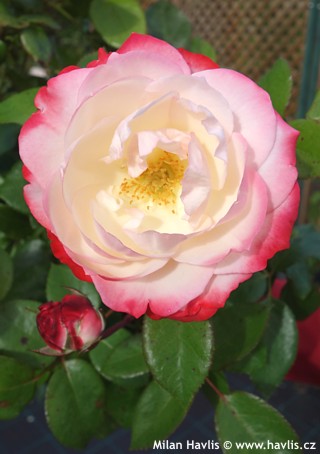
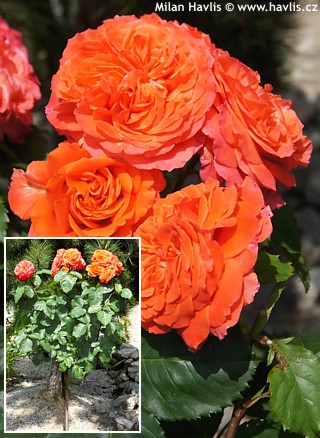
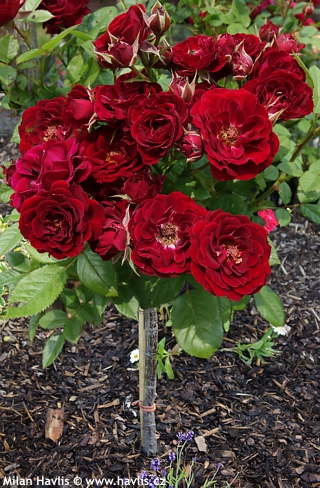
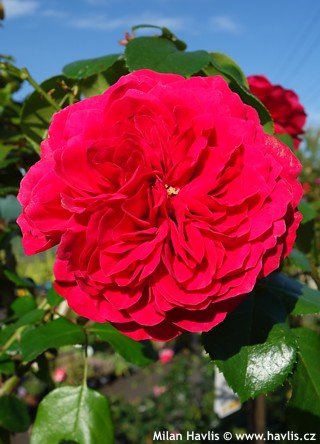
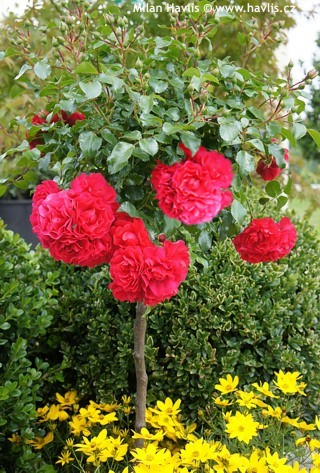
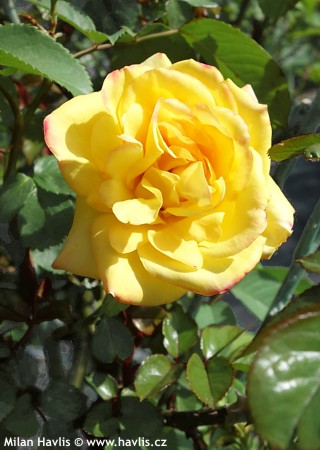
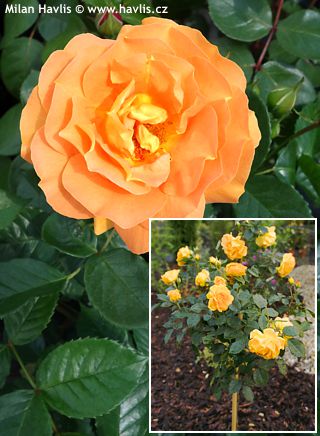
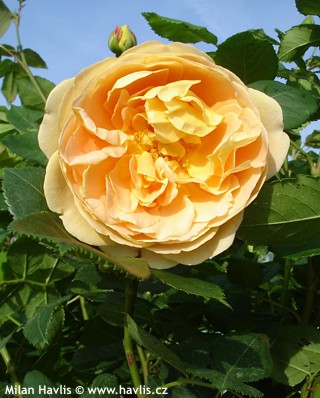
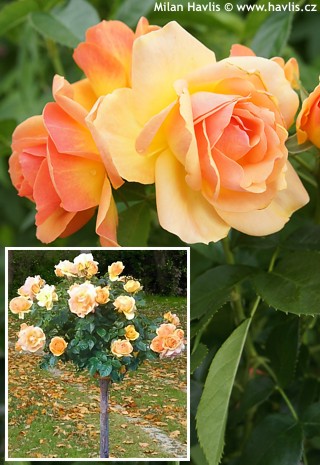
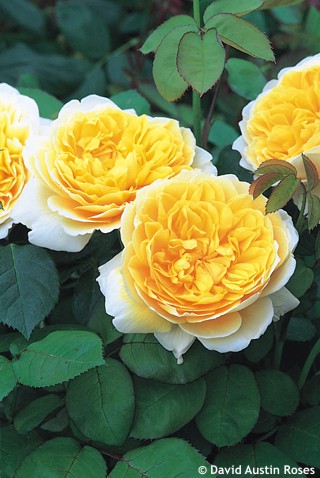
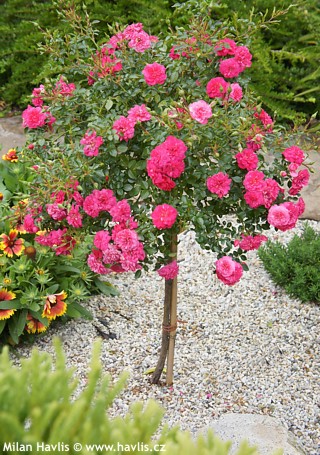
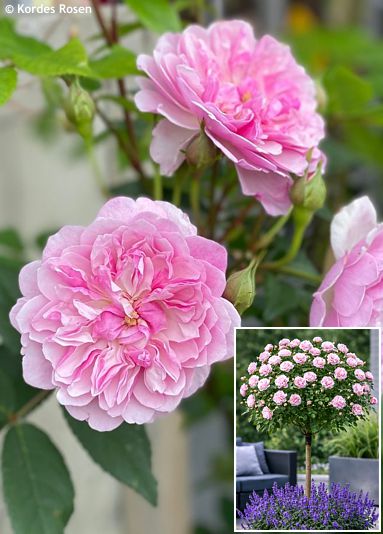
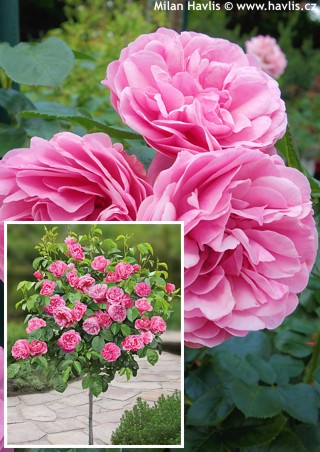
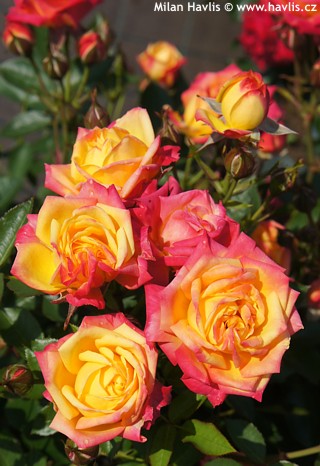
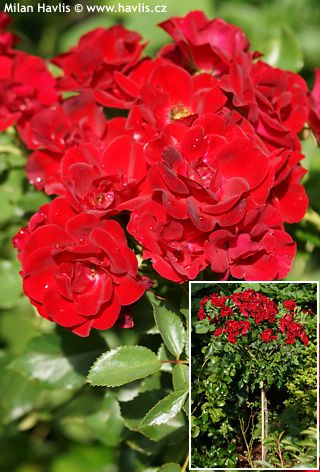
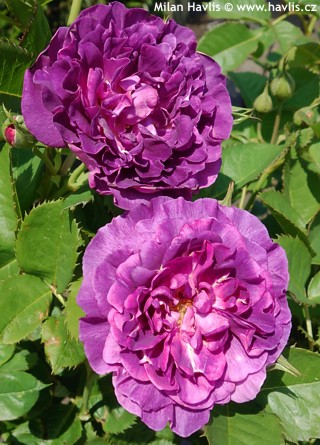
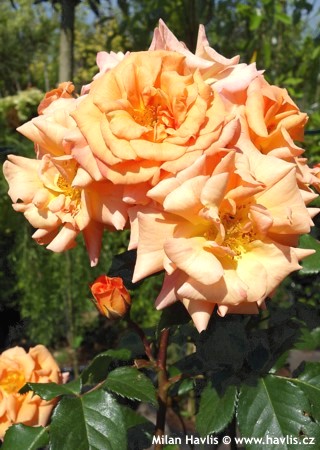
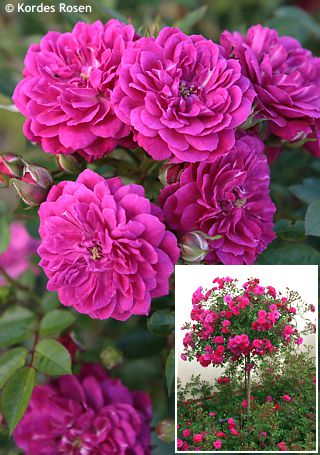
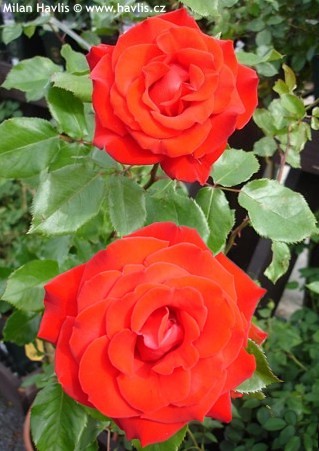
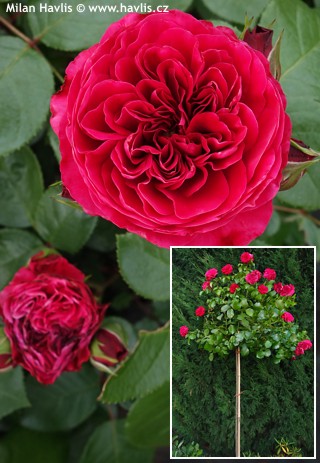
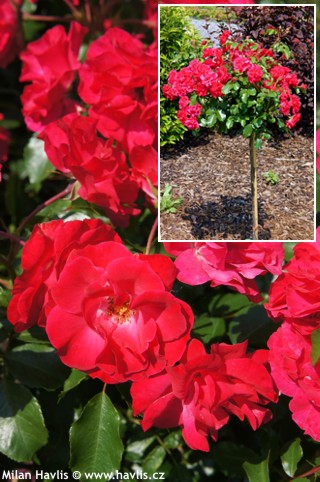
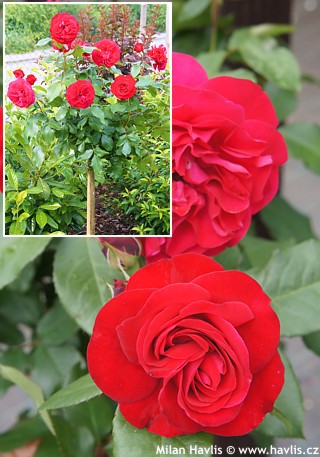
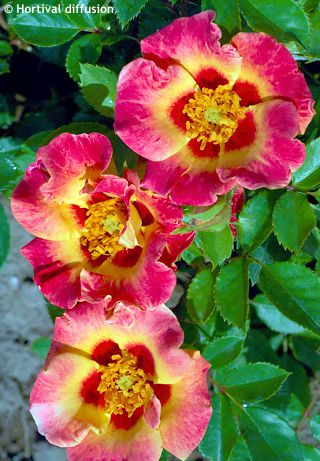
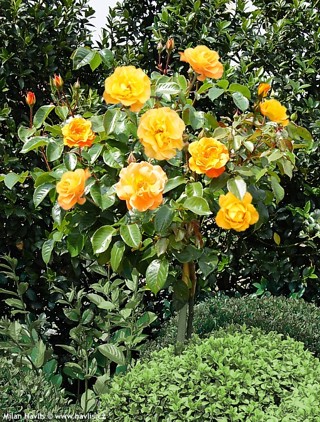
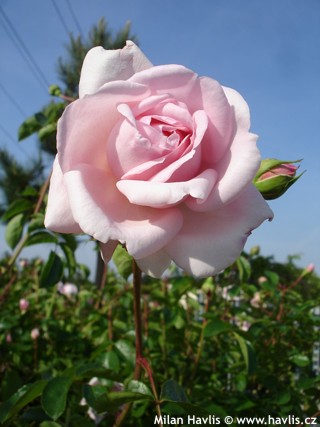
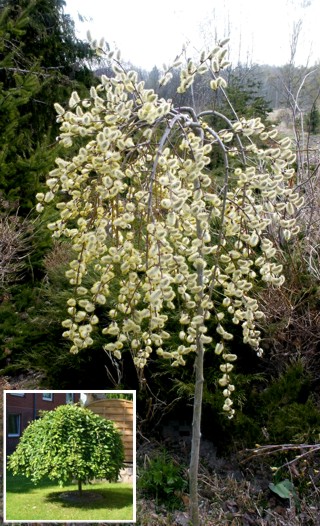
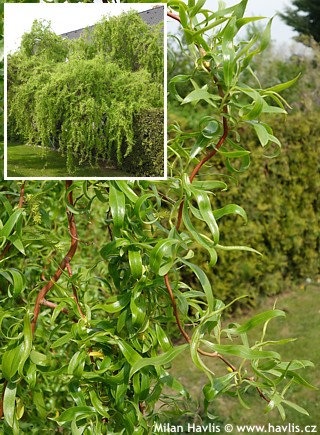
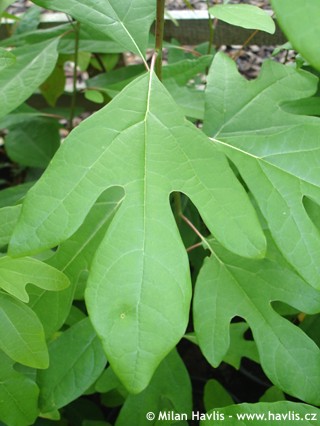
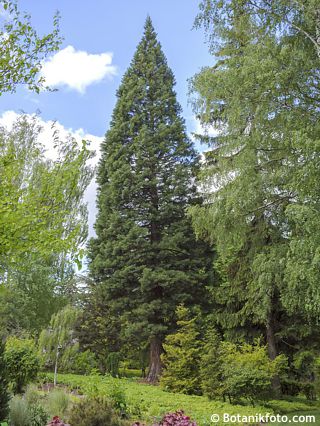
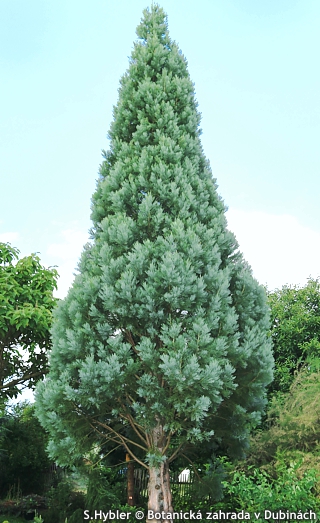
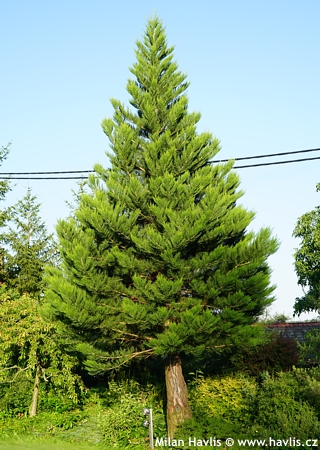
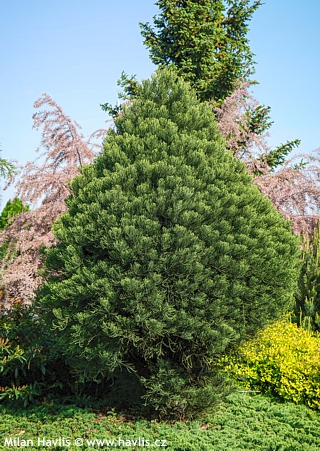
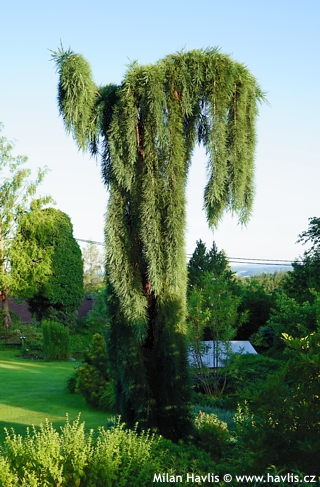
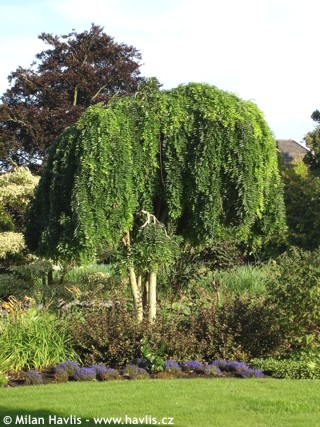
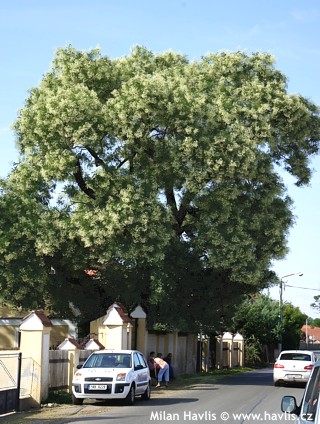
.jpg)