










CURRENTLY IN STOCK:
Golden Globe is a dwarf Norway maple i.e. one of those with large leaves as opposed to Japanese maples with small and dissected foliage. One of the big advantage of Norway maple is its resistance against majority of common tree diseases and pests. And it will grow almost anywhere.
Golden Globe va ...

IV - V

2 - 4m

3 - 4m

full sun

4 (down to -34°C)

for zone 5+6

for zone 7
Men usually get mad when women describe colours with expressions like salmon pink, peachy red etc. Well, men, get ready for another hit below the belt: we have a tree whose leaves are SHRIMP pink. Not familiar with that colour? Go to the nearest restaurant and have a prawn-cocktail to see what the f ...

IV - V

2 - 3m

full sun

4 (down to -34°C)

for zone 5+6

for zone 7
Red maple is one of the most spectacular big-sized trees suitable for large gardens, parks or city avenues. October Glory is a variety cultivated for its smaller size and fantastic autumn foliage colour. It has mid-sized leaves that are glossy and green in summer, changing to orange and red in early ...

9 - 13m

4 - 6m

full to partial sun

5 (down to -29°C)

for zone 5+6

for zone 7
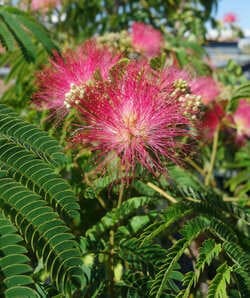
Mimosaceae plants are common and popular mainly in southern Europe for their high tolerance to drought as well as attractive and long lasting flowering. Even though they come from subtropical parts of the world there is one species hardy enough to be grown in our climate - silk tree.
Silk tree come ...

VII - IX

3 - 5m

3 - 6m

full sun

7 (down to -23°C)

for zone 5+6

for zone 7
Saskatoon is a native Canadian species of juneberry. It is cultivated for very tasty and juicy fruit which are deep purple to blue-purple berries similar to blueberries. They are formed in short clusters and best picked when fully ripe = when it turns the deepest colour. It can be used in any way yo ...

IV - IV

1 - 3m

1 - 1,5m

full sun

1 (down to -46°C)

for zone 5+6

for zone 7
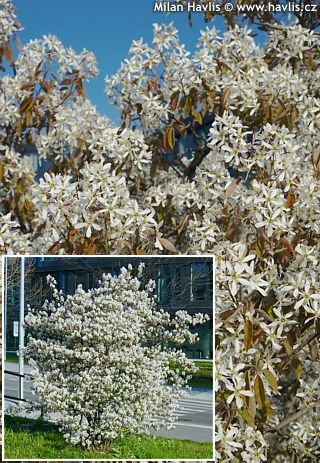
Juneberry and downy serviceberry species are popular shrubs and trees that are celebrating their renaissance at the beginning of the new millennium. They belong to both ornamental plants as well as fruit trees which is why they are regaining interest. They are very easy to grow and can cope even wit ...

IV - IV

4 - 8m

2 - 4m

full sun

4 (down to -34°C)

for zone 5+6

for zone 7
Juneberry is a large shrub cultivated mostly for its delicious and healthy fruit. It is a large deciduous shrub or a small tree.
Flowers are star-shaped, white and scented and appear in mid spring. Oval leaves are up to 8 cm long, emerge bronze and mature to green colour, turning scarlet red or dee ...

IV - V

2 - 6m

2 - 5m

full sun

4 (down to -34°C)

for zone 5+6

for zone 7
Among the most spectacular conifers this monkey puzzle tree is the hardiest. The scale-like leaves are dark green, sharp-pointed. This species is said to be 60 million years old.
It dislikes atmospheric pollution and hot and dry soil. It does surprisingly well in our climate, too, if you provide a ...

4 - 8m

1 - 4m

full to partial sun

7 (down to -23°C)

for zone 5+6

for zone 7
Atlantic is a French variety of strawberry tree selected and introduced by the Pepinieres Minier in 1993. It boasts a neat and well-behaved habit, dense branching, and improved hardiness. Its evergreen leaves are narrowly obovate, 5-7 cm long, finely serrated at margins, they emerge bronze red and r ...

V

2 - 3m

1 - 2m

full sun

7 (down to -23°C)

for zone 5+6

for zone 7
MERCURIUS is a French variety of hardy strawberry tree, bred by Jean Giraudet from the French nursery Pépinières du Bocage in Sèvremont, near the city of Nantes in the west of France, and introduced in 2020. This is an absolutely adorable shrub with a slower growth and almost rounded ...

IX - XI

0,7 - 1,5m

0,8 - 1,5m

full sun

6b (down to -21°C)

for zone 5+6

for zone 7
This evergreen shrub of Japanese aucuba is a commonly known favourite especially in Britain and in milder parts of humid regions of Germany and Benelux. The first specimen was brought from Japan to Europe in 1783, and has been sought after ever since for its beautifully varigated/golden-spotted leav ...

1 - 1,5m

1 - 1,5m

semi-shade to shade

7 (down to -23°C)

for zone 5+6

for zone 7
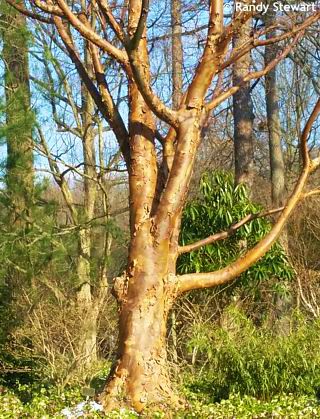
Birches are typical trees of Eastern Europe and Asia, as well as some northern regions. Himalayan birch grows slower and not as tall as white birch so you can try one in your garden, too.
Doorenboos is naturally a multi-stemmed shrubby tree with thick trunks. They are highly attractive for the cre ...

7 - 10m

4 - 6m

full to partial sun

5 (down to -29°C)

for zone 5+6

for zone 7
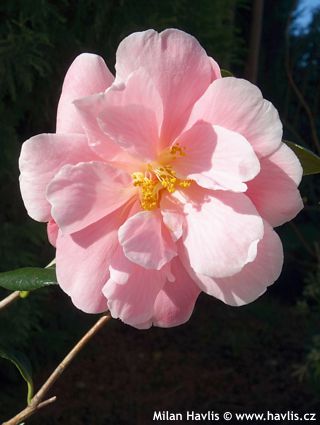
Spring Festival is one of the most valued hardy camellia hybrids (cuspidata hybrid) with double, pink flowers. They are not very large but appear in profusion from early April for 6 to 8 weeks if the plant has enough buds. These are formed from the previous year and need as long as half a year to ma ...

IV - V

1,5 - 3m

1 - 1,5m

semi-shade to shade

6b (down to -21°C)

for zone 5+6

for zone 7
Sweet chestnut is cultivated for several beautiful features. The deciduous leaves are deep green, elliptic to oblong, up to 20 cm long, distinctly serrated and glossy, turning deep golden yellow in autumn. Flowers are creamy beige catkins that appear in July. They release a rather strong fragrance ( ...

VII - VII

5 - 20m

5 - 10m

full to partial sun

5 (down to -29°C)

for zone 5+6

for zone 7
Aurea variey bears huge, tropical looking, heart shaped leaves (20-25 cm large), of bright yellow-green colour. They are slightly hairy like suede, pleasant to touch. They have interesting scent similar to tobacco leaves that allegedly repels insects.
Beginning of summer 20-30 cm tall upright pani ...

VI - VII

2 - 8m

2 - 6m

full sun

5 (down to -29°C)

for zone 5+6

for zone 7
Nana variety is a lot different to the species. It can be found under its second Latin name catalpa bungei. It is a small tree that can be considered dwarf as opposed to its parent. It was bred to achieve an attractive tree with exceptional foliage but of reduced size to fit even a small garden or a ...

2 - 3,5m

2 - 4m

full sun

5 (down to -29°C)

for zone 5+6

for zone 7
If you like cedars or perhaps if you are a collector or just an enthusiast don’t miss this one. It is a beautiful example of a form that is rarely seen in private gardens or arboretums.
Fastigiata is an attractive form of Atlas cedar with strictly narrow, columnar habit. Its evergreen, short ...

4 - 8m

1 - 2m

full sun

7 (down to -23°C)

for zone 5+6

for zone 7
Fastigiata Glauca is a blue green or silvery blue version of an attractive form of Atlas cedar Fastigiata with strictly narrow, columnar habit. Its lateral branches are short and densely cover the leader. If a branch goes mad and grows too long in the unwanted direction just clip it, any time of yea ...

4 - 8m

1 - 2m

full sun

7 (down to -23°C)

for zone 5+6

for zone 7
Blue Atlas cedar has distinct silvery-blue persistent larch-like needles born in whorls of 30-45. This gives a much dense appearance compared with other green cedars. Healthy young tree is well branched from the ground and retains its bottom branches. Young plants have conical habit which with age c ...

10 - 20m

5 - 12m

full sun

7 (down to -23°C)

for zone 5+6

for zone 7
Deodar – Himalayan cedar is the most graceful of all cedars. It has strictly pyramidal habit when young, spreading branching and weeping ends. Aurea is an extremely attractive variety with golden-yellow to yellow-green needles. They are evergreen, borne in whorls of 20-30. Female cones appear ...

3 - 5m

2 - 4m

full sun

5b (down to -27°C)

for zone 5+6

for zone 7
Feelin‘ Blue is a striking Dutch introduction of Himalayan cedar, which in fact turned out to be one of the most reliable cedars we ever had. Formerly a ground-covering plant is often staked up to a bamboo stick in order to form an appearance of a classic but much smaller cedar tree with pictu ...

0,2 - 3m

0,5 - 3m

full sun

5b (down to -27°C)

for zone 5+6

for zone 7
Golden Horizon is an interesting variety of Himalayan cedar with weeping branches. The needles are evergreen, yellow-green when young and in summer, turning blue-green as they mature and in the shade. The shape of the shrub is irregular, making horizontal branches with weeping ends.
It grows slowl ...

1 - 1,5m

1 - 3m

full sun

6b (down to -21°C)

for zone 5+6

for zone 7
Japanese plum yew is still an uncommon evergreen conifer which was first popularized by Earl of Harrington in early 19th century. It is hardy for almost the whole area of Central Europe except for the coldest mountainous regions, and can take diversity of soil types. It comes from Japan and Fastigia ...

1,5 - 3m

1 - 1,5m

full sun to shade

5b (down to -27°C)

for zone 5+6

for zone 7
Merlot redbud, just the French grapevine variety of the same name, has leaves of the deepest wine red colour. They are deciduous, heart-shaped, and glossy. Compared to Forest Pansy they are a little smaller (abt. 10x13 cm), the plant is not as vigorous, and exhibits a more compact and denser habit. ...

IV - V

2 - 3m

2 - 2,3m

full sun

for zone 5+6

for zone 7
Alley Cat, a variety of Eastern redbud, is a gem, or perhaps even a work of art. Imagine a vibrant green coat worn by an eccentric painter who paints exclusively in white, while listening to the Toreador Song and Habanera from Carmen, splashing white paint all around in ecstasy, including on his own ...

IV - V

3 - 5m

3 - 5m

full to partial sun

5 (down to -29°C)

for zone 5+6

for zone 7
Ruby Falls is undoubtedly one of the darkest coloured little trees that will grab your attention thanks to its dark burgundy red, typically heart-shaped, approximately 8x10 cm large leaves and a weeping habit. Its crown is quite compact and the branches may soon touch the ground unless pruned on reg ...

IV - V

1 - 2m

1 - 2m

full sun

7 (down to -23°C)

for zone 5+6

for zone 7
This giant dogwood has another name which, in my opinion, characterizes the plant much better = wedding cake tree. Looking at the habit of the more commonly grown cultivar Variegata one knows exactly what it means. This beauty can easily become a show-stopping specimen in a garden of literally any s ...

IV - V

3 - 5m

2 - 3m

full sun

5 (down to -29°C)

for zone 5+6

for zone 7
Milky Way is an old time favourite. It has snow white to creamy white flowers. Technically, they are not flowers but 4 flower bracts composed around small flower heads. They are 6-10 cm wide and conspicuous as they come out in June when the shrub is in leaf, and the foliage makes a dense, green back ...

V - VI

2 - 3m

2 - 4m

full sun

5 (down to -29°C)

for zone 5+6

for zone 7
Teutonia is another extraordinary Japanese dogwood which, apart from its ornamental features, is valued mostly for its exquisite fruit. It is produced from small spheres, composed of tiny flowers that open from late May or early June. The showy parts are four surrounding bracts. They are broadly lan ...

V - VI

1,5 - 3m

1,5 - 3m

full to partial sun

5 (down to -29°C)

for zone 5+6

for zone 7
SCARLET FIRE® is a proper Japanese dogwood, not a hybrid, so a plant which flowers later than American dogwoods, on already leafed-out trees (shrubs). The flowers are in fact bracts. There are 4, rich magenta pink, oval, sharply pointed bracts, composed around a small flower head, about 13 cm a ...

V - VI

3 - 4m

2 - 3m

full sun

5 (down to -29°C)

for zone 5+6

for zone 7
This Japanese dogwood has both large leaves and flowers. It flowers in June when the shrub is fully in leaf. The flowers are 6-8 cm wide, creamy white flower composed around small flower heads. They are followed by edible, bright pink fruit that looks like litchi. Pointed leaves are deciduous, ovate ...

V - VI

2 - 3m

2 - 3m

full to partial sun

5 (down to -29°C)

for zone 5+6

for zone 7
Splendens hawthorn is undoubtedly one of the most beautiful trees of northern hemisphere not only among hawthorns. It is valued for its lush, glossy foliage and a profusion of red berries. Leaves are deciduous, broadly elliptic, serrated at margins, dark green in spring and summer, and take on vibra ...

V - VI

4 - 7m

3 - 4m

full to partial sun

4 (down to -34°C)

for zone 5+6

for zone 7
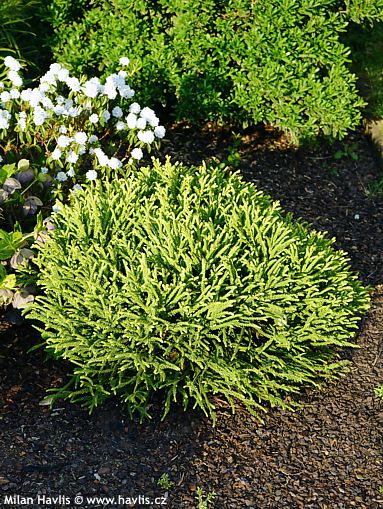
One of the most beautiful conifers of our climate is Japanese cedar. There are many species and varieties. Globosa Nana was first discovered in 1923 in Japan, where it is called Mitama-sugi.
It is a dense, compact conifer with rounded branches. The needles are curved, inward-pointing, bright green ...

1 - 1,8m

1 - 1,3m

full to partial sun

7 (down to -23°C)

for zone 5+6

for zone 7
Following the success Little Champion variety, Little Diamond is another dwarf Japanese cedar variety with a spherical habit. It originated in the Netherlands in 1990, and its beauty inspired the growers to train it into a gorgeous little tree with a single trunk. Since Little Diamond grows slowly, ...

1 - 2m

0,5 - 1m

full to partial sun

5 (down to -29°C)

for zone 5+6

for zone 7
The cultivar Fastigiata Aurea of the Arizona cypress is a true delicacy among conifers. It likely originated as a horticultural selection in France during the second half of the 20th century, although precise details about its development are not documented in the literature. Unlike ‘Fastigiata’, it ...

3 - 6m

1 - 2m

full sun

7 (down to -23°C)

for zone 5+6

for zone 7
Now for the cultivar Totem. The name itself suggests a plant with the character of a sculpture – and that is exactly what it is. Totem is an extremely narrow, columnar cultivar of Tuscan cypress, like a green sword thrust into the ground. It grows slowly yet steadily, holding its shape like a soldie ...

4 - 8m

0,5 - 1m

full sun

8 (down to -18°C)

for zone 5+6

for zone 7
Summer Ice is a variegated form of hybrid daphne caucasica found by Bob Tichnor of Oregon State University’s North Willamette Research and Extension Centre in Oregon, USA. The source does not say whether the plant is a mutation of unnamed hybrids or an existing variety Jim’s Pride with green foliage ...

VI - IX

0,5 - 1m

0,5 - 1m

full sun

7 (down to -23°C)

for zone 5+6

for zone 7
ETERNAL FRAGRANCE™ is a compact and dense growing variety of a hybrid daphne with long flowering period. Its small flowers are tubular, almost white inside and pale lilac pink outside. They have a strong and sweet perfume and are produced in profusion from late May until early July, and then sporadi ...

VI - X

0,5 - 1m

0,5 - 1m

full sun

5b (down to -27°C)

for zone 5+6

for zone 7
PINK FRAGRANCE™, or also marketed under its complete name SPRING PINK ETERNAL FRAGRANCE™, is a sister variety which arose from breeding its predecessor – ETERNAL FRAGRANCE™ variety. Its is a compact and dense growing hybrid daphne with long flowering period. It makes small, t ...

VI - X

0,5 - 1m

0,5 - 1m

full sun

5b (down to -27°C)

for zone 5+6

for zone 7
Compacta is a recent selection of Evergreen (Ebbing's) silverthorn, very probably of Italian origin (not confirmed). Unlike its mother plant - the species of Ebbing's silverthorn - it makes a compact and well-behaved shrub without overgrown twigs in one season. In fact, this sport makes quite a hand ...

IX - X

2 - 3m

1,5 - 2m

full to partial sun

7 (down to -23°C)

for zone 5+6

for zone 7
MARYLINE® is a trade name for a striking selection of evergreen silverthorn, found by Albert Breneliére in France. It is a very bushy, upright growing, evergreen shrub with irregularly variegated leaves. They are leathery, oval to ovate, partially undulated, and glossy. The centres are very pal ...

VIII - IX

1,5 - 2m

1 - 2m

full to partial sun

7 (down to -23°C)

for zone 5+6

for zone 7
Viveleg silverthorn is a bushy, upright growing, evergreen shrub with irregularly variegated leaves. They are leathery, oval to ovate, partially undulated, and glossy. The centres are dark green, the margins are rich yellow, and the borderline between these two colours is light green but is not pres ...

IX - X

2 - 3m

1 - 2m

full to partial sun

7 (down to -23°C)

for zone 5+6

for zone 7
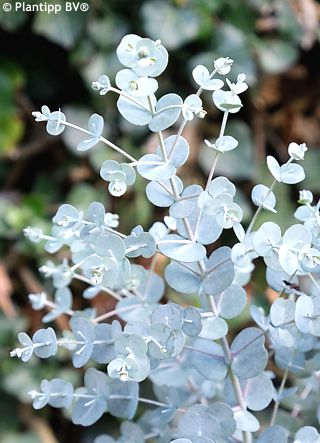
AZURA is undoubtedly the first reliably hardy cider gum variety of European origin. It has typically steel blue-green, rounded, highly aromatic, evergreen foliage along silvery blue stems. It grows moderately to fast and its ultimate height is expected to reach about 4-5m without pruning but it can ...

2 - 4m

1,5 - 2m

full to partial sun

7 (down to -23°C)

for zone 5+6

for zone 7
Microphyllus Aureovariegatus is a dwarf cultivar of Japanese spindle which is not only handsome but also much hardier compared to its larger-leaved relatives. Its leaves are small – about 2 cm long and half a centimetre wide – glossy, evergreen, and vividly coloured against a dark background. In the ...

0,5 - 0,8m

0,5 - 0,8m

full to partial sun

7 (down to -23°C)

for zone 5+6

for zone 7
Dawyckii varieties of common beech are very popular for their habit and leaf colours. Dawyck Purple has upright, columnar habit, its initial slow growth changes after a few years to medium-fast, never really fast. Spring leaves are striking purple, colour slightly deepens throughout the summer. Lack ...

10 - 15m

1 - 3m

full sun

4 (down to -34°C)

for zone 5+6

for zone 7
Another hardy fig that can grow and even fruit in our climate (zone 6) is called Bornholm’s Diamond (Bornholms Diamant). Its name and characteristics were derived from a Swedish variety called Bornholm bred on on island of the same name. This one is more tolerant of damp weather which makes it ...

1 - 2m

full sun

6b (down to -21°C)

for zone 5+6

for zone 7
One of the hardiest figs for our climate (zone 6) is named Brown Turkey. As the name suggests the fruit is brownish-red or blackish-purple, relatively large and sweet. They do not require pollination. Immature fruit and branches contain sap which can be an eye and lip-irritant. Palmate leaves are ve ...

1 - 2m

1 - 2m

full sun

6b (down to -21°C)

for zone 5+6

for zone 7
Ice Crystal is a unique variety of fig tree which probably rose from spontaneous crossbreeding with ficus afghanistanica. It stands out for its beautiful, palmate, deeply lobed leaves whose margins are picturesquely carved with smaller lobes and notches, so with a little imagination you can get the ...

1 - 2m

1 - 2m

full sun

7 (down to -23°C)

for zone 5+6

for zone 7
Some of you, gleditsia lovers, may have read about this quite rare and unique version of honey locust. Its charm consists in the unusual colour of leaves. They are bright purple as they emerge, turning chocolate brown later and light bronze in summer. They are pinnate or bi-pinnate and look like fer ...

3 - 8m

2 - 5m

full sun

5 (down to -29°C)

for zone 5+6

for zone 7
Sunburst is a mid-sized tree grafted at the bottom so the whole plant is thornless. It is usually offered as a feathered tree with branches from the ground level. It can also be trained into a tree form with a thin crown in 2m height. The trunk still keeps producing buds with leaves which should be ...

5 - 9m

2 - 5m

full sun

4 (down to -34°C)

for zone 5+6

for zone 7
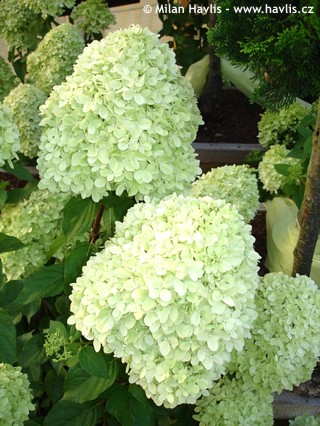
Limelight® is a panicle type hydrangea, not a mop-head one with big leaves and large flowers heads. Well, how to explain then that this new variety has even bigger flowers? Never mind, let’s just call them XXL size. The panicles are upto 30 cm long, fat blossoms of greenish-white colour w ...

VIII - IX

1,5 - 2m

full to partial sun

4 (down to -34°C)

for zone 5+6

for zone 7
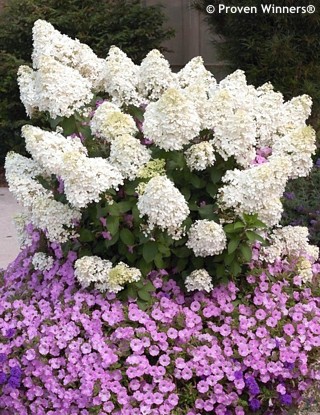
Panicle hydrangea BOBO® is unique for its small and compact growth and incredible amount of flowers. This variety produces numerous panicles, 25-30 cm tall and about 15 cm wide, composed of sterile flowers that emerge creamy white with lime green shades in midsummer, and mature to pale pastel p ...

VII - IX

0,5 - 0,8m

0,5 - 1m

full to partial sun

3 (down to -40°C)

for zone 5+6

for zone 7
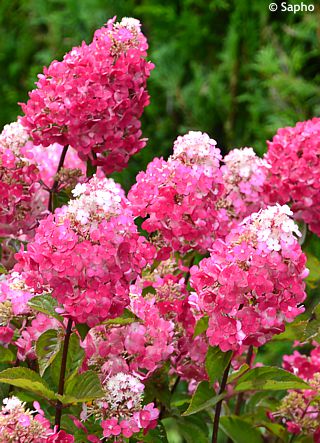
FRAISE MELBA® panicle hydrangea makes about 16 cm long and 12 cm wide panicles composed of mostly sterile (showy) flowers which emerge pale lime green and change to creamy white. However, earlier than others they turn glowing pink and purple pink as they mature during colder nights of late summ ...

VII - X

1,5 - 2m

1 - 1,5m

full to partial sun

4 (down to -34°C)

for zone 5+6

for zone 7
FRAMBOISINE® is another beautiful panicle hydrangea variety developed by French breeder Jean Renault. He is renowned for some of the finest varieties such as VANILLE FRAISE®, SUNDAE FRAISE®, FRAISE MELBA®, DIAMANTINO®, and DIAMANT ROUGE®. He crossbred FRAMBOISINE® ...

VII - X

0,8 - 1,2m

1 - 1,5m

full to partial sun

4 (down to -34°C)

for zone 5+6

for zone 7
Mary Nell is a hybrid holly from the USA, bred by Joe McDaniels in Tom Dodd Nursery in Alabama in 1962. It is a cross between large-leaved holly ilex latifolia and hybrid holly Red Delight which is a cross between ilex cornuta and ilex pernyi. Joseph C. McDaniels (1912-1982) was a renowned horticult ...

3 - 4m

1,5 - 2m

full to partial sun

7 (down to -23°C)

for zone 5+6

for zone 7
Nellie R. Stevens holly is one of the most cultivate hardy hollies worldwide simply because it is beautiful and versatile. It is a cross between English holly (ilex aquifolium) and Chinese holly (ilex cornuta). It grows relatively fast and can be trained into a gorgeous looking evergreen tree.
The ...

2 - 5m

1,5 - 2,5m

full to partial sun

7 (down to -23°C)

for zone 5+6

for zone 7
Chestnut Leaf is probably the most common variety when you happen to come across a Koehne holly in Europe early 21st century. I am giving this date deliberately in case you are reading this article in 2050 or later, laughing how come that we used to be so deprived having just one Koehne holly then. ...

2 - 6m

1,5 - 3m

full to partial sun

7 (down to -23°C)

for zone 5+6

for zone 7
Blue Maid® is a female variety of blue holly. It produces abundance of tiny, white flowers in spring that are followed by attractive berries in autumn. They are bright red and glossy, and remain on the plant until the birds find them in winter. Once they do they will eat them all. In order to p ...

1,5 - 3,5m

1 - 1,8m

full to partial sun

5 (down to -29°C)

for zone 5+6

for zone 7
Little Rascal® is a beautiful new variety of blue holly, found in US nursery Monrovia in 1996 as a natural mutation of another blue holly called Blue Boy. The plant exhibits unique features, distinctly different from its parent for which it was patented under PP9,999 as ilex x “Mondo̶ ...

0,5 - 0,6m

0,5 - 1m

full to partial sun

4 (down to -34°C)

for zone 5+6

for zone 7
Curly Red® variety comes from Dutch town Boskoop where it was found as a naturally occurring mutation among plants of another variety named SCARLETTA®. It was fits introduced in 2003 and received the award of “most striking plant novelty” at the Aalsmeer flower market in Novemb ...

0,3 - 0,4m

0,3 - 0,6m

full sun to shade

7 (down to -23°C)

for zone 5+6

for zone 7
BURNING LOVE® leucothoe is a keiskei species i.e. it makes narrowly lanceolate leaves with a conspicuous tip. They are evergreen, leathery, very glossy, and change colours from crimson red when they emerge to dark green when mature, and dark burgundy red from autumn till spring, when they rever ...

0,3 - 0,4m

0,3 - 0,6m

full sun to shade

5b (down to -27°C)

for zone 5+6

for zone 7
Excelsum Superbum is a highly attractive, variegated form of glossy privet. It makes large, up to 15 cm long and 6 cm wide, ovate to oval, pale dark green leaves abundantly variegated butter yellow, often extended to the midribs. Directly contradicting its botanical name they are NOT glossy, they ar ...

IX - X

2 - 5m

1 - 2m

full sun

8 (down to -18°C)

for zone 5+6

for zone 7
Gum Ball is a dwarf cultivar of sweetgum that has gained popularity for its compact size and attractive appearance without the need for pruning. Its leaves are deeply lobed, with five to seven lobes and prominent veining, turning into a spectacular mix of fiery red, orange, purple, and deep burgundy ...

1,5 - 3,5m

1,5 - 2m

full sun

5 (down to -29°C)

for zone 5+6

for zone 7
Aureomarginatum is a tulip tree variety that truly shines in spring. Its uniquely saddle-shaped, deciduous leaves emerge bright green, edged with a striking, irregular daffodil-yellow margin. It’s a spectacular sight – and one to savour – because this burst of spring colour is fleeting. As summer ar ...

VI - VII

15 - 20m

6 - 10m

full sun

5 (down to -29°C)

for zone 5+6

for zone 7
Fastigiatum is arguably the most sought-after form of tulip tree, thanks to its columnar growth habit that fits even into medium-sized gardens which is something the species, reaching up to 20 meters, can hardly claim 😊. It makes a good couple of attractive features as well as remarkably low ...

VI - VII

7 - 13m

2 - 3m

full to partial sun

5 (down to -29°C)

for zone 5+6

for zone 7
Liriodendron Snowbird® is a remarkable cultivar of this attractive tree, with origins linked to New Zealand. According to some sources, it was bred by James Palmer Rumbal, a long-time researcher at the renowned Duncan & Davies nursery, who specialized in selecting and propagating ornamental wood ...

VI

10 - 20m

6 - 12m

full sun

5 (down to -29°C)

for zone 5+6

for zone 7
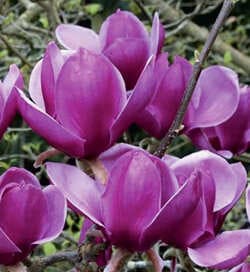
Galaxy magnolia was raised at U.S. National Arboretum in 1963, as a cross between purple-pink m. liliiflora ‚Nigra‘ and large-flowered m. sprengeri ‘Diva’. The result is a strong growing shrub or rather single-stemmed mid-sized tree with a thick leader, forming dense, oval to ...

IV - VI

3 - 6m

2 - 4m

full sun

4 (down to -34°C)

for zone 5+6

for zone 7
Spectrum is a magnolia hybrid from 1963. It was bred by W.Kosar from the US National Arboretum as a cross between magnolia liliiflora Nigra and magnolia sprengeri ‘Diva’. The result is a reasonably vigorous tree magnolia with liliiflora type, slightly fragrant flowers that are rich purpl ...

IV - V

6 - 8m

4 - 8m

full sun

5b (down to -27°C)

for zone 5+6

for zone 7
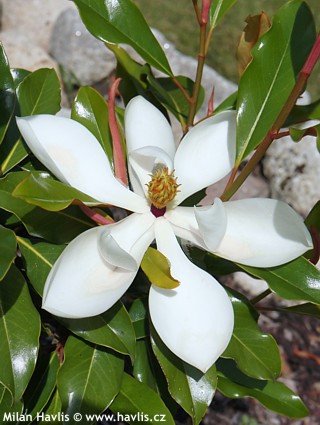
Ferruginea is a southern magnolia variety with large, 24-26 cm across, creamy white, lotus-like flowers whose fragrance attracts not only bees and other insects, but also most perfume producers and every passer-by, especially in late afternoon and early evening when it releases its rich, sweet and c ...

VI - IX

4 - 8m

3 - 5m

full sun

7 (down to -23°C)

for zone 5+6

for zone 7
Little Gem is an evergreen magnolia which is smaller in every aspect but offers more of everything. The glossy, leathery leaves are numerous, making the plant very dense. They are deep green with distinct rusty underneath. When crushed they release a fine resin perfume.
The amount of creamy white, ...

VI - X

2 - 4m

1,5 - 2,5m

full sun

6b (down to -21°C)

for zone 5+6

for zone 7
Southern magnolia Twenty Four Below is next to Edith Bogue variety one of the two hardiest evergreen magnolias known to trade. It produces large, 24-28 cm across, creamy white, lotus-like, and fragrant flowers from July until September. Their scent attracts not only bees and other insects, but also ...

VII - IX

4 - 8m

3 - 5m

full sun

5 (down to -29°C)

for zone 5+6

for zone 7
Nannetensis® is a French variety of bull bay magnolia that gained popularity at the turn of the millennium, probably thanks to internet that spread the information among plant enthusiasts, though it was first described already in 1865. It was formerly cultivated under various names co ...

VI - IX

3 - 8m

3 - 5m

full to partial sun

7 (down to -23°C)

for zone 5+6

for zone 7
Goliath is bushier than the species. As you can tell by its name, something is going to be extraordinary here. True: the flowers are extremely large, often up to 30 cm wide, strongly fragrant and appear on the plant usually from June, often from late May if the end of spring is hot, and continue blo ...

V - IX

3 - 8m

3 - 4m

full sun

7 (down to -23°C)

for zone 5+6

for zone 7
Evergreen magnolias are the queens of flowering trees. We choose the most beautiful and at the same time the hardiest varieties. Goliath is a cultivar found by American botanist Albert Charles Smith (1906-1999) in former Caledonian Nurseries on British island Guernsey in 1910. The nursery no longer ...

VI - IX

3 - 8m

3 - 5m

full sun

5a (down to -29°C)

for zone 5+6

for zone 7
ALTA® is a gorgeous southern magnolia of dense habit and narrowly columnar, very elegant shape that looks like a candle flame. From the first hot days of summer large – 20-24 cm across, creamy white, strongly sweet-scented flowers are produced singly and continuously for 2 months or a little longer ...

VII - VIII

3 - 6m

1 - 2m

full sun

7 (down to -23°C)

for zone 5+6

for zone 7
Malus Perpetu® is another crab apple. This variety offers snow-white flowers, very similar to those you can see on apple trees. They open from pink buds and their number is very high every year. Deciduous leaves are green, ovate, mid-sized. The best attraction is the fruit – many tiny app ...

IV - V

3 - 5m

2 - 3m

full to partial sun

4 (down to -34°C)

for zone 5+6

for zone 7
Scarlet crabapple is a fantastic addition to the collection of spring flowering apples and cherries. This one, however, has more than one feature to look at (just like Scarlett Johansson who may have been a reason for giving this tree its name …)
Scarlet is a flowering crabapple tree with pro ...

IV - V

4 - 6m

2 - 5m

full sun

5 (down to -29°C)

for zone 5+6

for zone 7
White mulberry and its Pendula variety is one of the top popular weeping trees. No wonder – apart from its beauty it offers tasty fruit. Moreover its small size makes it an ideal specimen tree even for small gardens. Its deciduous leaves are heart-shaped, toothed at margins, up to 15 cm long, ...

2 - 3m

1 - 2m

full sun

4 (down to -34°C)

for zone 5+6

for zone 7
Plane-leaved mulberry has many admirers thanks to its almost exotic large leaves. Fruitless is a follow-up variety from Italy eliminating the only set back this tree may have when it comes to cleanliness: it is sterile (male) and does not produce fruit that would cause coloured waste under its canop ...

3 - 5m

3 - 5m

full sun

4 (down to -34°C)

for zone 5+6

for zone 7
Fortune's osmanthus is a cross between o.heterophyllus (small, very spiny leaves) and o.fragrans (large, entire leaves). It was first brought from Japan to Europe to Holland Philipp Franz von Siebold in 1856. Over the years its name has developed from osmanthus aquifolium to o.aquifolium var.latifo ...

X - XI

1,5 - 3m

1,5 - 2,5m

full to partial sun

6b (down to -21°C)

for zone 5+6

for zone 7
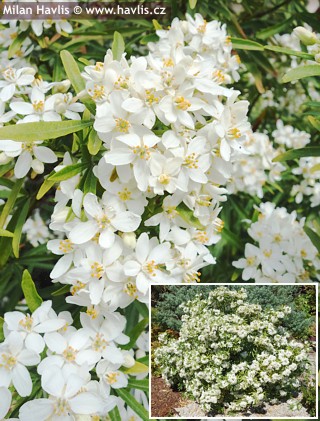
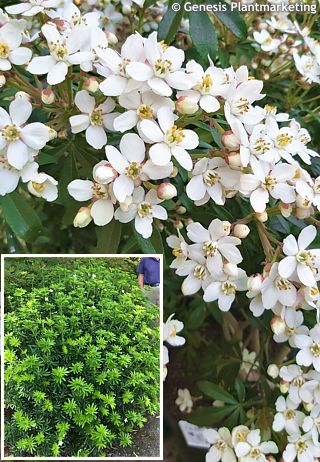
Narrow-leaved mock privet is another typical plant of so-called macchia vegetation found in dry and hot, rocky slopes of South Europe, i.e. plants which cope extremely well with long-lasting drought and are usually unattacked by wild animals. This mock privet has narrowly elliptic to lance-shaped, 4 ...

1,5 - 3m

1,5 - 3m

full sun

7 (down to -23°C)

for zone 5+6

for zone 7
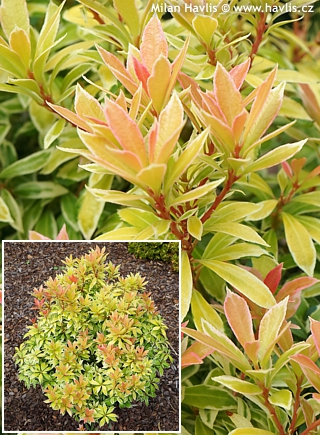
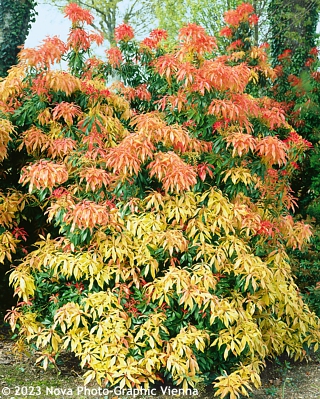
Red Robin is a New Zealand selection of Fraser's photinia which is considered the first and also possibly the most successful Fraser's photinia variety of 20th century. After 20 years from its introduction it received the Award of Garden Merit (AGM) by the English Royal Horticultural Society (RHS) f ...

V

2 - 4m

1 - 2m

full to partial sun

7 (down to -23°C)

for zone 5+6

for zone 7
Red Robin is a New Zealand selection of Fraser's photinia which is considered the first and also possibly the most successful Fraser's photinia variety of 20th century. After 20 years from its introduction it received the Award of Garden Merit (AGM) by the English Royal Horticultural Society (RHS) f ...

V

2 - 4m

1,5 - 3m

full to partial sun

7 (down to -23°C)

for zone 5+6

for zone 7
This photinia was given a nice name Cassini, but is marketed as PINK MARBLE®. That name tells the truth, though. PINK MARBLE® is an evergreen shrub producing dark green leaves that emerge rich red with white margins, maturing to deep green with silvery-white veins just like marble, gaining ...

1,5 - 3m

1 - 2m

full to partial sun

7 (down to -23°C)

for zone 5+6

for zone 7
Tree form or PINK MARBLE® photinia has evergreen, ovate, and glossy leaves of dark green colour with white margins and silvery-white veins just like marble has, that gain pink shades in autumn and winter. However, the best show happens when new leaves emerge - they are bright pink red and last ...

2 - 4m

1,5 - 2,5m

full to partial sun

7 (down to -23°C)

for zone 5+6

for zone 7
Carré Rouge is a French selection of Fraser's photinia from Red Robin variety. It originated in Nantes and produces smaller leaves of intensely red colour when young, maturing to deep green, yet keeping the top leaves crimson or wine red. New leaves with red colour emerge at least twice a year: in ...

IV

1,5 - 3m

1 - 2m

full to partial sun

7 (down to -23°C)

for zone 5+6

for zone 7
Carré Rouge is a selection of Fraser's photinia from Red Robin variety. It is commonly believed to have originated in French Nantes, however, the truth is that the first plants were found in a Tuscan nursery in Pistoia, Italy, and named Mandarino. It produces smaller leaves of intensely red colour w ...

2 - 4m

1 - 2m

full to partial sun

7 (down to -23°C)

for zone 5+6

for zone 7
Echiniformis is a very slow growing variety of white spruce. It bears evergreen needles that are short, only about 7 mm long, they are blue-green and look great when there is a deep green background and dark brown mulch underneath. Being a dwarf plant it will fit even the smallest of gardens. 25 yea ...

0,3 - 0,6m

0,8 - 1,3m

full to partial sun

3 (down to -40°C)

for zone 5+6

for zone 7
Italian stone pine, often called just umbrella pine, is a long-lived conifer with fresh green, evergreen, and relatively soft needles 10-20 cm long, which grow in pairs and densely cover the branches creating an impenetrable screen. Young plants grown from seeds till the age of about ten years first ...

10 - 20m

8 - 15m

full sun

8 (down to -18°C)

for zone 5+6

for zone 7
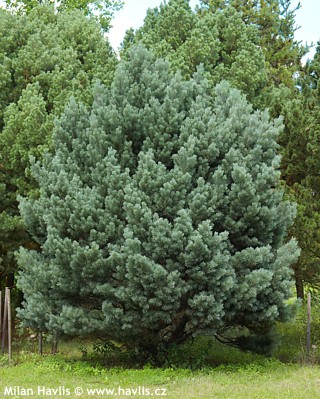
Watereri is a small, slow-growing pine which is also commercially known under the name “Nana” – a typical name for many dwarf plants. Its needles are borne in pairs, dark green with only a hint of blue-green in summer, and more bluish in cold months of autumn and winter. It is very ...

2 - 4m

1 - 4m

full sun

2 (down to -45°C)

for zone 5+6

for zone 7
Some trees have identity crisis and scientists are trying to trace up their true origin. As these efforts often end up in argumentative sessions we tend to choose the easiest possible explanation. In the case of this London plane tree we rather believe it comes from Cenozoic platanus aceroides and w ...

5 - 30m

4 - 20m

full sun

4 (down to -34°C)

for zone 5+6

for zone 7
Alphen’s Globe has been a sought after small tree in the last decade or so since it offers beauty of its parent – plane tree - but much smaller dimensions which make it suitable even for small gardens.
Its deciduous leaves are large – 20 cm wide, glossy green, with 5 lobes. Fruits ...

3 - 5m

2 - 3m

full sun

5 (down to -29°C)

for zone 5+6

for zone 7
Looking into the crown of this Japanese flowing cherry it is clear why people in Japan take a bow in front of them and organize sakura festivals. It is not only because of their beauty, they also believe that their trunks hold spirits of the dead, and finally they manifest the new life emerging in e ...

V - V

2 - 4m

2 - 5m

full sun

4 (down to -34°C)

for zone 5+6

for zone 7
Novita is a new sensation among cherry laurels. Eventually there is a hardy variety which has benefits of the formerly more tender ones: it grows fast and big, has large leaves of a nice colour, and is surprisingly hardy for a large-leaved cherry laurel. It is a selection of Rotundifolia variety hen ...

V

3 - 6m

1 - 3m

full sun to shade

5b (down to -27°C)

for zone 5+6

for zone 7
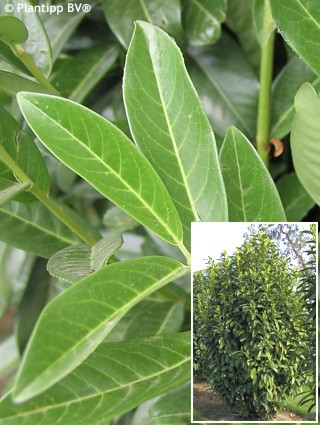
Angustifolia is a very elegant variety of Portugal laurel. Irrespective of its origin it belongs to the hardiest evergreen plants for our climate and performs better than some large-leaved cherry laurels. It has narrower leaves than the species and brighter red stalks and new twigs. In May and June ...

V - VI

3 - 6m

2 - 3m

full to partial sun

7 (down to -23°C)

for zone 5+6

for zone 7
Brenelia is an elegant novelty variety of Portugal laurel from early 21st century. In appearance and use it is similar to Angustifolia variety but has larger leaves with undulated margins and exhibit faster growth. The stalks and new stems are rich burgundy red not only in winter but most of the gro ...

VI

3 - 6m

2 - 4m

full to partial sun

7 (down to -23°C)

for zone 5+6

for zone 7
You can easily fall in love with this Portugal laurel if you like evergreen plants. It will enchant you with its lush, glossy leaves. They are large, thick, somewhat undulated, and emerge coppery orange, turn soft green, and mature to dark green in summer. They resemble foliage of viburnum odoratiss ...

V - VI

2 - 3m

1,5 - 2m

full to partial sun

7 (down to -23°C)

for zone 5+6

for zone 7
Bonfire is a spectacular new variety of dwarf ornamental peach with edible fruit. It has profusion of typical peach-like, light pink flowers that are clustered along short branches in a dense crown. The leaves are fantastic deep burgundy red and glossy, narrow and elongated, and not much smaller tha ...

IV - IV

0,5 - 1,3m

0,5 - 1,5m

full sun

5a (down to -29°C)

for zone 5+6

for zone 7
AMBER® is a dwarf peach tree developed by Chris “Floyd” Zaiger (1926-2020) who devoted all his adult life to breeding stone fruit. He set up Zaiger’s Genetics in Modesto, California, USA, where plants are bred using hand pollination rather than using DNA manipulation. As of 20 ...

IV

1 - 1,5m

1 - 1,5m

full sun

5b (down to -27°C)

for zone 5+6

for zone 7
Silver Prolific is a dwarf nectarine variety with excellent fruit. It has profusion of usual peach-like, bright pink flowers that are clustered along short branches in a dense plant. The leaves are mid green, semi-glossy, narrowly lanceolate, and not much smaller than those on any other peach tree. ...

IV - IV

1 - 1,5m

1 - 1,5m

full sun

5a (down to -29°C)

for zone 5+6

for zone 7
Spring in the garden is announced by flowering Japanese cherries. Amanogawa is a fantastic variety with narrowly columnar growth. In early spring it produces masses of double or semi-double, light pink flowers that may turn to clear white later. Young leaves are bronze, changing to green in summer, ...

IV - V

4 - 7m

0,5 - 1,5m

full to partial sun

5 (down to -29°C)

for zone 5+6

for zone 7
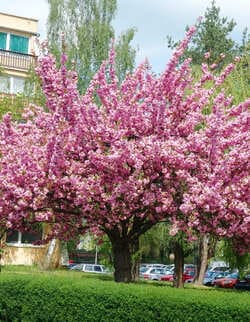
Just like many beautifully flowering trees or shrubs, this flowering cherry too comes from China. It even bears a name of an ancient tendai buddhist temple.
Kanzanu is a mid sized tree with double pink to magenta flowers which come out in early April and follow throughout the spring. It is probabl ...

IV - V

5 - 8m

4 - 5m

full sun

5 (down to -29°C)

for zone 5+6

for zone 7
Many believe the most beautiful ornamental cherry – the Sakura – is the famous ‘Kanzan’ or the original weeping ‘Kiku-shidare-zakura’. They are indeed magnificent, but imagine the excitement when, in Oregon in the early 1990s, a bud mutation appeared that offered the same qualities plus dark purple ...

IV - V

6 - 8m

5 - 6m

full sun

5 (down to -29°C)

for zone 5+6

for zone 7
Another treasure from the flowering cherry box was probably derived from prunus serrulata with serrated leaves. This small tree has almost horizontal branches with drooping ends. Snow white, single or semi-double fragrant flowers are large and born in pendent clusters in April. Mid-green oblong leav ...

IV

3 - 5m

4 - 7m

full to partial sun

4 (down to -34°C)

for zone 5+6

for zone 7
The prunus genus contains over 400 species which are useful and beautiful at the same time. There are cherries, plums, peaches or sloes, as well as flowering Japanese cherries, cherry laurels etc. This variety received its name for the season in which it can re-flower if the end of autumn is warm. H ...

III - IV

3 - 4m

1 - 3m

full sun

4 (down to -34°C)

for zone 5+6

for zone 7
New Madrid is a hybrid Nuttall oak variety, a cross between q. nuttallii (= q. texana) and q. palustris. It is a little smaller than the species, yet a large tree for mid-sized gardens and parks. It is renowned for its colourful foliage – in spring the leaves emerge coppery red, in late spring ...

10 - 15m

7 - 10m

full sun

7 (down to -23°C)

for zone 5+6

for zone 7
Holm oak or holly oak (holm is an old word for holly) is native to the Mediterranean and is spread from southern parts of Italy, France, Spain and Portugal, to west Balkan and milder parts of North Africa. It used to form vast areas of evergreen forests most of which are chopped down today. It was f ...

8 - 15m

6 - 8m

full sun

7 (down to -23°C)

for zone 5+6

for zone 7
Holm oakis a natural species, not a hybrid despite two specific names in its Latin title. Integrifolia is one of its few selections first described in 1836. Its evergreen, leathery leaves are spineless with less conspicuous notches or serration at margins, often with none whatsoever. They are 3-6 cm ...

4 - 10m

3 - 6m

full sun

7 (down to -23°C)

for zone 5+6

for zone 7
The bamboo-leaf oak is a small to medium-sized evergreen tree whose leaves resemble those of bamboo. They are narrow, elongated to lanceolate, with finely serrated edges or almost entire. New foliage emerges in attractive shades that vary from seedling to seedling and may be bronze, salmon, red, or ...

5 - 12m

4 - 6m

full sun

7 (down to -23°C)

for zone 5+6

for zone 7
Waasland is a variety of hybrid Spanish oak and the name of a Belgian region where it was found. It features elongated leaves with irregular lobes, which resemble oak leaves more than most other varieties. They are very stiff, leathery, shiny, dark green, the underside is protected by silvery grey i ...

6 - 12m

4 - 8m

full sun

7 (down to -23°C)

for zone 5+6

for zone 7
Pseudoturneri is a later variety of Turners oak. Its leaves are very similar to common oak, mid green, shallowly lobed and partly glossy. Compared to its hybrid parent it is a little smaller, hardier, and holds its leaves more reliably over the winter. Still, some leaves may fall down at the end of ...

3 - 6m

2 - 4m

full sun

7 (down to -23°C)

for zone 5+6

for zone 7
From Bailey Nurseries, USA, which also gave birth to hardy hydrangea Endless Summer®, comes a new plant, a special variety of sumac. Within a short time it has become a popular novelty among growers and gardeners around the world.
Tiger Eyes® is a cut-leaf form of sumac. Its pinnate, fe ...

1 - 1,8m

1 - 1,5m

full sun

3 (down to -40°C)

for zone 5+6

for zone 7
Black Lace is a variety of European elder that has lace-like, deep burgundy leaves that look like those of dissectum Japanese maples. Flowers are striking pink panicles that appear in May. Its vigorous growth helps this shrub soon make a dense cover of leaves that are vivid purple in the spring, dee ...

V - VI

2 - 3m

1,5 - 2,5m

full to partial sun

4 (down to -34°C)

for zone 5+6

for zone 7
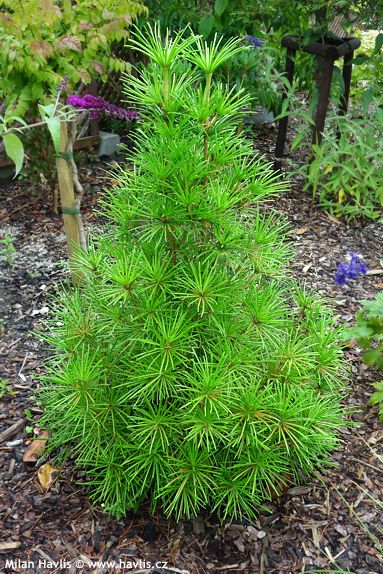
Japanese umbrella pine is an exquisite-looking conifer with dark green needles. They are glossy, 5-12 cm long and grow in whorls of 15-20. They are borne at the shoot-tips like the spokes of an umbrella, hence it name.
In Japan it grows some 10m tall, however, in our climate you can count on 2-4m, ...

1,5 - 4m

1 - 2m

full to partial sun

5b (down to -27°C)

for zone 5+6

for zone 7
Glaucum giant redwood is a smaller variety of this evergreen conifer with glaucous needles. It was first described by Christoph Friedrich Otto in 1860. Its habit is very narrowly conical even at older age. If sufficiently insolated also at its bottom parts it keeps its lower branched for a long time ...

15 - 30m

3 - 5m

full sun

5 (down to -29°C)

for zone 5+6

for zone 7
This yew is a cross between taxus baccata and taxus cuspidata and is called Hillii. It is a small to medium sized shrub of very dense, columnar habit when young, opening slightly at the top with age, with lustrous, soft green needles in summer with golden yellow hues in autumn and winter. This plant ...

2 - 3,5m

0,5 - 1,5m

full sun to shade

4 (down to -34°C)

for zone 5+6

for zone 7
Winter Orange is an outstanding linden tree variety. It features rich orange colour of branches in winter, vivid yellow leaves in autumn, and bright red buds in spring. The leaves are broadly heart-shaped, mid green, deciduous. Flowers come out in July and attract bees which produce very aromatic ho ...

VI - VII

10 - 12m

4 - 6m

full sun

3 (down to -40°C)

for zone 5+6

for zone 7
Eve Price laurustinus is truly a classic today. Its evergreen leaves are up to 8 cm long, ovate, leathery but thinner than most evergreens, medium to dark green, and with conspicuous venation. In autumn it produces a profusion of highly attractive terminal cymes composed of rosy pink flower buds whi ...

XII - III

0,5 - 1,5m

0,5 - 1m

full sun to shade

7 (down to -23°C)

for zone 5+6

for zone 7


.jpg)


.jpg)


.jpg)