












.jpg)
.jpg)
.jpg)
.jpg)
.jpg)
.jpg)
.jpg)
.jpg)
.jpg)
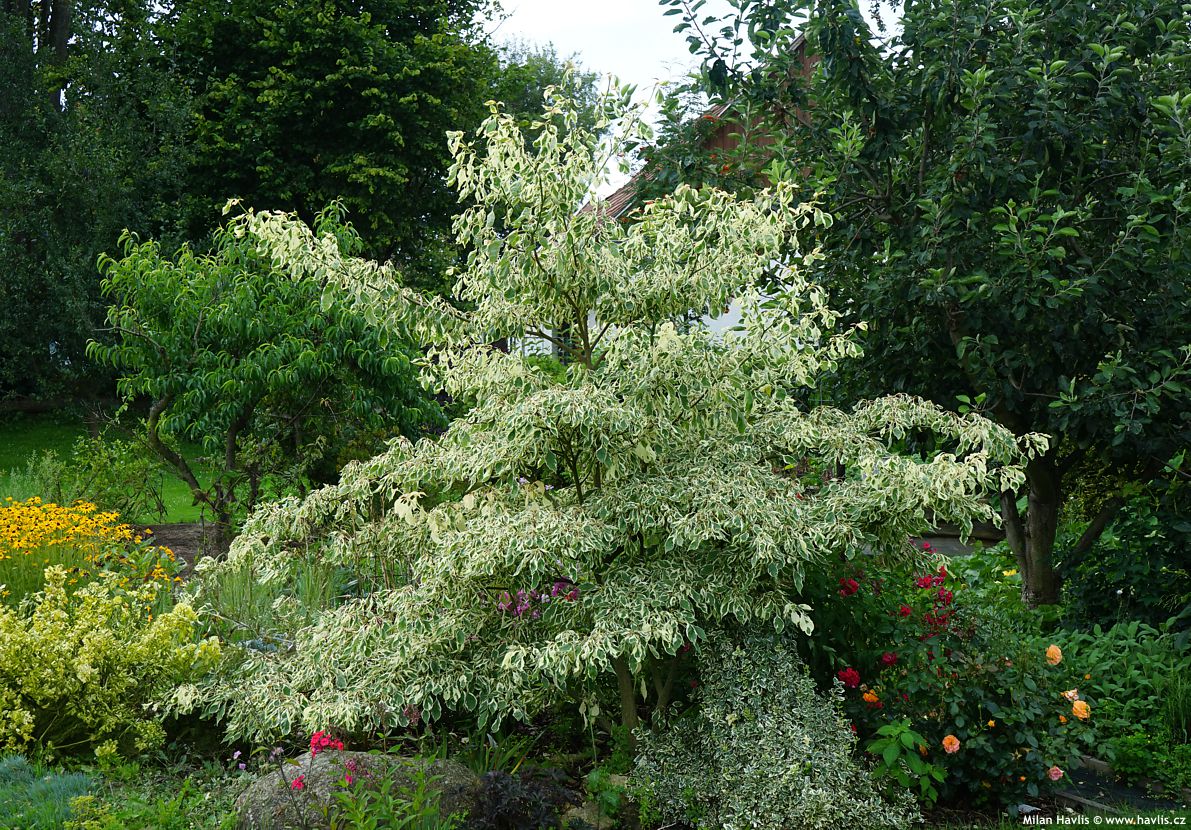
Cornus controversa 'VARIEGATA' wedding cake tree, giant dogwood

 Symbivit Tric (arbuscular)
 Symbivit (arbuscular)
Cornus
Cornus is a genus that botanists rightly regard as true aristocracy among woody plants. It comprises approximately 50–60 species of trees and shrubs distributed mainly across the temperate regions of the Northern Hemisphere, with centres of diversity in East Asia and North America. Fossil records confirm its presence as early as the Tertiary period, and the first scientific description of the genus was published by Carl Linnaeus (1707–1778) in 1753 in his Species Plantarum. For centuries, dogwoods have accompanied human culture not only as ornamental plants, but also as sources of exceptionally hard timber, medicinal substances and symbolic meaning in folk traditions, where they often represent strength, order and longevity.
Giant dogwood, Cornus controversa, originates from the mountain forests of Japan, Korea, northern China and adjacent Himalayan regions, where it grows as an understorey tree in light, moist woodland. The species was formally described in the early 20th century by the British botanist William Botting Hemsley (1843–1924). The epithet controversa refers to the taxonomic controversy of the time, as this species bears alternate leaves, unlike most dogwoods, which led to prolonged debate over its classification. European knowledge of the species was significantly advanced in the 19th century by the collections of Philipp Franz von Siebold (1796–1866), who introduced living material from Japan and paved the way for its cultivation in gardens. Thanks to its strictly horizontal, tiered crown, giant dogwood soon became a sought‑after tree in parks and botanical gardens across Europe and North America, valued primarily for its architectural form and longevity. In Japan, it is regarded as a tree of calm and order, often planted in parks, temple gardens and near traditional buildings, where its tiered branching symbolises balance and the natural rhythm of time. Unlike showy flowering trees, it has never been valued there as a dramatic focal point, but rather as a tree allowed to grow slowly, layer by layer, ageing in harmony with the landscape.
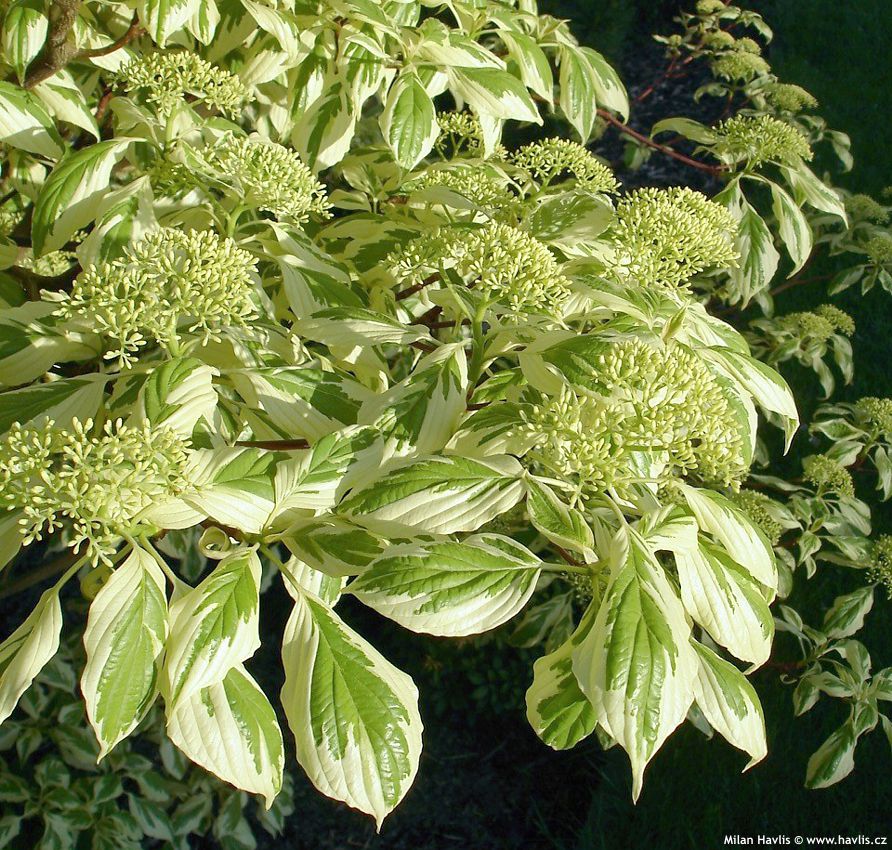
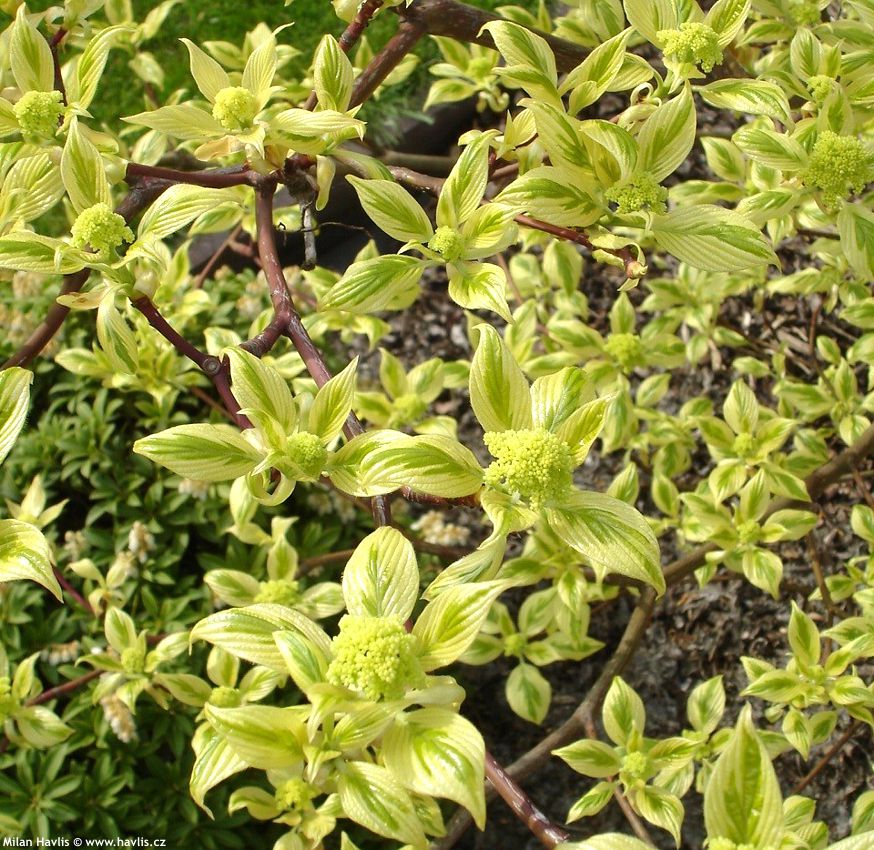
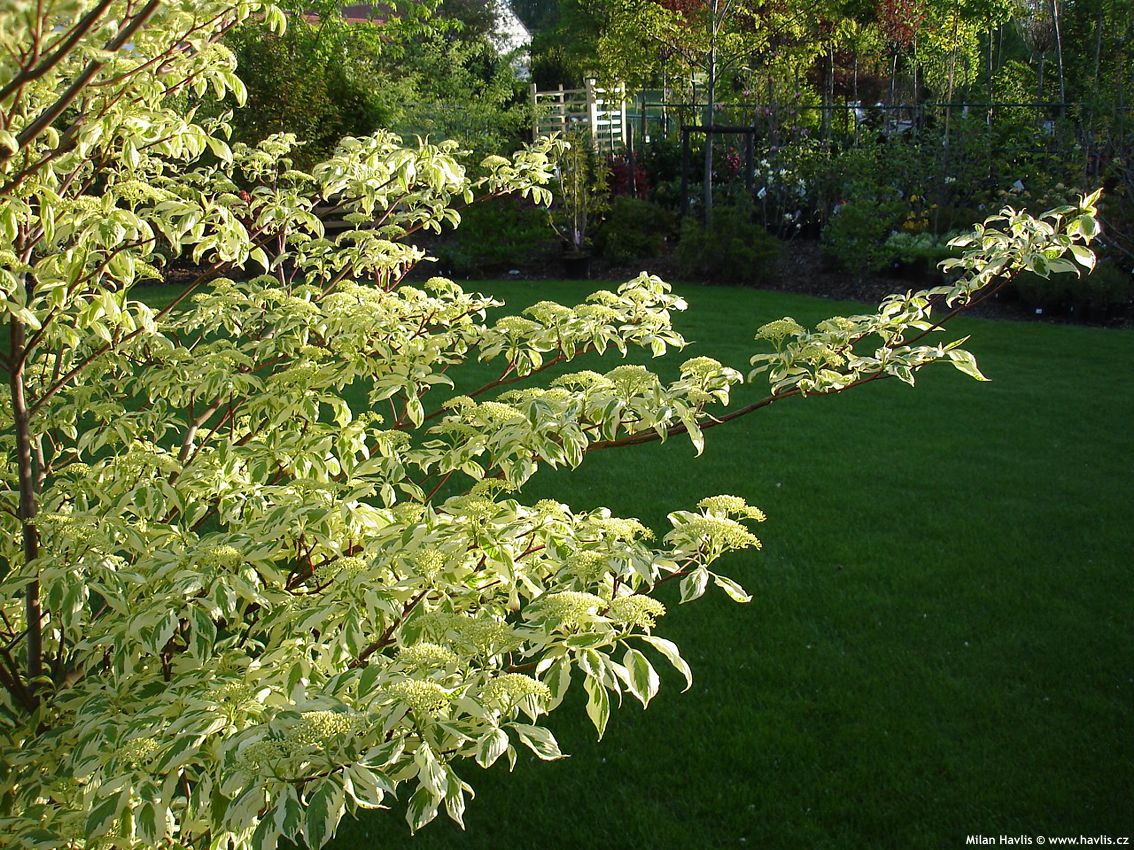
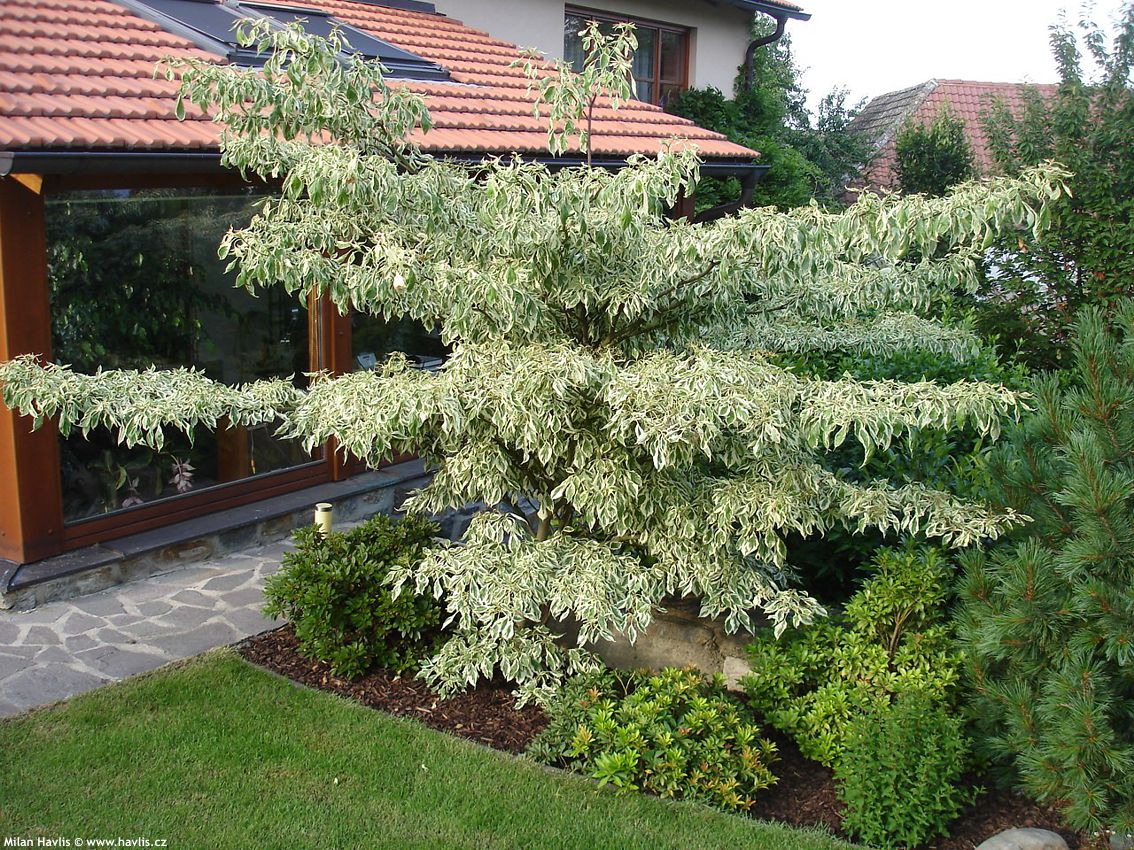
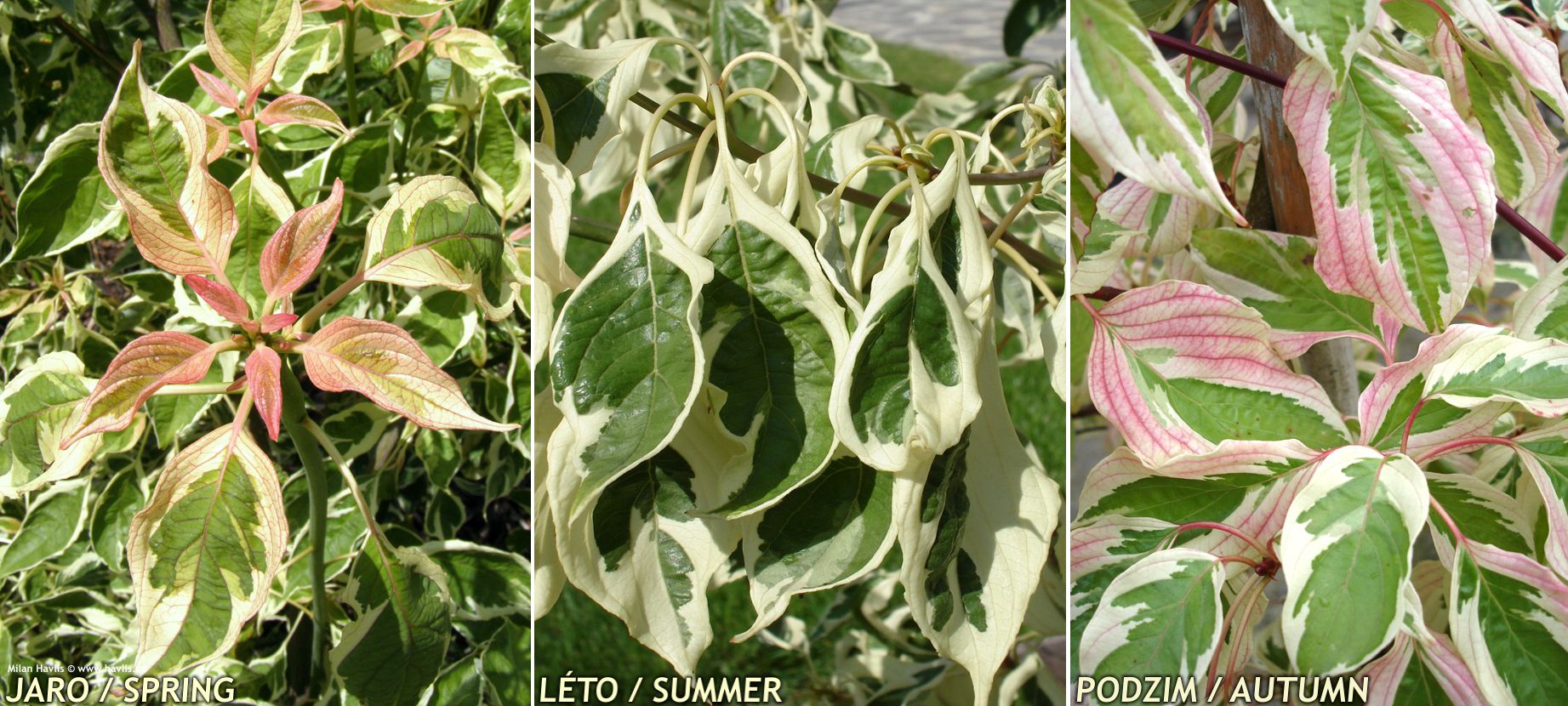
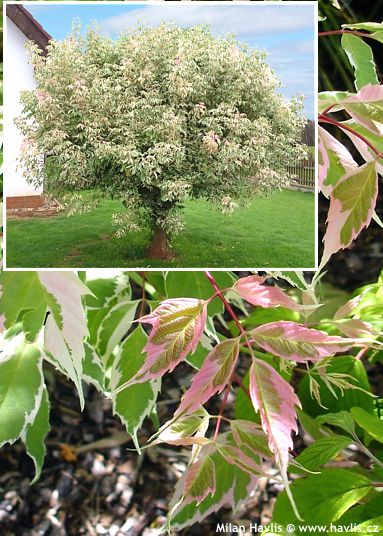
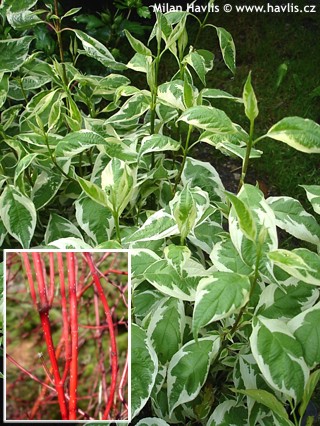
The cultivar Variegata elevates the natural beauty of giant dogwood not by one, but quite possibly by three levels at once. It bears striking green‑and‑white variegated leaves, whose broad creamy margins resemble sugar icing on the tiers of a wedding cake – hence the common name Wedding Cake Tree; fancy a slice? 😊 The deciduous leaves are ovate, gently undulating, always slightly pendulous, and emerge with a soft pink flush that returns in autumn as a subtle overlay. Flowers appear from late April to May in flat cymes 10–15 cm across, pale green to creamy white. Individual flowers are not showy, but the sheer number of inflorescences on a mature plant creates a delicate, almost mist‑like effect. Young shoots are dark wine‑red, accentuating the graphic structure of the canopy.
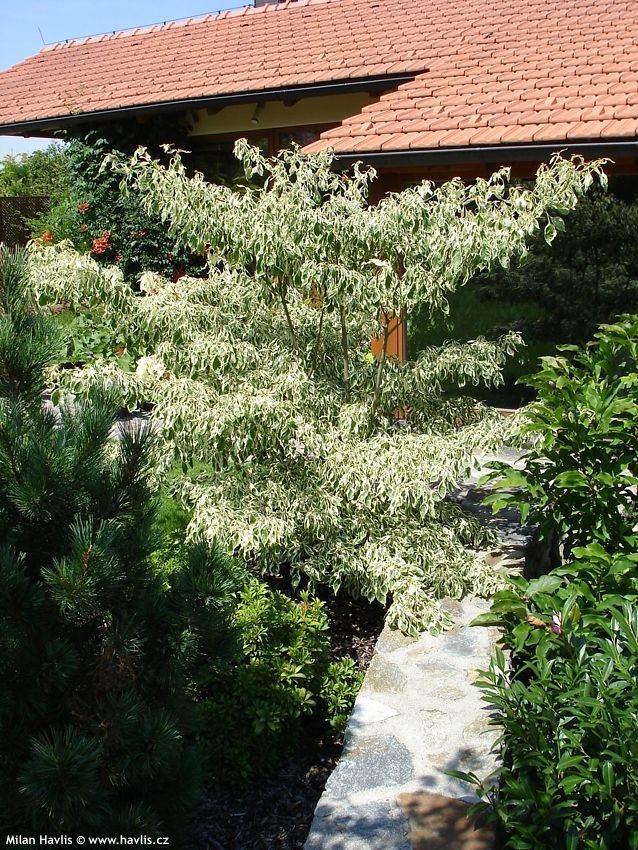
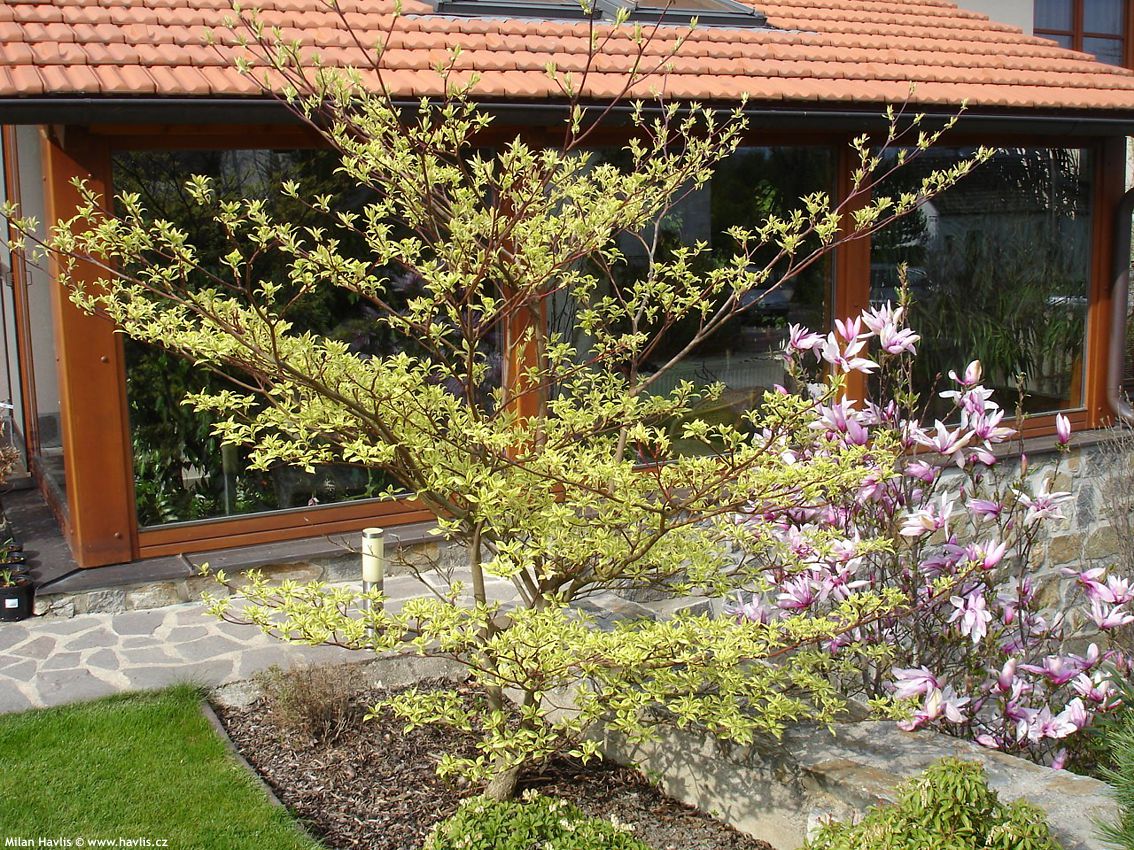
Cornus controversa ‘Variegata’ is a tree that requires time to reveal its full beauty. Its growth follows a typical rhythm: in one year, shoots surge upwards, often by 40 cm or more, only to spend the following period (roughly four years) forming strictly horizontal lateral branches that extend by just 10–20 cm but thicken densely. This cycle repeats, gradually building a compact, tiered structure. After about ten years, the result is a tree roughly two metres tall with a pronounced horizontal architecture, naturally becoming the focal point of the garden – and filling your phone with seasonal photos as you struggle to decide which angle to capture first 😊. It is best displayed as a solitary specimen with space to express its form, or combined with calm, structural woody plants or a low perennial understorey that does not compete with its shape.
Last update 25-02-2010; 08-02-2026
In cultivation, giant dogwood is surprisingly undemanding when its basic requirements are met. It prefers well‑drained, moderately fertile soil with even moisture, but does not tolerate prolonged waterlogging. It performs best in full sun or light shade, where leaf variegation develops most vividly. Excessive fertilisation is counterproductive, as it disrupts the natural growth rhythm and crown architecture. Pruning is unnecessary and often undesirable; allowing the tree to grow naturally gives it its distinctive, almost sculptural character. Under Central European conditions, it is fully hardy to at least −30 °C (USDA zone 5), possibly a bit more, and remains a long‑term, reliable garden tree.
.jpg)
Goods are shipped all over Europe. For Russia and U.K. and for further details please read about SHIPPING OPTIONS HERE.
Are you interested in a serious discount for orders NOV-FEB? Check your options here.
THE PRICES INCLUDE VAT of 15%. For quick conversion you can use 1 CZK = approx. 0.04 EUR
- STANDARD QUALITY - Plants of this group are 1st class quality with number of branches and overall density adequate to their size and age, considering they were container grown.
- DE LUXE QUALITY - This label guarantees a luxurious quality of manually selected plants that, compared to their height and age, are exceptionally dense and beautiful.
- EXTRA - These plants are usually mature and bigger specimens with exceptional overall appearance.
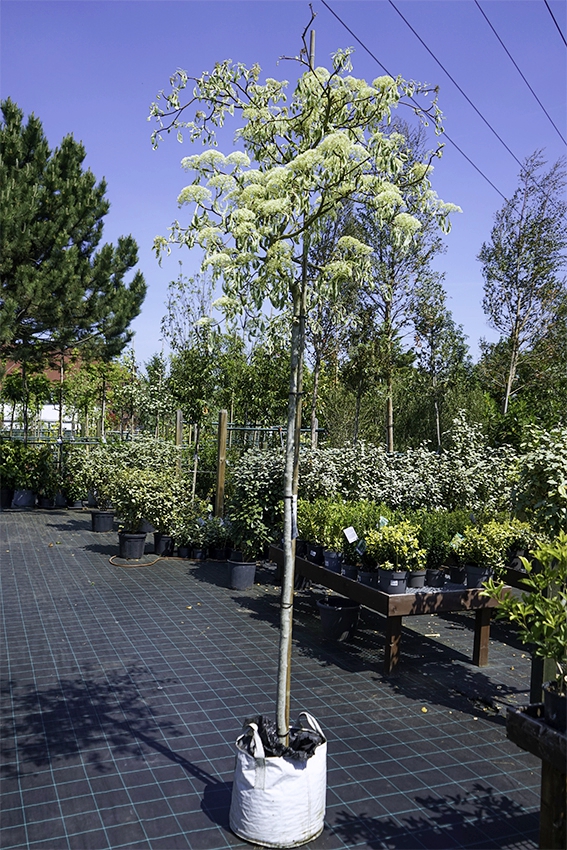
- STANDARD (as described in the plant form) means a tree with a trunk of 190-210 cm and a crown at the top, unless specified differently. The commercial size for trees is their girth measured in the height of 1m from ground.
- HOBBY - These plants are of the same quality as our standard-quality plants but younger and therefore cheaper.
- SHRUB - a woody plant with branches growing bushy from the ground level.
- HALF-STANDARD or MINI-STANDARD - a small tree with shorter trunk, its size is usually specified.
- FEATHERED - These are trees with branches growing already from the base of the trunk and up along the stem.
- GRASSES and PERENNIALS - Sizes given usually read the diameter of the pot or the clump, as specified.
