












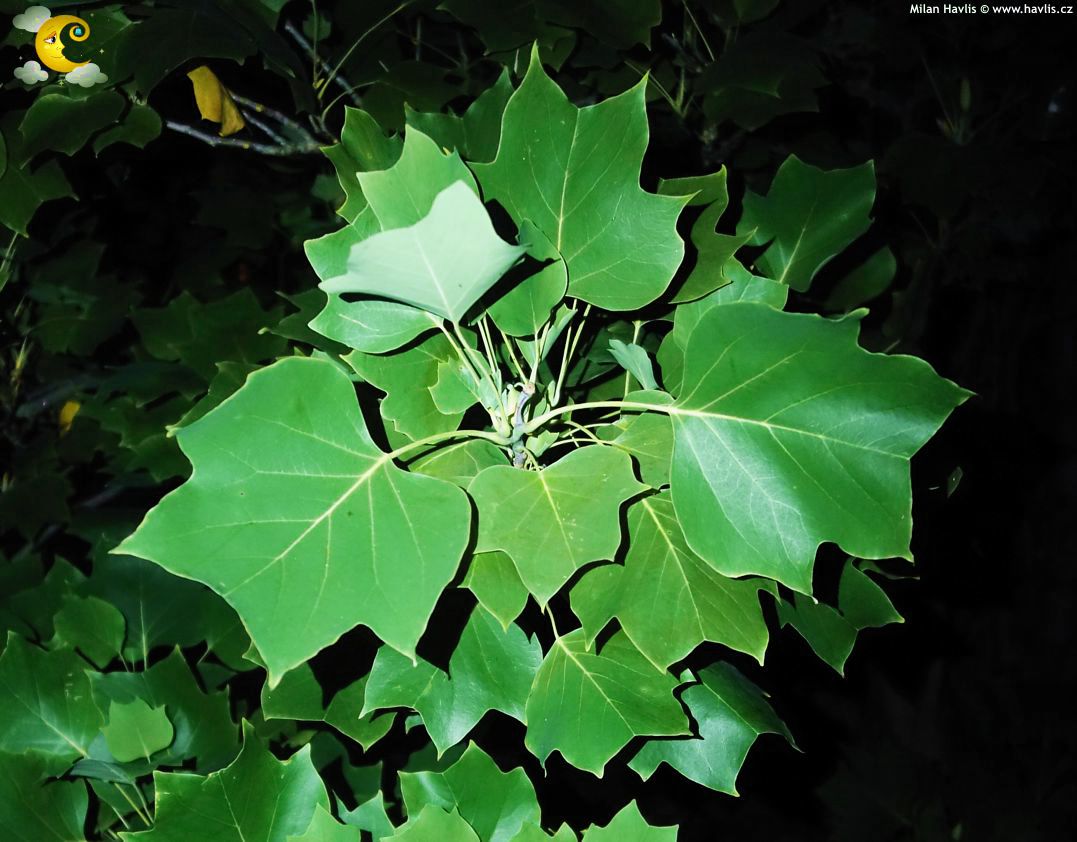
Liriodendron tulipifera 'FASTIGIATUM' tulip tree, yellow poplar



Liriodendron
The genus Liriodendron includes only two species — the North American L. tulipifera and the Chinese L. chinense. Both belong to the magnolia family (Magnoliaceae) and are considered living fossils, with origins dating back to the Tertiary period. Liriodendron tulipifera, commonly known as the tulip tree, is a tall deciduous tree native to the eastern United States. It can reach heights of up to 50 meters and is prized for its decorative leaves, tulip-shaped flowers, and high-quality timber. It was introduced to Europe in 1663 and has been cultivated in the Czech Republic since the early 19th century. The species was formally described by Carl Linnaeus in 1753.
The name Liriodendron comes from the Greek leirion (lily) and dendron (tree), meaning “lily tree.” While this poetic name has endured for centuries, it’s botanically misleading — the tree has no real connection to lilies. In fact, its distinctive leaves, with their saddle-like shape and elegant lobes, resemble a lyre far more than any flower. One could argue that “lyre tree” would be a more fitting name, capturing both its musical silhouette and graceful presence in the landscape. Still, tulip tree fits best — because the flowers truly are tiny tulips.
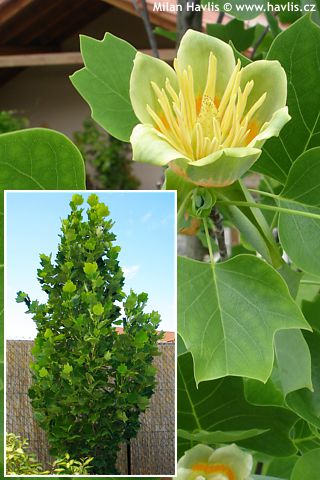
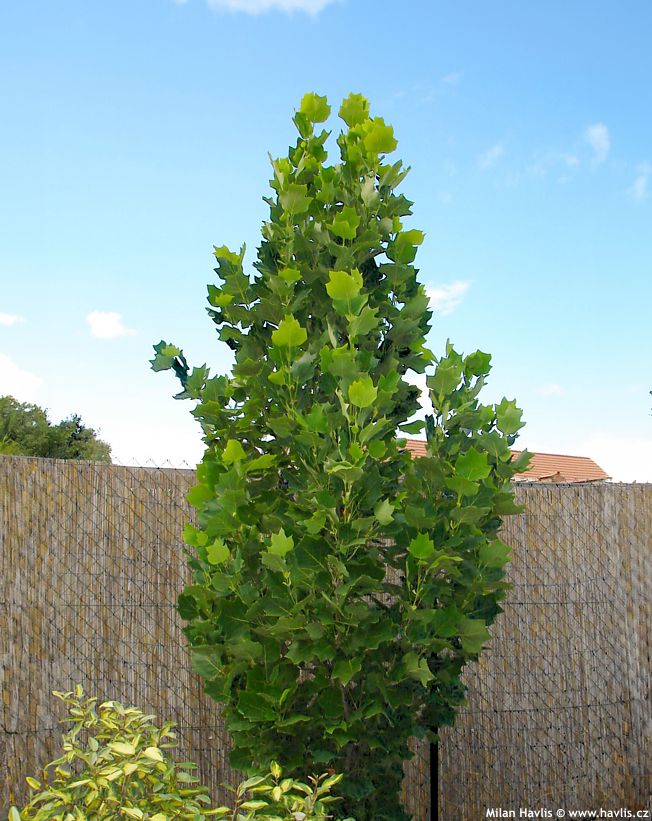
Fastigiatum is arguably the most sought-after form of tulip tree, thanks to its columnar growth habit that fits even into medium-sized gardens which is something the species, reaching up to 20 meters, can hardly claim 😊. It makes a good couple of attractive features as well as remarkably low maintenance. In its youth, it resembles a green obelisk – slender, upright, with branches reaching skyward like flames. Its canopy is narrow and elegant, ideal for urban settings, though it broadens with age and loses some of its formal rigidity. Older branches may bend and benefit from pruning to restore their upright form.
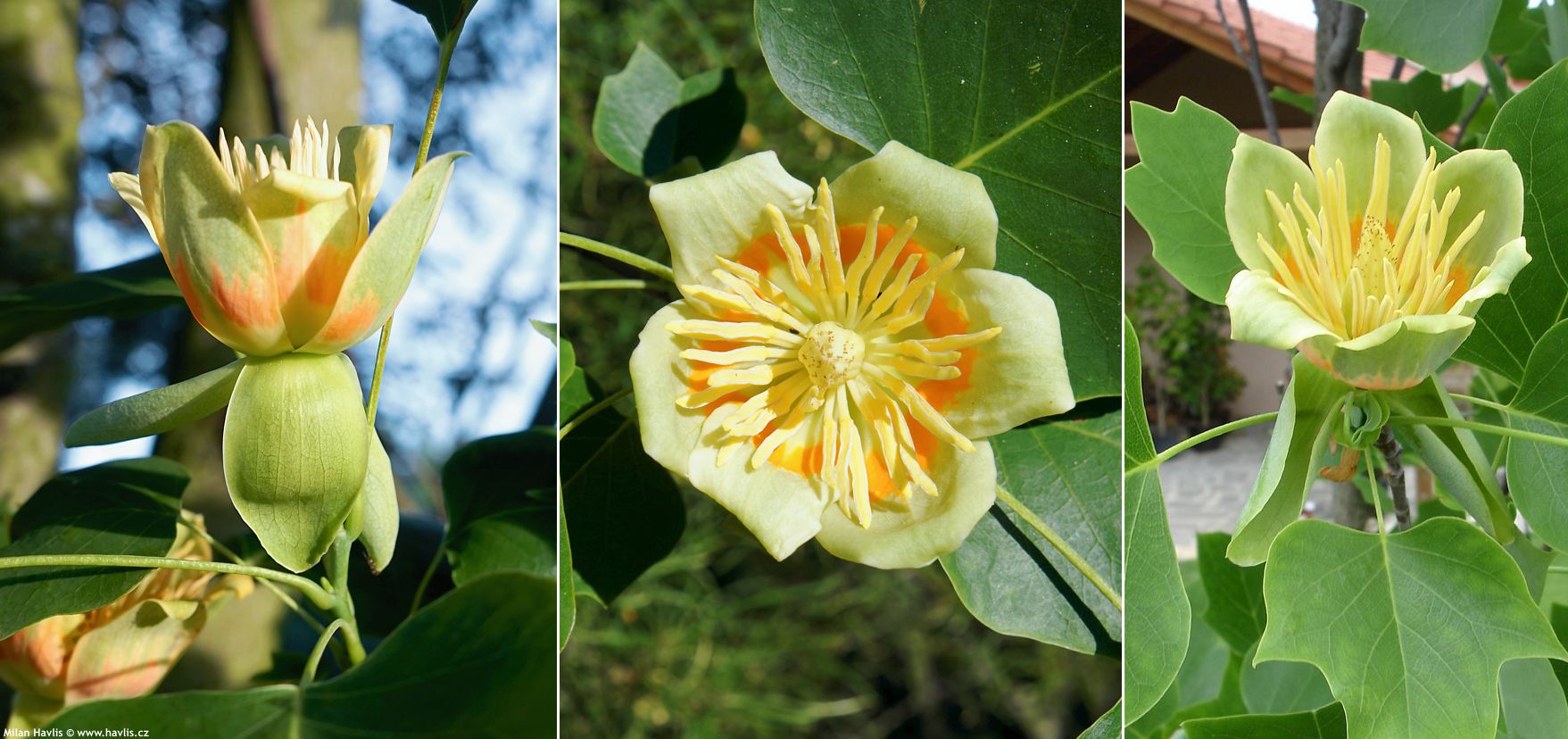
The deciduous leaves are the first reason you’ll want a tulip tree. I don’t know of any other tree species with such uniquely saddle-shaped foliage, resembling a lyre with a truncated tip. They’re fresh green in summer and glow buttery yellow in autumn. In June and July, the second spectacle appears – flowers nestled among the leaves, resembling small tulips. Their greenish-yellow petals with an orange band look like tiny chalices of light in the crown of a young tree and are utterly captivating. What makes this cultivar truly exceptional is its surprising eagerness to bloom: while the typical tulip tree takes decades to flower, Fastigiatum blossoms as early as its fourth year — even without grafting!
This cultivar originated as a spontaneous mutation and was first described in 1877 at the Arboretum de Segrez in France under the name 'Pyramidalis'. It later spread through selections at the Arnold Arboretum in Massachusetts, where plants with a stronger central leader were propagated under the name 'Arnold'. Although the tree may not be exceptionally long-lived, its early flowering and compact shape make it an attractive choice for streetscapes, avenues, and formal plantings. Modern nurseries now offer new clones such as Emerald City™ ('JFS-Oz'), which feature a broader, oval crown and glossy dark green leaves.
Pruning is generally unnecessary, as the tree naturally forms a dense, pyramidal shape with a handsome silhouette. However, if you need to reduce its size or shape it, always prune right after flowering — as a member of the magnolia family, it blooms at the tips of its branches, and spring pruning would remove the buds. You can grow it as a shrub with branches from the base, or as a single-trunk tree with a canopy above head height.
Plant your tulip tree in a sunny, open location with plenty of space. It tolerates windy sites if moisture is sufficient. It thrives best in rich, well-drained soil, ideally slightly acidic — adding peat can help. The soil should be moist but not waterlogged, although once established, the tree can handle short-term flooding after heavy rains. In its native habitat, it grows in a mild, humid climate with high humidity, which is hard to imitate in dry, continental climate of Central Europe. If you can’t plant it near water, ensure occasional watering, especially during summer heat and drought. Young single-trunk trees should be staked to help them root well and grow straight. Tulip trees are resistant to pests and diseases, and mature wood can withstand frosts down to –30 °C (USDA zone 5). The root system is shallow, wide-spreading, and actively seeks water. For this reason, avoid planting it too close to buildings, walls, or underground utilities — a minimum distance of 5 meters is recommended to prevent structural or pipe damage
Last update 7-12-2008; 11-08-2025

Goods are shipped all over Europe. For Russia and U.K. and for further details please read about SHIPPING OPTIONS HERE.
Are you interested in a serious discount for orders NOV-FEB? Check your options here.
THE PRICES INCLUDE VAT of 15%. For quick conversion you can use 1 CZK = approx. 0.04 EUR
- STANDARD QUALITY - Plants of this group are 1st class quality with number of branches and overall density adequate to their size and age, considering they were container grown.
- DE LUXE QUALITY - This label guarantees a luxurious quality of manually selected plants that, compared to their height and age, are exceptionally dense and beautiful.
- EXTRA - These plants are usually mature and bigger specimens with exceptional overall appearance.
- STANDARD (as described in the plant form) means a tree with a trunk of 190-210 cm and a crown at the top, unless specified differently. The commercial size for trees is their girth measured in the height of 1m from ground.
- HOBBY - These plants are of the same quality as our standard-quality plants but younger and therefore cheaper.
- SHRUB - a woody plant with branches growing bushy from the ground level.
- HALF-STANDARD or MINI-STANDARD - a small tree with shorter trunk, its size is usually specified.
- FEATHERED - These are trees with branches growing already from the base of the trunk and up along the stem.
- GRASSES and PERENNIALS - Sizes given usually read the diameter of the pot or the clump, as specified.
