










Delosperma 'SUNDELLA TRE COLORI' iceplant

Delosperma
Iceplant (Delosperma) is a genus of low-growing, perennial succulent plants in the family Aizoaceae, native mainly to the mountainous and semi‑desert regions of southern Africa, where it inhabits rocky slopes, crevices, and places where water disappears before it has a chance to soak in. The genus was described in the early 20th century by the British botanist Nicholas Edward Brown (1849–1934), who noticed the tiny, glistening cells on the surface of the leaves—features that gave the plants their name, derived from the Greek delos ("conspicuous") and sperma ("seed"). Delospermas are characterized by their fleshy, evergreen leaves capable of storing water for long periods, and by their strictly mat‑forming, creeping habit, which allows them to create dense, low carpets. During flowering, these inconspicuous cushions transform into a blaze of daisy‑like blooms that open only in full sun and rank among the most rewarding ornaments of dry, heat‑exposed sites.
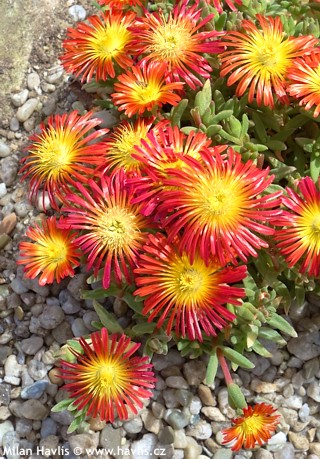
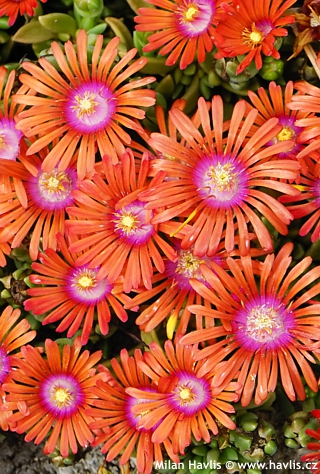
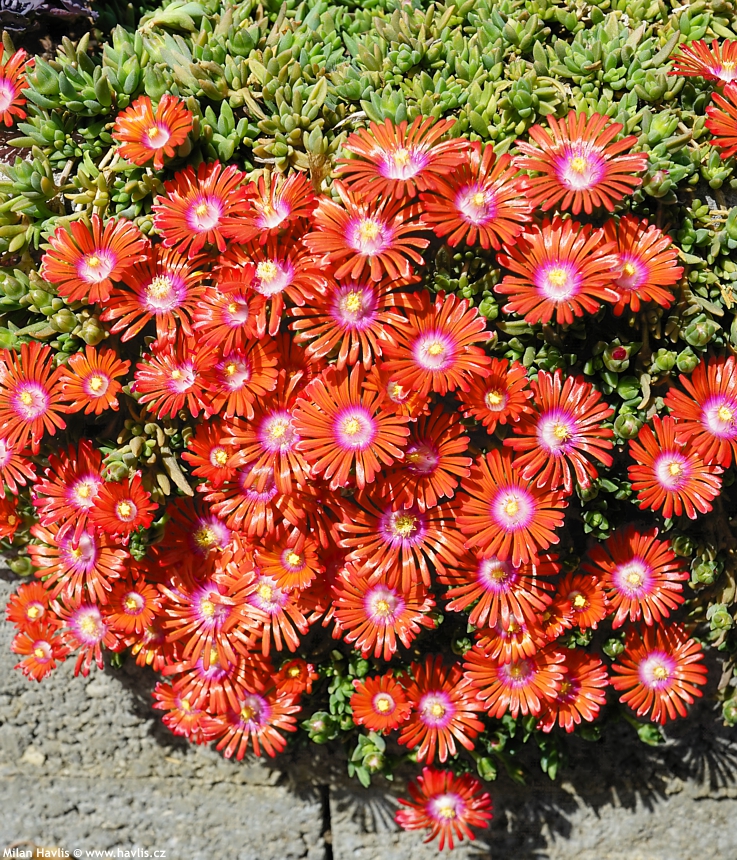
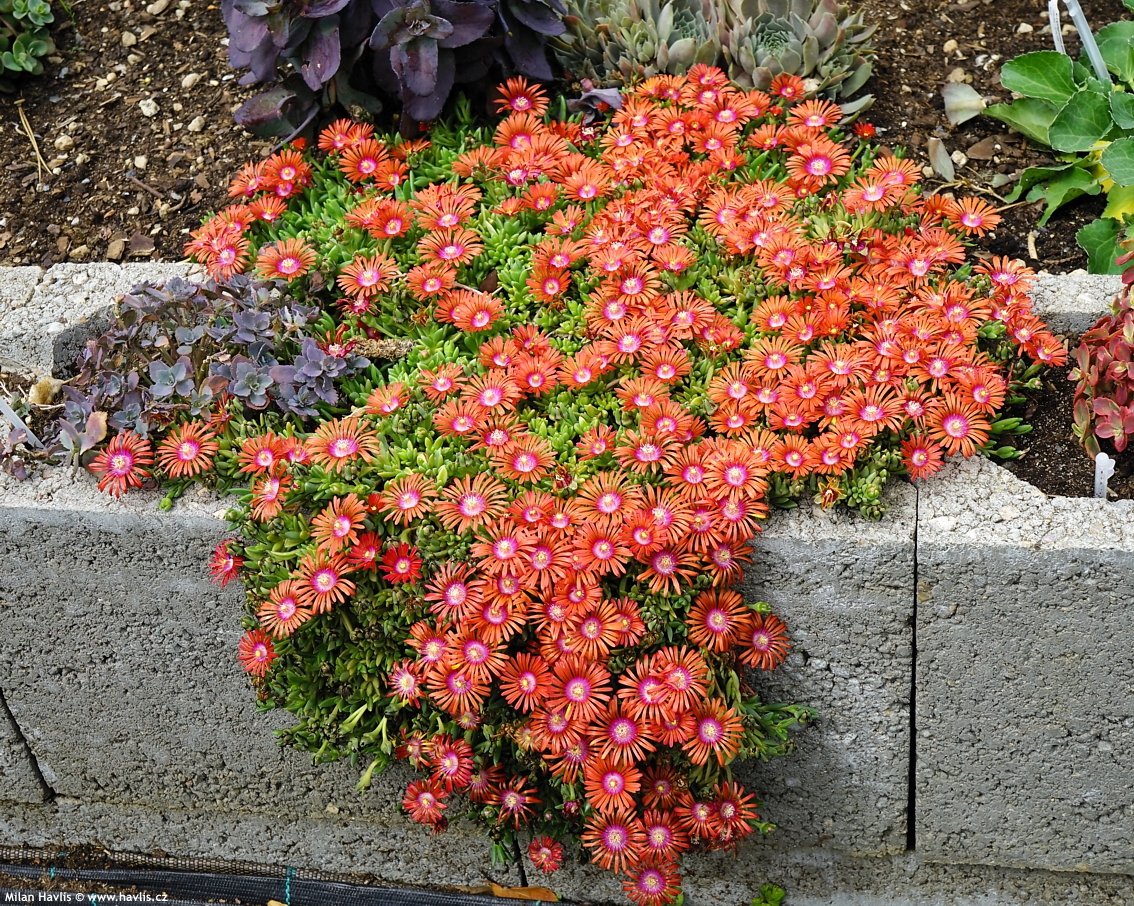
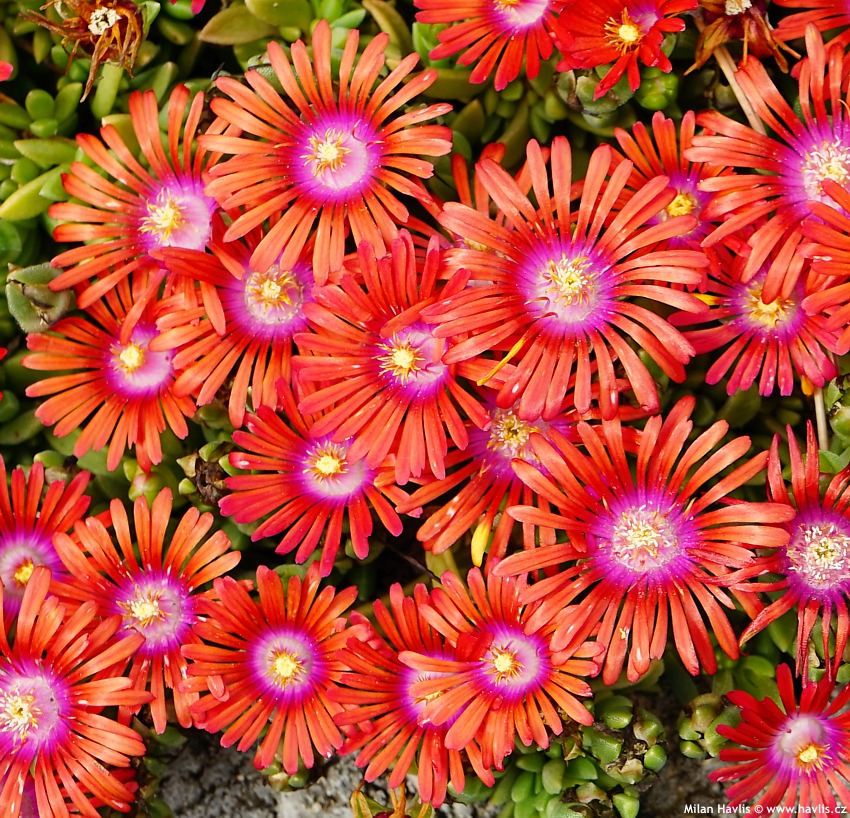
Tre Colori (syn. Carnival) is an iceplant variety from the Sundella series making bright tangerine orange flowers with golden glints like a metallic on a car. The white throat is surrounded by a bright purple-pink eye and a crown of beige anthers. The flowers are large, up to 3 cm across, and completely cover the insolated parts of the plant. They bloom only in sunny weather and close on cloudy days. Sundella iceplants can flower from June until September if the summer is sunny and warm.
In our garden centre we needed to cover a not very nice concrete foundations of a raised flowerbed, and this plant tripled its spread in just one year, creating a breathtaking show of flowers that we decided to plant them all along one side in several colors.
Iceplant loves sunny and dry locations, excess watering could kill this plant. It is best for rockeries with plenty of gritty material, in garden beds and along pavements make sure the soil is sharply drained so that the plant never stands in water. It is supposed to be hardy down to -34 °C (USDA zone 4) under ideal growing conditions. It can be grown in outdoor pots, too, provided good drainage, though we noticed that small pots need occasional careful watering.
Last update 10-06-2022