










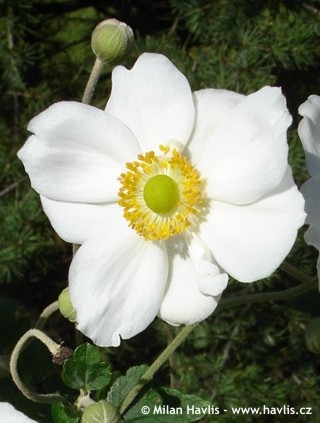
Anemone × hybrida 'ANDREA ATKINSON' anemone, windflower

 Symbivit Tric (arbuscular)
 Symbivit (arbuscular)
Anemone
Japanese anemone and its hybrids are late flowering perennials, commonly grown for late summer and autumn display of flowers. There are many varieties offering white, light pink, dark pink, and even purple pink flowers atop stems of various heights. They are mostly considered shade loving plants, however, if grown in good, evenly moist soil they can thrive in full sun, too, especially white flowering plants which are less demanding for soil moisture. Anemone x hybrida is a garden cross between a. japonica and a. vitifolia.
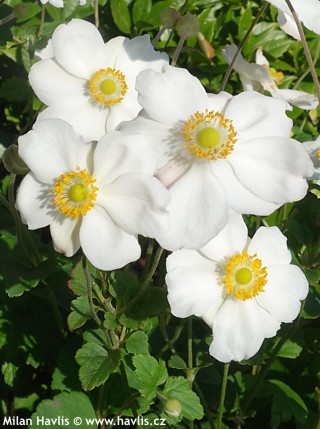
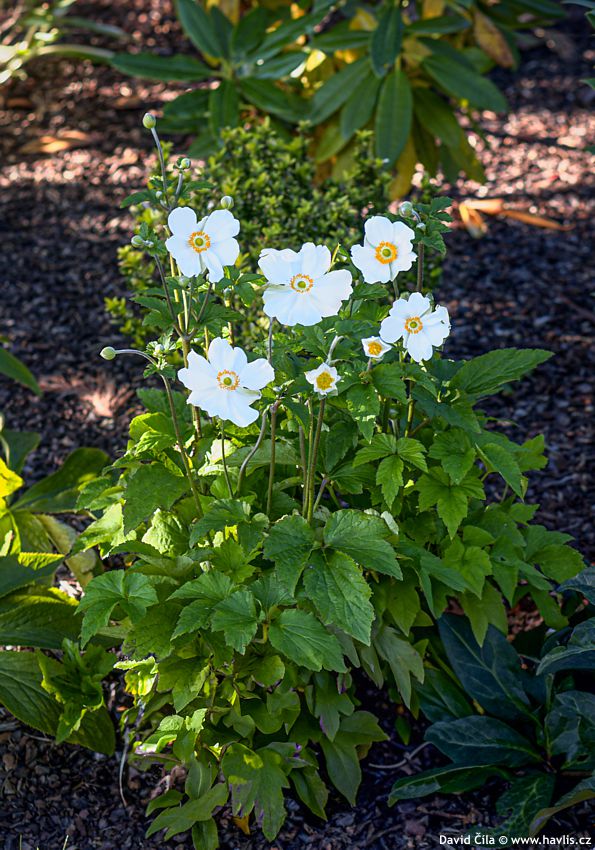
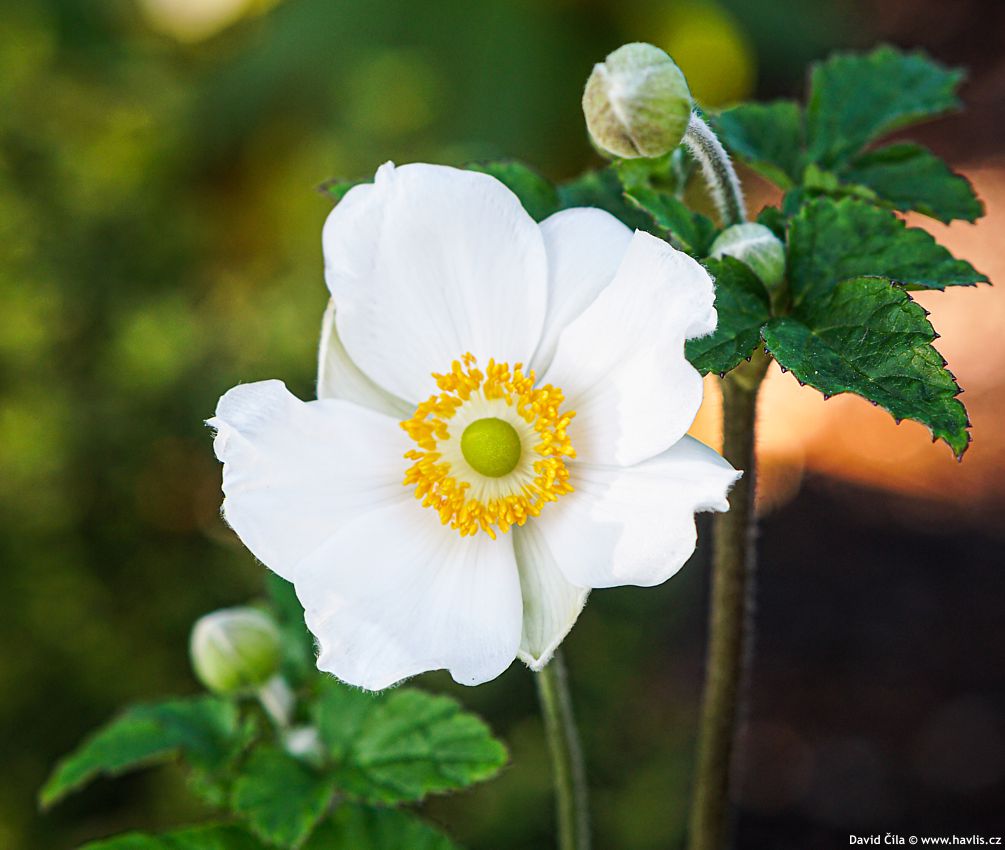
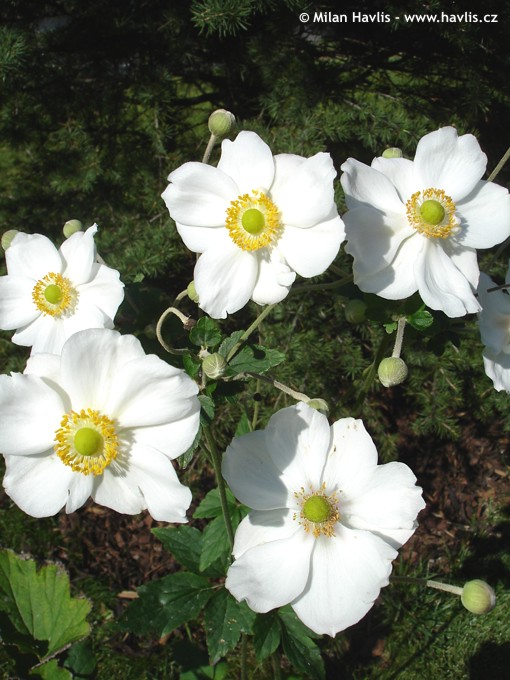
"Andrea Atkinson" is a later variety of anemone. It has 60-80 cm long stalks with snow-white camellia-like flowers with distinct yellow stamens. It starts blooming at the end of summer and continues until October. 3-palmate basal leaves are mid to dark green, sharply toothed, sparsely hairy beneath.
Anemones, when planted in full sun, prefer light, sandy soil. In partial shade the soil has to be moist but well-drained. In any location provide fertile, humus-rich soil. They like slightly drier conditions before flowering in early summer, as well as in winter. Mulching is recommended in colder areas.
Last update: 28-09-2007; 15-09-2023
Japanese anemones like moist, humus-rich, slightly acidic, and well-drained soil. When planted in full sun and if you live in area with cold winters make sure the plants are well mulched to keep the roots cool and away from dry frost. They prefer slightly drier conditions before flowering in early summer, as well as in winter. Anemones spread with aerial shoots which root easily so if you want to keep them in one place remove those shoots as and when they appear. Hardy to min. -29 °C (USDA zone 5).