












.jpg)
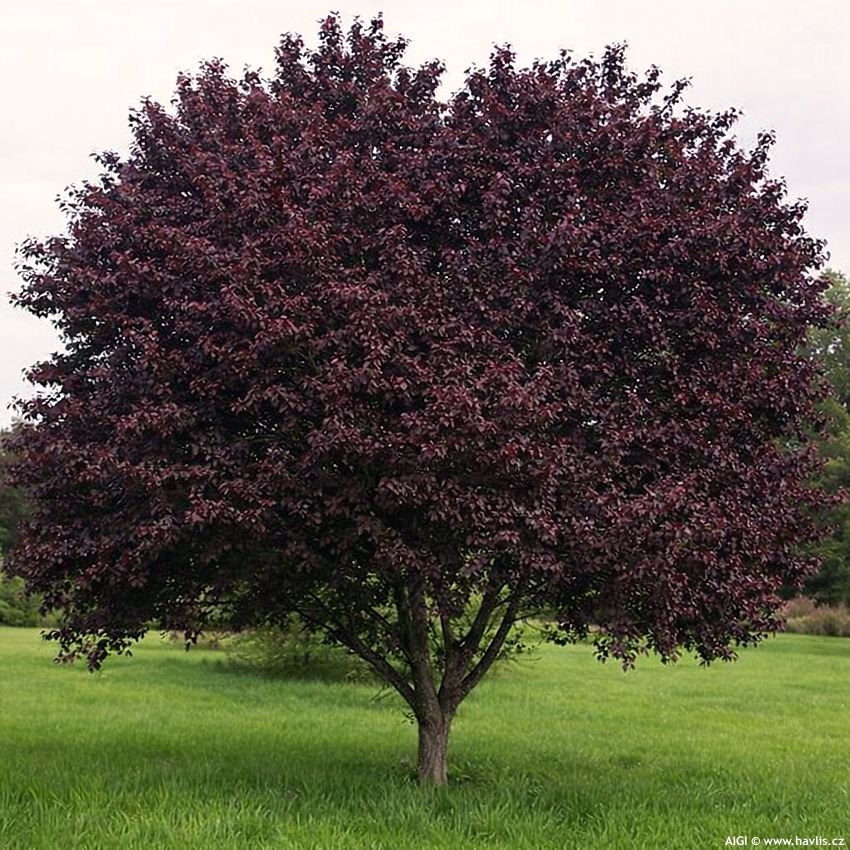
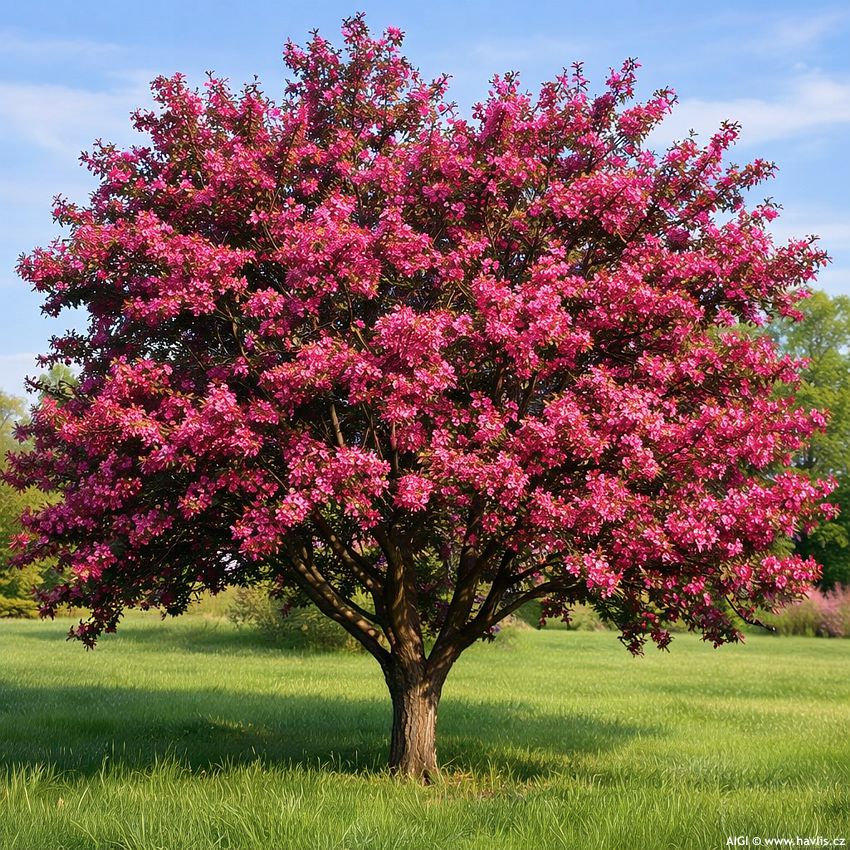
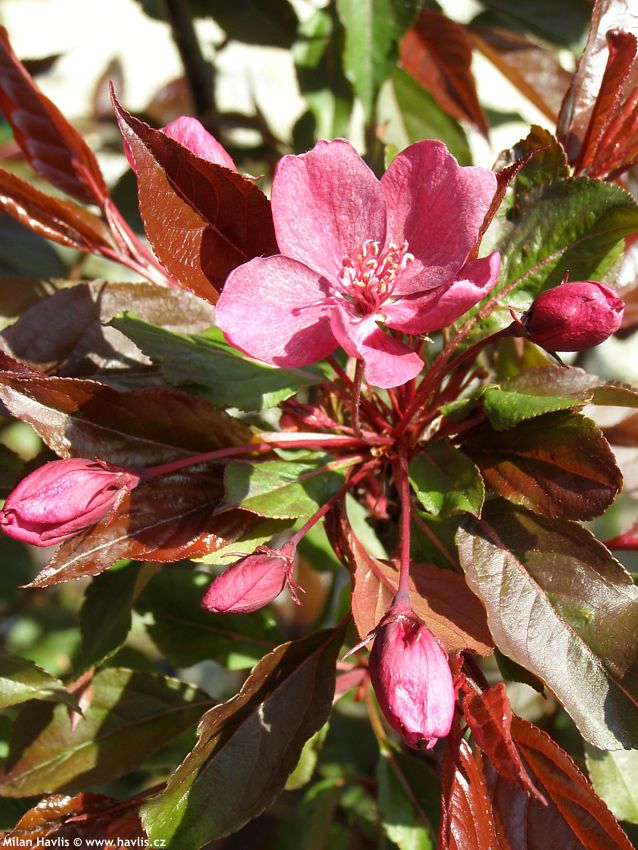
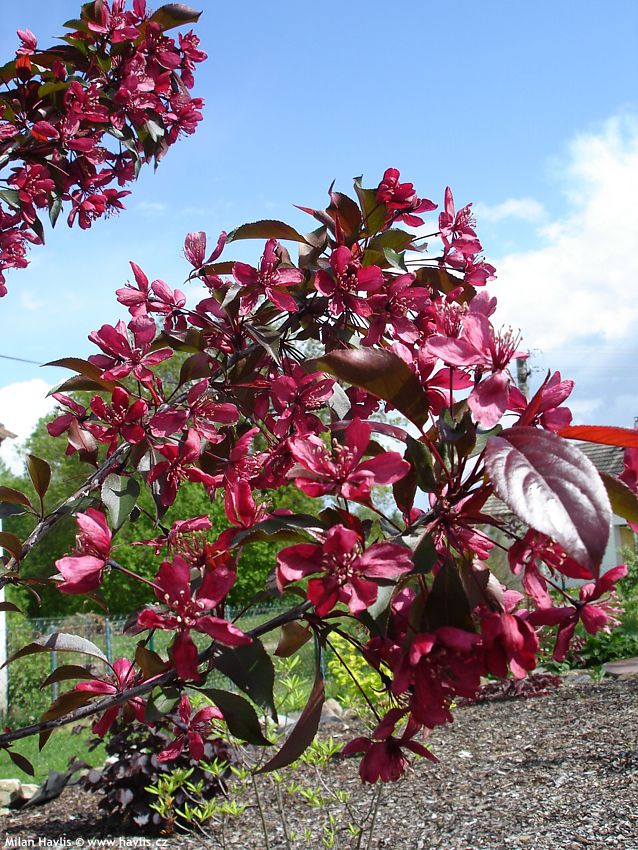
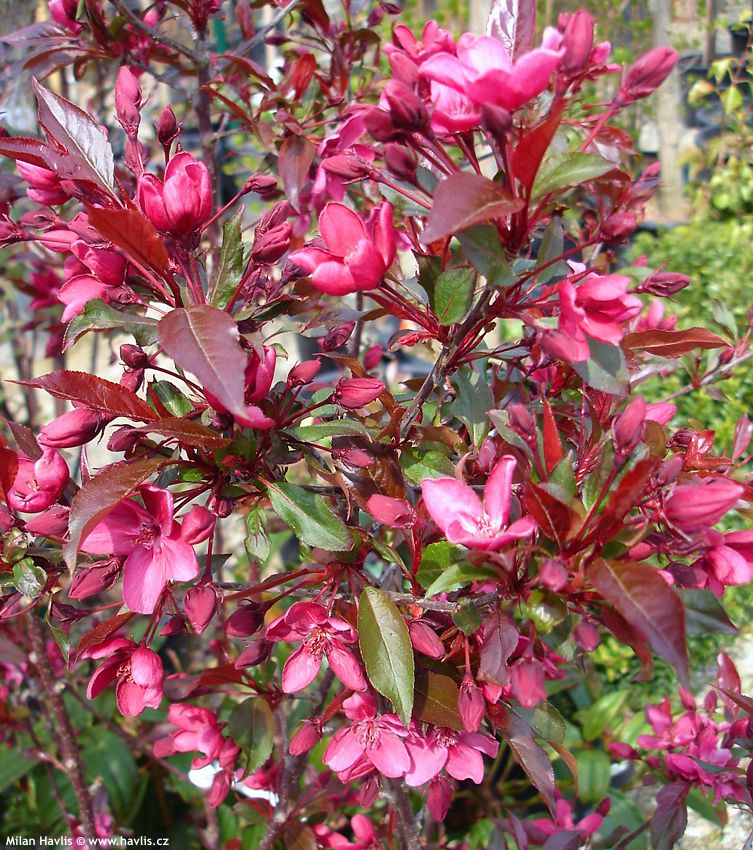
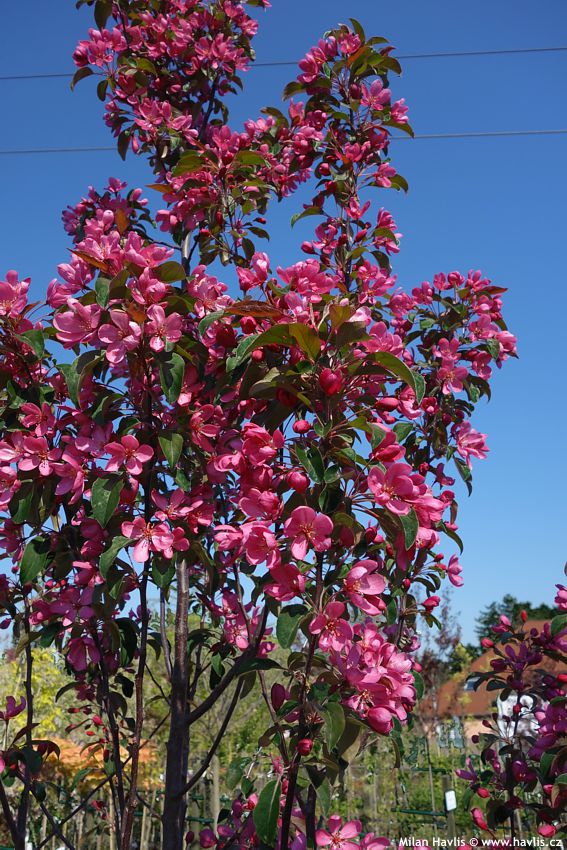
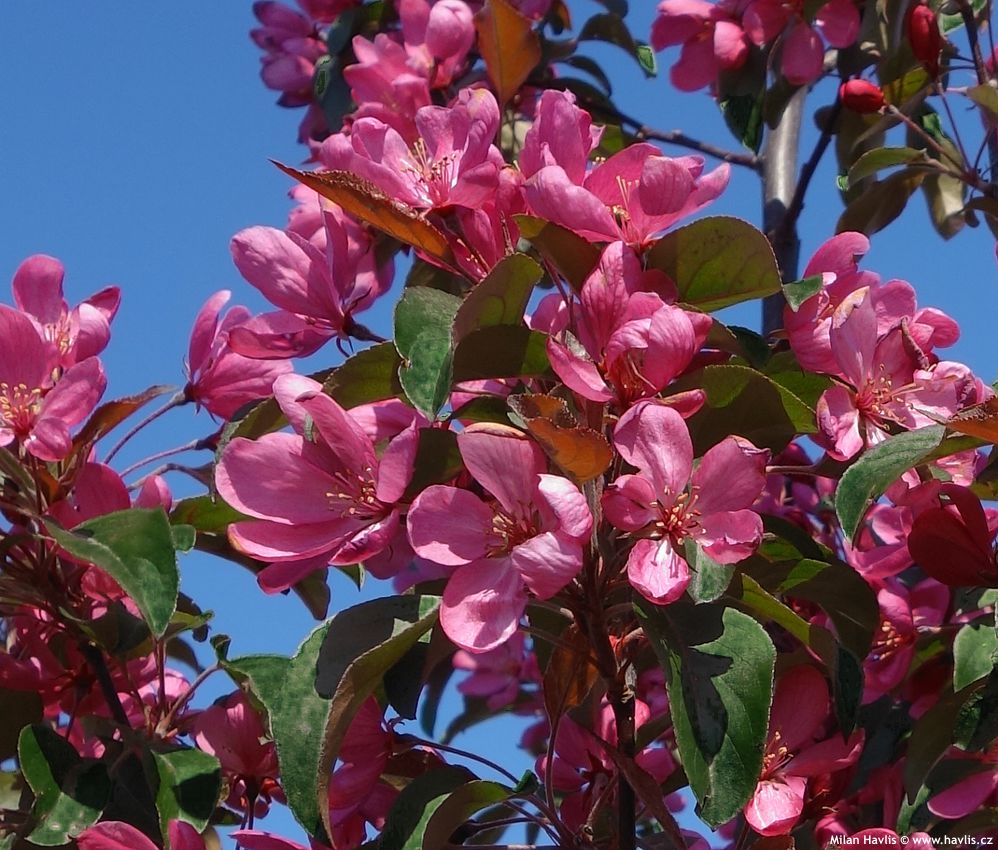
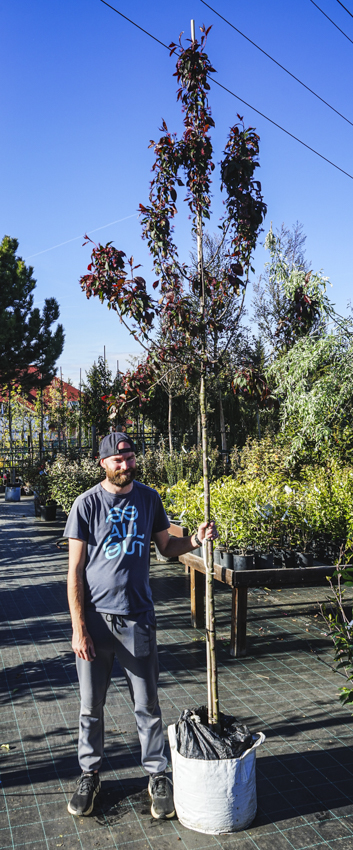
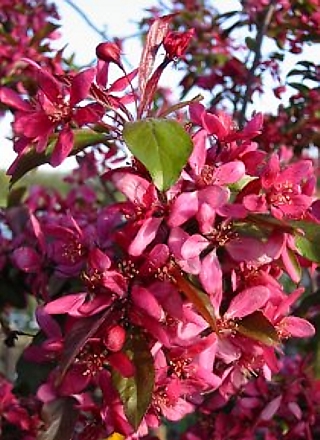
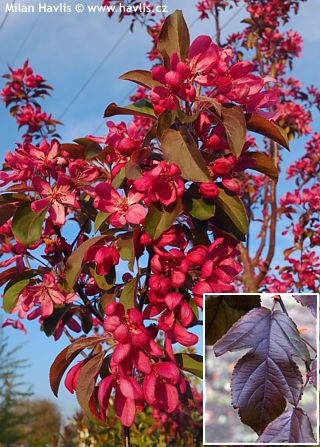
Malus 'ROYALTY' crab apple

 Symbivit Tric (arbuscular)
 Symbivit (arbuscular)
Malus
The genus Malus, the apples and crabapples, belongs to the rose family and includes around thirty species native to the temperate regions of the Northern Hemisphere. The greatest diversity occurs in Asia, especially in China and Central Asia, where several key ancestors of cultivated apples originated. A few species are native to Europe and North America. Fossil evidence shows that apples grew as early as the Tertiary period, and their fruits accompanied humans long before agriculture emerged. The first formal botanical description of the genus was written by Carl Linnaeus (1707–1778), who considered apples one of the fundamental cultivated plants. Since then, the genus has branched out both in the wild and in horticulture, giving rise to countless ornamental forms grown for their flowers, foliage and fruit.
Malus × purpurea is a hybrid ornamental crabapple described in the early twentieth century, when botanists began noticing a group of trees with unusually dark foliage and red flowers. Its exact origin is not documented, though Malus niedzwetzkyana, a Central Asian species with red wood and purplish leaves, is believed to have contributed to its genetic background. This ability to produce anthocyanin pigments in leaves, flowers and fruit shaped an entire line of dark‑leaved ornamental crabapples. Today, however, Malus × purpurea is no longer regarded as a clearly defined botanical hybrid, but rather as a historical label for a broader group of dark‑leaved crabapples with some genetic influence from Malus niedzwetzkyana. Modern taxonomy therefore avoids assigning individual cultivars to this name, as their origins are often complex and not always precisely known. Despite this, the group played an important role in twentieth‑century garden design. Purple‑leaved crabapples offered long‑lasting colour at a time when such traits were rare among ornamental trees. In landscapes and gardens they naturally continued the long cultural tradition of apples, which appear in European folklore, in Asian poetry and in North America as one of the clearest symbols of spring.
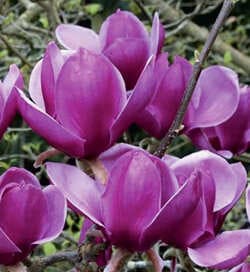
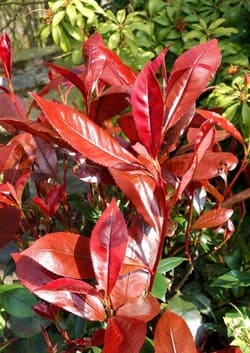
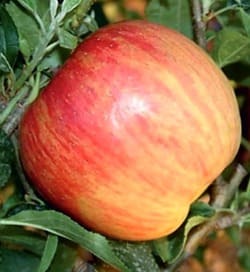
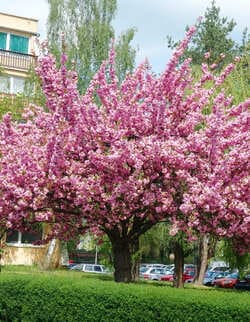
Royalty crabapple captures attention first and foremost with its blossom. In April, the entire tree becomes covered in deep pink to purplish flowers that make the crown appear as if lit from within. The flowers are richly coloured, lightly scented and among the most intense within ornamental crabapples. As soon as flowering ends, another feature takes over – the foliage. It emerges coppery red, briefly turns green and then shifts back to a wine-red shade that lasts throughout summer. In autumn, the leaves take on orange and red tones. The tree has an upright, later spreading habit and reaches around six metres in height. By late summer it produces small cherry-red crabapples which are technically edible but extremely astringent, and therefore not consumed. They often remain on the branches well into winter, adding decorative value. The cultivar was bred by W. L. Kerr in the 1960s at the Sutherland Forest Nursery Station in Saskatoon, Saskatchewan, and became part of the Rosybloom series, which draws on the genetic heritage of Malus niedzwetzkyana, now an endangered species in Central Asia.
In garden design, ‘Royalty’ works as a strong colour accent. It performs best as a solitary specimen in a lawn or against a light background, where the contrast of purple foliage stands out most clearly. It pairs well with shrubs and trees with fresh green or golden leaves, such as Acer pseudoplatanus, Cornus alba or Spiraea japonica. In smaller gardens it can serve as a focal point; in parks it is effective in avenues or small groups, creating seasonal colour dynamics. Thanks to its moderate size, it is suitable for front gardens and urban spaces where long-lasting colour is desired without demanding maintenance.
Last update 16-03-2010; 11-05-2026
Care for crabapples is straightforward. It requires full sun and well-drained soil that must not remain waterlogged. It tolerates neutral to slightly acidic soil. Pruning is carried out either deep in winter, when the buds are still fully dormant, or immediately after flowering if the aim is to preserve the spring display. Standard trees need a firm stake for the first three to four years until they root securely. Due to its extensive root system, it is not suitable for long-term container growing. Its cold hardiness reaches approximately –34 °C (USDA zone 4).
Goods are shipped all over Europe. For Russia and U.K. and for further details please read about SHIPPING OPTIONS HERE.
Are you interested in a serious discount for orders NOV-FEB? Check your options here.
THE PRICES INCLUDE VAT of 15%. For quick conversion you can use 1 CZK = approx. 0.04 EUR
- STANDARD QUALITY - Plants of this group are 1st class quality with number of branches and overall density adequate to their size and age, considering they were container grown.
- DE LUXE QUALITY - This label guarantees a luxurious quality of manually selected plants that, compared to their height and age, are exceptionally dense and beautiful.
- EXTRA - These plants are usually mature and bigger specimens with exceptional overall appearance.
- STANDARD (as described in the plant form) means a tree with a trunk of 190-210 cm and a crown at the top, unless specified differently. The commercial size for trees is their girth measured in the height of 1m from ground.
- HOBBY - These plants are of the same quality as our standard-quality plants but younger and therefore cheaper.
- SHRUB - a woody plant with branches growing bushy from the ground level.
- HALF-STANDARD or MINI-STANDARD - a small tree with shorter trunk, its size is usually specified.
- FEATHERED - These are trees with branches growing already from the base of the trunk and up along the stem.
- GRASSES and PERENNIALS - Sizes given usually read the diameter of the pot or the clump, as specified.
