





















SKRYTÝ OBRUBNÍK Invisible lawn edging
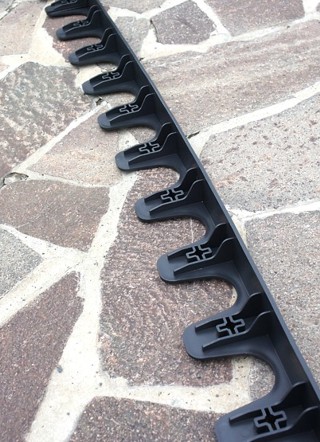
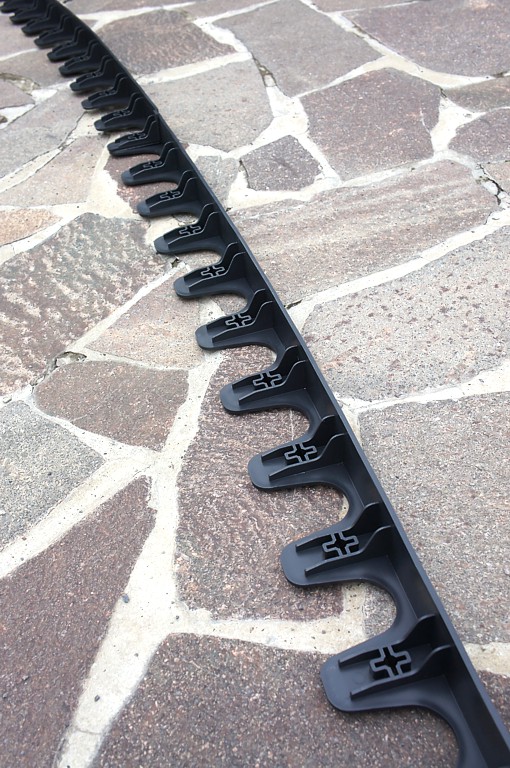
Invisible lawn edging is the perfect helper in garden design. It separates two areas that should not overlap, whether aesthetically or physically. It is excellent for dividing lawns from flowerbeds and planting zones with bark or gravel. It prevents grass from invading the bed and at the same time stops mulch material from spilling into the lawn. It can also be used to separate paving from lawns or beds. It becomes “invisible” because in the end you only see a thin edge of about 3 mm, which blends so well with the surroundings that the border becomes almost unnoticeable.
It is made of strong yet flexible plastic (polypropylene) and can be left straight or bent into curves, making it easy to shape the much‑desired rounded forms of beds. Its colour is dark grey‑black.
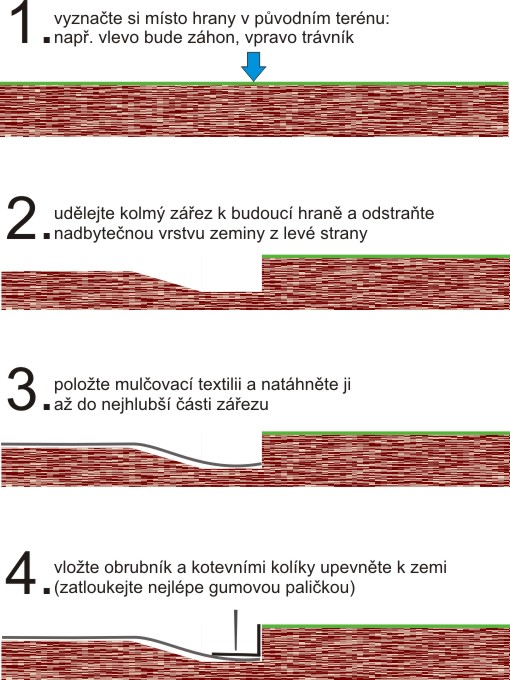
Installation is simple and requires no prior experience. First, mark the line where you want to create the border. Make a vertical cut to the depth of the edging. On the side where mulch or another filling will be placed, remove a strip of soil with a spade or sharp shovel down to the vertical cut. This creates a step into which the edging is inserted so that its tall edge touches the vertical wall of the cut and the fixing tabs rest on the soil surface.
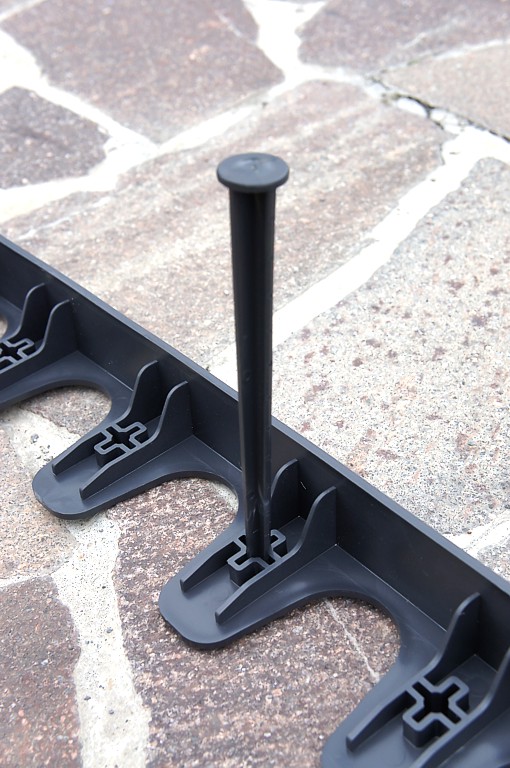
The edging is anchored into the ground either with a plastic fixing peg (not included, sold separately) or with a standard construction nail, ideally 120 mm long, which is significantly cheaper than the plastic peg and easier to work with.
It is ideal to use a weed‑control fabric under bark, gravel, or other decorative material. Pull this fabric under the edging tabs right up to its edge. Then secure the edging with fixing pegs – usually 3 pieces per 1 metre of edging in a straight line. Add more pegs gradually if you are shaping curves, to ensure the edging holds firmly.