










.jpg)
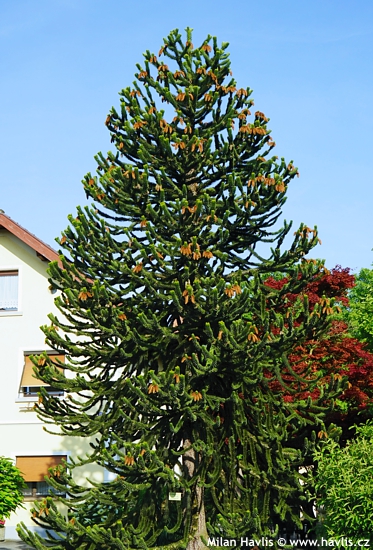
Araucaria araucana monkey puzzle tree


 Symbivit Tric (arbuscular)
 Symbivit (arbuscular)
Araucaria
The genus Araucaria today comprises 19 recognised species scattered across the Southern Hemisphere, from Australia through the Pacific to South America. It is a relict group of conifers that has survived since the Mesozoic era and frequently appears in the palaeobotanical record as a so‑called “living fossil”. Araucarias are characterised by massive trunks, regular tiers of branches and often an exceptionally great age. Their systematic description and introduction into European collections accompanied the travels of explorers and botanists of the eighteenth and nineteenth centuries, who brought plants back from remote regions of the Southern Hemisphere and marvelled at the fact that they were looking at trees whose structure had changed only minimally since the age of the dinosaurs.
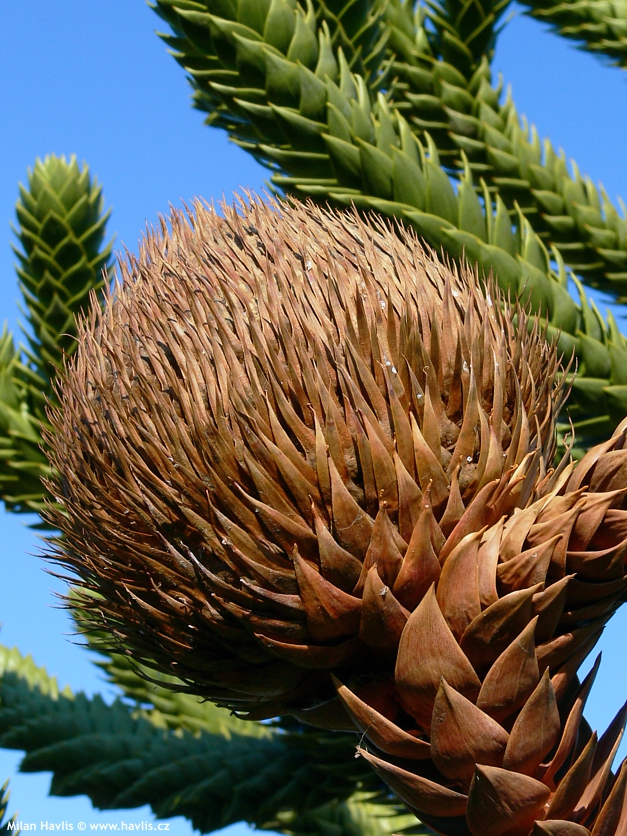
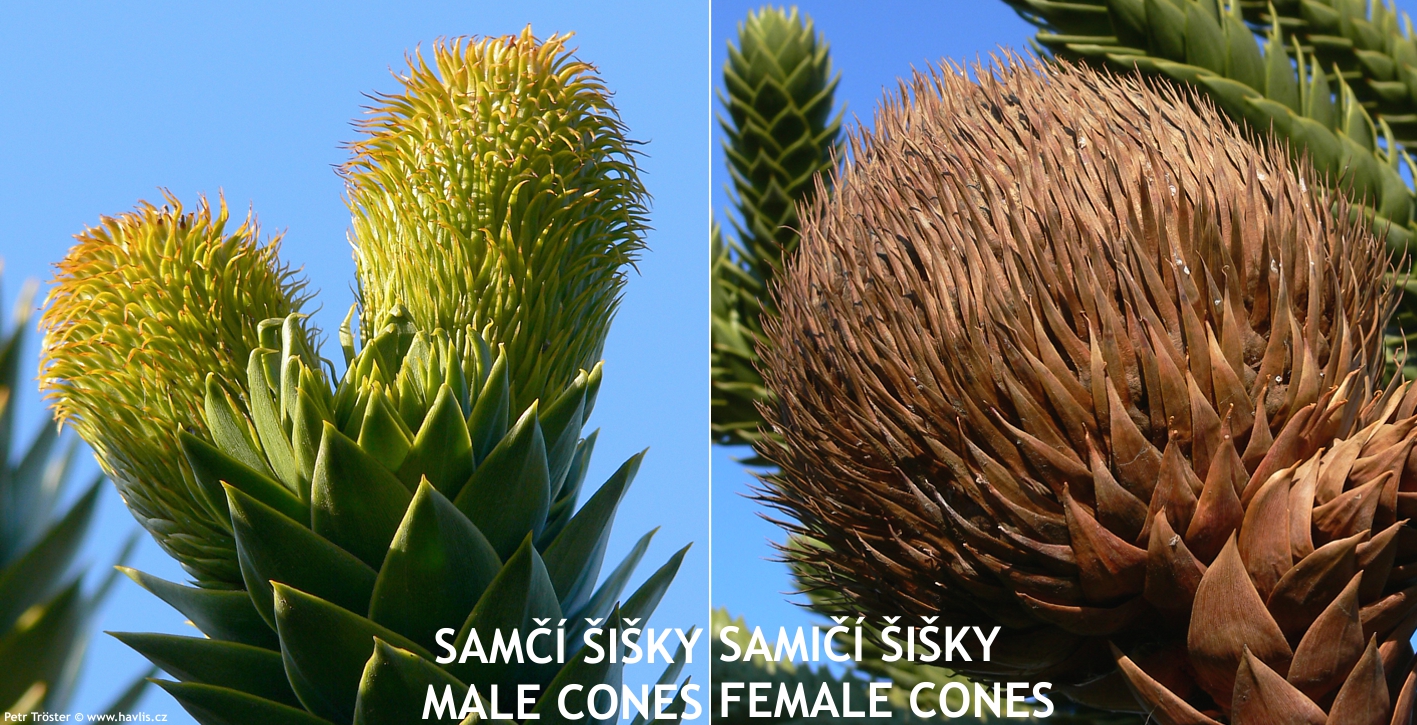
The species Araucaria araucana – the monkey puzzle tree – originates from central and southern Chile, where it is the national tree, and from western Argentina, where it grows on volcanic, rocky slopes in mountainous regions. The first formal botanical description was published by Juan Ignacio Molina (1740–1829) under the name Pinus araucana; it was later transferred to the genus Araucaria by Karl Heinrich Koch (1809–1879). This species is sought after for its unmistakable silhouette, stiff triangular leaves and large spherical cones with edible seeds. In its native range it has strong cultural significance for the indigenous Mapuche people, who for centuries have collected and used the seeds, known as piñones, as an important food source. Araucaria araucana is now considered an endangered species due to logging, fires and grazing, which gives this tree a pronounced historical and ecological dimension.
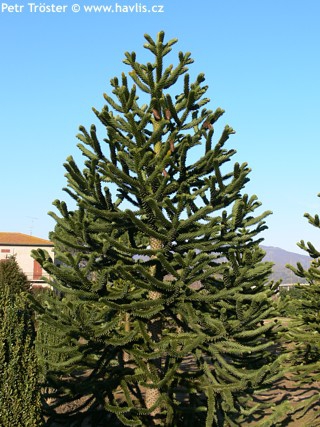
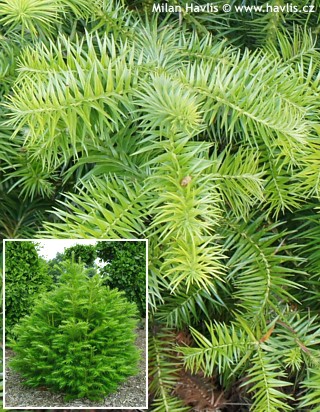
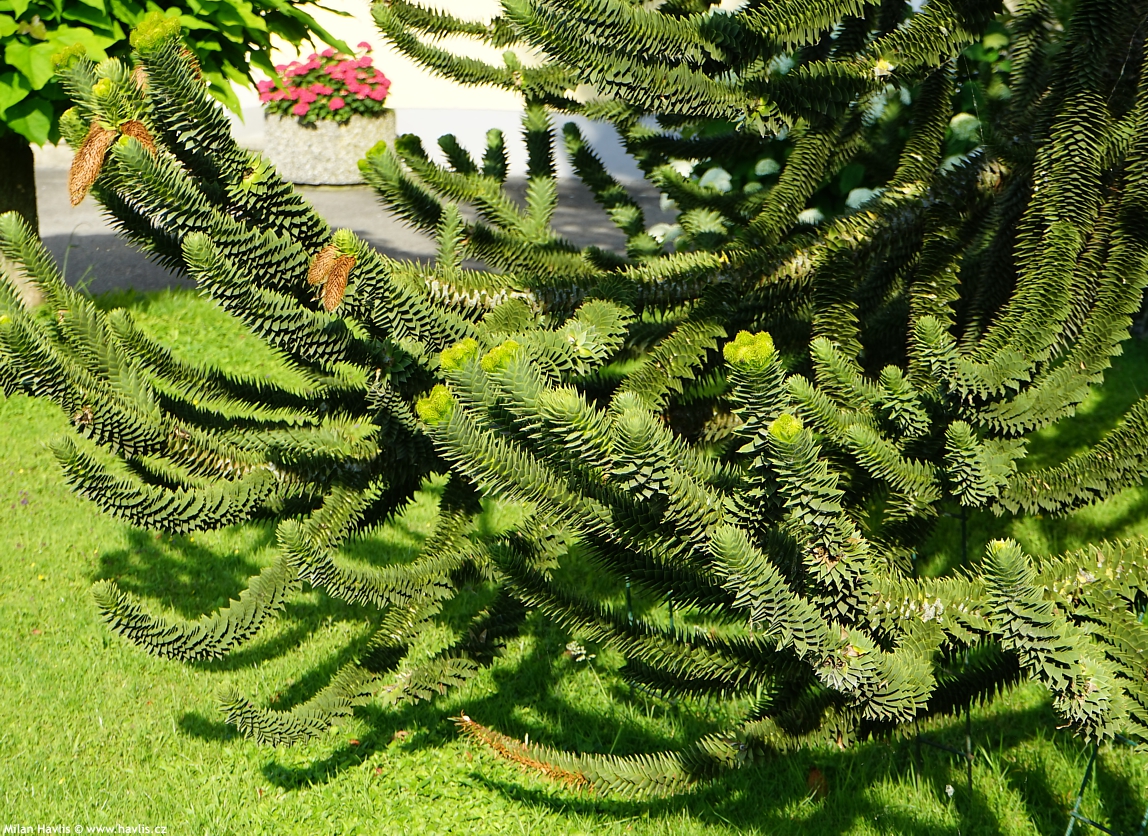
The monkey puzzle tree is a magnificent yet somehow mischievously unconventional conifer that wins you over with its unique appearance. Its robust habit and thick branches armoured with sharp leaves are complemented by the tree’s strict, regular architecture. Somewhere I once heard it compared to a garden Godzilla, probably by someone with a vivid imagination. The leaves are evergreen, stiff, triangular, dark green and tipped with a sharp point; they give the tree a rough, almost prehistoric character that children with fertile imaginations liken to the tail of a stegosaurus. It is precisely these sharp leaf tips that require caution when handling the plant, yet when stroked “with the grain” the monkey puzzle is surprisingly pleasant to the touch and feels almost massage‑like. Mature trees bear attractive, large, round cones whose seeds are edible after heat treatment.
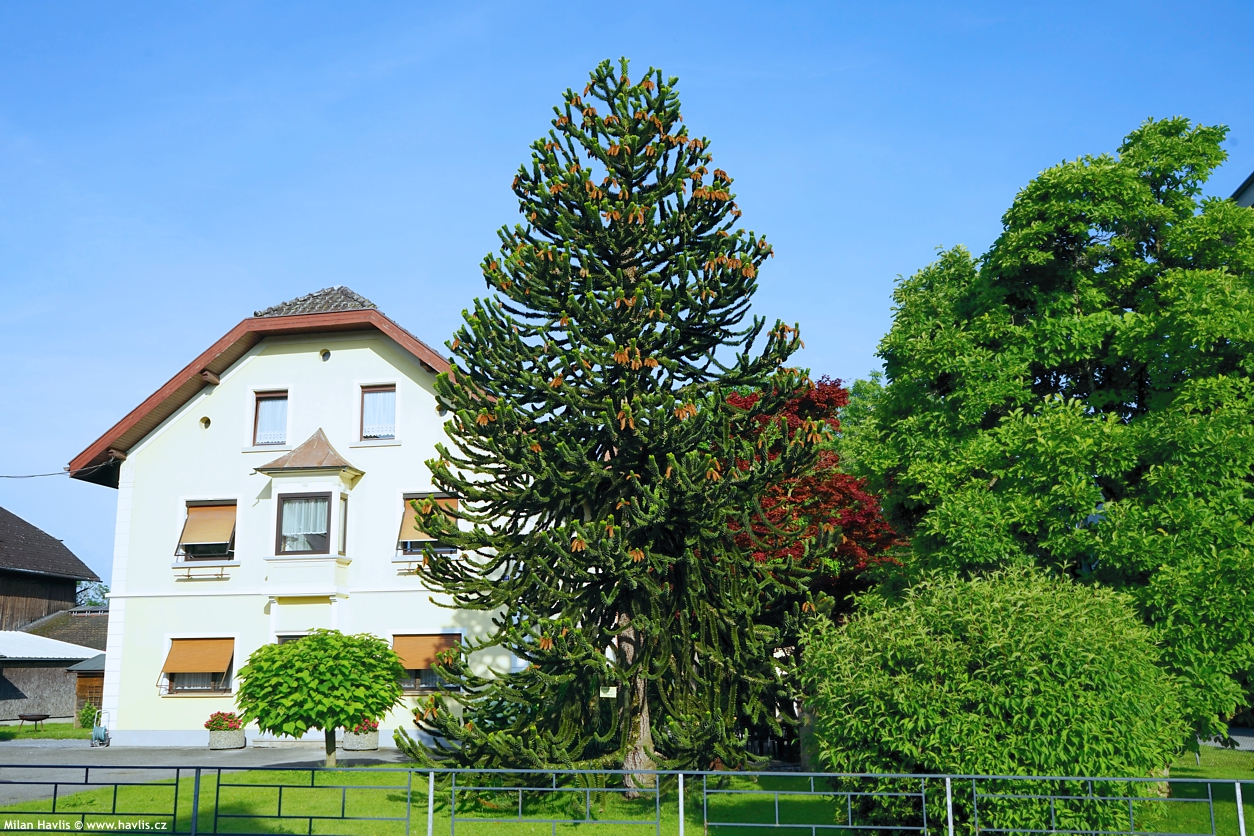
When young, the monkey puzzle forms a regular cone with dense, horizontal tiers of branches and is well branched right down to the ground. Dieback and loss of the lower branches occur only at a very advanced age or under less than optimal light conditions. In the garden, the monkey puzzle is an unequivocal focal point that draws the attention of every passer‑by. It works best as a specimen tree in spacious parks or large gardens, where it can be given plenty of room, or where several lower tiers of branches can eventually be removed to allow passage beneath the crown. Compared with other species of the genus, the Chilean araucaria is the hardiest and at the same time the only one commonly cultivable in Central Europe. Because it also tolerates salty air well, it can be used in gardens close to sea level.
Last update 09-01-2009; 26-02-2026
Its requirements and care are relatively straightforward, but with a few key principles. The monkey puzzle prefers full sun or only light partial shade and well‑drained, rather acidic to neutral soils with good drainage; it does not tolerate prolonged waterlogging. Young plants benefit from mulching and a sheltered position protected from cold winds, while mature trees are markedly more resilient. Fertilising is unnecessary and is best avoided, allowing new growth to ripen properly during the growing season. Pruning is carried out only to remove damaged branches or to ensure clearance beneath the crown; shaping is generally not required. Older encyclopaedias state frost hardiness down to −15 °C, but practice shows that well‑established specimens with mature wood can withstand drops to around −23 °C, provided the frost is not prolonged.