











Pieris × 'BROUWER'S BEAUTY' lily-of-the-valley shrub


 Rhodovit (ericoid)
Pieris
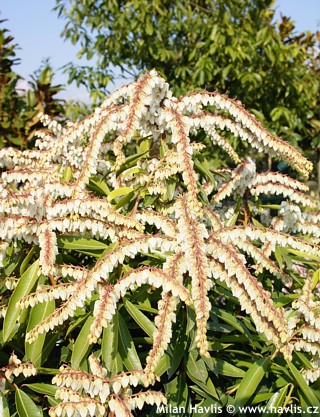
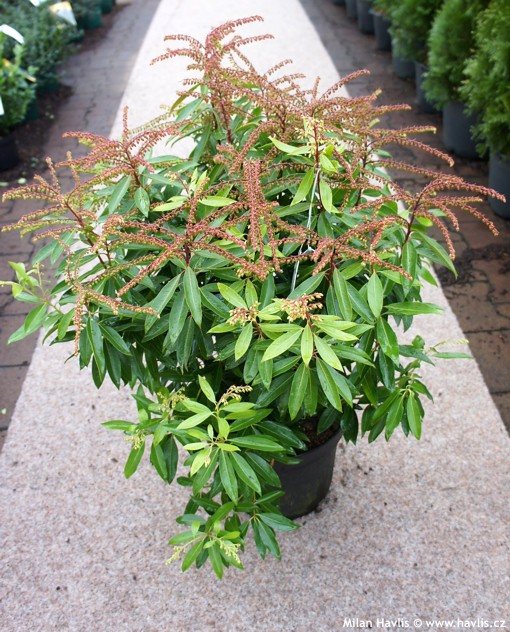
Lily-of-the-valley shrubs are very popular ericaceous plants with attractive foliage and abundant flowering. There are many varieties and every a couple of new ones are born. Still, each one is different with something extraordinary. For instance this one: it is a cross between pieris floribunda and pieris japonica. The result is fantastic – compact plant with profuse flowering on extra long racemes.
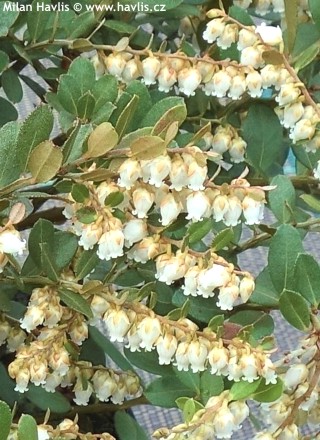
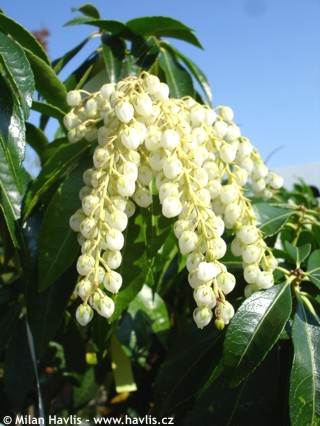
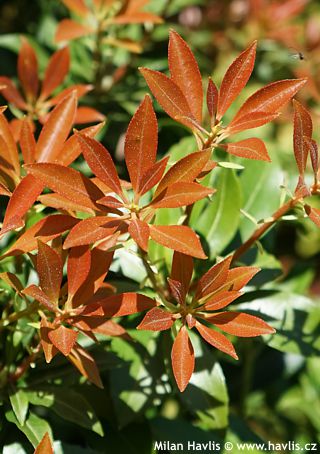
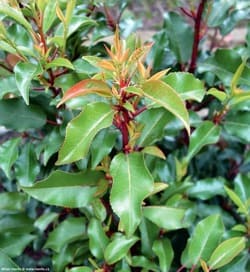
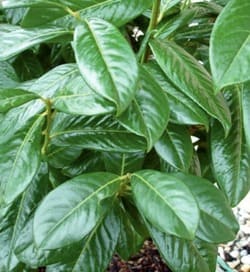
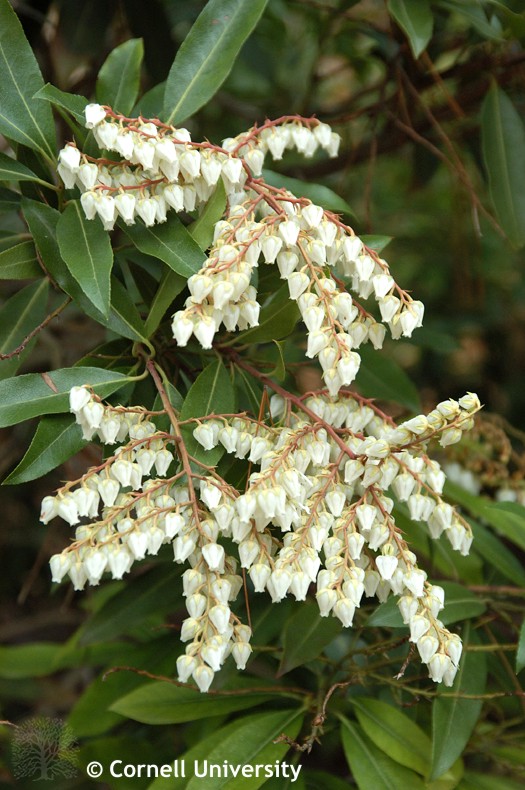
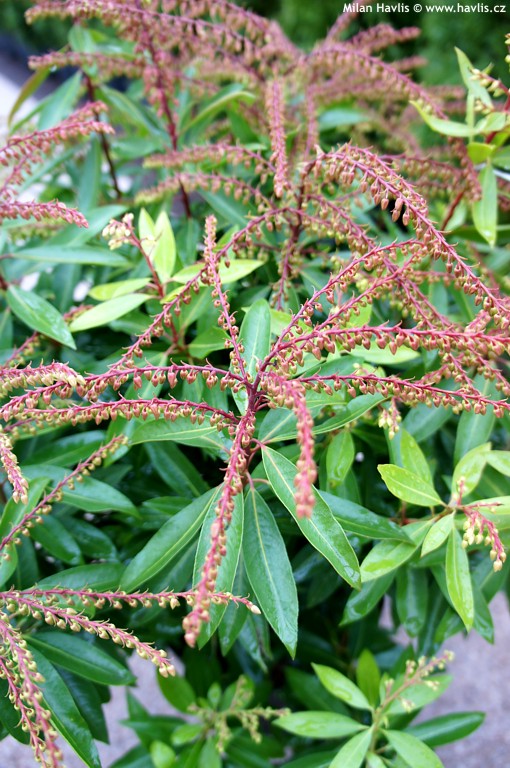
Brouwer's Beauty is a mid-sized Lily-of-the-valley shrub with up to 12 cm long, purple-red, horizontal flower racemes. They consist of numerous yellow-green tiny buds that turn red before winter and open up into white, slightly scented, urn-shaped flowers early in the spring. Flowering raceme gets a little heavier and becomes arching. Evergreen leaves are lanceolate, 3-8 cm long, pointed and glossy. Their emerging colour is yellowish-green. This pieris grows slowly and keeps it rounded shape.
Pieris does not require much maintenance. But if you wish to have a perfect plant here are a few suggestions: cut off spent flower racemes to prevent them from making seeds. During late spring and summer check the leaves 2 or 3 times for tiny spots on the upper sides – they manifest insect attack whose miniature worms are living inside the leaves and produce sticky sap on the underneath of the leaves. In such case spray it with a suitable insecticide – one dose is usually enough. In winter remove heavy and wet snow from the top of the plant to prevent its fragile branches from bending or breaking.
Last update 09-01-2012
Ericaceous plants require soil that is light, acidic, and constantly moist (not wet). If your garden soil is too heavy do not dig a deep hole but make a mounded and wide bed topped up with a good mixture of peat, fine bark chips, and leaf (forest) litter. Keep the soil moist by mulching. Slow-release fertilizers for acid-loving plants are advised. Hardy to about -27°C.